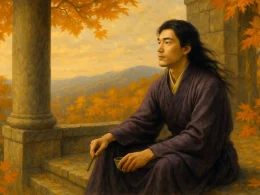

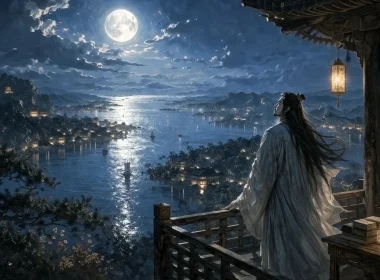
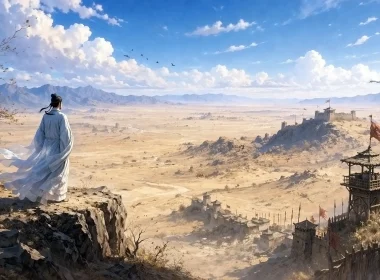
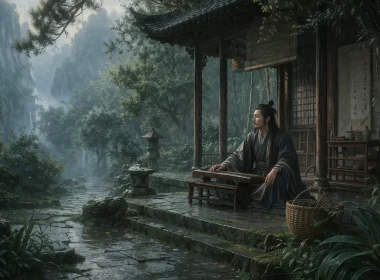
Liu Zongyuan (柳宗元 773 - 819), a native of Yongji, Shanxi Province, was a renowned writer and thinker of the Mid-Tang Dynasty. He passed the jinshi examination in the ninth year of the Zhenyuan era (793 AD). Actively participating in the “Yongzhen Reform,” he was demoted to the post of Sima of Yongzhou after its failure. Ten years later, he was transferred to be the Prefect of Liuzhou, where he died in office. As one of the advocates of the Ancient Prose Movement in the Tang Dynasty, he is often paired with Han Yu as “Han-Liu,” and is listed among the “Eight Great Masters of the Tang and Song Dynasties.” His poetry frequently depicts landscapes and nostalgia, with simple language yet deep emotion. His collected works, Liu Hedong Ji, have been handed down through the ages.
Major Works








Life
Liu Zongyuan was born into a family of scholar-officials with a strong literary tradition spanning generations. His great-granduncle, Liu Shi, served as chancellor during the reign of Emperor Gaozong. However, by his father Liu Zhen's generation, the family's fortunes had declined. Although Liu Zhen held only a minor official post, he was well-versed in poetry and prose, and was known for his upright and unyielding character. His mother, née Lu, came from a distinguished family, was a devout Buddhist, literate and principled, and served as Liu Zongyuan's first teacher. This family background laid a profound foundation for the later development of Liu's philosophical thought which sought to "synthesize Confucianism and Buddhism."
Endowed with remarkable talent, Liu Zongyuan was intelligent and studious from a young age, gaining literary fame early on and harboring lofty ideals of achieving great deeds. His life trajectory is distinctly divided into two phases by the Yongzhen Reform.
Early Official Career (c. 773–805)
Liu Zongyuan's youth was smooth sailing, making him a typical example of early success among Tang dynasty poets. At just thirteen, he began to experience society while accompanying his father, who was an official. By his capping ceremony (around age 20), he had already demonstrated extraordinary talent. In the 9th year of the Zhenyuan era (793 CE), at the age of twenty-one, Liu Zongyuan passed the imperial Jinshi examination and thus entered officialdom. Subsequently, in the 14th year of Zhenyuan (798), he passed the special Boxue Hongci examination. He held positions such as Collator in the Institute for the Glorification of Literature (Jixian Dian Zhengzi) and Sheriff of Lantian County, later entering the central administration as a Probationary Investigating Censor (Jiancha Yushi Lixing), responsible for inspecting the conduct of court officials. His career path seemed exceptionally bright.
During this period, Liu Zongyuan met and befriended Liu Yuxi, who was similar in age and had passed the examinations the same year. Sharing common aspirations, they became lifelong, inseparable friends. Around the end of the Zhenyuan era and the beginning of the Yongzhen era, Liu became acquainted with the reformist faction led by Wang Shuwen and Wang Pi. Sharing the same reformist ambitions, Liu Zongyuan and Liu Yuxi quickly became core members of this group. After Emperor Shunzong ascended the throne, the Wang Shuwen faction gained power and launched the "Yongzhen Reform." Liu Zongyuan was promoted to A Vice Director of the Ministry of Rites (Libu Yuanwailang), becoming a central pillar of the reforms. This reform aimed to curb the power of eunuchs, oppose separatist military governors, and address various malpractices, reflecting his early political ambition to forge ahead and support the state.
Life in Exile (805–819)
The "Yongzhen Reform" lasted only 146 days before it collapsed swiftly following Emperor Shunzong's forced abdication and Emperor Xianzong's accession. After the reform's failure, the core members of the Wang Shuwen faction were all banished. In the ninth month of the 1st year of Yongzhen (805), Liu Zongyuan was first demoted to Prefect of Shao Province. Before he could assume the post, in the eleventh month, he was further demoted to Marshal of Yongzhou (present-day Yongzhou, Hunan), thus beginning an exile that would last over a decade. Yongzhou was located in the "southern wilds," plagued by miasmic diseases and harsh conditions, which was undoubtedly a devastating blow to Liu, who was in his prime and filled with concern for the world.
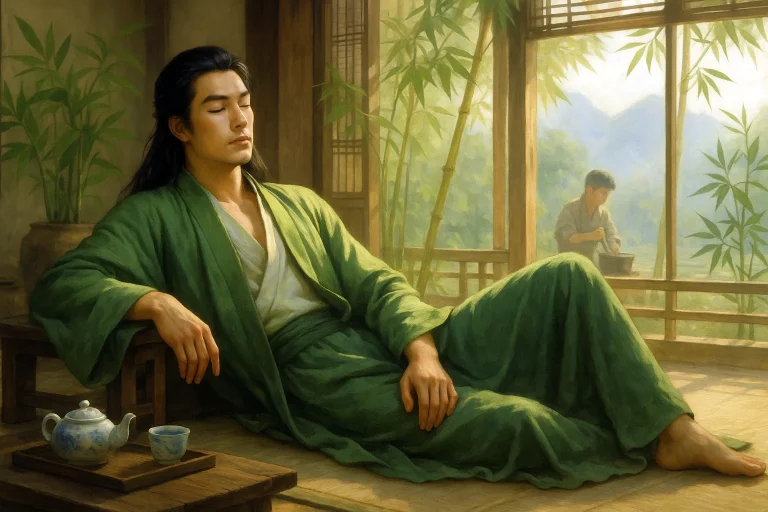
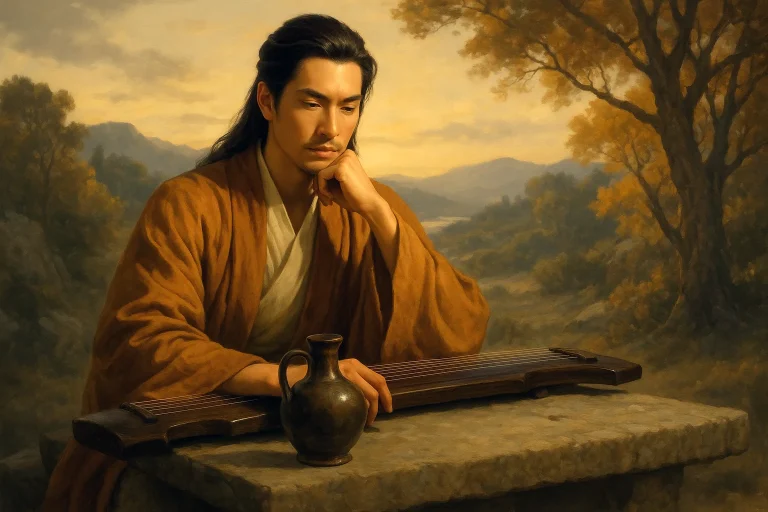
During his nearly ten years (c. 805–815) of exile in Yongzhou, Liu Zongyuan suffered political setbacks and was deeply depressed. This decade was the most painful period of his life spiritually, yet it also marked the peak of his literary creativity. To vent his anguish, he often sought solace in landscapes, exploring secluded places and historic sites, traversing the hills and waters of Yongzhou. He wrote a series of immortal masterpieces, the most famous being the Eight Records of Excursions in Yongzhou. These works, ostensibly describing scenery, actually conveyed his solitary indignation and personal ideals arising from his exile. Beyond landscape travelogues, he also produced many fables (such as Three Admonitions) and philosophical works (such as Discourse on Heaven), using sharp prose to criticize social realities and express philosophical reflections.
In the first month of the 10th year of the Yuanhe era (815), Liu Zongyuan, Liu Yuxi, and others were summoned back to the capital by imperial decree. However, this respite was short-lived. In the third month of the same year, they were once again banished from the capital. Liu Zongyuan was demoted to Prefect of Liuzhou (present-day Liuzhou, Guangxi). The four years in Liuzhou constituted the final stage of Liu's life. Unlike the purely literary catharsis of the Yongzhou period, during his tenure as Prefect of Liuzhou, he personally administered governance, diligently serving and caring for the people. Addressing the local custom of "using men and women as collateral for money," he innovatively implemented a policy to emancipate slaves, stipulating that slaves could work to repay debts and regain their freedom upon completion. This act earned him great affection from the populace. He also actively promoted education, dug wells, planted trees, and improved people's livelihoods, transforming Liuzhou's social landscape. Consequently, he was deeply loved by the local people. To this day, Liuzhou retains the "Lord Liu Shrine" dedicated to his memory. The four years in Liuzhou marked a new phase in his poetry, where his regulated verse in seven-character lines is considered to show new artistic development, complementing the five-character poems of the Yongzhou period, together forming gems of the Yuanhe poetry scene.
In the 14th year of the Yuanhe era of Emperor Xianzong (819), Liu Zongyuan passed away from illness at his post in Liuzhou at the age of forty-seven. On his deathbed, he entrusted the manuscripts of his life's literary works to his close friend Liu Yuxi, requesting that he compile them. Liu Yuxi honored this commitment, dedicating his life to organizing Liu Zongyuan's posthumous works, ensuring their preservation and transmission. The profound friendship between Liu Zongyuan and Liu Yuxi, along with his turbulent yet accomplished life, forms a poignant chapter in the history of Chinese literature.
Literary Style
Liu Zongyuan left over six hundred literary works in his lifetime, with his prose achievements surpassing his poetry. His writings span an extremely wide range, including argumentative essays, fables, landscape travelogues, biographies, and poetry, all achieving remarkable success. His stylistic features can be summarized as follows: prose characterized by austere rigor, logical严密, and deep emotion; poetry marked by a chill, solitary, and aloof elegance, simple yet profound.
Prose
Liu Zongyuan was a core leader of the Ancient Prose Movement in the Tang dynasty. Although skilled in parallel prose in his early years, he later vehemently opposed its flaws of "neglecting content and being vacuous," advocating instead for "writing to illuminate the Way," demanding that literature reflect reality and innovate in form and language. His prose, with its profound thought, distinct combativeness, and superb artistry, set a model for later generations. His achievements in prose are mainly evident in the following aspects:
Landscape Travelogues – Eight Records of Excursions in Yongzhou: Pioneering Landscape Prose
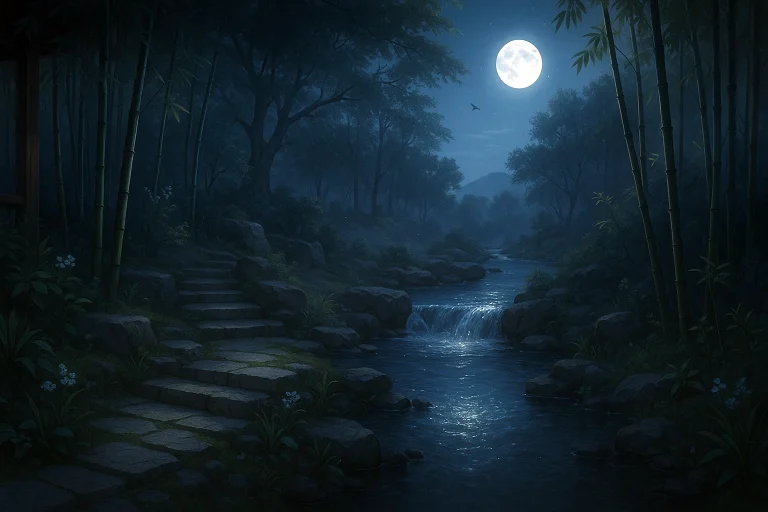
This represents the most brilliant and original part of Liu Zongyuan's prose. After his banishment to Yongzhou, seeking solace in landscapes, he wrote eight travelogues, later collectively called the Eight Records of Excursions in Yongzhou. This series not only pioneered a new style for Chinese landscape prose, but also made Yongzhou regarded as the "birthplace of Chinese landscape prose." Liu successfully integrated objective natural scenes with his subjective resentment, achieving a state of "unity of object and self." By "entrusting his hidden indignation to the mountains and waters," every hill, stream, plant, and tree in his writing bears the imprint of the author's emotions, becoming a projection of his personal ideals and sentiments. His aesthetic proposition—"美不自美,因人而彰"—emphasizing the agency of the aesthetic subject, found excellent practice here.
Fables and Short Essays – Three Admonitions, etc.: Sharp, Admonitory, and Biting Satire
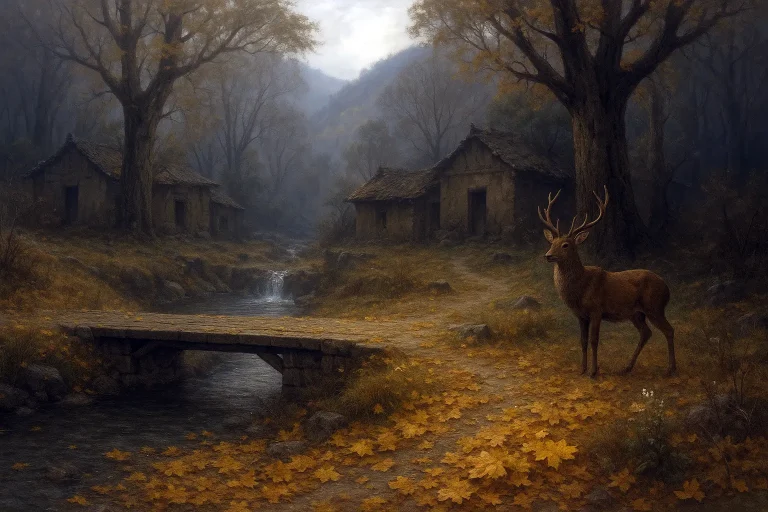
Liu Zongyuan's fables are an important component of his prose, possessing high philosophical and strong political qualities. His most famous representative work is undoubtedly Three Admonitions, comprising three stories: The Deer of Linjiang, The Donkey of Qian, and The Rats of the Yong Family. Using animals as protagonists, these fables cleverly satirize the vile phenomena in society of those who rely on power, are fierce in appearance but weak within, and abuse their authority. The allusion "黔驴技穷" from these stories has been passed down through the ages, becoming a household idiom. These works are sharp in style, biting in satire, and combative, fully demonstrating Liu Zongyuan's profound insight as a thinker and his exceptional expressive power as a literary writer.
Argumentative Essays and Biographies: On the Feudal System, The Snake-Catcher, etc.
Liu Zongyuan's argumentative essays are logically严密 and deeply thoughtful. His On the Feudal System is a famous political essay systematically expounding his views on state political systems. His biographical sketches, such as The Snake-Catcher and The Story of Camel Guo the Tree Planter, use small matters to illustrate larger issues. By narrating ordinary events in people's lives, they profoundly reveal social problems of heavy taxation and destitution, expressing his deep sympathy for the common people and his longing for an ideal political environment. His biographical works like Anecdotes of Minister Duan also provide vivid material for later study of Tang history.
Poetry
163 extant poems by Liu Zongyuan remain, 99 of which were created in Yongzhou. His poetic creation is mainly divided into the Yongzhou and Liuzhou periods. His poetic style combines solemn melancholy with clear aloofness, using concise language and excelling at metaphorical imagery. He is universally recognized by later generations as a master of the Tang landscape and pastoral poetry school, grouped with Wang Wei, Meng Haoran, and Wei Yingwu as "Wang, Meng, Wei, Liu." His poetry is as famous as that of his close friend Liu Yuxi, known collectively as "Liu-Liu," but their styles differ greatly: Liu Zongyuan's poetic style is described as "骨耸", more grave, introverted, and austere; whereas Liu Yuxi's is "气雄", appearing more uplifting, expansive, and majestic. Su Shi once evaluated Liu's poetry: "发纤秾于简古,寄至味于澹泊", accurately summarizing its aesthetic pursuit of "simplicity, tranquility, and profundity."
Landscape Poetry: Fervent Pain within Chill Aloofness
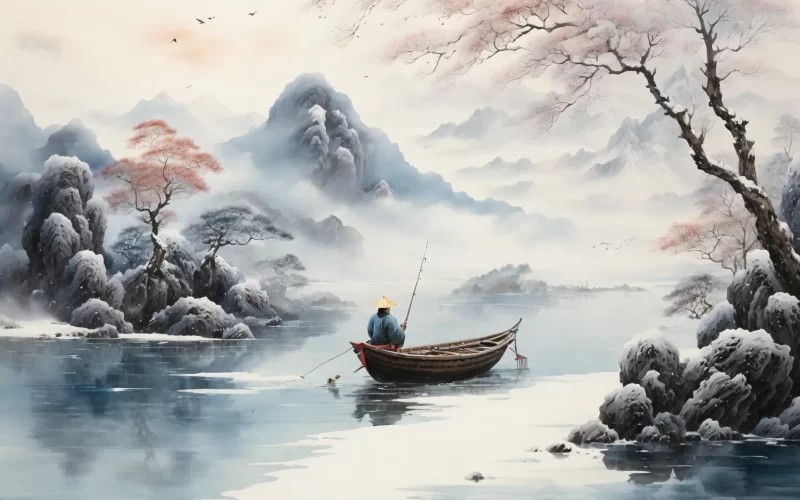
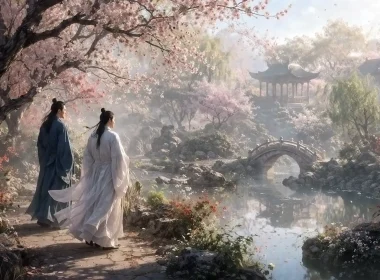
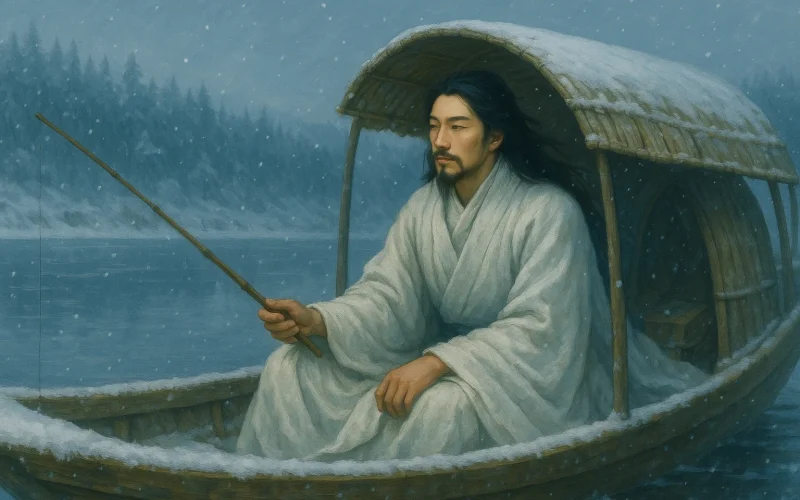
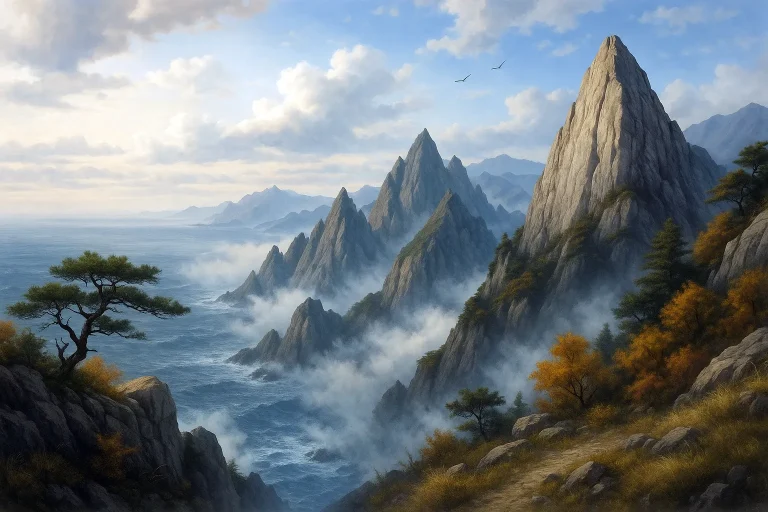
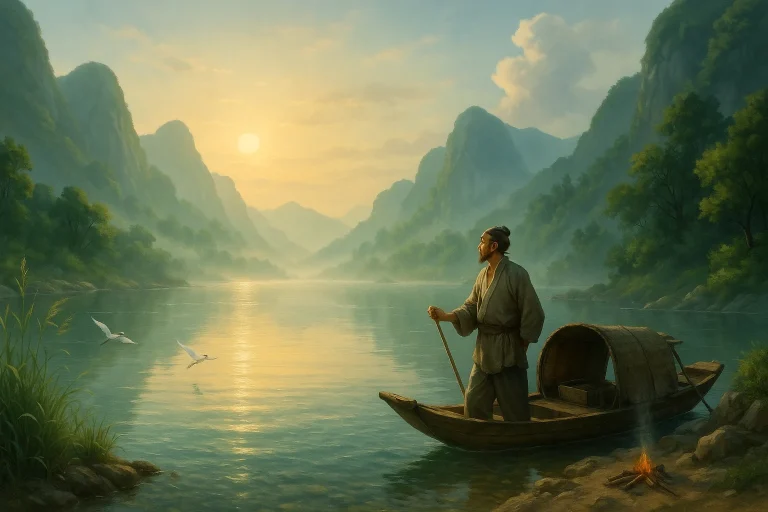
Liu Zongyuan is an important representative of Tang landscape poetry. His landscape poetry is not as ethereal and transcendent as Wang Wei's, nor as naturally plain as Meng Haoran's. Superficially, he uses landscapes to express calmness and detachment, but between the lines lies an unresolved "pain," and this pain is "fervent." He often projects his own secluded, lonely inner world onto the fresh and beautiful landscapes he depicts. By contrasting the permanence of landscape with the impermanence of human life, he seeks spiritual solace and transcendence, forming a unique philosophical contemplation and an "austere and rigorous" literary style. His representative work Jiang Xue uses the extremely cold scene of "千山鸟飞绝,万径人踪灭" to depict the utter isolation between heaven and earth; Yu Weng employs the synesthetic technique of "烟销日出不见人,欸乃一声山水绿" to show the vitality and detachment at dawn.
Exile Poetry: Profound Sorrow and Political Allegory
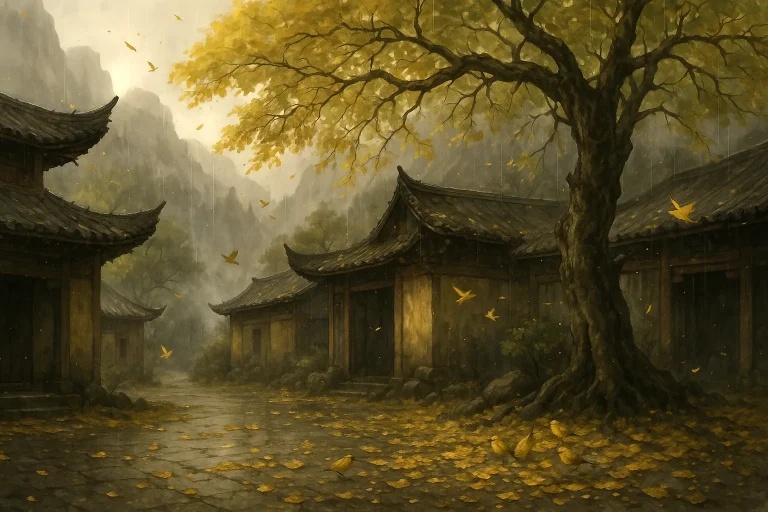
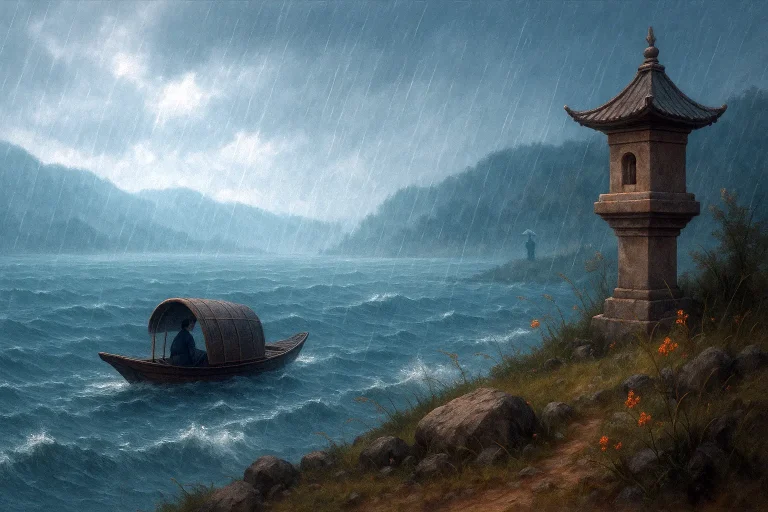
A large number of Liu Zongyuan's poems were written during his exile. These poems either directly express the feelings of banishment or use historical allusions to convey the grief and indignation of political frustration. For example, the poem Deng Liuzhou Cheng Lou Ji Zhang Ting Feng Lian Si Zhou uses "惊风乱飐芙蓉水,密雨斜侵薜荔墙" to metaphorically allude to the perilous political environment, and "岭树重遮千里目,江流曲似九回肠" to express longing for distant friends and the tortuous sorrow within. This type of poem is sincere and deep in emotion, containing concern for the current situation and lament for his own fate beneath a cool and detached touch, forming an important part of his "chill, solitary, and aloof" poetic style.
Pastoral Poetry and Historical Poetry
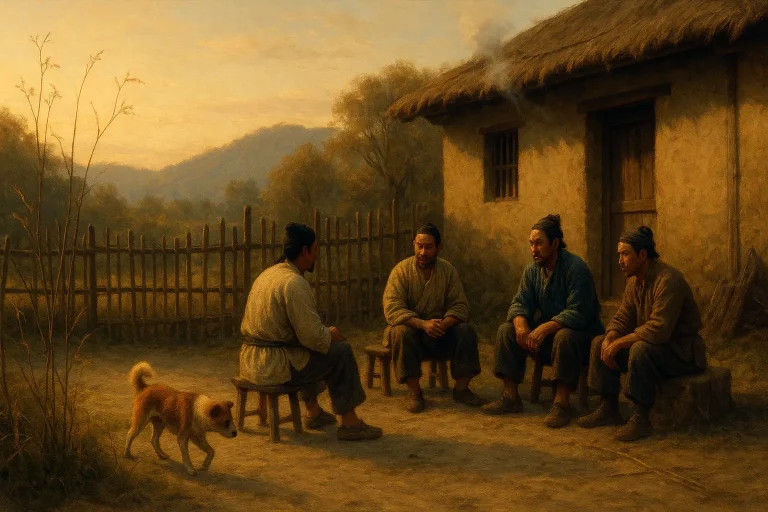
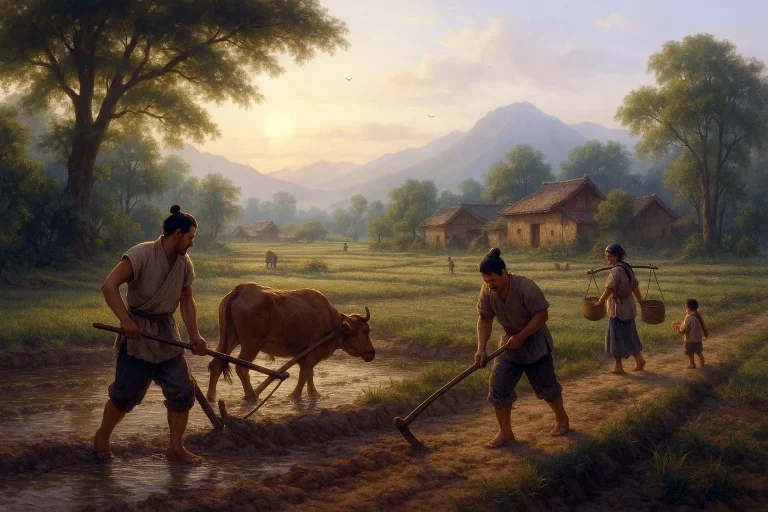
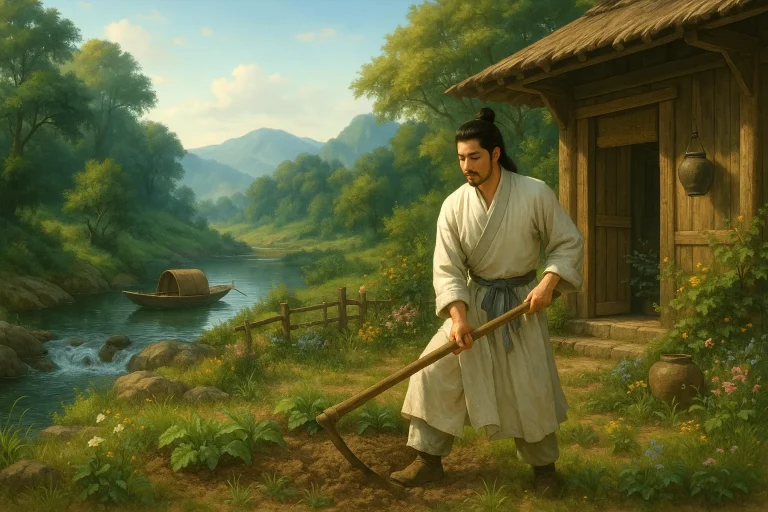
Liu Zongyuan also created a certain number of pastoral poems and historical poems. His pastoral poems, such as Three Poems on Farming Families, depict the hardships of peasant life, reflect social realities, with simple language and sincere emotion. His historical poems, such as Ode to Jing Ke and Ode to the Three Good Men, use the past to satirize the present, expressing his thoughts on loyalty and moral integrity, reflecting his historical perspective as a statesman and his literary talent as a poet.
Philosophical Works
Liu Zongyuan was not only a literary figure but also a philosopher with naive materialist ideas. He wrote a series of philosophical works including Discourse on Heaven, Responses to Heaven, and Critique of the Discourses of the States. Discourse on Heaven focuses on criticizing the idealist concept of a willful Heaven that rewards and punishes, expounding the naive materialist view that Heaven has no will and is a material entity. Responses to Heaven is a creative reply to the Warring States poet Qu Yuan's Heavenly Questions. In over 170 answering verses, it systematically addresses Qu Yuan's queries about the cosmos, nature, and history, displaying his atheistic thoughts and naive dialectical thinking. Comrade Mao Zedong once highly praised it, saying, "Qu Yuan wrote Heavenly Questions; it took a thousand years before Liu Zongyuan wrote Responses to Heaven. He was very bold," and considered that "Liu Zongyuan was a materialist philosopher." The philosophical debates on the relationship between Heaven and humanity that he engaged in with his friends Han Yu and Liu Yuxi form an important chapter in the intellectual history of the Mid-Tang.
Influence
Liu Zongyuan occupies an extremely important position in the history of Chinese literature and thought, and his influence is multifaceted and profound.
Leader of the Ancient Prose Movement and One of the "Eight Great Prose Masters of the Tang and Song"
Together with Han Yu, Liu Zongyuan advocated the Ancient Prose Movement of the Tang dynasty, known as "Han-Liu." He made outstanding contributions to reversing the prevailing parallel prose style since the Six Dynasties and restoring the practicality and artistry of prose. He is one of the "Eight Great Prose Masters of the Tang and Song," and his prose practice established new models for later generations.
"Patriarch of Travelogues" and Pioneer of Landscape Literature
What Liu Zongyuan is most celebrated for by later generations is his creation of landscape travelogues. Through works like the Eight Records of Excursions in Yongzhou, he elevated landscape travel writing from an appendage of geographical texts to an independent literary genre. His writing perfectly integrated scenery description, lyrical expression, and discursive reflection, profoundly influencing the landscape writings of later literary giants like Ouyang Xiu, Su Shi, and Wang Anshi. He is regarded by literary historians as the "Patriarch of Travelogues."
Independence and Development of Fable Literature
Liu Zongyuan's fable writing marks a new developmental stage in ancient Chinese fable literature. His fables, such as Three Admonitions, were no longer mere appendages to argumentation but became an independent literary form. He excelled at using vivid animal imagery and intricate plots to imbue profound social philosophy. This creative approach had a far-reaching influence on later fable and satirical literature.
Poetic Status: "Liu-Liu" and "Wang, Meng, Wei, Liu"
In the realm of poetry, Liu Zongyuan, together with his close friend Liu Yuxi, is known as "Liu-Liu," each dominating a sphere in the Yuanhe poetry scene. Simultaneously, he is grouped with Wang Wei, Meng Haoran, and Wei Yingwu as "Wang, Meng, Wei, Liu", collectively representing the highest achievements of the Tang landscape and pastoral poetry school. His poetic style, with its unique "chill, solitary, and aloof" quality, enriched the aesthetic conception of Chinese landscape poetry.
Contribution to Later Philosophy
As a prominent Mid-Tang thinker, Liu Zongyuan inherited the naive materialist tradition of Wang Chong. In works like Discourse on Heaven and Responses to Heaven, he systematically expounded his materialist view of nature that "Heaven and humanity do not interfere with each other," delivering a powerful critique of the prevalent theory of the Mandate of Heaven. His philosophical thought significantly influenced the later development of materialist ideas and the intellectual landscape of Song Neo-Confucianism, which sought to merge Confucianism, Buddhism, and Daoism.
Evaluations Through the Ages
Han Yu, in his Epitaph for Liu Zihou, highly praised his literary talent: "子厚少精敏,无不通达", and "名声大振,一时皆慕与之交". Su Shi's evaluation of his poetry and prose was extremely precise, stating that he "发纤秾于简古,寄至味于澹泊", and revered him as a literary giant of the Tang. Qing dynasty scholar Guan Shiming, in his Preface to Reading Poems from the Snow Mountain Studio, commented: "子厚骨耸,梦得气雄,元和之二豪也." Mao Zedong pointed out: "Qu Yuan wrote Heavenly Questions; it took a thousand years before Liu Zongyuan wrote Responses to Heaven. He was very bold", and "Liu Zongyuan was a materialist philosopher."
In summary, with his turbulent life experiences, profound philosophical thought, and exceptional literary talent, Liu Zongyuan stands as an eternal peak in the history of Chinese literature. He is one of the "Eight Great Prose Masters of the Tang and Song" and a mainstay of the Tang Ancient Prose Movement; his landscape travelogues pioneered a literary style, earning him the title "Patriarch of Travelogues"; his fables are sharp and admonitory, warning the world; his poetry stands shoulder to shoulder with Wang Wei, Meng Haoran, and Wei Yingwu, and his "chill, solitary, and aloof" poetic style, together with Liu Yuxi's "heroic and majestic" spirit, are jointly known as "Liu-Liu." Inheriting the legacy of the Songs of Chu and inspiring the principles of Song and Ming literature, the independent personality and aesthetic concepts embodied in his works continue to shine brilliantly in the long river of Chinese cultural history.