
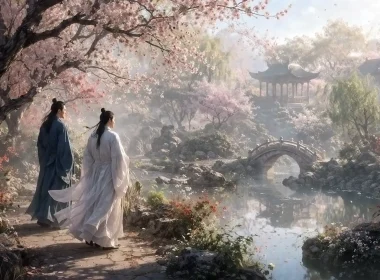
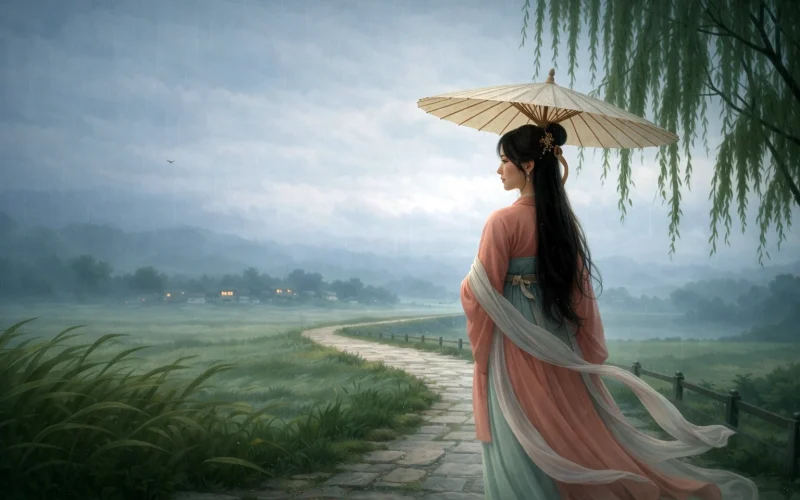
As the holiday approaches, and grasses are bright after rain,
And the causeway gleams with willows, and wheatfields wave in the wind,
We are thinking of our kinsfolk, far away from us.
0 cuckoo, why do you follow us, why do you call  us home?
Original Poem
近寒食雨草萋萋,著麦苗风柳映隄。
等是有家归未得,杜鹃休向耳边啼。
Interpretation:
This is a travel poem using an object to express feelings. The authorship is uncertain, attributed by some to Wang Jian, by others to an anonymous poet. It was likely written by a wanderer drifting in the regions south of the Yangtze during the late Tang Dynasty. In the late Tang, the nation's power declined, and wars were frequent. Scholars often ended up in unfamiliar lands, either fleeing turmoil or seeking livelihood, with no clear date for returning home. The Cold Food Festival was approaching, spring grass grew lush—a time originally for spring outings and tomb-sweeping. Yet the poet could only be alone in a foreign land, listening to the cuckoo's poignant cry, doubling his homesickness. The line "Like other homeless people, I cannot go back" expresses the shared helplessness of wanderers throughout the ages.
First Couplet: "近寒食雨草萋萋,著麦苗风柳映堤。"
Jìn hánshí yǔ cǎo qī qī, zhe miàmiáo fēng liǔ yìng dī.
Nearing Cold Food Day, rain falls, grass runs riot green; Wheat sprouts wave in the breeze, willows shade rivershore.
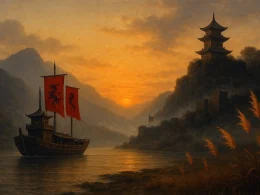
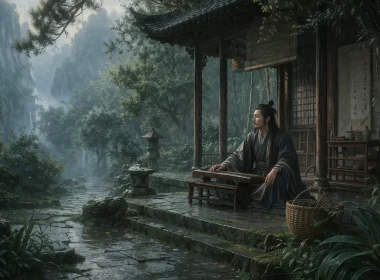
The poem opens with a fine-brush depiction of the Jiangnan spring scenery on the eve of the Cold Food Festival. "近寒食雨" (Nearing Cold Food Day, rain falls) indicates the season. "草萋萋" (grass runs riot green) describes the lushness of spring grass, originally a scene full of vitality. "著麦苗风柳映堤" (Wheat sprouts wave in the breeze, willows shade rivershore) further elaborates: wheat sprouts sway in the wind, willows and the riverbank reflect each other like a painting. This couplet is purely descriptive scenery, with bright colors and vivid imagery. However, the two words "寒食" (Cold Food) already conceal a foreshadowing—this season should be for returning home to sweep tombs, yet the poet can only face the spring scenery of a foreign land, moved by the scene to feel emotion.
Second Couplet: "等是有家归未得,杜鹃休向耳边啼。"
Děng shì yǒu jiā guī wèi dé, dùjuān xiū xiàng ěr biān tí.
Like other homeless people, I cannot go back. O cuckoo, wail no more from now on at my door!
This couplet is the soul of the entire poem. It shifts from scene to feeling, directly expressing the heart's intent. "等是有家归未得" (Like other homeless people, I cannot go back)—these seven words exhaust the wanderer's pain. "等是" means "similarly" or "like others"; in this world, are there not many who have homes but cannot return? This line is both self-consolation and self-sorrow. The next line, "杜鹃休向耳边啼" (O cuckoo, wail no more from now on at my door!), concludes the entire piece with an impassioned address. The cuckoo's cry sounds like "better go home" and is a common image of homesickness in ancient poetry. Yet the poet scolds the cuckoo, "wail no more", precisely because the more mournful the cry, the harder it is to suppress the longing for home. This scolding is "unreasonable yet wonderfully effective," writing the poet's helplessness and grief at being unable to return home with penetrating depth.
Holistic Appreciation
This is an excellent work among late Tang travel poems. The entire poem consists of four lines and twenty-eight characters. It begins with the spring scenery before the Cold Food Festival and concludes with the cuckoo's cry, blending the beauty of spring with the pain of homesickness, showcasing the wanderer's deep sorrow and lament at being unable to return home.
Structurally, the poem presents a progressive layering moving from scene to emotion, from joy to sorrow. The first couplet uses "grass runs riot green" and "willows shade rivershore" to depict the beauty of spring light, seemingly a delightful picture. The second couplet, however, takes a sharp turn downward, using "cannot go back" to puncture the hidden pain beneath the joy and using "cuckoo's cry" to push the emotion to its climax. Between the two couplets, it moves from beautiful scenery to sad emotion, from description to direct expression, forming a strong contrast that makes the longing for home seem all the more acute.
Thematically, the core of this poem lies in the three words "归未得" (cannot go back). That spring color of "grass runs riot green" is originally a call to "return"; that sound of the "cuckoo's cry" is originally an urging to "return." Yet the poet can only "cannot go back"—not unwilling to return, but unable to; not without a place to return to, but having a home he cannot reach. This contradiction between "to return" and "cannot" is precisely the deepest tragic core of the entire poem.
Artistically, the poem's most moving aspect lies in the contrasting technique of "using joyful scenery to write sorrowful emotion." The poet employs the bright spring light of "grass runs riot green" and "willows shade rivershore" to contrast the desolation of being unable to return home; he uses the mournful sound of the "cuckoo's cry" to intensify the pain of homesickness. That scolding cry of "wail no more" seems unreasonable, yet it is the natural outpouring of emotion at its peak, making the reader feel as if hearing the sound and seeing the person.
Artistic Merits
- Using Joyful Scenery to Write Sorrow, Powerful Contrast: Using the bright spring colors of "grass runs riot green" and "willows shade rivershore" to contrast the desolation of being unable to return home. The more beautiful the scene, the sadder the emotion.
- Using Sound to Convey Emotion, Seamless Allusion: Borrowing the cuckoo's "better go home" cry to convey homesickness, using the impassioned address "wail no more" to directly express emotion. The allusion is natural, the emotion intense.
- Concise Language, Deep Emotion: The entire poem has twenty-eight characters. It contains scene and emotion, moving from description to direct expression, progressing layer by layer, with enduring resonance.
Insights
This poem, through a spring scene before the Cold Food Festival, speaks to an eternal theme—The deepest homesickness in the world is not having no home to return to, but having a home one cannot return to.
First, it lets us see "the loneliness within a festival." The Cold Food Festival approaches, a time when one should return home to sweep tombs, yet the poet can only be alone facing the spring scenery of a foreign land. The vitality of "grass runs riot green", the soft beauty of "willows shade rivershore"—the more bright and beautiful they are, the more they contrast with the inner desolation of the wanderer. It reminds us: The meaning of a festival lies not in the scenery, but in reunion; the ties of home lie not in the landscape, but in human connections.
On a deeper level, this poem makes us contemplate "the cuckoo's cry." That call of "better go home" is originally a natural sound, but in the poet's ears it becomes an accusation that pierces the heart. He scolds the cuckoo, "wail no more", precisely because this cry awakens the truth he least wishes to face—he cannot return. This technique of "transferring anger onto an object" is precisely the natural outpouring of emotion at its peak, giving sound to longing and shape to helplessness.
And what is most moving is the poem's sense of "等是" (like others) helplessness. The poet says "Like other homeless people, I cannot go back"—are there not many who have homes but cannot return? This line is both self-consolation and self-sorrow; it is both resonance with all wanderers under heaven and a lament for his own fate. True homesickness is never one person's alone; it is the shared sigh of all who drift.
This poem is set in the late Tang Cold Food Festival, yet it allows everyone漂泊异乡 (drifting in a foreign land) to find resonance within it. That spring color of "grass runs riot green" is the scenery in the eyes of every wanderer. The helplessness of "cannot go back" is the hidden pain in the heart of every homesick person. That mournful cry of the "cuckoo" is the echo in the ears of everyone with a home they cannot return to. This is the vitality of poetry: it writes of one wanderer's heartfelt thoughts, but one reads of people in all eras who, amidst the spring light, long for home.
Translator
Kiang Kanghu