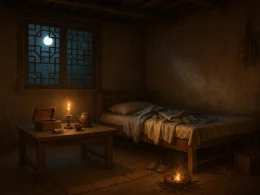



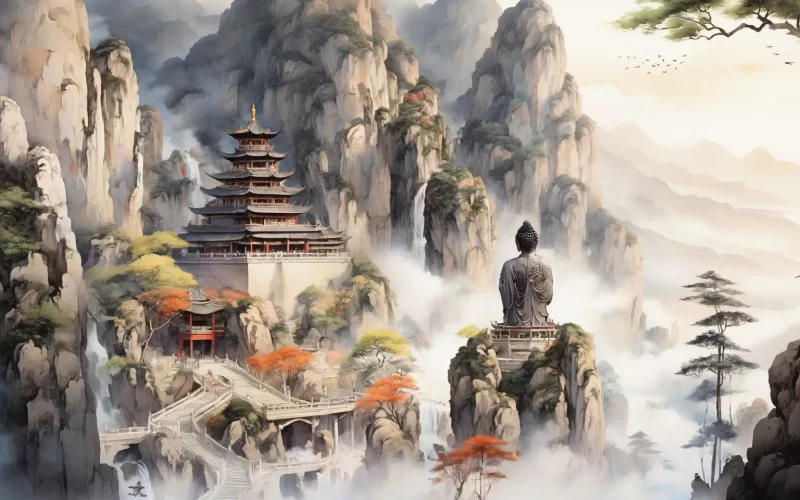
Rough were the mountain-stones, and the path very narrow;
And when I reached the temple, bats were in the dusk.
I climbed to the hall, sat on the steps, and drank the rain-washed air
Among the round gardenia-pods and huge banana-leaves.
On the old wall, said the priest, were Buddhas finely painted,
And he brought a light and showed me, and I called them wonderful.
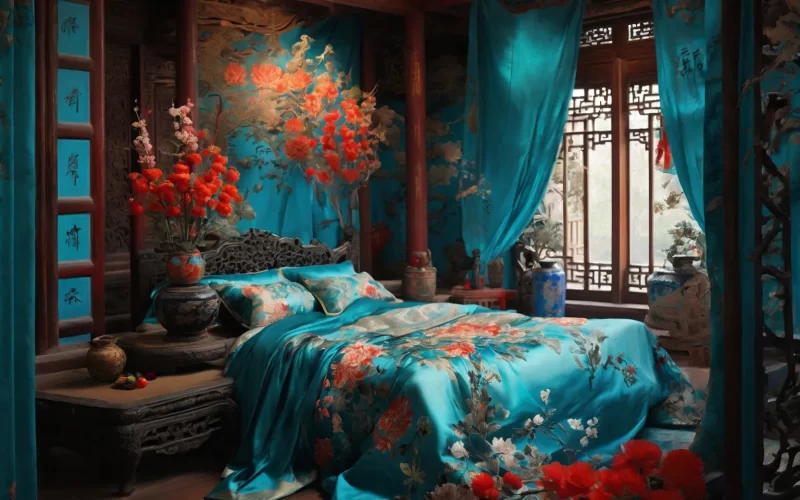
He spread the bed, dusted the mats, and made my supper ready,
And, though the food was coarse, it satisfied my hunger.

At midnight, while I lay there not hearing even an insect,
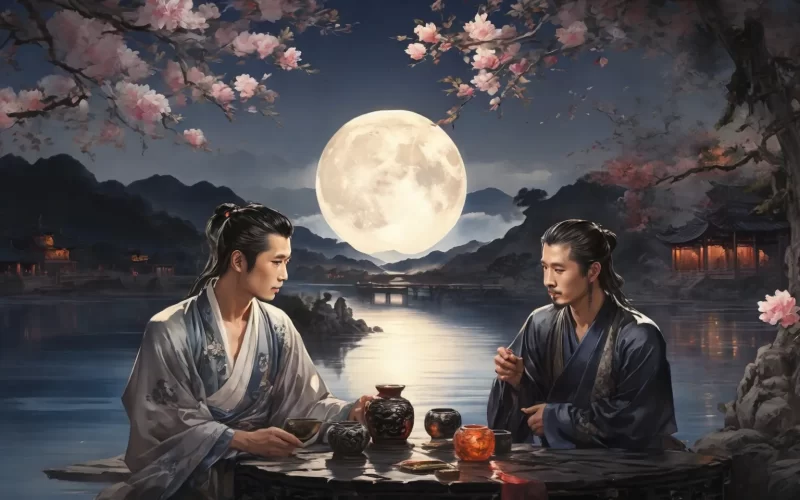
The mountain moon with her pure light entered my door...

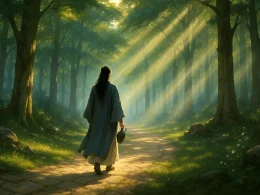
At dawn I left the mountain and, alone, lost my way:
In and out, up and down, while a heavy mist
Made brook and mountain green and purple, brightening everything.
I am passing sometimes pines and oaks, which ten men could not girdle,
I am treading pebbles barefoot in swift-running water -
Its ripples purify my ear, while a soft wind blows my garments...

These are the things which, in themselves, make life happy.
Why should we be hemmed about and hampered with people?
O chosen pupils, far behind me in my own country,
What if I spent my old age here and never went back home?
Original Poem
「山石」
韩愈
山石荦确行径微, 黄昏到寺蝙蝠飞。
升堂坐阶新雨足, 芭蕉叶大栀子肥。
僧言古壁佛画好, 以火来照所见稀。
铺床拂席置羹饭, 疏粝亦足饱我饥。
夜深静卧百虫绝, 清月出岭光入扉。
天明独去无道路, 出入高下穷烟霏。
山红涧碧纷烂漫, 时见松枥皆十围。
当流赤足蹋涧石, 水声激激风吹衣。
人生如此自可乐, 岂必局束为人鞿?
嗟哉吾党二三子, 安得至老不更归?
Interpretation
This poem was composed in the seventh month of 801 AD, the 17th year of the Zhenyuan era under Emperor Dezong of Tang, when Han Yu was thirty-four years old, on his journey from Xuzhou to Luoyang. The previous year, Han Yu had left the administrative staff in Bianzhou and, after moving about, took a position under Zhang Jianfeng, the Military Governor of Xuzhou. Due to disagreements with Zhang Jianfeng, he felt depressed and frustrated, and soon resigned to proceed to Luoyang. Passing by Huilin Temple north of Luoyang, he lodged there for a night. Moved by the experience, he wrote this poem.
Titled "Mountain Stones", taking the first two words of the poem, it is not specifically about rocks but uses the style of a traveling monk's account to record a complete experience of lodging overnight at a mountain temple and walking at dawn. The poem contains both heartfelt praise for natural landscapes and a deep weariness with the constraints of official life; it expresses both grateful contentment with a simple life and a heartfelt call to like-minded companions. The poem flows smoothly from start to finish, like floating clouds and flowing water, showing the rare, leisurely side of Han Yu's poetry. It has been praised by later generations as "the purest and most elevated among Changli's (Han Yu's) poems."
Stanza One: «山石荦确行径微,黄昏到寺蝙蝠飞。升堂坐阶新雨足,芭蕉叶大栀子肥。»
Shān shí luòquè xíngjìng wēi, huánghūn dào sì biānfú fēi. Shēng táng zuò jiē xīn yǔ zú, bājiāo yè dà zhīzǐ féi.
Mountain stones rugged, the path narrow and faint; / At dusk I reach the temple, bats are flying.
Climb the hall, sit on the steps—new rain has soaked the earth; / Banana leaves are large, gardenia flowers plump.
The opening begins with «山石荦确», sketching the ruggedness and peril of the mountain path; the three words «行径微» add a sense of deep seclusion. «黄昏到寺» states the time, while «蝙蝠飞» is both a realistic depiction of dusk's arrival and evokes the desolate, quiet atmosphere of the ancient temple. The next two lines abruptly shift tone: ascending the Buddha hall and sitting on the steps, he discovers everything refreshed by the recent rain. In «芭蕉叶大栀子肥», the words «大» (large) and «肥» (plump) are used masterfully—they are not only realistic but also projections of the poet's mood: after the hardship of the mountain path, the vibrant scene before his eyes feels like a reward and solace.
Stanza Two: «僧言古壁佛画好,以火来照所见稀。铺床拂席置羹饭,疏粝亦足饱我饥。夜深静卧百虫绝,清月出岭光入扉。»
Sēng yán gǔ bì fó huà hǎo, yǐ huǒ lái zhào suǒ jiàn xī. Pū chuáng fú xí zhì gēng fàn, shū lì yì zú bǎo wǒ jī. Yè shēn jìng wò bǎi chóng jué, qīng yuè chū lǐng guāng rù fēi.
The monk says the ancient wall's Buddha paintings are fine; / Bring a torch to look—what's seen is sparse and faint.
He spreads the bed, sweeps the mat, sets out broth and rice; / Coarse fare, yet enough to fill my hunger.
Deep in the night I lie still, all insects hushed; / The clear moon emerges from the ridge, its light enters the door.
This section describes the experience of lodging overnight in the temple, with four scenes progressing layer by layer. «古壁佛画» is the monk's recommendation; «以火来照» is the poet's investigation. The three words «所见稀» describe both the mottled, blurry state of the murals and subtly convey a sense of the vicissitudes of worldly affairs. Next comes the temple monk's warm hospitality: the two actions «铺床拂席» and «置羹饭» show the host's attentiveness; «疏粝亦足饱我饥» reveals the poet's peaceful state of mind, being content wherever he is. In the deep quiet of night, «百虫绝» and «清月出岭» play off each other—the cessation of insect sounds highlights the stillness of the night, while the pouring moonlight adds a note of clear, cool beauty to this silent night. The four lines move from activity to stillness, from outside to inside, with clear progression.
Stanza Three: «天明独去无道路,出入高下穷烟霏。山红涧碧纷烂漫,时见松枥皆十围。当流赤足蹋涧石,水声激激风吹衣。»
Tiānmíng dú qù wú dàolù, chūrù gāoxià qióng yānfēi. Shān hóng jiàn bì fēn lànmàn, shí jiàn sōng lì jiē shí wéi. Dāng liú chìzú tà jiàn shí, shuǐshēng jījī fēng chuī yī.
Dawn breaks, I leave alone, no path in sight; / Going in and out, up and down, I exhaust the mist and haze.
Mountains red, stream blue, a riot of dazzling color; / Now and then I see pines and oaks, all ten arm-spans round.
Facing the current, barefoot I tread on stream stones; / Water sounds chattering, the wind blows my clothes.
The focus shifts to the dawn walk of the second day, the brilliant descriptive passage of the poem's landscape. «无道路» describes the thickness of the morning mist; «穷烟霏» describes the distance traversed; these two lines capture the dreamlike quality of the morning mountain walk perfectly. Immediately following, the seven words «山红涧碧纷烂漫» depict the mountain hues with richly colored strokes: red are the mountain flowers, blue the stream water; the three words «纷烂漫» present both the dazzling display of color and the vigorous vitality. «时见松枥皆十围» then shifts from dazzling color to the simple, rugged quality of trees—the vibrant and the plain play off each other. The final two lines describe the intimate pleasure of water with «赤足蹋涧石»; «水声激激风吹衣» concludes with auditory and tactile sensations, pushing the fusion of man and nature to its climax.
Stanza Four: «人生如此自可乐,岂必局束为人鞿?嗟哉吾党二三子,安得至老不更归?»
Rénshēng rúcǐ zì kě lè, qǐbì júshù wéi rén jī? Jiē zāi wú dǎng èr sān zǐ, ān dé zhì lǎo bù gēng guī?
A life like this, of course, can bring joy; / Why must one be constrained, a haltered man for others?
Alas, you two or three, my own band; / How can we manage not to turn back till we are old?
The conclusion shifts from description to lyrical reflection, the pivotal line of the entire poem. «人生如此自可乐» summarizes the experiential journey described earlier—this «乐» comes from the gift of landscape, and even more from the state of unconstrained freedom. «岂必局束为人鞿» uses a rhetorical question for contrast: «局束» refers to the confinement of official life; «鞿», originally a horse's halter, symbolizes being controlled by others. The contrast between «自可乐» (finding joy oneself) and «为人鞿» (being haltered for others)—freedom versus constraint—is clear without further words. The final two lines call to like-minded companions: «嗟哉吾党二三子» is both a sigh and a summons; the word «归» in «安得至老不更归» points to returning to nature, returning to one's original heart. This is both an expectation for his friends and the poet's own self-exhortation.
Holistic Appreciation
This poem stands alone in Han Yu's oeuvre. Its greatest feature is using the form of a travelogue to achieve poetic reality, lodging reflections on life within the joy of landscape. The entire poem unfolds chronologically: arriving at the temple at dusk, lodging overnight and viewing paintings, walking alone at dawn—like a refined landscape travelogue. But Han Yu's brushwork goes beyond mere recording; he infuses emotion into every scene and extracts philosophical reflection from each experience, causing this "travelogue" to ultimately ascend into a deep, impassioned ode to a free life.
The most moving aspect of the poem is the poet's fusion with nature. He does not stand outside nature "viewing" the scenery but immerses himself wholly within it: treading stones barefoot, feeling the stream's flow against his feet; the wind blowing his clothes, he experiences the freshness of the wild mountains. This method of writing, "entering the scene with his whole body," gives the poem a strong physical and present sense; the reader seems to follow the poet's footsteps, sharing the exhilaration of «水声激激风吹衣».
The reflective conclusion is especially incisive. «人生如此自可乐» is the elevation of the earlier experience; «岂必局束为人鞿» is a negation of official life. But the poet does not go to extremes; instead, he concludes with the sigh of «嗟哉», transforming personal insight into a heartfelt summons for like-minded companions. This attitude of being both detached and engaged with the world is precisely the unique appeal of Han Yu's character.
Artistic Merits
- Poetic Structure Modeled on Travelogue
The entire poem unfolds chronologically: arriving at the temple at dusk—lodging overnight, viewing paintings—walking alone at dawn. The narrative thread is clear, the progression distinct. This structure allows the poem to possess both the documentary quality of a travelogue and the emotional power of lyric poetry, pioneering a new paradigm for recording travel in verse. - Three-Dimensional Sensory Description
The poem fully engages multiple senses: visually, «山红涧碧纷烂漫» offers dazzling color; aurally, «水声激激» is crisp and pleasant; tactilely, «风吹衣» is cool and refreshing; there is even a sense of temperature in the slight chill of «清月出岭光入扉». This multi-sensory, three-dimensional writing makes the reader feel present. - Precise and Vivid Verbs
The «坐» (sit) in «升堂坐阶», the «铺» (spread) and «拂» (sweep) in «铺床拂席», the «蹋» (tread) in «当流赤足蹋涧石»—each verb accurately conveys the quality of the action, filling the poem with dynamic imagery. - Contrastive Use of Color
The red-green contrast of «山红涧碧», the simple, rugged strength of «松枥皆十围» against the fresh, lush fullness of «芭蕉叶大栀子肥», creates layers and tension in color, enhancing the poem's visual impact. - Natural Integration of Reflection
The concluding reflection is not inserted awkwardly but emerges naturally from the preceding travel experience. «人生如此自可乐» summarizes the «乐» described earlier; «岂必局束为人鞿» is a value judgment made through contrast. It flows naturally, without any sense of lecturing.
Insights
The core insight this work offers contemporary readers concerns how to discover and guard "authentic moments" within modern life. The one night and one dawn Han Yu records in the poem were merely a chance lodging and an ordinary morning walk, yet, through his wholehearted immersion, they became irreplicable "authentic moments" in life. This reminds us: the true quality of life does not depend on external conditions but on our ability to feel the present moment. The contentment in «疏粝亦足饱我饥» and the exhilaration of «赤足蹋涧石» are not due to superior surroundings but because the poet possessed a mind able to dwell peacefully in the now.
The contrast in «人生如此自可乐,岂必局束为人鞿» touches upon a core dilemma of modern people: we often sacrifice the happiness of the "present" for the sake of a "future" happiness; we suppress genuine desires for the sake of others' evaluations. Han Yu tells us that freedom is not somewhere far away; it lies in every intimate contact with nature, in every breath taken with slowed steps.
Finally, the call of «嗟哉吾党二三子,安得至老不更归» is both an expectation for like-minded companions and a question posed to every reader: Can we still find such friends with whom we can "not turn back till we are old"? Can we still guard such a spiritual homeland to which we can "not turn back till we are old"? In an increasingly atomized modern society, this longing for a spiritual community is perhaps even more urgent than in Han Yu's time.
About the Poet
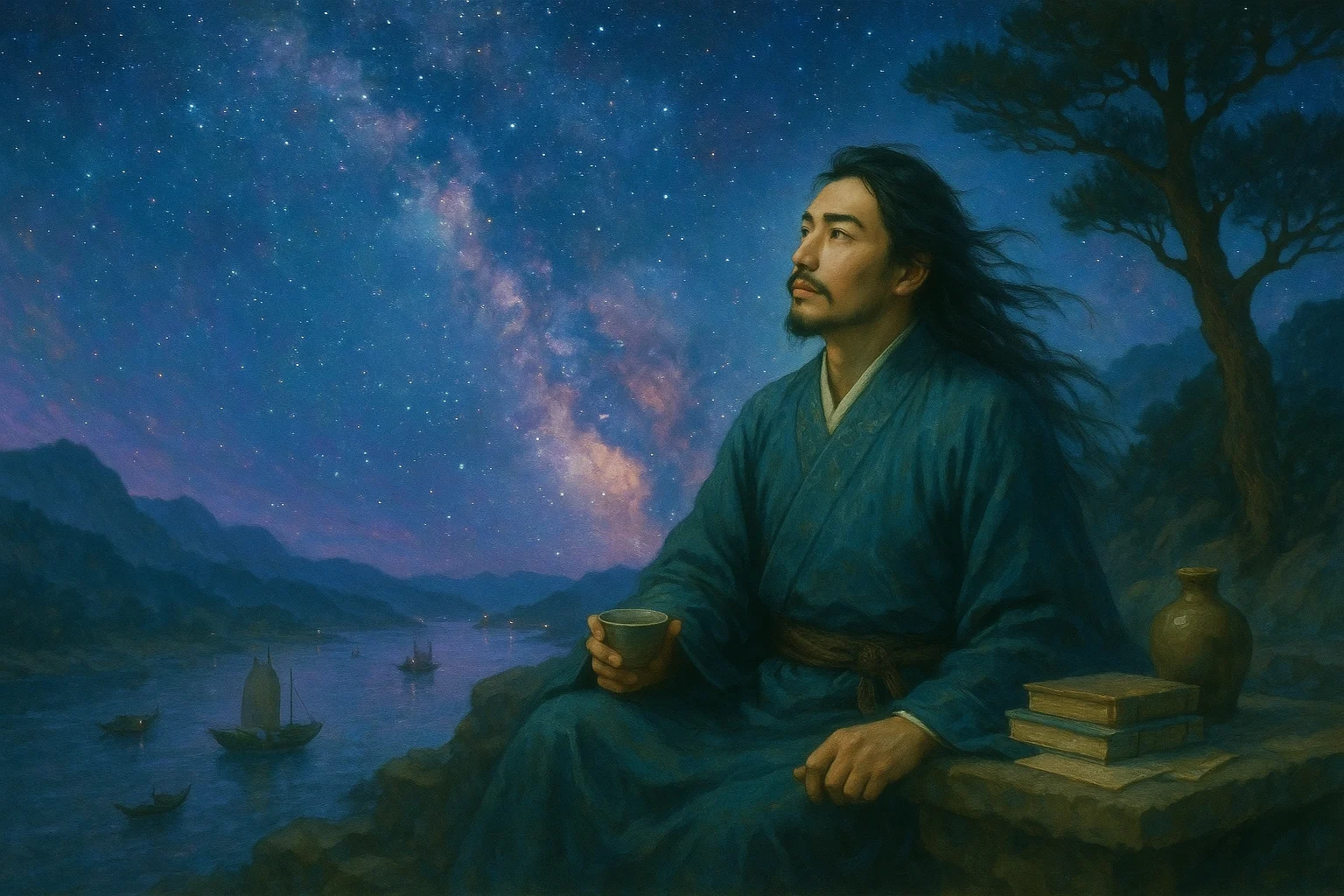
Han Yu (韩愈, 768 - 824), originario de Mengzhou en Henan, fue el líder del Movimiento de la Prosa Antigua durante la dinastía Tang. Obtuvo el título de jinshi en 792 y ascendió al cargo de Viceministro de Personal. Su prosa es vigorosa y poderosa, mientras que su poesía se caracteriza por un estilo audaz y poco convencional. Su poema Rocas de la Montaña (山石) inauguró la técnica de "prosificar la poesía". Fue mentor de poetas como Meng Jiao y Jia Dao, y es considerado el principal de los "Ocho Grandes Maestros de la Prosa de Tang y Song". Sus contribuciones revolucionarias a la literatura tuvieron una influencia profunda y duradera, lo que le valió el título honorífico de "Maestro Literario de las Generaciones".