
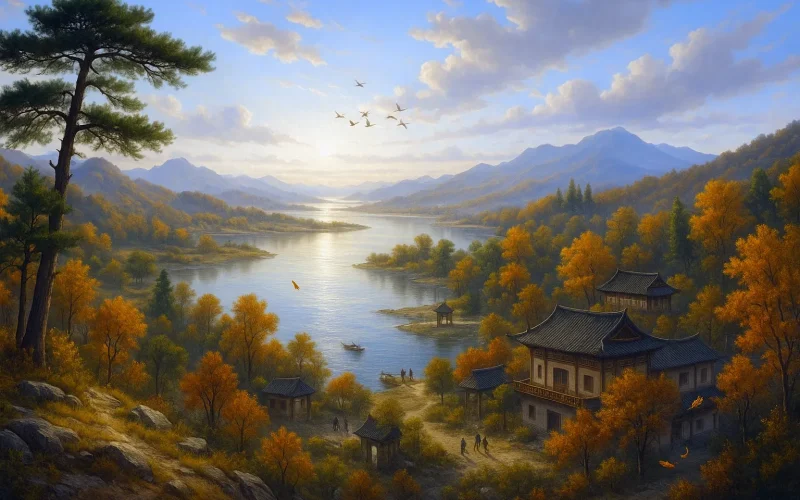
On a northern peak among white clouds
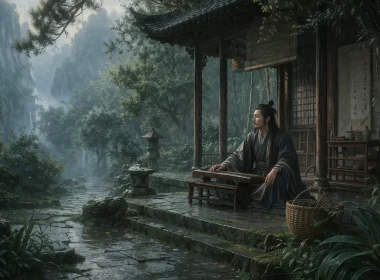
You have found your hermitage of peace;
And now, as I climb this mountain to see you,
High with the wildgeese flies my heart.

The quiet dusk might seem a little sad
If this autumn weather were not so brisk and clear;
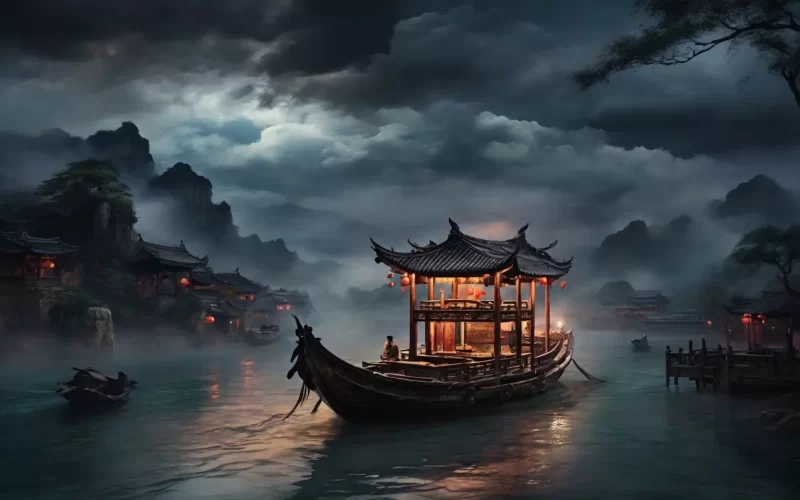
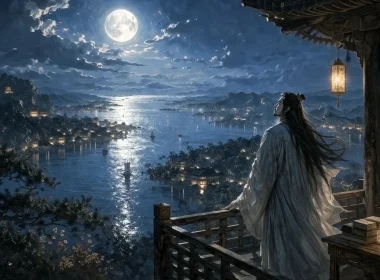
I look down at the river bank, with homeward-bound villagers
Resting on the sand till the ferry returns;
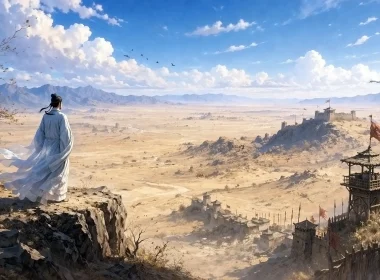
There are trees at the horizon like a row of grasses
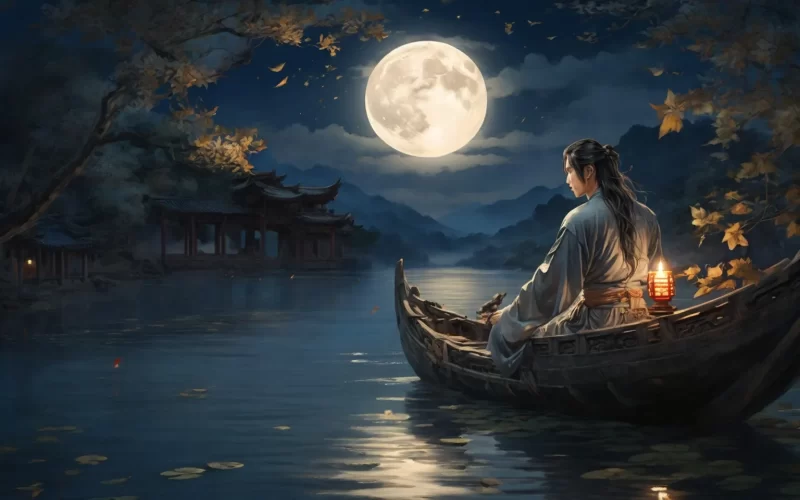
And against the river's rim an island like the moon
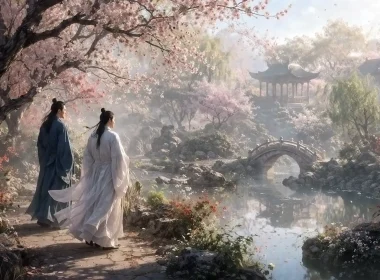
I hope that you will come and meet me, bringing a basket of wine --
And we'll celebrate together the Mountain Holiday.
Original Poem
「秋登兰山寄张五」
孟浩然
北山白云里,隐者自怡悦。
相望始登高,心随雁飞灭。
愁因薄暮起,兴是清秋发。
时见归村人,沙行渡头歇。
天边树若荠,江畔洲如月。
何当载酒来,共醉重阳节。
Interpretation
This poem was written during Meng Haoran’s years of reclusion in Xiangyang. Based on its mood and imagery, it likely dates from after 732 AD, the final phase of his life when he had completely abandoned hope of officialdom and settled peacefully at his South Garden estate. Zhang the Fifth refers to Zhang Yin, who ranked fifth among his siblings. He was a fellow townsman and close friend of Meng Haoran, as well as a painter-recluse. Zhang Yin once served as Vice Director of the Ministry of Justice but later resigned and retired, maintaining close ties with Wang Wei, Meng Haoran, and others. Wang Wei wrote three poems playfully titled “Presented to My Younger Brother Zhang Yin,” depicting this “brother” living the life of a hermit in the Zhongnan Mountains, “shutting his door to read history books, opening it to clouds and streams.” Meng Haoran exchanged verses with him, their friendship running deep.
The poem’s title reads “Climbing Orchid Mountain in Autumn, Sent to Zhang the Fifth.” Orchid Mountain is believed to be Mount Wan near Xiangyang (some say Stone Gate Mountain), a place Meng Haoran often visited. As the Double Ninth Festival approached, the poet climbed alone, gazing into the distance at white clouds over the northern mountains, wild geese flying south. In the twilight, villagers returned to their ferry crossings, while sandbars along the river gleamed like the moon. The clearer and more tranquil the autumn landscape before him, the more persistent and unshakeable grew his longing for his old friend. And so he wrote this poem, sending it far away to the friend who, like himself, had chosen the path of reclusion.
Within the poem, two images of “recluses” stand side by side. The opening line, “North Mountain, amid white clouds—the recluse finds joy there,” draws on Tao Hongjing’s verse: “What do I have in the mountains? / Plenty of white clouds atop the peaks. / I alone find joy in them— / I cannot bear to send you some.” It depicts the nameless recluse of North Mountain, a portrait of Zhang Yin, and also Meng Haoran’s confirmation of his own identity. The line “Gazing toward you, I climb high” reveals that although poet and friend each dwell in separate mountains, through climbing and looking into the distance, they achieve a spiritual encounter. This state of “being apart yet gazing toward each other” forms the poem’s most touching emotional structure: true kindred spirits need not face each other day and night; they need only, under the same autumn sun and amidst the same cries of wild geese, each climb their own height and gaze into the distance—and their hearts will already be one.
First Couplet: “北山白云里,隐者自怡悦。”
Běi shān bái yún lǐ, yǐn zhě zì yí yuè.
North Mountain, amid white clouds—
The recluse finds joy there.
Explication: The poem opens with a realm of lofty clarity. North Mountain is where Zhang Yin dwells (some say it refers to the Zhongnan Mountains); white clouds are the classic image of reclusive life—cut off from worldly dust, free from striving. The poet borrows Tao Hongjing’s phrasing but transforms the aloofness of “I alone find joy in them—I cannot bear to send you some” into the serene contentment of “the recluse finds joy there.” This is Meng Haoran’s unique warmth: the recluse in his brush is not a proud figure standing apart from the world, but someone at peace with himself, breathing in harmony with heaven and earth. This line describes the friend’s state, yet it is also the poet’s self-projection. By this time, he himself was already the “hidden one” beneath the moon of Deer Gate Mountain, the lute-bearer in the lotus-scented breeze of South Pavilion. He understood this “joy” as he understood the effortless drifting of white clouds from mountain caves. Yet understanding aside, at this moment of climbing and gazing into the distance, he still felt the impulse to “gaze toward”—joy is the constant state of the recluse; longing is the undertone of human feeling. The two do not contradict each other; rather, they create the rich texture within a life of reclusion.
Second Couplet: “相望始登高,心随雁飞灭。”
Xiāng wàng shǐ dēng gāo, xīn suí yàn fēi miè.
Only to gaze toward you did I climb high;
My heart follows the wild geese as they fly, disappearing.
Explication: This couplet marks the turning point where emotion moves from hidden to manifest. The phrase “gaze toward” unveils the unspoken concern beneath the recluse’s self-sufficiency in the first two lines. The poet did not climb simply to enjoy autumn; his ascent has a specific emotional direction—toward that person, that mountain, that friendship which distance has never dimmed. “My heart follows the wild geese as they fly, disappearing” is the poem’s most moving image. Wild geese are messengers of letters and longing in classical poetry, but Meng Haoran does not ask the geese to carry a message; instead, he lets his “heart” follow their wings toward the friend’s direction. “Disappearing” is not vanishing—it is merging: merging into the flock, into the distant sky, into the twilight that the friend, too, must be gazing upon. The poet need not send a letter, for he has sent himself.
Third Couplet: “愁因薄暮起,兴是清秋发。”
Chóu yīn bó mù qǐ, xìng shì qīng qiū fā.
Sadness rises with the approach of dusk;
Joy springs forth from the clear autumn air.
Explication: This couplet captures the duality of the poet’s mood as he climbs. “Dusk” is the hour of return—villagers come back to their ferries, birds fly to their nests—yet the one the poet gazes toward cannot come back, and so sadness arises. But this sadness is not heavy or oppressive; it is gently held up by the words “clear autumn.” Autumn skies are high and crisp, the heavens clear, all things bright—this season itself carries an uplifting power. Sadness and joy stand side by side, not in opposition but in coexistence. This is the true reflection of Meng Haoran’s late-life state of mind: he had long accepted his fate, no longer feeling the anxiety of “wanting to cross but lacking a boat,” no longer writing the bitter indignation of “the gifted rejected by the enlightened ruler.” His sadness is faint, lingering, like the mist of an autumn evening; his joy is unhurried, self-sufficient, like the distant view from a height. The two intertwine to form the complete emotional fabric of this autumn climb.
Fourth Couplet: “时见归村人,沙行渡头歇。”
Shí jiàn guī cūn rén, shā xíng dù tóu xiē.
Now and then I see villagers returning home—
Walking on sandy shores, resting at the ferry landing.
Explication: This couplet draws the scene from afar to near, and also settles the emotion. Earlier lines described wild geese, the sky, and twilight—all distant views. Now the poet’s gaze returns to the human world, to ordinary scenes that have nothing to do with him yet bring comfort. The “villagers returning home” form a subtle contrast with the poet: they, too, are on their way back, but they return to a specific home, a specific village. The poet’s “return” is a return to the mountains, to solitude, to a Double Ninth Festival without his friend. Yet the poet harbors no resentment. He simply watches these returning people, watches the sandy paths, the ferry landing, the ordinary life continuing in the twilight. This act of watching is itself a gentle reconciliation with the world.
Fifth Couplet: “天边树若荠,江畔洲如月。”
Tiān biān shù ruò jì, jiāng pàn zhōu rú yuè.
Trees at the horizon look like shepherd’s purse;
Sandbars by the river bend like the moon.
Explication: This couplet is the ultimate expression of distant viewing in Tang poetry. Gazing to the farthest limit, objects transform with distance: towering trees shrink to tiny herbs, vast sandbars curve into crescent moons. This is the law of optical perspective, but even more, it is the visual externalization of inner feeling—when longing reaches its extreme, everything in the distance loses its shape, becoming the infinitely reduced figure of the one in the heart. The line “trees at the horizon look like shepherd’s purse” adapts Xue Daoheng’s “distant plains, trees like shepherd’s purse,” but Meng Haoran places this scene by the river, on the eve of moonlight, adding a touch of ethereal beauty. The sandbar curving like the moon is both a precise capture of natural scenery and a hint of the reunion anticipated in the next couplet—the moon will eventually be full, people will eventually gather, and the longing of this moment will eventually turn into wine shared at the Double Ninth Festival.
Sixth Couplet: “何当载酒来,共醉重阳节。”
Hé dāng zài jiǔ lái, gòng zuì chóng yáng jié.
When will you bring wine and come,
That we may drink together, drunk on the Double Ninth Festival?
Explication: The poem closes with a question, channeling all the preceding gazing, longing, mingled sadness and joy, and quiet observation into this simple yet profound wish. It is not a fervent call, not an urgent plea, but something close to a murmured soliloquy—“When will you” conveys both hope and waiting: a promise certain to be fulfilled, yet tinged with the wistfulness of uncertain timing. “Drunk on the Double Ninth Festival” is the final destination of the poem’s emotion. The Double Ninth is a festival of climbing heights and of longing. Wang Wei wrote, “On festive occasions, doubly I miss my kin”; Meng Haoran writes, “When will you bring wine and come, that we may drink together?” The former speaks of brotherly yearning, the latter of a pact between kindred spirits. Two poets from Xiangyang, in the same autumn light, defined the emotional core of the Double Ninth in different ways: it is not about sorrow, but about anticipation; not about loneliness, but about the faith that reunion will come.
Holistic Appreciation
This poem is the pinnacle of Meng Haoran’s landscape-and-missing-a-friend poetry, and one of the most tenderly moving works in all of Chinese classical literature on the themes of “waiting” and “hope.” Its unique charm lies in its simultaneous completion of two narratives. On the surface, it is a spatial narrative of climbing high and gazing far: beginning with the white clouds over North Mountain, the poet climbs, sends off wild geese with his eyes, looks down on villagers, gazes to the treeline at the horizon and the moonlike sandbars, and finally arrives at the hope of drinking together on the Double Ninth. Space moves from near to far, from high to low, from humanity to heaven, forming a complete vista. Beneath the surface runs the emotional narrative of longing: from the recluse’s “self-joy,” to the concern of “gazing toward,” to the pursuit of “heart following wild geese,” to the complex interplay of sadness and joy, to the contrast with “returning villagers” and the fixation on “trees like shepherd’s purse and sandbars like the moon,” finally reaching the emotional terminus of “bringing wine to drink together.” Space carries emotion; emotion animates space. The two are inseparable, shadow and form.
Structurally, the poem unfolds in layers from far to near, from high to low, from others to self. The first couplet paints the distant scene of North Mountain’s white clouds; the second captures the dynamic of climbing and gazing; the third explores the inner weaving of twilight and autumn light; the fourth presents the everyday scene of villagers returning to their ferry; the fifth stretches vision to the farthest horizon; and the sixth concludes with the heartfelt hope of sharing wine on the Double Ninth. Between the six couplets, the field of vision moves from distant to near, from concrete to abstract, from outer to inner, like ink washes layered in a Chinese painting, finally settling on the simplest of wishes.
Thematically, the poem’s core lies in the tension between “gazing toward” and “drinking together.” The “gaze” in “only to gaze toward you did I climb high” is a gaze across a thousand miles; the “will” in “when will you bring wine and come” is the faith that meeting will someday happen. Between this “gaze” and this “will” lie the enduring length of longing and the steadfastness of friendship—though for now we can only gaze toward each other, I believe that one day we will drink together. It is this expectation—suspended yet never abandoned—that gives the poem its depth of feeling within apparent lightness, its strength within restraint.
Artistically, the poem’s most moving quality is its unique technique of “using painted scenes to express inner states, using distance to convey intimacy.” The poet uses the perspectival distortion of “trees at the horizon look like shepherd’s purse; sandbars by the river bend like the moon” to capture the persistence of straining to see; he uses the surreal imagination of “my heart follows the wild geese as they fly, disappearing” to convey the tacit understanding of kindred spirits. He needs no response, no confirmation of an appointment; simply climbing and gazing in the same autumn light completes the entire ritual of friendship. This state of “being apart yet gazing toward each other” is the ideal form of friendship among Chinese literati.
Artistic Merits
- Layered Aesthetics of Spatial Composition: The poem’s spatial vision unfolds step by step—North Mountain’s white clouds form the distant view; climbing and gazing form the middle ground; returning villagers form the near view; treeline at the horizon marks the farthest limit; sandbars by the river mark the boundary of water and sky. Like a landscape painter, the poet uses words as brush and ink, layering wash upon wash to create the complete spatial depth of climbing and gazing.
- Tidal Rhythm of Emotion: The emotion in this poem does not advance in a straight line; it ebbs and flows like the tide. “Joy” is the calm of ebb; “heart following wild geese” is the surge of flood; “sadness rising” is the dark undertow; “joy springing forth” is the return of buoyancy; the final line “when will you bring wine” is the full tide of feeling, yet it does not end in a rush but in a fixed gaze. This masterful control of emotional release and restraint is the hallmark of Meng Haoran’s mature late style.
- Psychological Writing Through Visual Perspective: The couplet “trees at the horizon look like shepherd’s purse; sandbars by the river bend like the moon” is both a law of physical perspective and a projection of psychological space. Distant trees shrink to tiny herbs because the one who longs has strained his eyes to the limit; the sandbar curves like the moon because the one who hopes has already seen in his heart the fullness of reunion. Scenic language has here become wholly emotional language.
- Subtle Handling of Allusion: The opening line borrows from Tao Hongjing’s poem “What do I have in the mountains?” yet conceals the source, making the meaning feel as though it flows directly from the poet’s heart. The closing line “drunk on the Double Ninth Festival” implicitly invokes a whole constellation of festival customs—climbing heights, wearing dogwood, drinking chrysanthemum wine—yet not a single “custom” word appears, transforming ritual into pure emotional expectation. This ability to dissolve allusion into seamless expression is the mark of a consummate High Tang poet.
- Fluidity and Absence of Person: The entire poem unfolds from a first-person perspective, yet the word “I” never appears. The poet hides behind a series of actions—“climbing,” “heart following,” “seeing,” “gazing”—never stepping forward yet present everywhere. This concealment of subjectivity lends the poem a non-personal universality: every reader who climbs a height and thinks of someone can step into this autumn light.
Insights
This poem teaches us: the highest form of longing is not bitter waiting, not anxious questioning, not dragging the beloved back from afar, but completing, from one’s own position, a shared gaze upon the same sky. Meng Haoran and Zhang Yin—one on Orchid Mountain in Xiangyang, the other on the Zhongnan Mountains (or North Mountain)—were separated by ranges of hills and rivers, yet because each climbed high on the Double Ninth and gazed into the distance, they “gazed toward each other.” This gazing requires no response, no arrival, not even the knowledge that one is being gazed upon. It is one-way, silent, expecting nothing in return—yet it is the purest form of friendship.
Modern life is filled with instant communication; longing no longer needs to be entrusted to wild geese or river currents. We can make phone calls at any moment, send messages instantly, confirm each other’s existence and state at any time. Yet has this zero-distance connection perhaps diluted the intensity of longing? Meng Haoran tells us that the aesthetics of longing lie precisely in distance—not geographical distance, but the distance of holding someone in your heart, the patience to wait an entire autumn for a single meeting, the ritual solemnity of entrusting two lines of tears to the western shore of the sea.
“When will you bring wine and come, that we may drink together on the Double Ninth Festival?” Whether this wish was ever fulfilled, we do not know. But the poem’s beauty lies precisely in its eternal suspension in the state of “when will”—a promise not yet kept, yet never abandoned. Life gains direction from these suspended expectations, just as a solitary boat dares to sail through the night because a lighthouse burns in the distance. On an autumn day a thousand years ago in Xiangyang, a poet in commoner’s robes climbed a height alone, watched the wild geese fly south, thought of a friend somewhere beyond the mountains and waters. He did not know when his friend would come, nor how many more Double Ninth Festivals he would live to see. He simply took the longing of that moment and turned it into a poem. Then he let the poem wait for him.
Poem translator
Kiang Kanghu
About the poet
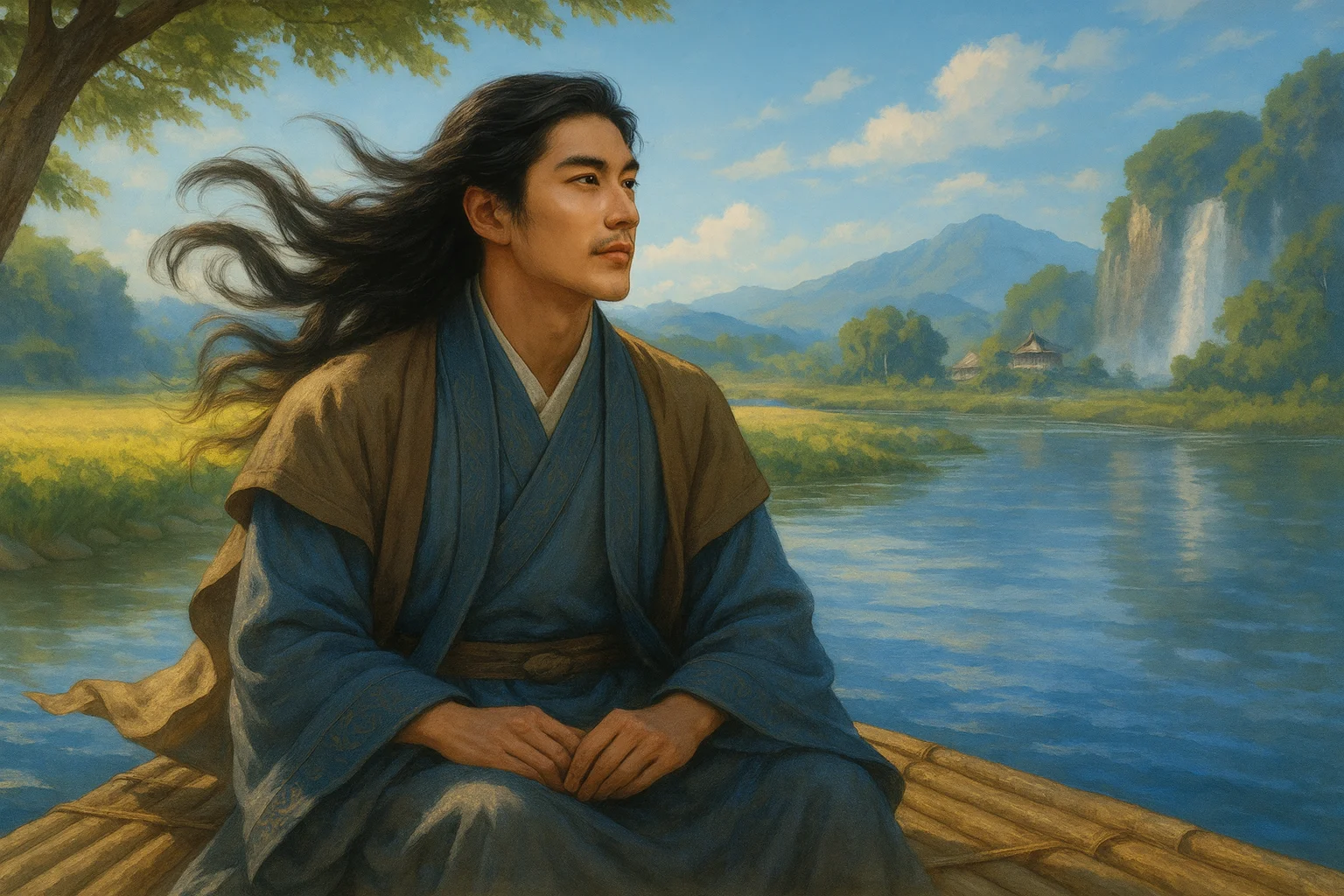
Meng Haoran (孟浩然 689 - 740), a native of Xiangyang, Hubei Province, was a renowned landscape and pastoral poet of the Tang Dynasty. In his early years, he lived in seclusion on Mount Lumen, reading for his own pleasure. At the age of forty, he traveled to the capital to take the jinshi examination but failed. Thereafter, he remained a commoner for the rest of his life, roaming the Wu and Yue regions and finding contentment in poetry and wine. He excelled in five-character verse, with a style that is light and natural, often depicting the pleasures of landscapes and reclusion. He is regarded as a representative of the High Tang landscape and pastoral poetry school. His collected works, Meng Haoran Ji, have been handed down, and his poetry exerted a profound influence on later hermitic poetic traditions.