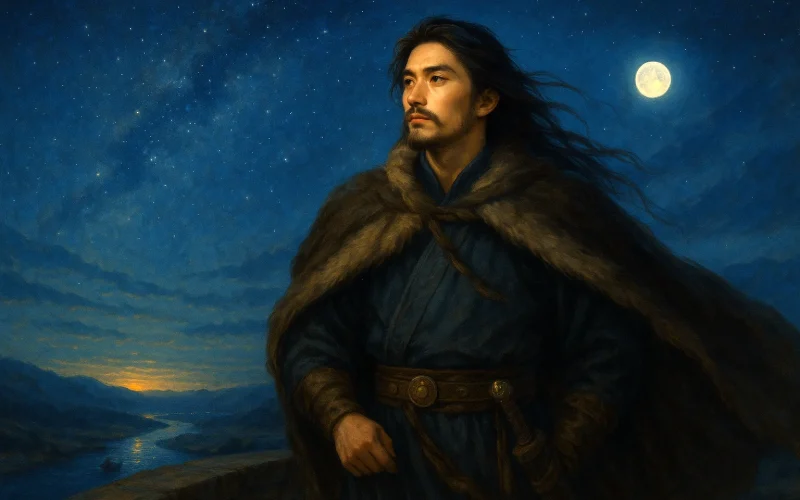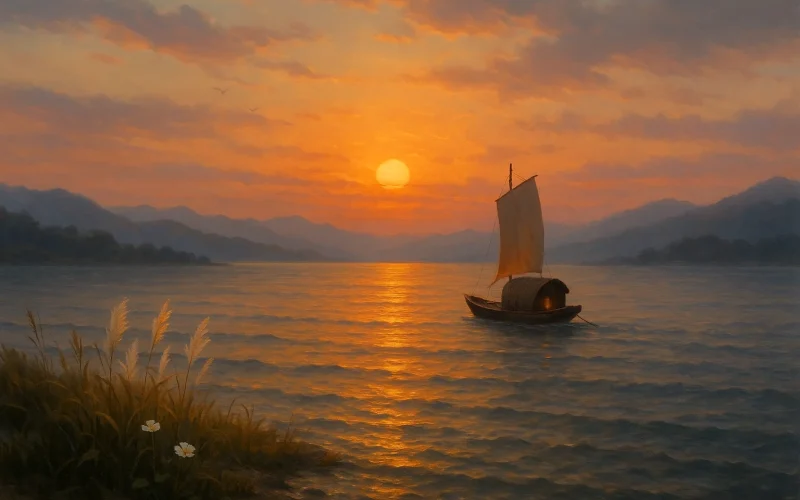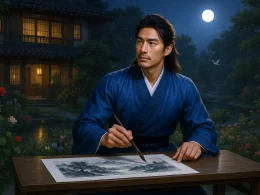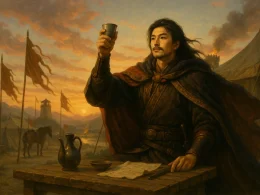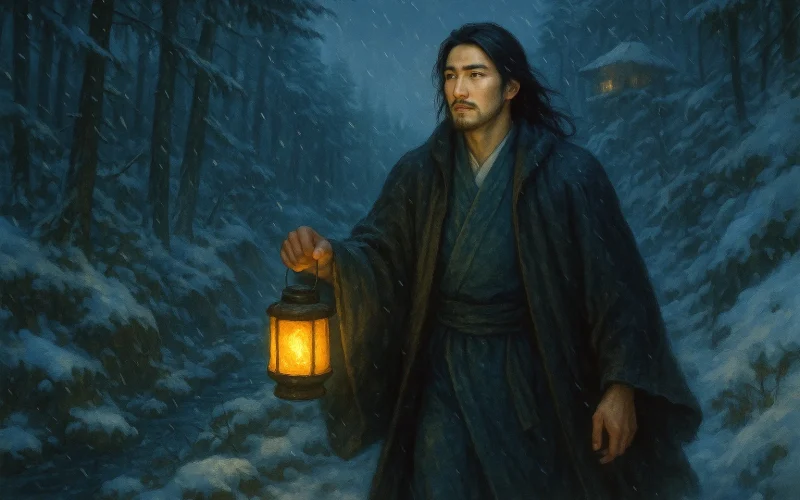
Liu Zhangqing (刘长卿 c. 726 – c. 786), a native of Xuancheng, Anhui Province, was a poet of the Mid-Tang Dynasty. He obtained the jinshi degree (presented scholar) in the late Tianbao era and successively held official posts such as Sheriff of Changzhou and Investigating Censor. Due to his upright and unyielding character, he was exiled twice. His poetry, particularly his five-character verses, achieved the highest distinction, often depicting the melancholy of exile and the joys of reclusion in landscapes. His poetic style is refined, elegant, and ethereal, blending a desolate undertone with the meticulousness characteristic of the Ten Talented Poets of the Dali era. He excelled in using plain sketching to create an atmosphere of tranquil emptiness and profound remoteness. As a pivotal poet bridging the High Tang and Mid-Tang periods, his work inherits the idyllic charm of Wang Wei and Meng Haoran while foreshadowing the bleak and cool elegance of Dali poetry. He exerted a certain influence on late Tang poets such as Yao He and Jia Dao, who belonged to the "painstaking school."
Major Works
Life
Liu Zhangqing, courtesy name Wenfang, was a native of Xuancheng (present-day Xuancheng City, Anhui Province), according to some sources; others claim he was from Hejian (present-day Hejian City, Hebei Province). He later moved to Luoyang. He was born around the fourteenth year of the Kaiyuan era of Emperor Xuanzong (c. 726 AD) and died around the sixth year of the Zhenyuan era of Emperor Dezong (c. 790 AD), living approximately sixty-five years. He was an important representative of the Dali poetry circle in the Mid-Tang dynasty, renowned for his five-character verse, and styled himself the "Great Wall of Five-Character Poetry." He enjoyed great fame during the Dali and Zhenyuan eras.
Liu Zhangqing's early years are somewhat obscure in historical records. He was born into an official family, but its fortunes had declined, so he had to make his own way in the world from an early age. He studied diligently from childhood, read widely, and was especially skilled in poetry. Around the Tianbao era, he arrived in Chang'an to begin his quest for an official position. However, his path through the imperial examinations was quite rocky, and he failed repeatedly. During this period, he had the opportunity to become acquainted with famous literary figures of the time, interacting with great poets such as Wang Wei, Li Bai, and Du Fu. Although he was slightly younger, he was greatly appreciated by these predecessors.
In the fourteenth year of the Tianbao era (755 AD), the An Lushan Rebellion broke out. Liu Zhangqing fled south to avoid the chaos and took up residence in the Jiangnan region. The war allowed him to experience firsthand the suffering of a shattered nation and displaced families, and also gave him the opportunity to deeply observe the landscapes of Jiangnan and the hardships of the people's lives. This experience profoundly influenced his later poetic creation; the deep sorrow for his country and the poignant feelings about his own life in his poems largely stem from this period.
In the second year of the Zhide era of Emperor Suzong (757 AD), Liu Zhangqing finally passed the Jinshi examination, by which time he was already over thirty. After earning his degree, he was appointed Sheriff of Changzhou County (present-day Suzhou City, Jiangsu Province). However, soon after, he was imprisoned for some matter. The historical records do not detail the reason for this imprisonment; it may have been related to official factional strife. While in prison, he wrote poems such as "Presented to Censor Weize from the Prison," protesting his innocence. After his release, he was demoted to Sheriff of Nanba County in Panzhou (present-day Dianbai County, Guangdong Province). Nanba was located in Lingnan, a remote and desolate area. This demotion was a great blow to him, but it also deepened his poetic style.
During the Dali era of Emperor Daizong, Liu Zhangqing's official career began to improve somewhat. He successively held positions such as Censor in the Palace, Examining Secretary in the Ministry of Rites, and later was appointed Administrative Assistant to the Transport Commissioner, responsible for the Huainan and E'Yue circuits. During this period, he mainly served in the Jianghuai region, interacting and exchanging poems with poets active in Jiangnan at the time, such as Li Jiayou, Lang Shiyuan, Huangfu Ran, and Yan Wei, becoming a central figure among the Dali-era Jiangnan poets.
However, Liu Zhangqing had an upright and outspoken nature and was not adept at currying favor, so he was repeatedly sidelined in officialdom. Around the eighth year of the Dali era (773 AD), due to a disagreement with his superior, he was falsely accused of corruption and imprisoned again. He was subsequently demoted to Adjutant of Muzhou (present-day Jiande City, Zhejiang Province). Muzhou, located in western Zhejiang, had clear and secluded landscapes, and he spent several years of demoted life there. During this period, he created a large number of poems chanting landscapes and expressing his feelings, with his art reaching maturity.
In the first year of the Jianzhong era of Emperor Dezong (780 AD), Liu Zhangqing was transferred to be the Prefect of Suizhou (present-day Suizhou City, Hubei Province), and is known to posterity as "Liu Suizhou." While in office in Suizhou, he was diligent in government affairs and achieved considerable results. However, in the fourth year of Jianzhong (783 AD), Li Xilie, the Military Governor of Huaixi, rebelled, and his forces threatened Suizhou. Liu Zhangqing abandoned the city and fled to avoid the chaos in Huainan. This act of abandoning the city tarnished his reputation in his later years and became an indelible stain on his life.
Around the first year of the Zhenyuan era (785 AD), Liu Zhangqing retired due to old age and illness and lived in seclusion in Yangzhou. Around the sixth year of the Zhenyuan era (790 AD), he died of illness in Yangzhou, ending his difficult and troubled life.
Looking at his life as a whole, Liu Zhangqing lived through the reigns of four emperors – Xuanzong, Suzong, Daizong, and Dezong – and witnessed the entire process of the Tang dynasty's transition from prosperity to decline. His official career was full of frustrations: he was imprisoned twice, demoted twice, and in his later years was stained by the act of abandoning his city. Truly, his fate was full of misfortunes. Yet it was precisely these hardships that gave his poetry its profound reflections on life and its power of genuine emotion.
Stylistic Characteristics
Liu Zhangqing's poetry achieved its highest distinction in five-character verse, especially in the five-character regulated form (wuyan lüshi). He styled himself the "Great Wall of Five-Character Poetry." His themes are broad, mainly focusing on landscapes and reclusion, travel and farewells, and the feelings of demotion. Stylistically, his work is characterized by "elegant tranquility" and "plaintive subtlety," establishing a unique place for him in the Mid-Tang poetic scene.
The Great Wall of Five-Character Poetry
What Liu Zhangqing was most proud of in his life was his five-character poetry. In "Again Seeing Off Magistrate Pei Demoted to Jizhou" (重送裴郎中贬吉州), he called himself the "Great Wall of Five-Character Poetry." Although it was a self-deprecating remark, it also reflected his confidence in his achievements in this form. Looking at his actual creative output, his five-character regulated verse and five-character ancient-style verse indeed reached a very high artistic level.
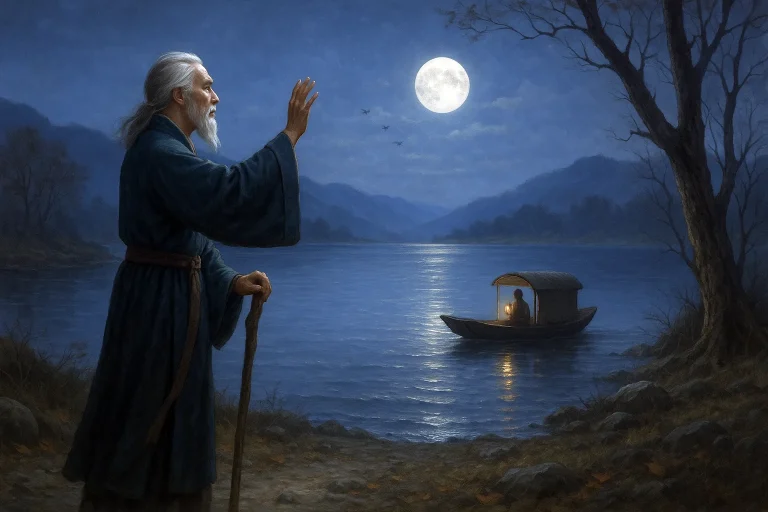
His five-character poetry excels in describing scenery, skillfully capturing the subtle changes in light and shadow and the emotional coloring of natural scenes. For example, in "Seeking the Recluse of Mount Chang, the Taoist of South Creek" (寻南溪常山道人隐居), the lines "一路经行处,莓苔见履痕。白云依静渚,春草闭闲门" use images of moss, white clouds, and spring grass to sketch a quiet reclusive environment. The language is simple, but the artistic conception is profound and far-reaching. Similarly, in "Happy that Censor Huangfu Visits My Villa at Green Stream" (碧涧别墅喜皇甫侍御相访), the lines "古路无行客,寒山独见君" use the simplest of strokes to express the joy at a friend's arrival – subtle yet powerful.
His five-character poetry is especially skilled in its openings, often capturing the reader from the very first line. For example, the opening of "Seeing Off Elder Li Lu" (送李录事兄) – "归客南行日,残花送马前" – points out the season of farewell and sets the mood of parting, naturally and wonderfully. The opening of "Viewing Lake Dongting from Yueyang Tower" (岳阳馆中望洞庭湖) – "万古巴丘戍,平湖此望长" – contrasts the ancient garrison with the vast lake, interweaving time and space and immediately creating an imposing atmosphere.
Landscape and Reclusion Poetry
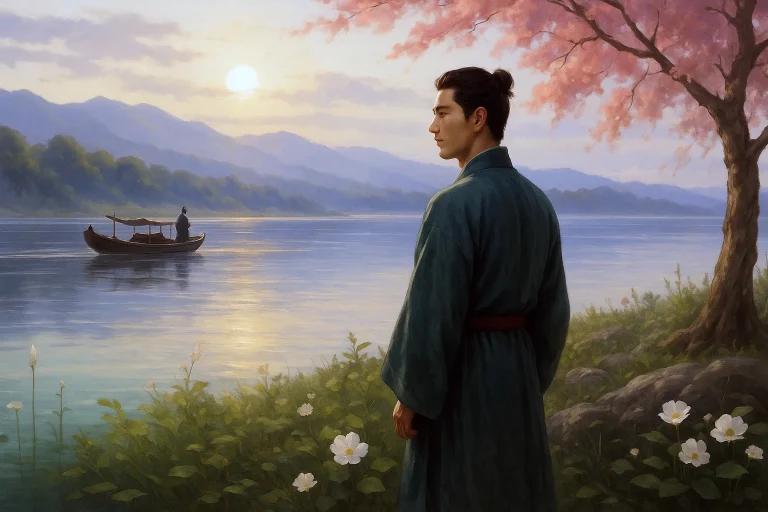
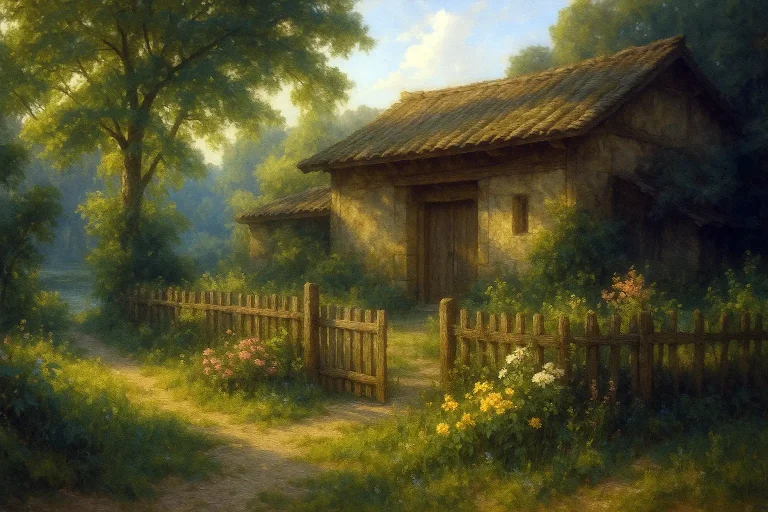
Liu Zhangqing lived in reclusion or resided amidst landscapes many times in his life, gaining a deep understanding of nature. His landscape and reclusion poetry inherited the tradition of pastoral poetry from Wang Wei and Meng Haoran, but also incorporated his personal feelings about his own life, forming a unique style that is elegant and tranquil, with a secluded and far-reaching conception.
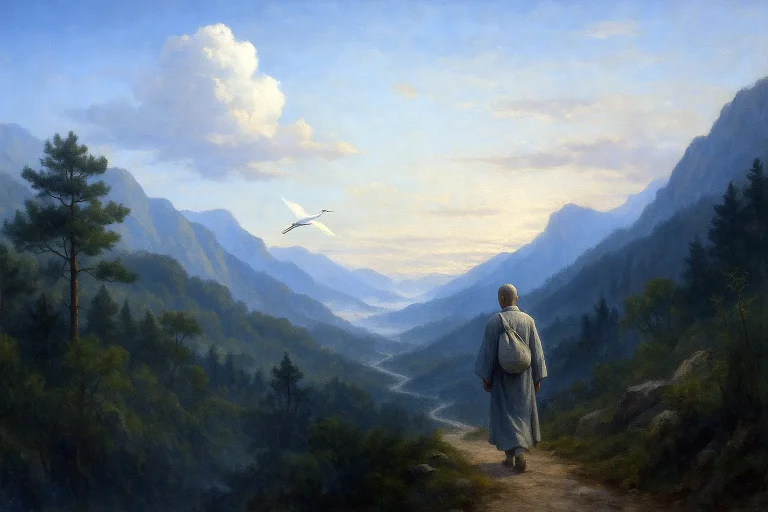
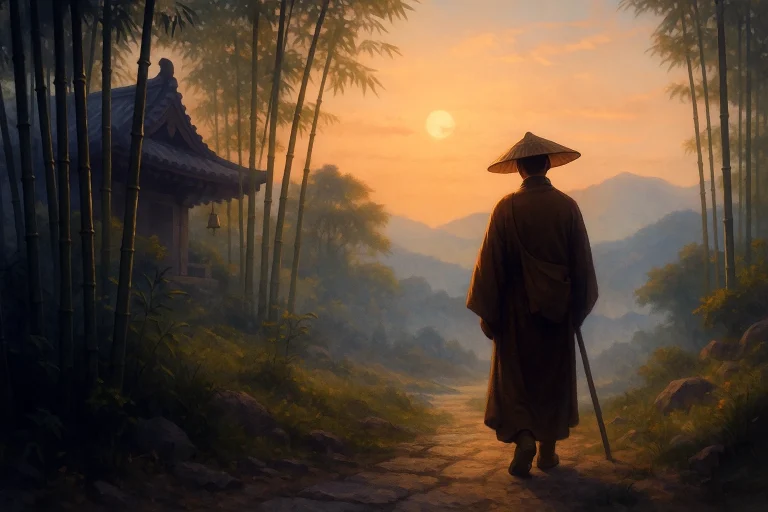
He was skilled at infusing a faint sense of Chan (Zen) Buddhism into his landscape poems, creating a conception where the self and the object are forgotten. For example, in "Seeking the Recluse of Mount Chang, the Taoist of South Creek," the lines "溪花与禅意,相对亦忘言" juxtapose the creek flowers with the sense of Chan, concluding with "forgetting words," creating an ethereal conception that captures the lingering charm of Wang Wei. Similarly, in "Seeing Off the Monk Lingche" (送灵澈上人), the lines "荷笠带斜阳,青山独归远" use the setting sun and green hills as a backdrop to sketch the figure of the monk Lingche walking alone back into the distant mountains. The scene is pure, quiet, and far-reaching – poetry in painting, painting in poetry.
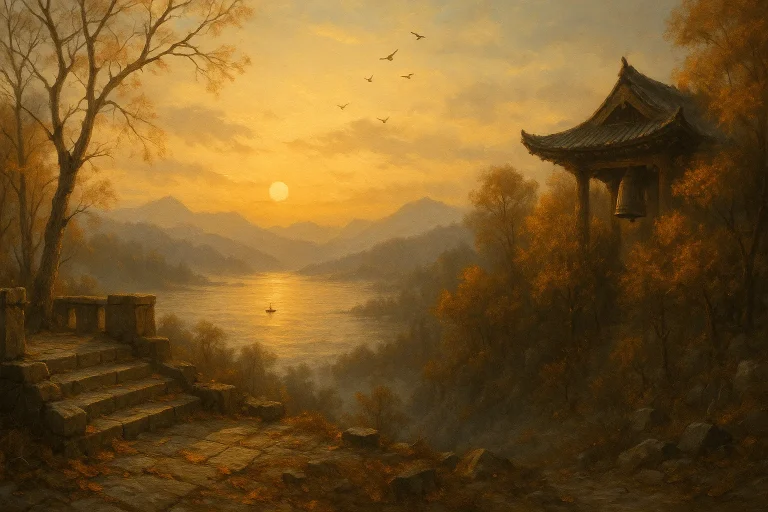
However, Liu Zhangqing's landscape poetry differs from that of the High Tang landscape poets. The landscapes in the hands of High Tang poets are often full of life and vitality; whereas those in Liu Zhangqing's hands have an added touch of cold stillness and desolation. This is closely related to his living in the declining Dali era and his own troubled life experiences. For example, in "Happy that Censor Huangfu Visits My Villa at Green Stream," the lines "古路无行客,寒山独见君" contrast "no traveling companions" with "seeing you alone," not only describing the secludedness of the place of reclusion but also revealing the poet's inner solitude.
Farewell Poems
Liu Zhangqing wandered throughout his life, spending more time apart from friends than together, and thus wrote many farewell poems. His farewell poems are emotionally sincere. He excels at expressing emotion through scenery, blending the sorrow of parting into specific landscapes to achieve a fusion of feeling and scene.
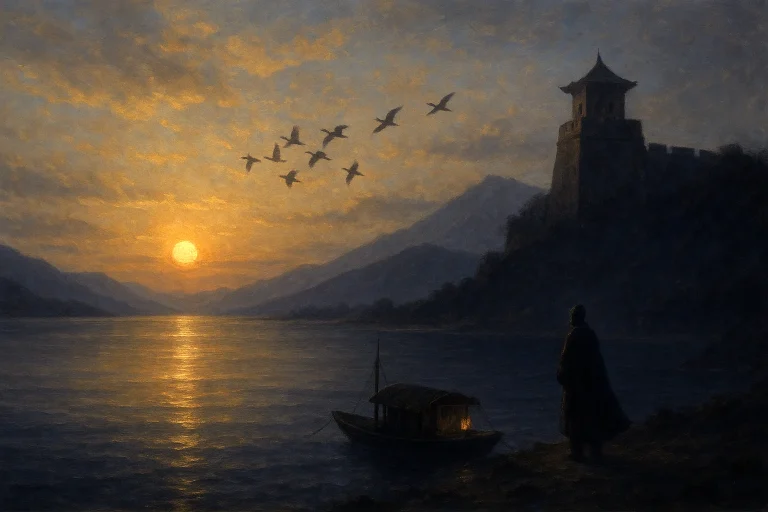
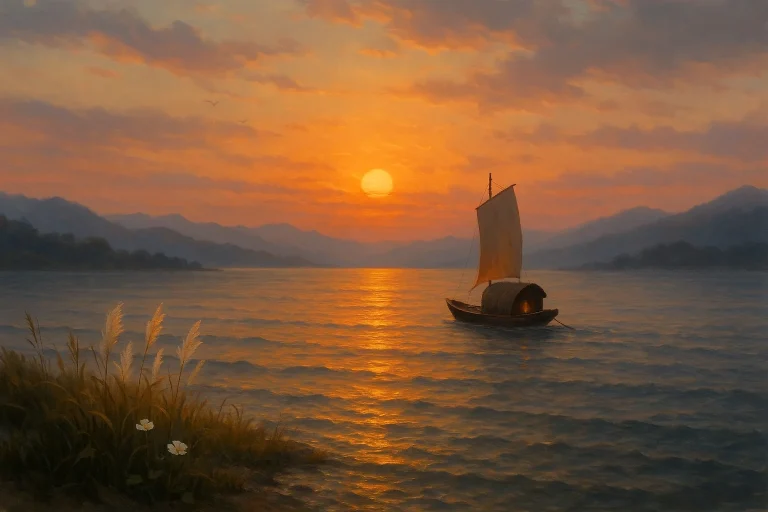
For example, in "Seeing Off Elder Li Lu," the lines "莫道野人无外事,开田凿井在青山" console a friend with the aspiration to retire, the emotion sincere and the conception lofty. Similarly, in "Feast in Farewell to Wang Shiyi's Southern Journey" (饯别王十一南游), the lines "飞鸟没何处,青山空向人" use the image of a bird disappearing into the horizon and green hills facing the person left behind to express concern and melancholy for a friend's distant journey – subtle yet powerful.
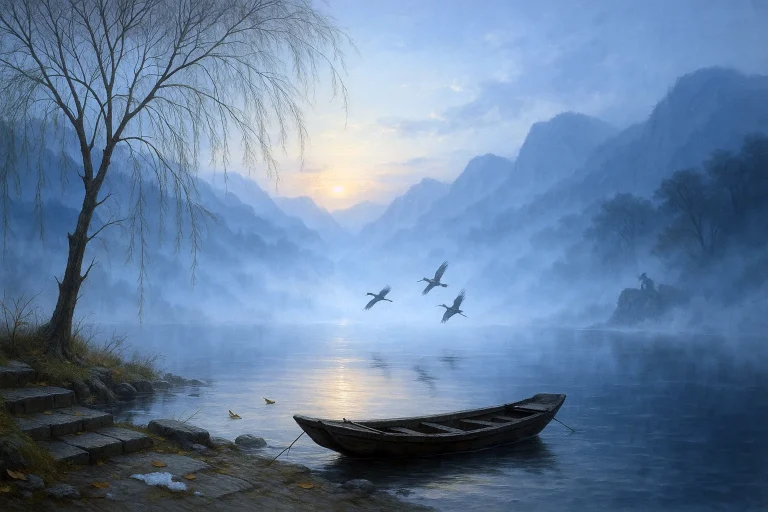
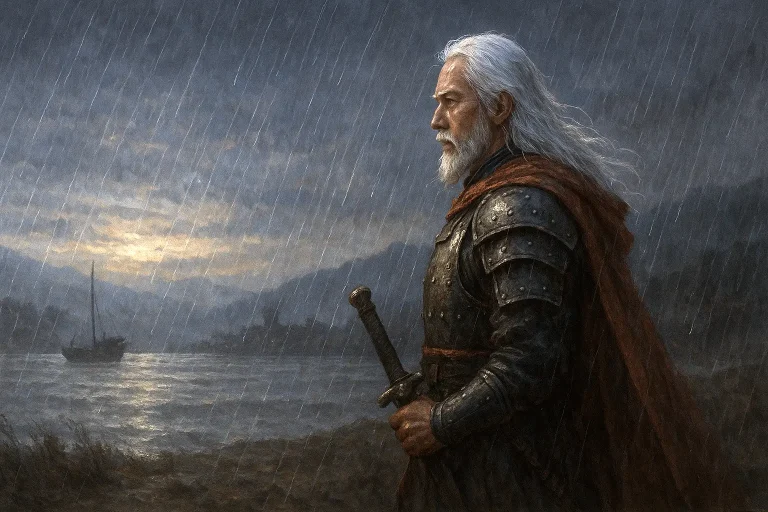
His farewell poems are especially skilled in the final couplet, often opening up a new dimension and leaving a lasting resonance. For example, in "Again Seeing Off Magistrate Pei Demoted to Jizhou," the lines "猿啼客散暮江头,人自伤心水自流" use the juxtaposition of "人自伤心" and "水自流" to express the helplessness of parting and the eternity of nature, leaving an endless aftertaste.
Demotion Poems
His two experiences of demotion led Liu Zhangqing to write a large number of poems on the theme of demotion. This category of poetry is the most emotionally profound and artistically mature. He often merges his personal misfortunes with the vastness of history and space, expressing his reflections on fate and his thoughts on life.
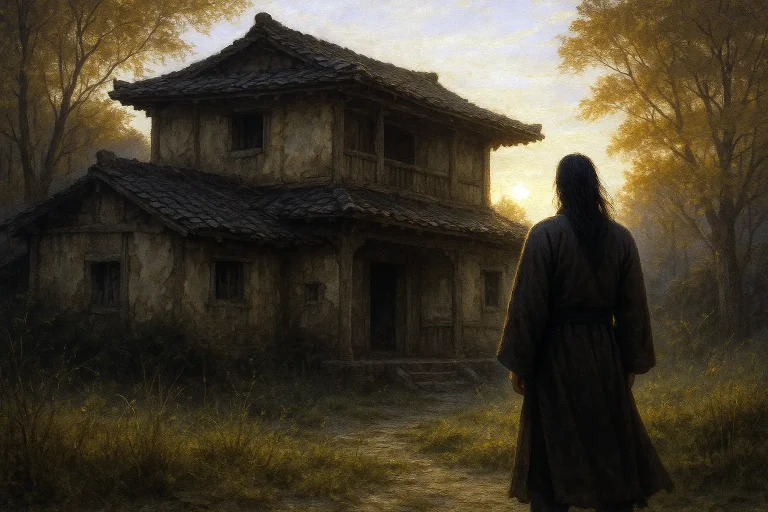
For example, in "Passing by Jia Yi's Residence in Changsha" (长沙过贾谊宅), the lines "三年谪宦此栖迟,万古惟留楚客悲" compare himself to Jia Yi, linking his own demotion with that of the Han dynasty scholar, giving his personal misfortune a sense of historical weight. Similarly, in "Climbing the Ancient Wall of Yugan County" (登余干古县城), the lines "官舍已空秋草没,女墙犹在夜乌啼" use the desolation of the ancient city to reflect the sorrow within, creating a vast and boundless conception.
His demotion poems also often reveal a longing for home and a yearning for reclusion. For example, in "Written on New Year's Day" (新年作), the lines "乡心新岁切,天畔独潸然" use homesickness at the New Year to convey the bitterness of demotion – the emotion is sincere. In "Written Climbing the Yuyue Pavilion after Being Demoted" (负谪后登干越亭作), the lines "天南愁望绝,亭上柳条新" use the new willow branches to contrast the utter despair of sorrow – subtle and profound.
Literary Influence
Liu Zhangqing occupies an important position in the Dali poetry circle, and his influence is profound and lasting.
Representative Poet of the Dali Style
Liu Zhangqing, along with Qian Qi, Lang Shiyuan, Li Jiayou, and others, is known as one of the "Ten Talents of the Dali Era" (the exact list varies, and Liu is usually grouped with the Jiangnan poets of the Dali era). He is an important representative of the Dali poetic style, and his work typically embodies its general characteristics of "elegant tranquility" and "plaintive subtlety." Gao Zhongwu, in his Zhongxing Jianqi Ji (Anthology of Poetry from the Revival Era), selected nine of his poems, the most in the entire collection, and commented: "Zhangqing had official talent, but was upright and offended his superiors, suffering two demotions. His poetic style, though not novel, is highly polished. Generally, in poems over ten lines, the language and meaning are somewhat repetitive, especially in the closing couplets. His thoughts are sharp, but his talent is narrow." Although this evaluation points out his shortcomings, it also acknowledges his status at the time.
The Established Reputation and Status of the "Great Wall of Five-Character Poetry"
Liu Zhangqing styled himself the "Great Wall of Five-Character Poetry," and critics throughout the ages have generally acknowledged his achievements in this form. Ji Yougong of the Song dynasty, in his Tangshi Jishi (Records of Tang Poetry), wrote: "Zhangqing was renowned for his poetry during the Shangyuan and Baoying eras, and was truly the 'Great Wall of Five-Character Poetry'." Hu Yinglin of the Ming dynasty, in his Shisou (Poetic Depths), commented: "Liu Zhangqing's five-character regulated verse is elegant and tranquil, truly the best of the Dali era." Shen Deqian of the Qing dynasty, in his Tangshi Biecai (A Special Anthology of Tang Poetry), selected more than twenty of his poems, the vast majority being five-character verse, demonstrating his status in the eyes of Qing critics.
An Important Link in the Tradition of Landscape Poetry
Liu Zhangqing's landscape poetry inherited the tradition of pastoral poetry from Wang Wei and Meng Haoran, but also incorporated his personal feelings about his own life, forming a unique style of elegant tranquility and secluded, far-reaching conception. He carried on the High Tang tradition of landscape poetry and paved the way for the landscape and reclusion poetry of Wei Yingwu and Liu Zongyuan, occupying an important place in the developmental history of Tang landscape poetry. His works often infuse deep reflections on life into landscape descriptions, expanding the expressive realm of the genre.
A Pioneer of Demotion Literature
Liu Zhangqing was demoted twice and wrote a large number of poems on the theme of demotion, becoming an important representative of demotion literature in the Tang dynasty. His demotion poems merge his personal misfortunes with the vastness of history and space, expressing his reflections on fate and his thoughts on life, providing a model for later poets such as Liu Zongyuan and Liu Yuxi in their demotion poetry. His poem "Passing by Jia Yi's Residence in Changsha" is a model work of expressing feelings through historical allusion, profoundly influencing later creations on similar themes.
Influence on Later Generations
Liu Zhangqing's poetry enjoyed a high reputation in later generations. Song dynasty poets such as Lu You and Yang Wanli drew much inspiration from his work. During the Ming and Qing dynasties, with deeper research into Mid-Tang poetry, Liu Zhangqing's status was further confirmed. Wang Shizhen of the Qing dynasty, in his poetics advocating "spiritual resonance," greatly admired the elegant and tranquil, secluded and far-reaching style of Liu Zhangqing's poetry. Li Tiaoyuan, in his Yucun Shihua (Yucun's Poetry Talks), stated: "Liu Zhangqing's poetry is pure and flowing, best capturing the essence of the poets."
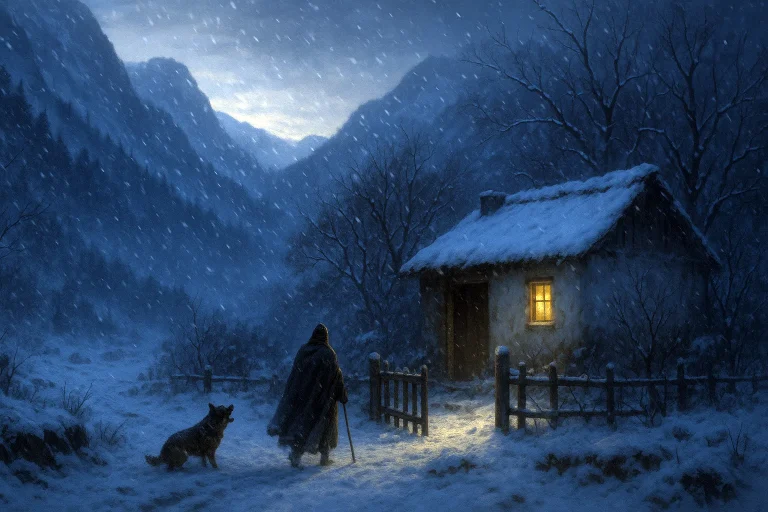
In summary, Liu Zhangqing was an outstanding representative of the Dali poetry circle in the Tang dynasty, renowned for his five-character verse and styling himself the "Great Wall of Five-Character Poetry." His official career was full of frustrations; he was demoted twice and wandered everywhere. His poetry integrates themes of landscape and reclusion, travel and farewell, and the feelings of demotion, forming a unique style that is elegant and tranquil, plaintive and subtle. Famous lines such as "风雪夜归人" from "Stopping at a Farmhouse on a Snowy Night" (逢雪宿芙蓉山主人), "秋草独寻人去后" from "Passing by Jia Yi's Residence in Changsha," and "溪花与禅意" from "Seeking the Recluse of Mount Chang, the Taoist of South Creek" have been recited through the ages, remaining fresh and timeless. His creative work serves as a bridge between past and future, carrying on the tradition of pastoral poetry from Wang Wei and Meng Haoran and paving the way for the landscape and reclusion poetry of Wei Yingwu and Liu Zongyuan, occupying an important place in the developmental history of Tang landscape poetry. Although Gao Zhongwu criticized him for having "sharp thoughts but narrow talent," the title "Great Wall of Five-Character Poetry" is truly well-deserved.