


After these ten torn wearisome years
We have met again. We were both so changed
That hearing first your surname, I thought you a stranger -
Then hearing your given name, I remembered your young face...

All that has happened with the tides
We have told and told till the evening bell.

Tomorrow you journey to Yo-chou,
Leaving autumn between us, peak after peak.
Original Poem
「喜见外弟又言别」
李益
十年离乱后,长大一相逢。
问姓惊初见,称名忆旧容。
别来沧海事,语罢暮天钟。
明日巴陵道,秋山又几重?
Interpretation
Li Yi, a Mid-Tang poet, lived during the reigns of Emperors Daizong and Dezong, personally experiencing the An Lushan Rebellion and the turbulent years that followed. This rebellion lasted eight years, swept across the north, and left countless families displaced, with kin separated. This poem precisely describes the experience of reuniting with and then parting from a cousin amidst the warfare. The four characters, "ten years of separation and turmoil" (十年离乱, shí nián lí luàn), clarify the span of time and also point to the historical backdrop. The An Lushan Rebellion began in 755 CE and was quelled in 763, but afterwards, separatist military governors and continuous warfare plagued the land. "Ten years" may not be an exact number but denotes a long duration. The poet and his cousin parted in childhood, each struggling to survive in the chaotic world, and by the time they reunited, both were already adults.
The most moving part of the poem lies in the two lines: "We ask each other's names, shocked as if at first sight, / And recall old features, names now being said." (问姓惊初见,称名忆旧容). Parted in youth, upon meeting again their appearances had so changed they did not recognize each other face to face. Only after asking for the surname did they realize the person before them was kin; only upon mentioning the name did the childhood image slowly surface from memory. These fourteen characters incorporate warfare, separation, growth, forgetting, and recognition. Yet, before the joy of reunion could be fully savored, parting was already at hand. Tomorrow, the cousin would again set foot on the road to Baling; with autumn mountains layered upon layer, who knew when they would meet again? Li Yi does not write of his own sorrow, but merely asks, "How many ranges of autumn hills again?" (秋山又几重), hiding all his concern within those layered peaks and ridges.
First Couplet: "十年离乱后,长大一相逢。"
Shí nián lí luàn hòu, zhǎng dà yī xiāng féng.
Ten years parted by turmoil, we've grown up, and now we meet.
The opening is plain yet carries immense weight. "Ten years of separation and turmoil" is the backdrop, the national calamity, and also the familial sorrow. The two characters "grown up" (长大, zhǎng dà) are understated yet conceal untold hardships—how they survived, how they grew up during those ten years, the poem does not say, but readers can imagine. The word "now" (一, yī) in "now we meet" (一相逢, yī xiāng féng) expresses the chance nature and surprise of the reunion. In a chaotic era, separation is the norm, reunion an accident.
Second Couplet: "问姓惊初见,称名忆旧容。"
Wèn xìng jīng chū jiàn, chēng míng yì jiù róng.
We ask each other's names, shocked as if at first sight,
And recall old features, names now being said.
This couplet is the heart of the entire poem. Parted in youth, upon meeting again as adults, appearances utterly changed, to the point of not recognizing each other face to face. The five characters, "We ask each other's names, shocked as if at first sight" (问姓惊初见, wèn xìng jīng chū jiàn), express the cruelty of time to the fullest—those who should be closest need to confirm identities by asking for surnames. The next line, "And recall old features, names now being said" (称名忆旧容, chēng míng yì jiù róng), goes a step further: names are the key to memory; once mentioned, childhood images float up from the depths of time. These fourteen characters write the changes time works on people, the blurring and awakening of memory, with exquisite subtlety.
Third Couplet: "别来沧海事,语罢暮天钟。"
Bié lái cāng hǎi shì, yǔ bà mù tiān zhōng.
So much has happened since we parted—seas changed to mulberry fields;
Our talk done, we hear the vesper bells from the evening sky.
"Seas changed to mulberry fields" (沧海事, cāng hǎi shì) is an allusion, referring to the great changes in the world. Over these ten years, they experienced warfare, flight, famine, death—there was too much to say. The two characters "talk done" (语罢, yǔ bà) conceal how many words were left unsaid—it is not that there was nothing to say, but that night had fallen, the bells rang, and they had to stop. The vesper bells ringing mark both the passage of time and a harbinger of parting.
Fourth Couplet: "明日巴陵道,秋山又几重?"
Míng rì Bālíng dào, qiū shān yòu jǐ chóng?
You'll leave for Baling by the long, long way tomorrow;
How many ranges of autumn hills again?
The final couplet concludes with a question, pushing the sorrow of parting into the distance. The road to Baling is the path the cousin will travel tomorrow; the autumn hills are the obstacles along the way. The three characters "how many...again" (又几重, yòu jǐ chóng) express both the multitude of mountains and the depth of parting sorrow. The poet does not speak of reluctance, does not ask the date of return; he only asks how many ranges of hills there are—as if by counting the mountains, he could know the distance of the parting, could know how difficult meeting again will be.
Holistic Appreciation
This is a pentasyllabic regulated poem that masters complexity through simplicity. In its forty characters, it writes of a complete meeting and parting—from the surprise of reunion, to the immersion in conversation, to the melancholy of parting, progressing layer by layer, forming a seamless whole.
The first two couplets write the "joy" of reunion, yet a joy tinged with bitterness. Ten years of separation and turmoil, meeting again as grown-ups, should be a happy event; but the sense of unfamiliarity in "We ask each other's names, shocked as if at first sight" makes one realize how deeply time has changed a person. The third couplet writes the conversation, a continuation of the "joy," but once "the vesper bells" appear, joy begins to transform into sorrow. The final couplet writes the parting, which is "sorrow," yet sorrow without complaint, using only the question, "How many ranges of autumn hills again?" to push all emotion onto the distant mountains and the reader.
The most moving aspect of this poem lies in its restraint. The poet does not exaggerate the horrors of war, does not pour out the pain of separation, does not lament the sadness of parting. He simply records the details of the reunion—how they did not recognize each other, how mentioning the name brought the old appearance to mind, how they talked until dark, how he watches the other prepare to set out again. These details themselves convey all the emotion.
Artistic Merits
- Vivid Details, Using the Small to See the Large: The two lines, "We ask each other's names, shocked as if at first sight, / And recall old features, names now being said," cut in from the most minute instant, expressing the full weight of ten years of separation. Deep feeling is seen in the details; the vicissitudes of time are seen in the subtleties.
- Clear Temporal Progression, Natural Emotional Development: From "ten years of separation and turmoil" to "grown up," from "ask each other's names" to "recall old features," from "talk done" to "vesper bells," from "tomorrow" to "autumn hills," the progression of time is layered, and the emotion随之 shifts from joy into sorrow.
- Concluding with a Question, Leaving Endless Resonance: "How many ranges of autumn hills again?" offers no answer, only poses the question. Asking of the mountains, the road, the date of return, of fate. This question leaves all concern beyond those many-layered autumn hills, providing endless food for thought.
- Simple Language, Profound Meaning: The entire poem contains no obscure or difficult phrases; it is like everyday speech, yet it writes of warfare, separation, reunion, and parting with penetrating force. Sincerity is found in plainness; skill is revealed in simplicity.
- Combining the Real and the Imagined, Interweaving Time and Space: "So much has happened since we parted—seas changed to mulberry fields" is an imaginary description, containing all the storms of ten years; "Our talk done, we hear the vesper bells from the evening sky" is a real description, the present moment passing; "You'll leave for Baling by the long, long way tomorrow" is the future; "How many ranges of autumn hills again?" is space. Between the real and the imagined, time and space flow, giving the limited scope boundless capacity.
Insights
This poem writes of a reunion, and also of a parting, but at its core, it writes of time. First, it allows us to see how time changes people. "问姓惊初见"—the closest of kin actually need to confirm identities by asking for surnames. This is not forgetting; it is the force of time. Ten years is enough to turn a youth's face into an adult's, to turn familiarity into strangeness. The poet does not avoid this strangeness but records it truthfully. This makes one realize: time is not abstract; it concretely etches itself on people's faces, changes their voices, blurs their memories.
The line, "称名忆旧容" further reveals that while time can change people, it cannot completely erase the past. Names are the key to memory; once mentioned, those images buried by the years slowly resurface. This reminds us: people change in time, but the connections between people are often hidden in a name, a glance, an old phrase, waiting to be awakened.
Secondly, this poem allows us to see the impermanence of meetings and partings. Ten years of separation and turmoil, a sudden meeting, vesper bells ringing, parting again tomorrow. The gathering is so brief, the parting so long. The poet does not complain; he simply presents this impermanence. The question, "How many ranges of autumn hills again?" holds no answer, only resignation. This is not pessimism; it is clarity—a clear understanding that in a chaotic world, reunion is accidental, separation is the norm.
On a deeper level, this poem also makes one ponder: Amidst impermanence, what can people still grasp? Li Yi's answer is: grasp this moment. Grasp the shock of "asking each other's names," grasp the recollection of "recalling old features," grasp the conversation when "talk is done." These moments are all that people possess in time. Tomorrow, one must take to the road; how many ranges of autumn hills lie ahead is unknown. But tonight's vesper bells are still ringing in the ears.
Poem translator
Kiang Kanghu
About the poet
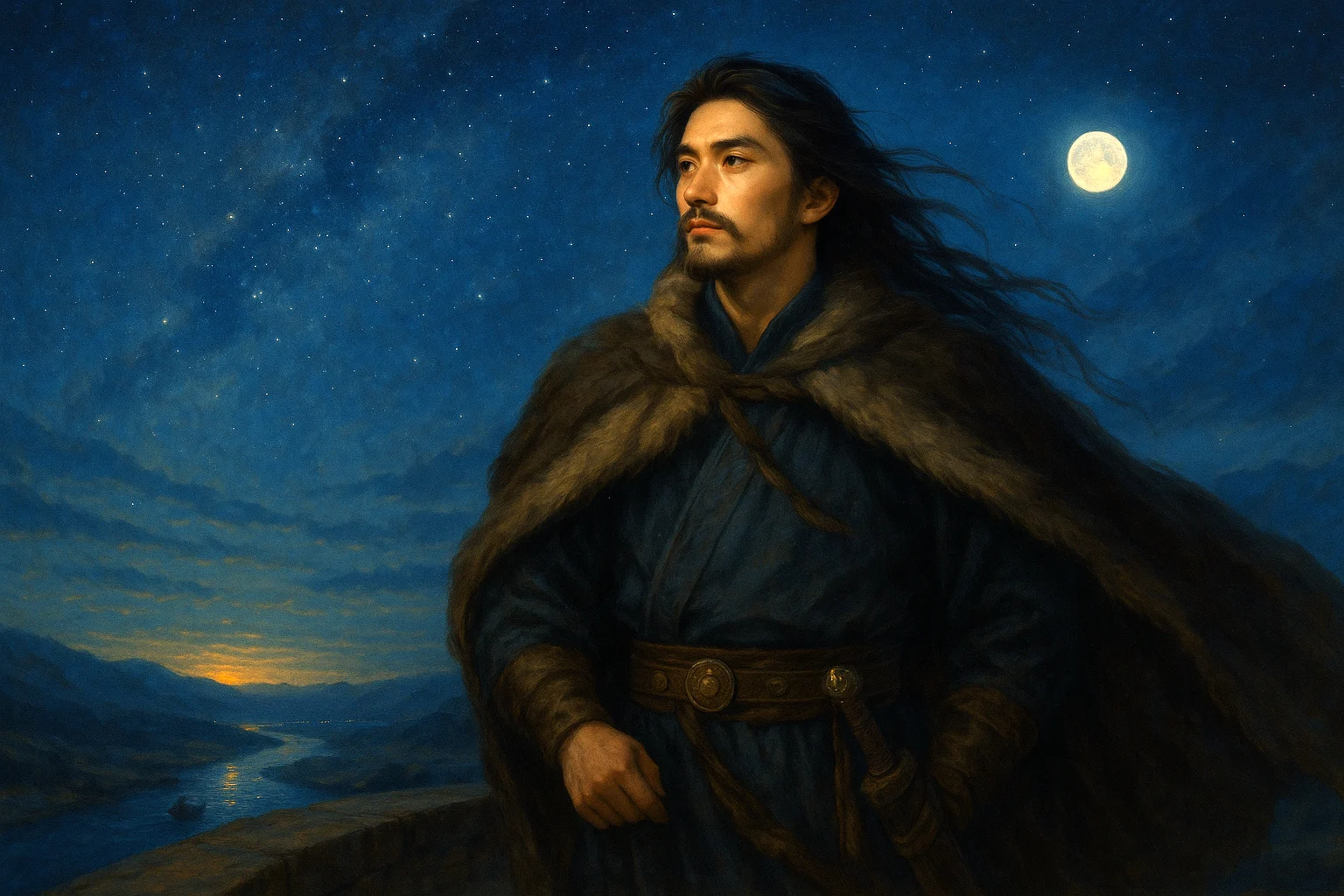
Li Yi (李益 748 - 829), a native of Wuwei, Gansu Province, was a representative poet of the Frontier Fortress School in the Mid-Tang period. He became a jinshi (presented scholar) in the fourth year of the Dali era (769 AD) and served through the reigns of Emperor Xianzong and Emperor Wenzong, eventually rising to the position of Minister of Rites. His poetry is particularly renowned for its seven-character quatrains, characterized by a style that is both solemn and poignant, blending the grandeur of High Tang frontier poetry with the plaintive elegance of the Mid-Tang. Inheriting the legacy of Wang Changling and inspiring later poets like Li He, his frontier poems carved out a unique and distinctive place in the Mid-Tang literary world.