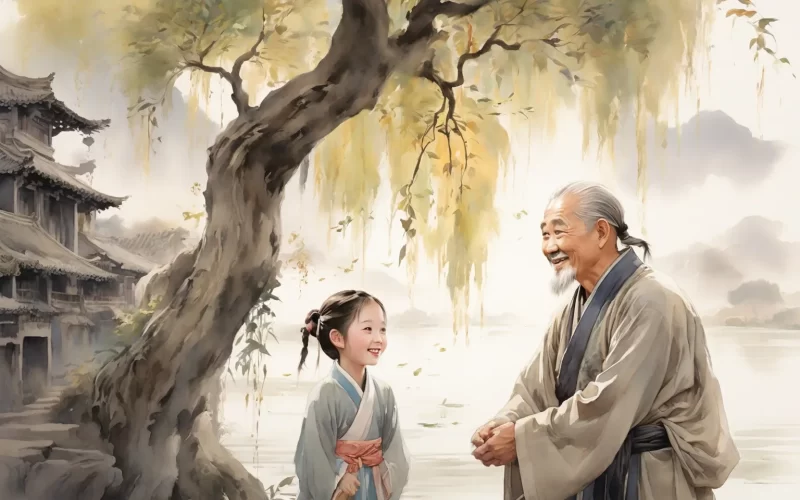

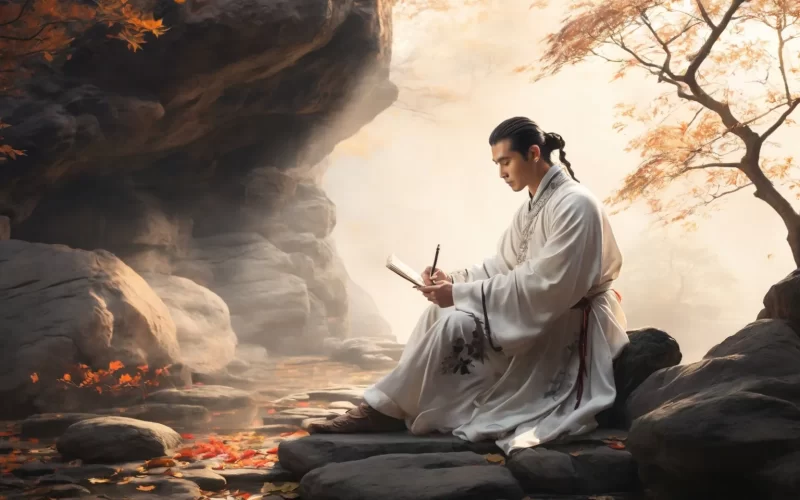
Chang handed me this tracing, from the stone drums,
Beseeching me to write a poem on the stone drums.
Tu Fu has gone. Li Po is dead.
What can my poor talent do for the stone drums?

...When the Chou power waned and China was bubbling,
Emperor Hsüan, up in wrath, waved his holy spear
And opened his Great Audience, receiving all the tributes
Of kings and lords who came to him with a tune of clanging weapons.
They held a hunt in Ch'i-yang and proved their marksmanship:
Fallen birds and animals were strewn three thousand miles.
And the exploit was recorded, to inform new generations.
Cut out of jutting cliffs, these drums made of stone -
On which poets and artisans, all of the first order,
Had indited and chiselled - were set in the deep mountains
To be washed by rain, baked by sun, burned by wildfire,
Eyed by evil spirits, and protected by the gods.

. . . Where can he have found the tracing on this paper? -
True to the original, not altered by a hair,
The meaning deep, the phrases cryptic, difficult to read,
And the style of the characters neither square nor tadpole.
Time has not yet vanquished the beauty of these letters -
Looking like sharp daggers that pierce live crocodiles,
Like phoenix-mates dancing, like angels hovering down,
Like trees of jade and coral with interlocking branches,
Like golden cord and iron chain tied together tight,
Like incense-tripods flung in the sea, like dragons mounting heaven.

Historians, gathering ancient poems, forgot to gather these,
To make the two Books of Musical Song more colourful and striking;
Confucius journeyed in the west, but not to the Ch'in Kingdom,
He chose our planet and our stars but missed the sun and moon...
I who am fond of antiquity, was born too late
And, thinking of these wonderful things, cannot hold back my tears . . .

I remember, when I was awarded my highest degree,
During the first year of Yüan-ho,
How a friend of mine, then at the western camp,
Offered to assist me in removing these old relics.
I bathed and changed, then made my plea to the college president
And urged on him the rareness of these most precious things.
They could be wrapped in rugs, be packed and sent in boxes
And carried on only a few camels: ten stone drums
To grace the Imperial Temple like the Incense-Pot of Kao -
Or their lustre and their value would increase a hundredfold,
If the monarch would present them to the university,
Where students could study them and doubtless decipher them,
And multitudes, attracted to the capital of culture
From all corners of the Empire, would be quick to gather.
We could scour the moss, pick out the dirt, restore the original surface,
And lodge them in a fitting and secure place for ever,
Covered by a massive building with wide eaves
Where nothing more might happen to them as it had before.

...But government officials grow fixed in their ways
And never will initiate beyond old precedent;
So herd-boys strike the drums for fire, cows polish horns on them,
With no one to handle them reverentially.
Still ageing and decaying, soon they may be effaced.
Six years I have sighed for them, chanting toward the west.

The familiar script of Wang Hsi-chih, beautiful though it was,
Could be had, several pages, just for a few white geese!
But now, eight dynasties after the Chou, and all the wars over,
Why should there be nobody caring for these drums?
The Empire is at peace, the government free.
Poets again are honoured and Confucians and Mencians.
Oh, how may this petition be carried to the throne?
It needs indeed an eloquent flow, like a cataract -
But, alas, my voice has broken, in my song of the stone drums,
To a sound of supplication choked with its own tears.
Original Poem
「石鼓歌」
韩愈
张生手持石鼓文,劝我试作石鼓歌。
少陵无人谪仙死,才薄将奈石鼓何。
周纲凌迟四海沸,宣王愤起挥天戈。
大开明堂受朝贺,诸侯剑佩鸣相磨。
蒐于岐阳骋雄俊,万里禽兽皆遮罗。
镌功勒成告万世,凿石作鼓隳嵯峨。
从臣才艺咸第一,拣选撰刻留山阿。
雨淋日炙野火燎,鬼物守护烦撝呵。
公从何处得纸本,毫发尽备无差讹。
辞严义密读难晓,字体不类隶与蝌。
年深岂免有缺画,快剑斫断生蛟鼍。
鸾翔凤翥众仙下,珊瑚碧树交枝柯。
金绳铁索锁钮壮,古鼎跃水龙腾梭。
陋儒编诗不收入,二雅褊迫无委蛇。
孔子西行不到秦,掎摭星宿遗羲娥。
嗟余好古生苦晚,对此涕泪双滂沱。
忆昔初蒙博士征,其年始改称元和。
故人从军在右辅,为我度量掘臼科。
濯冠沐浴告祭酒,如此至宝存岂多。
毡包席裹可立致,十鼓只载数骆驼。
荐诸太庙比郜鼎,光价岂止百倍过。
圣恩若许留太学,诸生讲解得切磋。
观经鸿都尚填咽,坐见举国来奔波。
剜苔剔藓露节角,安置妥帖平不颇。
大厦深檐与盖覆,经历久远期无佗。
中朝大官老于事,讵肯感激徒媕婀。
牧童敲火牛砺角,谁复著手为摩挲。
日销月铄就埋没,六年西顾空吟哦。
羲之俗书趁姿媚,数纸尚可博白鹅。
继周八代争战罢,无人收拾理则那。
方今太平日无事,柄任儒术崇丘轲。
安能以此尚论列,愿借辩口如悬河。
石鼓之歌止于此,呜呼吾意其蹉跎。
Interpretation
This poem was composed in 811 AD, the sixth year of the Yuanhe era under Emperor Xianzong of Tang, when Han Yu was forty-four years old, serving as the Magistrate of Henan. The Stone Drum Inscriptions are the earliest surviving engraved stone texts in China, discovered in the early Tang at Sanzhi Plain in Tianxing (present-day Baoji, Shaanxi). They consist of ten drum-shaped stones, each encircled with a four-character poem recording the hunting activities of the Qin rulers, hence they are also called "Hunting Steles." While in Chang'an, Han Yu saw rubbings of the Stone Drum Inscriptions from his friend Zhang Ji. He was profoundly moved by their artistic beauty, described as «辞严义密» (cí yán yì mì) and «鸾翔凤翥» (luán xiáng fèng zhù), and was pained to see that these national treasures suffered exposure, described as «雨淋日炙野火燎» (yǔ lín rì zhì yěhuǒ liǎo), long abandoned in the wilderness with no one caring for them.
At this time, Han Yu had experienced many setbacks in his official career. In 806 AD, he was summoned from a legal post in Jiangling to be a Professor at the Imperial Academy. In 809 AD, he was transferred to a vice-director position and assigned to Luoyang, later requesting reassignment to the Eastern Capital to avoid slander. Although holding minor posts, he consistently considered promoting Confucian orthodoxy and preserving ancient artifacts as his personal mission. In the poem, he not only praises the calligraphic value of the Stone Drum Inscriptions but also appeals to the court to move them to the Imperial Academy for scholars to study. This stance aligns with Han Yu's lifelong cultural ideal of «抵排异端,攘斥佛老» (dǐ pái yìduān, rǎng chì Fó Lǎo) and reviving Confucian learning. This poem is both a passionate plea for the preservation of cultural relics and a majestic ode of reverence for ancient civilization.
Stanza One: «张生手持石鼓文,劝我试作石鼓歌。少陵无人谪仙死,才薄将奈石鼓何。»
Zhāngshēng shǒu chí shígǔ wén, quàn wǒ shì zuò shígǔ gē. Shàolíng wú rén zhéxiān sǐ, cáibó jiāng nài shígǔ hé.
Student Zhang holds in hand the Stone Drum text, / Urges me to try composing a Stone Drum Song.
No one is left from Shaoling, the Banished Immortal is dead; / With my scant talent, what can I do for the Stone Drums?
The opening begins with narration, explaining the occasion for the song. The phrase «手持» (shǒu chí) shows Zhang Ji's high regard for the Stone Drum text; «劝我试作» (quàn wǒ shì zuò) introduces the poet's encounter with the Drums. The next two lines use Du Fu (Shaoling) and Li Bai (the Banished Immortal) for contrast, expressing both reverence for the earlier poets and self-deprecation, subtly conveying a sense of awe toward the immense value of the Stone Drums—implying that only poetic giants like Li and Du would be worthy of composing a work for this millennia-old artifact.
Stanza Two: «周纲凌迟四海沸,宣王愤起挥天戈。大开明堂受朝贺,诸侯剑佩鸣相磨。蒐于岐阳骋雄俊,万里禽兽皆遮罗。»
Zhōu gāng língchí sìhǎi fèi, Xuānwáng fèn qǐ huī tiān gē. Dà kāi míngtáng shòu cháohè, zhūhóu jiàn pèi míng xiāng mó. Sōu yú Qíyáng chěng xióngjùn, wànlǐ qínshòu jiē zhē luó.
Zhou's bonds slackened, the Four Seas seethed; / King Xuan rose in wrath, brandished Heaven's lance.
Opened wide the Bright Hall, received homage from the court; / Lords' sword-pendants clanged, grating against each other. Hunted on Qiyang's south, gave rein to heroes bold; / For ten thousand li, birds and beasts were all ensnared.
This stanza recounts the historical context recorded in the Stone Drum text. According to Tang dynasty research, the inscriptions date from the reign of King Xuan of Zhou (most modern scholars attribute them to the Qin). Adopting this theory, Han Yu begins with «周纲凌迟» (Zhōu gāng língchí) to introduce King Xuan's glorious military achievements during the mid-Zhou restoration. «挥天戈» (huī tiān gē) shows his strategic brilliance; «明堂朝贺» (míngtáng cháohè) displays his majesty extending throughout the land. «蒐于岐阳» (Sōu yú Qíyáng) identifies the core content of the inscriptions—the grand spectacle of the royal hunt. With concise and vigorous brushstrokes, the poet outlines a picture of the Western Zhou's prosperous age, setting the stage for discussing the Drums' value later.
Stanza Three: «镌功勒成告万世,凿石作鼓隳嵯峨。从臣才艺咸第一,拣选撰刻留山阿。»
Juān gōng lè chéng gào wànshì, záo shí zuò gǔ huī cuó'é. Cóng chén cáiyì xián dìyī, jiǎnxuǎn zhuàn kè liú shān'ē.
Engrave the feats, complete the record, tell ten thousand ages; / Hew stone to make drums, demolish lofty cliffs. Attendant officials' talents and arts all ranked first; / Selected, composed, carved, left on the mountain's brow.
The focus shifts from historical events to the making of the Drums. The four words «镌功勒成» (juān gōng lè chéng) reveal the nature of the Drums—commemorative stelae; «凿石作鼓» (záo shí zuò gǔ) shows the difficulty of their creation, requiring «隳嵯峨» (huī cuó'é)—demolishing lofty cliffs—to obtain the stone, emphasizing the monumental scale of the project. The last two lines praise the creators' skill. Words like «咸第一» (xián dìyī) and «拣选» (jiǎnxuǎn) emphasize the meticulous crafting of the Stone Drum text in both content and form, establishing its artistic value.
Stanza Four: «雨淋日炙野火燎,鬼物守护烦撝呵。公从何处得纸本,毫发尽备无差讹。辞严义密读难晓,字体不类隶与蝌。»
Yǔ lín rì zhì yěhuǒ liǎo, guǐwù shǒuhù fán huī hē. Gōng cóng héchù dé zhǐběn, háofà jìn bèi wú chā'é. Cí yán yì mì dú nán xiǎo, zìtǐ bù lèi lì yǔ kē.
Rain-soaked, sun-scorched, prairie-fire scorched; / Ghostly beings guarded them, took trouble to drive off harm. Where did you, sir, obtain this paper copy? / Every hair complete, without flaw or error.
Diction strict, meaning dense, reading brings scant comprehension; / The script's style resembles not Clerk Script nor Tadpole Script.
Time and space jump forward a millennium to the present. The first three lines forcefully describe the hardships of the Drums' survival. The ordeal of «雨淋日炙野火燎» (yǔ lín rì zhì yěhuǒ liǎo) contrasts with the mystery of «鬼物守护» (guǐwù shǒuhù), bestowing a sacred aura upon the Drums. The next four lines turn to praise for the rubbing: «毫发尽备» (háofà jìn bèi) shows the rubbing's precision; «辞严义密» (cí yán yì mì) praises the depth of its content; «不类隶与蝌» (bù lèi lì yǔ kē) reveals the uniqueness of the Stone Drum calligraphy—different from both Han Dynasty Clerk Script and the ancient "Tadpole" script of the Warring States, which is precisely its precious quality.
Stanza Five: «年深岂免有缺画,快剑斫断生蛟鼍。鸾翔凤翥众仙下,珊瑚碧树交枝柯。金绳铁索锁钮壮,古鼎跃水龙腾梭。»
Nián shēn qǐ miǎn yǒu quē huà, kuàijiàn zhuó duàn shēng jiāo tuó. Luán xiáng fèng zhù zhòng xiān xià, shānhú bì shù jiāo zhī kē. Jīn shéng tiě suǒ suǒ niǔ zhuàng, gǔ dǐng yuè shuǐ lóng téng suō.
Years deep, how could they avoid missing strokes? / Like a keen sword hacking through living flood-dragons, river-dragons. Like simurghs soaring, phoenixes soaring, a host of immortals descending; / Like coral trees, jasper trees, branches intertwined. Like golden ropes, iron chains, with massive clasps and fastenings; / Like an ancient cauldron leaping from water, a dragon vaulting through a shuttle.
This stanza uses seven consecutive similes to intensely describe the beauty of the Stone Drum calligraphy. «快剑斫断» (kuàijiàn zhuó duàn) compares it to vigorous strength; «鸾翔凤翥» (luán xiáng fèng zhù) depicts its ethereal grace; «珊瑚碧树» (shānhú bì shù) captures its elegant, interlaced form; «金绳铁索» (jīn shéng tiě suǒ) suggests its coiled majesty; «古鼎跃水» (gǔ dǐng yuè shuǐ) and «龙腾梭» (lóng téng suō) liken it to spirited dynamism. With a poet's eye, Han Yu interprets the metal and stone, transforming static engraved characters into dynamic aesthetic images. The boldness of his imagination and the strength of his expression are astonishing.
Stanza Six: «陋儒编诗不收入,二雅褊迫无委蛇。孔子西行不到秦,掎摭星宿遗羲娥。嗟余好古生苦晚,对此涕泪双滂沱。»
Lòu rú biān shī bù shōurù, èr yǎ biǎnpò wú wēiyí. Kǒngzǐ xīxíng bù dào Qín, jǐzhí xīngxiù yí Xī'é. Jiē yú hàogǔ shēng kǔ wǎn, duì cǐ tìlèi shuāng pāngtuó.
Shallow Confucians compiled the Songs but did not include it; / The Greater and Lesser Odes are cramped, lack breadth and sweep. Confucius journeyed west but did not reach Qin; / He plucked the stars and constellations, but missed the Sun and Moon. Alas, I love antiquity, yet born bitterly late; / Facing this, tears pour in double streams.
The tone turns sharply, shifting from praise to indignation. Han Yu believed the Classic of Poetry's omission of the Stone Drum text was the fault of «陋儒» (lòu rú). The phrase «二雅褊迫» (èr yǎ biǎnpò) highlights how severely the Drums' value was underestimated. The simile «孔子西行不到秦» (Kǒngzǐ xīxíng bù dào Qín) is especially incisive—Confucius edited the Songs but missed this monumental work, like gathering stars but missing the sun and moon. The poet's grievous lament in «涕泪双滂沱» (tìlèi shuāng pāngtuó) expresses both indignation on behalf of the Drums and profound regret for his own powerlessness despite his love for antiquity.
Stanza Seven: «忆昔初蒙博士征,其年始改称元和。故人从军在右辅,为我度量掘臼科。濯冠沐浴告祭酒,如此至宝存岂多。毡包席裹可立致,十鼓只载数骆驼。荐诸太庙比郜鼎,光价岂止百倍过。圣恩若许留太学,诸生讲解得切磋。»
Yì xī chū méng bóshì zhēng, qí nián shǐ gǎi chēng Yuánhé. Gùrén cóngjūn zài yòu fǔ, wèi wǒ dùliàng jué jiù kē. Zhuó guān mùyù gào jìjiǔ, rúcǐ zhìbǎo cún qǐ duō. Zhān bāo xí guǒ kě lì zhì, shí gǔ zhǐ zài shù luòtuo. Jiàn zhū tàimiào bǐ Gào dǐng, guāng jià qǐzhǐ bǎi bèi guò. Shèng ēn ruò xǔ liú tàixué, zhūshēng jiǎngjiě dé qiēcuō.
I recall when first summoned as Professor; / That year first changed to be called Yuanhe. An old friend served in the army at the Right Support; / For me measured and planned to dig foundation pits. Washed my cap, bathed my body, reported to the Chancellor: / Such ultimate treasures, how many can exist? Wrapped in felt, bound in mats, they could be brought at once; / Ten drums, needing but a few camels for transport. If presented in the Ancestral Temple, compared to the Gao Tripod, / Their glory and worth would surpass it a hundredfold. If by sacred grace permitted to stay in the Imperial Academy, / Students could explain and discuss them, gain by grinding.
This stanza shifts to recalling his own efforts and advocacy. While serving as a Professor at the Imperial Academy, Han Yu actively planned to move the Drums to the Academy. The solemnity of «濯冠沐浴» (zhuó guān mùyù) shows his devoutness toward the cultural mission; the rhetorical question «存岂多» (cún qǐ duō) reveals his urgency. Details like «毡包席裹» (zhān bāo xí guǒ) and «数骆驼» (shù luòtuo) make the preservation plan concrete, as if we can see him running about, advocating. Comparing them to the «郜鼎» (Gào dǐng) elevates the Drums to the status of national ritual vessels. The point about «诸生讲解得切磋» (zhūshēng jiǎngjiě dé qiēcuō) clarifies their educational value—the Drums are not just artifacts but living teaching materials for scholars studying ancient script and culture.
Stanza Eight: «观经鸿都尚填咽,坐见举国来奔波。剜苔剔藓露节角,安置妥帖平不颇。大厦深檐与盖覆,经历久远期无佗。»
Guān jīng Hóngdū shàng tiányàn, zuò jiàn jǔguó lái bēnbō. Wān tái tī xiǎn lù jiéjiǎo, ānzhì tuǒtiē píng bù pō. Dàshà shēn yán yǔ gàifù, jīnglì jiǔyuǎn qī wú tuó.
Viewing the sutras at Hongdu still clogged the streets; / You would see the whole realm come running, traveling. Gouge out moss, scrape off lichen, expose the edges and corners; / Install them properly, level, not tilted. Great halls with deep eaves to cover and shelter them; / Expect them to last long ages, free from harm.
The poet imagines the grand scene if the Drums were housed in the Academy. «观经鸿都» (Guān jīng Hóngdū) alludes to the crowds that filled the streets to view the stone classics erected during Emperor Ling of Han, predicting an even greater sensation for the Drums. Three progressive steps—«剜苔剔藓» (wān tái tī xiǎn), «安置妥帖» (ānzhì tuǒtiē), and «大厦深檐» (dàshà shēn yán)—from cleaning, to installation, to protection, show thorough planning born of his utter dedication. However, this beautiful vision is about to be shattered by harsh reality.
Stanza Nine: «中朝大官老于事,讵肯感激徒媕婀。牧童敲火牛砺角,谁复著手为摩挲。日销月铄就埋没,六年西顾空吟哦。羲之俗书趁姿媚,数纸尚可博白鹅。继周八代争战罢,无人收拾理则那。»
Zhōngcháo dàguān lǎo yú shì, jù kěn gǎnjī tú ān'ē. Mùtóng qiāo huǒ niú lì jiǎo, shuí fù zhuóshǒu wèi māsuō. Rì xiāo yuè shuò jiù máimò, liù nián xīgù kōng yín'é. Xīzhī sú shū chèn zīmèi, shù zhǐ shàng kě bó bái'é. Jì Zhōu bā dài zhēngzhàn bà, wú rén shōushi lǐ zé nà.
High court officials, old in the ways of the world, / How would they be moved? They merely vacillate.
Herdboy strikes fire on them, oxen whet their horns; / Who will again lay hand on them to caress and cherish? Day by day worn, month by month melted, they will be buried and lost; / For six years I've gazed west, vainly chanting and sighing. Xizhi's vulgar script courts posture and charm, / A few sheets of it can still barter for white geese. Eight dynasties after Zhou, their warfare done; / No one gathers them up—what principle is this?
This stanza expresses the poet's indignation and condemnation of reality. The eight characters «老于事» (lǎo yú shì) and «徒媕婀» (tú ān'ē) vividly depict the bureaucrats' worldliness and indecisiveness. «牧童敲火牛砺角» (mùtóng qiāo huǒ niú lì jiǎo) forms a stark contrast with «谁复著手为摩挲» (shuí fù zhuóshǒu wèi māsuō)—the precious Drums are left to be damaged, with no one to care for them. Most poignant is the prophecy «日销月铄就埋没» (rì xiāo yuè shuò jiù máimò), ultimately borne out by history. The poet uses Wang Xizhi's calligraphy for comparison: though fine, it is after all «俗书» (sú shū), and a few sheets can still be traded for geese. The Stone Drum Inscriptions, as a relic of the Three Dynasties, are far more valuable than "vulgar script," yet no one asks after them—what an inversion! «继周八代» (Jì Zhōu bā dài) refers to the Drums surviving from the Qin, Han, Wei, Jin down to the Tang, through countless wars, only to be "buried and lost" in a time of peace. How biting the irony!
Stanza Ten: «方今太平日无事,柄任儒术崇丘轲。安能以此尚论列,愿借辩口如悬河。石鼓之歌止于此,呜呼吾意其蹉跎。»
Fāngjīn tàipíng rì wúshì, bǐng rèn rúshù chóng Qiū Kē. Ān néng yǐ cǐ shàng lùnliè, yuàn jiè biànkǒu rú xuánhé. Shígǔ zhī gē zhǐ yú cǐ, wūhū wú yì qí cuōtuó.
Now in this peaceful time, day after day without incident, / Authority employs Confucian arts, honors Confucius and Mencius. How can I still bring this up for debate? / I long to borrow an eloquent mouth like a hanging river. The Song of the Stone Drums stops here; / Alas, my intentions will likely come to naught.
The concluding four lines reveal despair within sorrow and anger. The description of the times as «方今太平» (fāngjīn tàipíng) and «崇丘轲» (chóng Qiū Kē) ironically contrasts the authorities' neglect of culture—if they honor Confucius, why not protect this precursor to Confucian classics? The rhetorical question «安能以此尚论列» (Ān néng yǐ cǐ shàng lùnliè) expresses the helplessness of being lowly and insignificant. «愿借辩口如悬河» (yuàn jiè biànkǒu rú xuánhé) is a final, desperate struggle, a tragic attempt despite knowing it's likely futile. The final sigh, «呜呼吾意其蹉跎» (wūhū wú yì qí cuōtuó), concludes the entire poem. It echoes the opening «才薄将奈石鼓何» (cáibó jiāng nài shígǔ hé), pushing the grievous lament to its climax, its lingering sound leaving the reader lost in contemplation.
Holistic Appreciation
This work is a model of Han Yu's use of poetry to discuss politics and preserve history. Its artistic achievement lies not only in the exquisite depiction of the Stone Drum calligraphy but, more importantly, in closely linking the fate of a cultural artifact to the literati's cultural ideals, the court's political attitude, and the era's value orientation, making the Stone Drums a cultural symbol bearing multiple meanings. The poem's structure is grand, its emotions dramatic: from praise for the Drums' history and art, to indignation over their omission by "shallow Confucians" and "Confucius," to condemnation of the indifference of court officials, ending with the lament of «吾意其蹉跎» (wú yì qí cuōtuó). The emotional layers advance, surging like tides.
The most moving aspect of the poem is Han Yu's elevation of his personal sentiment of «好古» (hàogǔ) into a sense of cultural mission. He not only appreciates the calligraphic beauty of the Stone Drums but sees them as the lifeblood of Three Dynasties civilization, a witness to Confucian orthodoxy. Therefore, advocating for their protection is advocating for preserving the root of Chinese civilization. This mode of thought linking artifacts to orthodoxy reflects the unique cultural perspective of Han Yu as a leader of the Ancient Prose Movement. Even a millennium later, the childlike sincerity in «对此涕泪双滂沱» (duì cǐ tìlèi shuāng pāngtuó) remains deeply touching.
Artistic Merits
- Robust and Vigorous Stylistic Language
The poem's language is like metal striking stone, sonorous and forceful. Lines like «快剑斫断生蛟鼍» (kuàijiàn zhuó duàn shēng jiāo tuó) and «金绳铁索锁钮壮» (jīn shéng tiě suǒ suǒ niǔ zhuàng) use bold imagery to depict vigorous brushwork, fully embodying Han Yu's aesthetic pursuit of "using prose in poetry" and avoiding softness. - Multi-layered Contrastive Structure
The poem constructs multiple contrasts: the Drums' «鬼物守护» (guǐwù shǒuhù) versus the reality of «牧童敲火» (mùtóng qiāo huǒ); the glorious military achievements of King Xuan's restoration versus the «媕婀» (ān'ē) of contemporary officials; Wang Xizhi's "vulgar script" being tradable for geese versus the Drums, ultimate treasures with no one asking. These contrasts build progressively, pushing the critical force to its extreme. - Contextualized Use of Allusion
The use of allusions like «观经鸿都» (guān jīng Hóngdū), «郜鼎» (Gào dǐng), and «羲之换鹅» (Xīzhī huàn é) enriches the poem's historical depth while pointing directly at present reality, making the allusions weapons of critique, not mere ornament. - Rhythm of Alternating Emotional Tension and Release
The poem's emotions are like towering waves: passionate and surging when praising the Drums; indignant and激昂 when denouncing the shallow Confucians; full of hope when depicting the preservation vision; sorrowful and despairing when confronting reality. This rhythm of sharp rises and falls aligns with Han Yu's poetic principle of "uttering sounds when there is injustice" («不平则鸣», bùpíng zé míng). - Perfect Fusion of Narrative, Description, Argument, and Lyricism
The poem contains the retrospective narration of the Drums' history, the depiction of calligraphic beauty, the criticism of their omission, and the lament on his own fate. The four are fused into one, creating powerful artistic impact.
Insights
The primary insight this poem offers contemporary readers concerns "human responsibility" in cultural transmission. As a minor official, facing the indifference of «中朝大官» (zhōngcháo dàguān), Han Yu still «濯冠沐浴» (zhuó guān mùyù) and ran about advocating, striving even when he knew it might be futile. This cultural commitment of "striving even when it seems impossible" is precisely the spiritual drive that has kept Chinese civilization alive through the ages. It reminds us: cultural transmission is never an automatic process; it is the result of generations of dedicated people guarding it with their devotion, struggling for it with conviction.
Secondly, the criticism in «陋儒编诗不收入» (lòu rú biān shī bù shōurù) and «孔子西行不到秦» (Kǒngzǐ xīxíng bù dào Qín) reveals the contingency and regret inherent in cultural selection. The cultural classics of any era have undergone human selection and filtering. Those omitted "Stone Drums" are not necessarily inferior to the included «二雅» (èr yǎ). This enlightens us: we should maintain a critical reflection toward established "canons" and an open mind toward forgotten "margins." True cultural confidence lies not in clinging to one corner, but in the ability to rediscover value obscured by history.
Finally, Han Yu's juxtaposition of «羲之俗书趁姿媚» (Xīzhī sú shū chèn zīmèi) with the Stone Drums proposes a profound reflection on the "refined" and the "vulgar." In his view, Wang Xizhi's calligraphy, though beautiful, is "vulgar script"; the Stone Drum script, though ancient and unadorned, carries the legacy of the Three Dynasties. This is not merely calligraphic commentary but a reflection on the era's aesthetic tendencies—when society pursues the style of "posture and charm," it often forgets the majestic power contained within ancient simplicity. For our current era of prevalent consumer culture, this is undoubtedly a sobering reminder: true cultural value is not necessarily in the spotlight, but often in an overlooked corner, waiting for dedicated people to wipe away the dust and let it shine again.
About the Poet
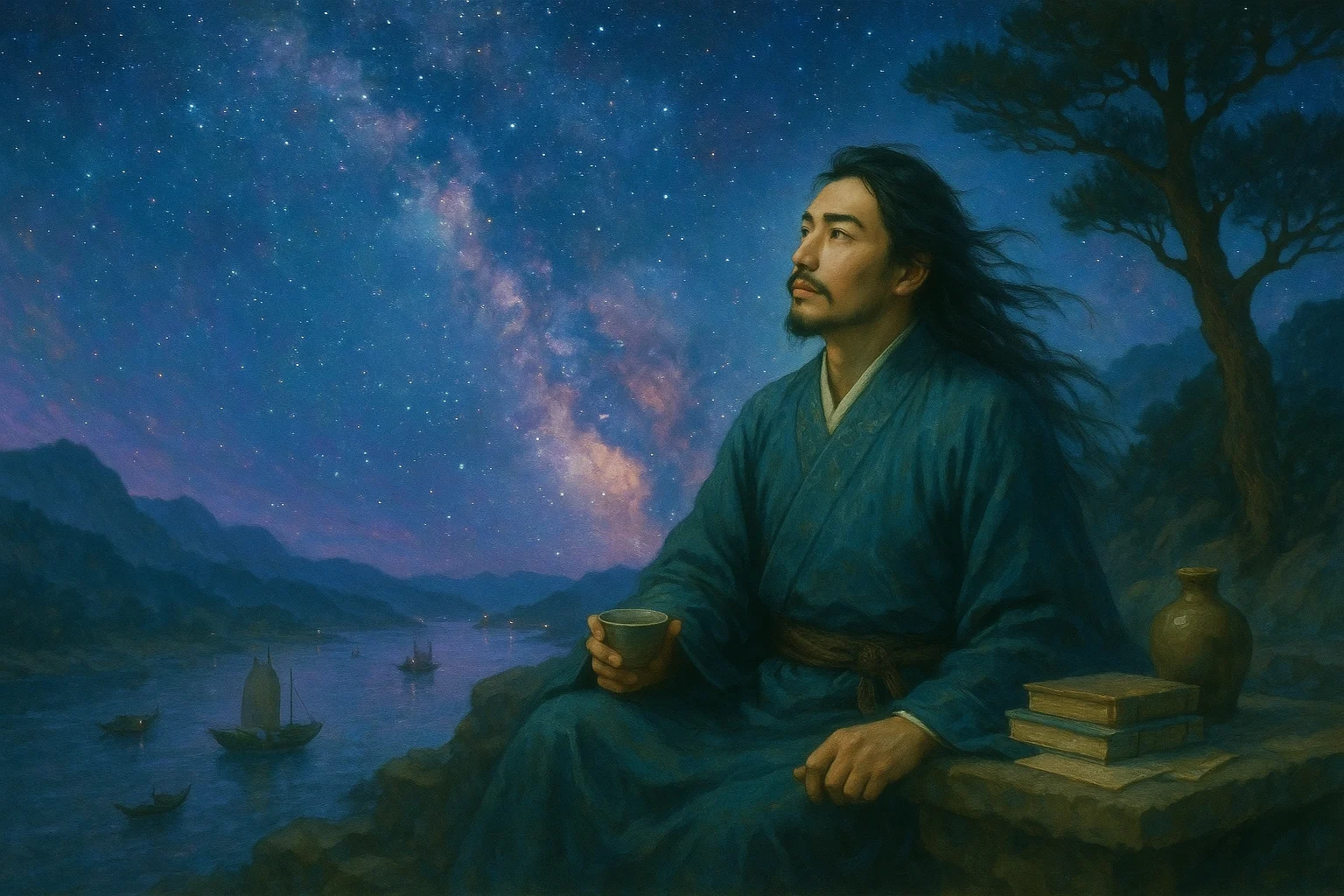
Han Yu (韩愈, 768 - 824), a native of Mengzhou, Henan Province, he was the leader of the Ancient Prose Movement in the Tang Dynasty. He became a jinshi (presented scholar) in the eighth year of the Zhenyuan era (792 AD). His prose was vigorous and powerful, and he patronized notable poets such as Meng Jiao and Jia Dao. Regarded as the foremost of the "Eight Great Masters of the Tang and Song Dynasties," Han Yu revolutionized both poetry and prose, exerting a profound and lasting influence. Later generations honored him as the "Literary Patriarch of a Hundred Generations."