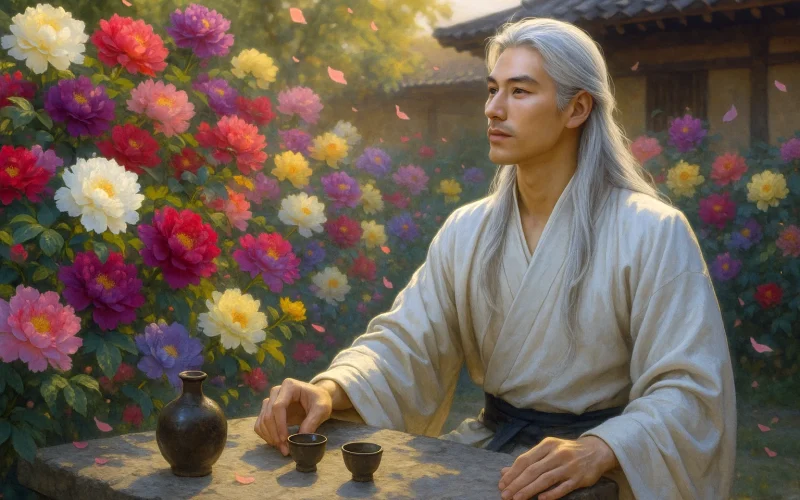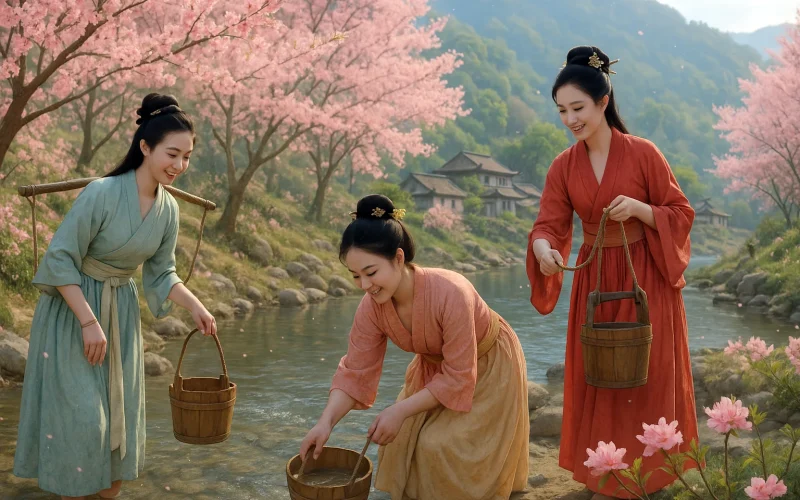



The clear stream winds along, with willows overgrown;
The wooden bridge still stands, where twenty years have flown.

I parted here with my fair lady then;
Would she’d send word! Would she’d send word! I wish in vain again.
Original Poem
「柳枝词」
刘禹锡
清江一曲柳千条,二十年前旧板桥。
曾与美人桥上别,恨无消息到今朝。
Interpretation
The exact year of this poem's composition is unknown; based on its content, it should be a work from Liu Yuxi's late years, recalling the past. The poet was passing by a plank bridge when he saw the willow branches by the river and suddenly remembered bidding farewell to a woman there twenty years before. Since then, there had been no word from her. The poem does not reveal who the woman was, does not explain why they parted back then, and does not tell how those twenty years were spent. Liu Yuxi simply presents the time (twenty years ago), the place (the plank bridge), the person (the beauty), and the outcome (no news), leaving the rest for the reader to feel. This use of negative space is precisely the brilliance of Tang poetry.
The "twenty years ago" in the poem is not a vague reference. Liu Yuxi's life was one of constant displacement, his exile lasting over twenty years, during which countless people and events had long since changed beyond recognition. When he stood again on this plank bridge, the river was still that same river, the willow branches were still those willow branches, the bridge was still that bridge. Only the person with whom he had parted on the bridge twenty years before had no news.
A clear river's bend, a thousand willow strands—both are actual scenes before his eyes. In classical poetry, "willow" (liu) is homophonous with "to stay" (liu), inherently a symbol of farewell. Now the willow strands remain as ever, but the person who once broke a willow twig in parting gift is nowhere to be known. The word "old" in "the old plank bridge" describes both the bridge's antiquity and the poet's old connection to this bridge, and further implies the vast, desolate passage of time.
First Couplet: "清江一曲柳千条,二十年前旧板桥。"
Qīng jiāng yī qǔ liǔ qiān tiáo, èrshí nián qián jiù bǎn qiáo.
A clear river's bend, a thousand willow strands;
The old plank bridge from twenty years ago.
The opening describes the scenery plainly, yet every phrase carries feeling. "A clear river's bend" is the water's posture, and also memory's winding course; "a thousand willow strands" is the actual scene before his eyes, and also the fixed symbol of farewell in classical poetry—breaking a willow twig in parting, the willow strands themselves embody parting sentiment. "Twenty years ago" abruptly stretches open time. The first two lines contain no emotional words, only river, willow, bridge, twenty years. But these four terms placed together already make one feel the weight of time. The poet does not say "I remember the past"; he only says the bridge is old, I came here twenty years ago. It is enough.
Final Couplet: "曾与美人桥上别,恨无消息到今朝。"
Céng yǔ měirén qiáo shàng bié, hèn wú xiāoxi dào jīnzhāo.
Once I parted with a beauty upon this bridge;
Regret—no word of her has come to this very day.
This couplet is the outlet for the poem's emotion. The two words "Once I" lightly introduce the past event, without embellishment, without elaboration, merely stating a fact. The word "Regret" in "Regret—no word of her" is disappointment, concern, that tiny bit of obsession not let go of for twenty years. "To this very day" echoes the previous couplet's "twenty years ago," completing time's closed loop. Parted twenty years ago; standing alone on the same bridge twenty years later. The river is still that river, the willow strands are still those willow strands, the bridge is still that bridge. Only the people on the bridge are fewer by one.
Holistic Appreciation
This poem is one of Liu Yuxi's most moving and most simple works. The entire poem has four lines, its structure extremely minimal: the first two lines describe scenery while noting time; the last two lines narrate while conveying emotion. No allusions, no commentary, no ornamentation whatsoever. Yet it is precisely this simplicity that gives the poem its power to traverse time.
The most moving elements in the poem are the word "old" and the word "regret." The "old" in "the old plank bridge" is time's trace, and also memory's anchor point. Twenty years have passed; the bridge remains, the person is no longer the same. The "regret" in "Regret—no word" is not resentment, but deep disappointment—not regret towards that person, but regret for these twenty long years of blankness. Liu Yuxi does not write where the woman went, does not write how he spent those twenty years. He simply stands on the bridge, placing two points in time side by side: the farewell twenty years ago, and today twenty years later. The blank space in between, he leaves for the reader to imagine.
Artistic Merits
- Tension of Temporal Structure: "Twenty years ago" and "to this very day" form the two ends of time, with the entire twenty years in between left blank. This omission is more powerful than any elaboration.
- Contrast of Unchanged Setting and Changed People: The river is still that river, the willow still that willow, the bridge still that bridge—only the people are different. The poet does not write "the people are not the same"; he only writes "the setting remains," letting the reader feel the disparity for themselves.
- Restraint of the Word "Regret": This word is the only directly emotional term in the entire poem. But what is regretted is not that person, but "no word"; it is not resentment, but concern. The emotional nuance is grasped with extreme precision.
- Symbolic Use of Willow Strands: In classical poetry, willow (liu) is homophonous with "to stay" (liu), a standard image of farewell. Liu Yuxi does not deliberately point this out; he simply lets the willow strands hang there, allowing readers familiar with the tradition to comprehend it themselves.
- Suspended Ending: The poem ends with "to this very day." There is no sequel, no looking forward. That "regret" hangs there, becoming an eternal state. This is precisely the truest form of longing—no resolution, only continuation.
Insights
What is most moving about this poem is how it captures the power of time. A single farewell twenty years ago; a solitary revisit to the old place twenty years later. What happened in between? Where did that woman go? Did Liu Yuxi ever look for her again later? The poem writes not a single word of this. But it is precisely these blank spaces that allow this poem to become a story everyone can代入 (project themselves into).
In each of our hearts, there is probably an "old plank bridge," a person we parted with "twenty years ago." That person may have long vanished from our lives, but whenever you pass a certain place, see a certain thing, you remember. It's not necessarily about meeting again, not necessarily about having an outcome; it's just "remembering."
Liu Yuxi, with twenty-eight characters, crystallizes this moment of "remembering." He does not tell you how to treat this memory, does not say whether you should let go or should search. He only lets you see: someone else was like this too, after twenty years, still remembering. That is enough.
About the poet
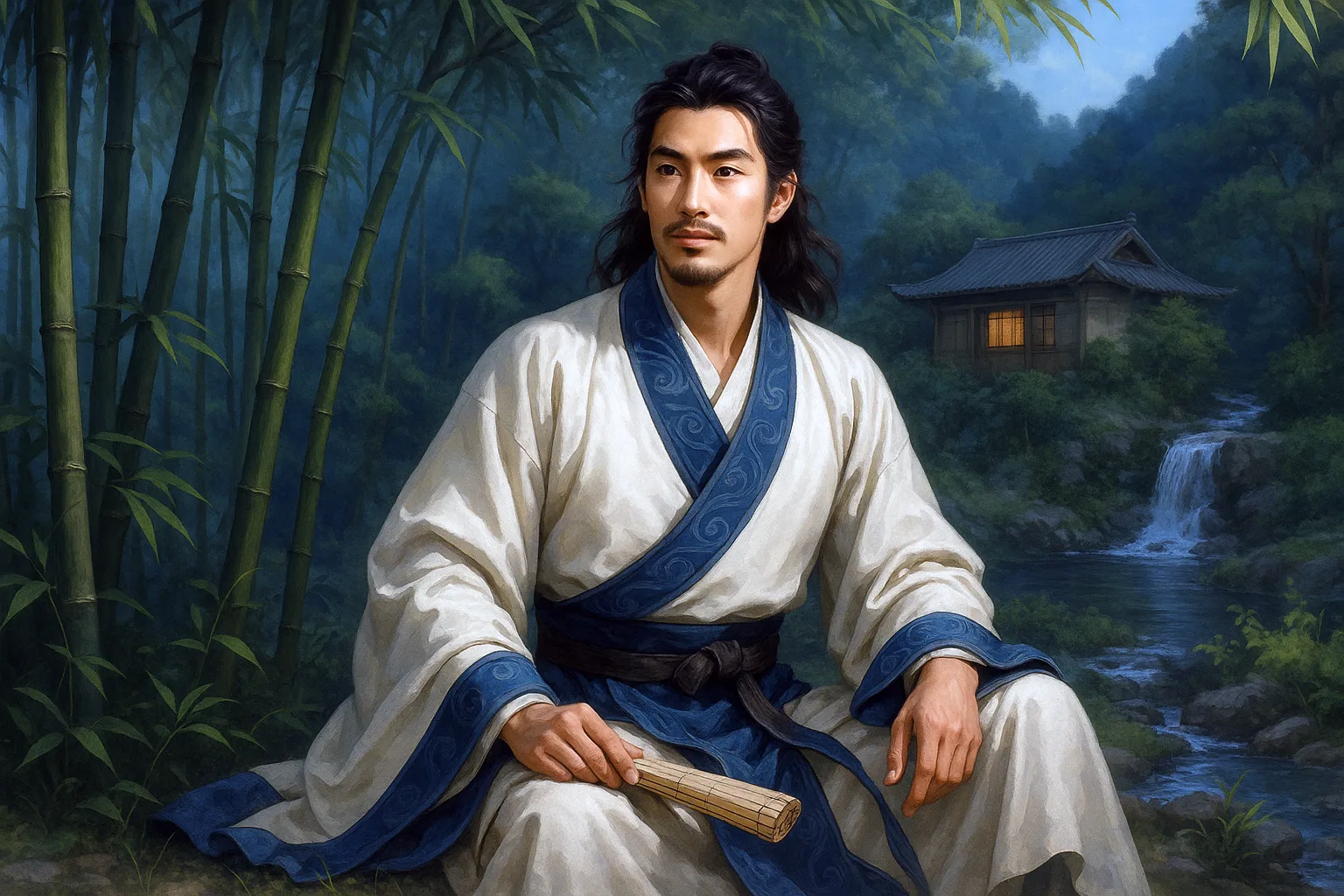
Liu Yuxi(刘禹锡), 772 - 842 AD, was a native of Hebei. He was a progressive statesman and thinker in the middle of the Tang Dynasty, and a poet with unique achievements in this period. In his compositions, there is no lack of poems reflecting current affairs and the plight of the people.