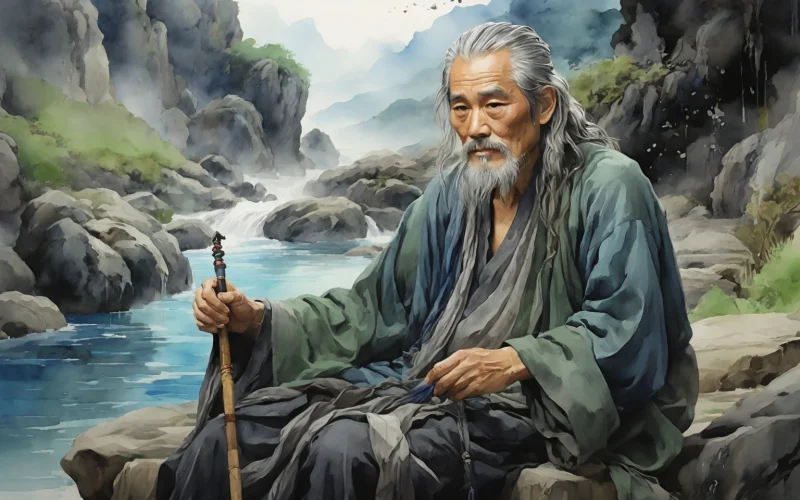
He digs up jade, he digs up jade in water green
To make a headdress for a lady or a queen.
When he's hungry and cold, the dragon would be sad;
Nor clear nor pure, the water of Blue Creek turns bad.
He eats hazelnuts when it rains in mountains deep;
With tears like the blood shed by the cuckoo, he'd weep.

The Blue Creek dislikes a digger when he appears;
He too dislikes it though dead for a thousand years.
By the mountainside the wind soughs and the rain falls;
A rope hangs around his waist over waterfalls.

How can he not think of his children in his hut cold,
When he sees the forget-me-not on the cliff old?
Original Poem
「老夫采玉歌」
李贺
采玉采玉须水碧,琢作步摇徒好色。
老夫饥寒龙为愁,蓝溪水气无清白。
夜雨冈头食蓁子,杜鹃口血老夫泪。
蓝溪之水厌生人,身死千年恨溪水。
斜山柏风雨如啸,泉脚挂绳青袅袅。
村寒白屋念娇婴,古台石磴悬肠草。
Interpretation
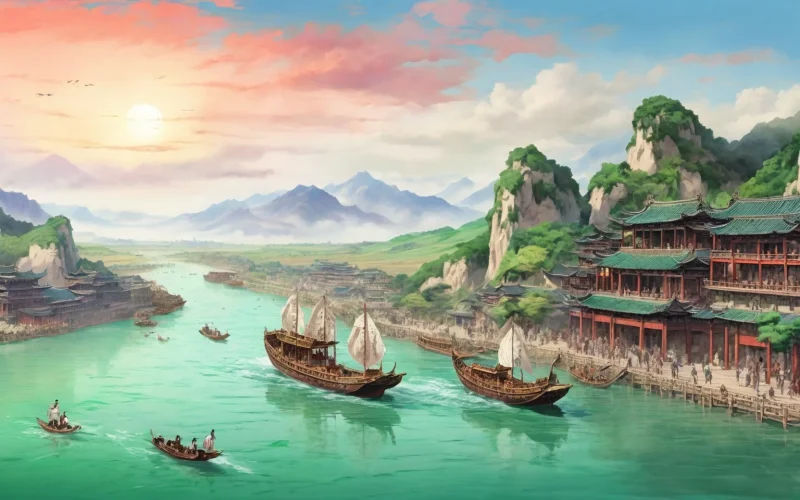
West of Lantian County stands Lantian Mountain, and at its foot flows the Blue Stream. In the clearest depths of this stream lies a type of jade called "Water-Jasper," its color like a deep pool, its texture like congealed cream—a superior material for crafting the "hairpins that sway as the walk" (buyao) jewelry of noblewomen. Yet, this beautiful stone is steeped in the blood and tears of the jade-gatherers. In the Tang Dynasty, jade-gathering in the Blue Stream was a form of conscripted corvée labor. The gatherers, ropes tied around their waists, had to dangle from sheer cliffs, plunge into the piercingly cold stream water, and search for that glint of green among the rock crevices. A moment's inattention meant a snapped rope, a fatal fall, lost without a trace. Year after year, the stream swallowed lives, and year after year, new batches of jade-gatherers were driven to its banks. The jade that was gathered was eventually carved into swaying hairpins and jade hairpins, adorning the chignons of noble ladies, swaying gracefully.
Li He wrote this poem during the Yuanhe era. He himself was stranded in Chang'an, having served for three years as the lowly Ritual Ceremonialist (Fengli Lang), responsible for managing ceremonial tablets and directing sacrifices, constantly dealing with spirits and rituals. This humble post allowed him contact with the lives of the lowest commoners and endowed him with an extraordinary sensitivity to human suffering. When he heard of the terrible plight of the Blue Stream jade-gatherers, what surged in his heart was not only sympathy, but outrage at the injustice of the entire social order.
This work was born from this context. The "cold and hungry" old man in the poem is the epitome of countless jade-gatherers; the cry, "a thousand years after dying, I’ll hate the stream that took my life," is an indictment against an unjust fate; and the concern of "in the poor thatched hut in a cold hamlet thinking of a tender babe" gives this indictment a deeper warmth—what is most heartbreaking is not death itself, but the moment before death, when the heart still remembers the hungry infant waiting at home.
First Couplet: "采玉采玉须水碧,琢作步摇徒好色。"
Jade, jade, you gather, but it must be water-jasper green;
Then carved for hairpins that sway as the walker walks—all for mere vanity and delight.
The opening uses the repetition "Jade, jade" like a heavy work chant, immediately pulling the reader into the day-after-day, year-after-year toil. "Must be water-jasper green" emphasizes the difficulty—one must dive into the water, must search for that rare green hue. The next line, "all for mere vanity and delight," uses the word "mere" like a sharp blade to pierce all pretense: this jade, bought with lives, is merely to add a bit of optional "delight" to the chignons of noblewomen. The word "mere" is the poet's complete negation of this forced labor—the price of life is exchanged for the adornment of vanity; the payment of blood and tears achieves meaningless luxury.
Second Couplet: "老夫饥寒龙为愁,蓝溪水气无清白。"
Cold and hunger for the old man—the dragon, too, grieves;
Blue Stream’s water-aura is no longer clear and pure.
This couplet shifts from man to object, projecting suffering onto the entire environment. "The dragon, too, grieves" uses a mythical image to depict human misery—even the legendary dragon grieves, unable to bear the sight of this human tragedy. "Blue Stream’s water-aura is no longer clear and pure" is even more striking: the water, originally clear, is muddied by the blood and tears of the gatherers; the stream, originally innocent, loses its purity from bearing too many deaths. These two lines magnify individual suffering into the sorrow of heaven and earth, sharply deepening the force of the critique.
Third Couplet: "夜雨冈头食蓁子,杜鹃口血老夫泪。"
Night rain on the ridge crest, you eat hazelnuts for food;
The cuckoo that cries blood—these are the old man’s tears.
This couplet uses two images to convey the utter misery of the old man's situation. "Night rain on the ridge crest" shows he has no fixed dwelling; "eat hazelnuts for food" shows he lacks sufficient sustenance. The next line, "The cuckoo that cries blood—these are the old man’s tears," incorporates the allusion of the cuckoo crying blood—the cuckoo cries until it bleeds, the ultimate lament; and the old man's tears are like this cuckoo's blood. This line merges man and bird into one, uniting nature's lament with human weeping, achieving the utmost poignancy.
Fourth Couplet: "蓝溪之水厌生人,身死千年恨溪水。"
The waters of Blue Stream have come to loathe the living;
A thousand years after dying, I’ll hate the stream that took my life.
This couplet uses a startling pen to express the dual grief and indignation of the living and the dead. "The waters of Blue Stream have come to loathe the living"—the stream water, originally without feeling, seems to have gained a spirit from devouring too many lives, beginning to loathe the living creatures forced into its embrace. The next line, "A thousand years after dying, I’ll hate the stream that took my life," goes a step further: those who died, even a thousand years later, their resentment will still haunt this stream. This "hate" is both the hate of the dead and the hate of the living; it is both specific and symbolic—what is hated is not just the stream, but the system that drives people to their deaths, the era that treats human life as worthless.
Fifth Couplet: "斜山柏风雨如啸,泉脚挂绳青袅袅。"
Slanting hill, cypress winds, rain that howls like a beast;
Where the spring spills, a rope dangles, suspended, faint, and green.
This couplet uses straightforward description to depict the extreme danger of jade-gathering. "Slanting hill, cypress winds, rain that howls like a beast" describes the perilous environment: wind and rain rage, mountain cypresses roar, heaven and earth are desolate. "Where the spring spills, a rope dangles, suspended, faint, and green" describes the gatherer's tool—the rope tied around the waist, the lifeline, now dangling by the spring, swaying faintly and green in the mist. "Suspended, faint, and green" describes the rope's precarious hanging, its barely-there thinness, its swaying fragility, and thus the life hanging by a thread. This scene carries a bone-chilling coldness within its seemingly calm depiction.
Sixth Couplet: "村寒白屋念娇婴,古台石磴悬肠草。"
In the poor thatched hut in a cold hamlet thinking of a tender babe;
On the old tower’s stone stairs, the "heart-hanging" vine.
The final couplet shifts from danger to concern, from the external to the internal. "The poor thatched hut in a cold hamlet" is the old man's home, the only thing he cannot let go of in this desperate situation. "Thinking of a tender babe" expresses the softest part of a dying man's heart—he may have long disregarded life and death, but thinking of the hungry infant at home brings endless sorrow. The next line, "On the old tower’s stone stairs, the 'heart-hanging' vine," concludes with a plant's name: the "heart-hanging vine" is also called the "thinking-of-son creeper"; the poet uses this to point to the old man's deepest concern. This stroke gives the poem's grief and indignation a place to land: he hates because he still has loved ones to care for; he resents because he still has someone he cannot abandon.
Overall Appreciation
This is one of Li He's poems with the strongest realist spirit. Using the tragic experience of the old jade-gatherer as a thread, it reveals layer by layer the inhuman conditions of laborers at the bottom under harsh governance and exploitation.
Structurally, the poem shows a progressive layering from outer to inner, from object to person. The first two couplets describe the hardship of gathering and the old man's suffering, placing misery between heaven and earth. The third couplet deepens the sorrow with night rain, hazelnuts, and the cuckoo crying blood. The fourth couplet uses the word "hate" as the focal point, elevating individual suffering into an indictment of fate and the system. The fifth couplet uses danger to depict the thin line between life and death. The final couplet concludes with "thinking of a tender babe," giving grief and indignation a deeper warmth through concern.
Conceptually, the poem's core lies in the resonance between the word "hate" and the word "think." He hates the stream; he thinks of the infant. He hates fate; he thinks of family love. This intertwining of hate and care allows the poem to transcend simple social critique and attain a depth of humanity. The old man is not just a symbol of suffering; he is a flesh-and-blood person with love and hate.
Artistically, the poem's most moving aspect is the combination of romanticism and realism. "The dragon, too, grieves" and "The cuckoo that cries blood" are romantic imaginings; "Where the spring spills, a rope dangles..." and "In the poor thatched hut... thinking of a tender babe" are realistic descriptions. The two are interwoven, giving the poem both the force of critique and the power of artistic appeal.
Artistic Features
- Combines Social Critique with Romantic Imagination: Uses mythical images like "the dragon grieves" and "cuckoo cries blood" to depict real suffering, giving the critique more tension and the poem greater artistic impact.
- Layered Progression, Deepening Emotion: From cold and hunger, to hating the stream, to thinking of the infant, the emotion builds layer by layer, finally resting on the deepest human concern, which is deeply moving.
- Startling Imagery, Condensed Language: "Water-aura is no longer clear and pure," "A thousand years after dying, I’ll hate the stream," "suspended, faint, and green," "heart-hanging vine"—the imagery is unique, the language refined, typical of Li He's poetic style.
- Sees the Large Through the Small, Uses the Individual to Represent the Group: Uses the fate of one old man to reflect the tragic situation of the entire jade-gathering community, possessing a high degree of typicality.
- Concluding Stroke Highlights the Theme, Leaving a Subtle and Profound Resonance: Concludes with the "heart-hanging vine," which both echoes the earlier "thinking of a tender babe" and uses the plant's name to end, achieving subtlety and far-reaching meaning.
Insights
This poem, through the tragic experience of an old jade-gatherer, reveals the inhuman conditions of laborers at the bottom under harsh governance, offering a profound warning to later generations. It shows us the cost of "beauty." Those hairpins swaying in noble ladies' hair, those jade objects adorning the palace—behind them are the blood, tears, and lives of countless jade-gatherers. With the three words "mere vanity and delight," the poet tears aside this veil of hypocrisy: so-called beauty is merely vanity built upon the suffering of others. It reminds us that when admiring any "beautiful" thing, we should ask: does this beauty hide an unknown cost?
The resentment of "身死千年恨溪水" and the concern of "村寒白屋念娇婴" in the poem constitute the deepest contradiction of human nature. The old man hates the injustice of fate but cannot let go of his love for his family; he curses the life-taking stream but cannot stop clinging to life. This contradiction is precisely the shared fate of millions of laborers at the bottom. It enlightens us that when discussing social issues, we must not forget that behind every number is a flesh-and-blood person with love and hate.
This poem also shows us another side of Li He, the "Ghost of Poetry." Those magnificent, startling imaginations, those images of myths and ghosts, are not mere displays of skill; they are to more powerfully depict the suffering in the human world. He uses the dragon's grief to write of human hardship, uses the cuckoo's blood to write of human tears, making myth serve humanity, making imagination cry out for reality. This poetics combining romanticism with realist spirit is precisely Li He's unique contribution to Chinese poetry.
Poem translator
Xu Yuanchong (许渊冲)
About the Poet
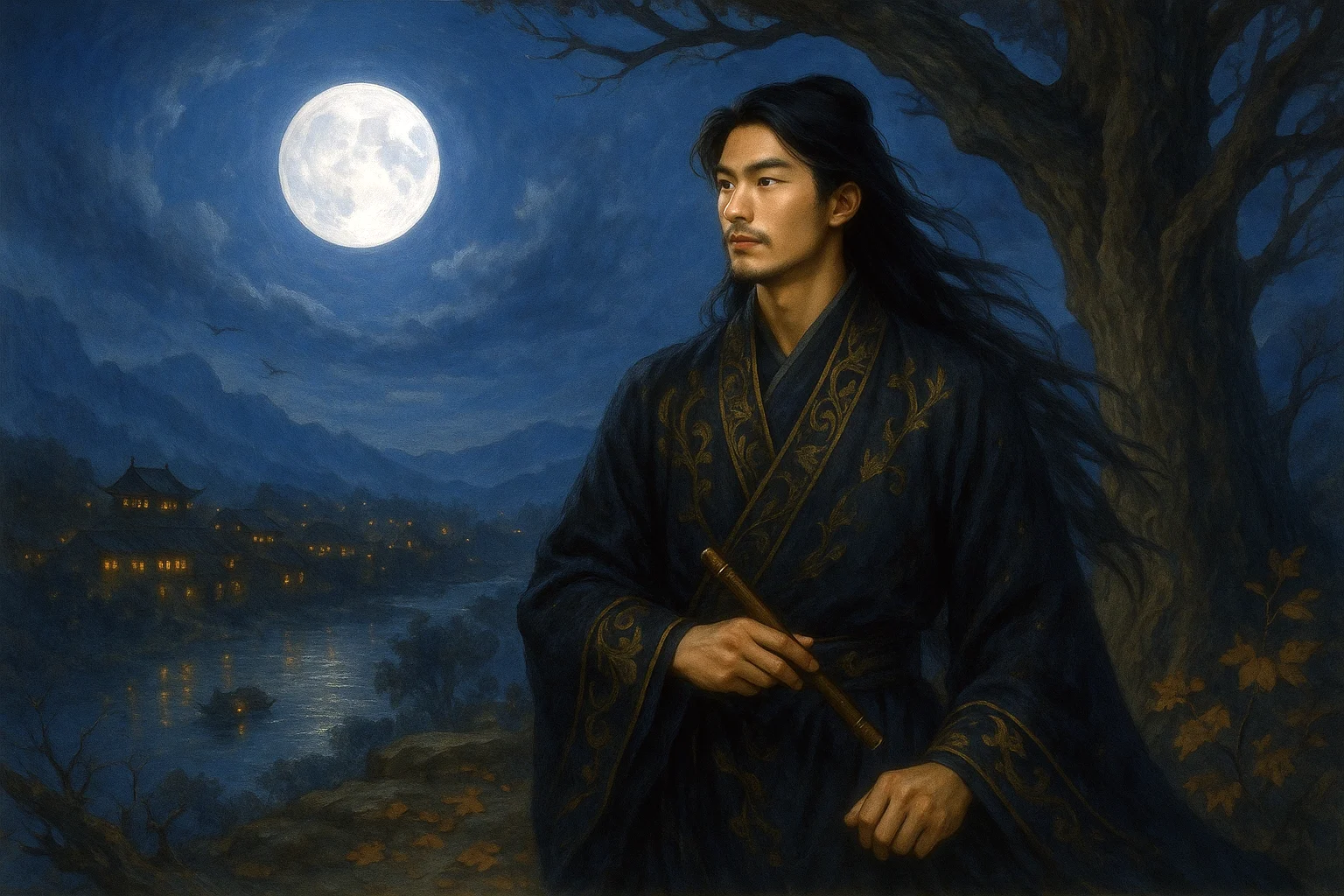
Li He (李贺 790 - 816), a native of Yiyang, Henan, was a Romantic poet of the Mid-Tang dynasty. A descendant of the Tang imperial clan, he was barred from taking the national jinshi civil service examination due to a naming taboo (his father's name contained a character homophonous with "Jin"), which led to a life of frustration and poverty. He died at the age of twenty-seven. His poetry, renowned for its bizarre grandeur, chilling elegance, and fantastical imagination, earned him the title "Ghost of Poetry." He pioneered the distinctive "Changji Style" within Tang poetry, exerting a profound influence on later poets like Li Shangyin and Wen Tingyun and on the expansion of poetic imagery in subsequent eras.