


On vernal day no flowers were in bloom, alas!
In second moon I'm glad to see the budding grass.
But white snow dislikes the late coming vernal breeze,
It plays the parting flowers flying through the trees.
Original Poem
「春雪」
韩愈
新年都未有芳华,二月初惊见草芽。
白雪却嫌春色晚,故穿庭树作飞花。
Interpretation
This poem was composed during a relatively stable period in Han Yu's official career, likely after his return to the capital during the Yuanhe era. Han Yu, known throughout his life for his uprightness and daring remonstrance, suffered repeated exiles, but he also experienced brief moments of peace. Spring was lingering, the chill still sharp, when an unexpected spring snow arrived. Seeing the white snow fluttering and falling among the trees in his courtyard, resembling spring blossoms, the poet joyfully took up his brush. At this moment, Han Yu had perhaps temporarily escaped political turmoil, or perhaps had just stolen a half-day's leisure from his official duties. Faced with this natural change in the season of alternating warmth and cold, what welled up in his heart was not the deep pain and desolation found in his exile poems, but a rare sense of ease and delight.
"Spring snow" is a common natural phenomenon in the north. After the beginning of spring, as the climate gradually warms, cold snaps can still strike, bringing falling snow. For those longing for spring, this snow might be disappointing; but under Han Yu's pen, the white snow becomes an unwillingly lonely sprite, actively choosing to "穿庭树作飞花" (dart through the courtyard trees as flying flowers), making up for the absence of spring colors. This poetic, personifying treatment of a natural phenomenon reveals another side of Han Yu beyond his "using prose techniques in poetry"—a naive imagination, a lively touch, an optimistic sentiment. It lets us see that Han Yu, who saw himself as a Confucian and took upon himself the responsibility for the orthodox Way, also harbored a childlike delight and romance in his heart.
First Couplet: "新年都未有芳华,二月初惊见草芽。"
Xīnnián dōu wèi yǒu fāng huá, èryuè chū jīng jiàn cǎo yá.
The New Year has come, but still no lovely flowers are seen;
'Tis early in Second Month when, startled, I note the grass's green.
The opening line uses "New Year" to mark the season, a time of renewal and fresh beginnings, yet "still no lovely flowers are seen"—the longed-for spring scenery is delayed. The word "都" (still) conveys the anxiety and regret of long, unfulfilled anticipation. The second line, "二月初惊见草芽" ('Tis early in Second Month when, startled, I note the grass's green), sharply turns the brush. "Second Month" follows "New Year," marking the passage of time and the gradual approach of spring. The word "惊" (startled) is the poetic eye of the line. It captures both the suddenness of the grass shoots breaking through the earth and the poet's surprise upon discovering this hint of green. Though tiny, those "grass shoots" are spring's first message, the first breath of life after the long winter. Using "惊" to describe it, the poet gathers into a single word the joy after long waiting and the sensitivity to life's rhythm.
Second Couplet: "白雪却嫌春色晚,故穿庭树作飞花。"
Báixuě què xián chūnsè wǎn, gù chuān tíng shù zuò fēi huā.
The white snow, though, finds spring too slow to come;
It therefore darts through the courtyard trees as flying flowers.
This couplet is the soul of the entire poem. Moving from the concrete to the abstract, it transforms the snowy scene before him into a romantic fancy. The words "却嫌" (finds… too slow) endow the white snow with human emotion—it, too, finds spring tardy and, unwilling to be lonely, thus "故穿庭树作飞花" (therefore darts through the courtyard trees as flying flowers). The word "故" (therefore) is even more wonderful—it means deliberately, intentionally, as if the snow also understands aesthetic taste and knows how to use its dancing posture to fill the void left by spring's colors. In the poet's eyes, the swirling snowflakes are no longer symbols of cold and desolation, but lively sprites, spring blossoms blooming ahead of time. This fancy is at once naive and charming, and rich in meaning: since spring is late, why not let the snow temporarily stand in for spring flowers? Since reality falls short of expectations, why not use imagination to reconstruct the world?
Holistic Appreciation
This is a fresh, bright, and romantically flavored little poem chanting an object. In four lines and twenty-eight characters, it begins with longing for spring, turns with surprise, and concludes with a wondrous fancy, making a commonplace spring snow full of charm and delight.
In terms of its emotional thread, the poem exhibits a subtle rhythm of "restrain—lift—turn—conclude." The first line, "都未有芳华" (still no lovely flowers are seen), is the restrain, expressing regret over spring's delay. The second line, "惊见草芽" (startled, I note the grass's green), is the lift, expressing the surprise of encountering the first hint of spring. The third line, "却嫌春晚" (finds spring too slow to come), is the turn, shifting emotion from the human realm to nature, endowing the snow with human feeling. The final line, "作飞花" (as flying flowers), is the conclusion, merging snow and flower into one, transforming regret into poetry. Between the four lines, emotions rise and fall, yet they are consistently threaded through with an optimistic, uplifting spiritual tone.
Artistically, the most moving aspect of this poem lies in the skillful use of personification. Comparing the white snow to a sprite that "finds spring too slow" is already a wondrous thought; having it "dart through the courtyard trees as flying flowers" is a marvelous fancy. This personification is not mere rhetorical technique; it is the poet's deep emotional projection onto all things in nature—in Han Yu's eyes, heaven and earth have feeling, all things have spirit; even the white snow understands the pursuit of beauty and knows how to make up for what is lacking. This aesthetic approach of viewing the world through one's own subjective feelings, thereby imbuing all things with one's own colors, is precisely the most moving lyrical tradition of classical Chinese poetry.
In terms of intellectual depth, the core of this poem is "hope" and "transformation." Faced with the reality of spring's delay, the poet does not wallow in regret. Instead, he sees vitality in the grass shoots and poetry in the white snow. The delight of "惊见草芽" (startled, I note the grass's green) and the wondrous fancy of "作飞花" (as flying flowers) are both positive responses to reality—since spring is slow in coming, why not let the heart blossom ahead of the season? This ability to discover beauty within regret and create poetry amidst difficulty is precisely an embodiment of Han Yu's optimistic and broad-minded spirit.
Artistic Merits
- Vivid Personification, Unusual Imagination: "白雪却嫌春色晚,故穿庭树作飞花" endows the white snow with human emotion and active intention, transforming a natural phenomenon into a romantic, wondrous scene. The unusual quality of the imagination compels admiration.
- Clear Contrast, Emotional Fluctuation: The contrast between the regret of "都未有" (still no) and the delight of "惊见" (startled to note), the interplay between the anxiety of long waiting and the surprise of chance encounter, create emotional waves that captivate. Layers are seen in contrast; true feeling is revealed in fluctuation.
- Concise Language, Rich Meaning: The entire poem has no superfluous words. Characters like "惊" (startled), "嫌" (finds… too slow), and "故" (therefore) are precise and vivid, condensing complex emotional changes into single words. The unusual is seen in the plain; the profound is seen in the simple.
- Seeing the Large in the Small, Broad Realm: Starting from the minuteness of grass shoots and the fineness of snowflakes, it manages to convey the entire breath of spring and the deep emotional interaction between humanity and nature. The vast universe is seen in tiny things; profound meaning is contained in small scenes.
- Optimistic and Broad-minded, Brimming with Poetry: Faced with the lingering chill of spring, the poet does not complain. Instead, he uses poetic imagination to dissolve regret and views the world with a delighted eye. This optimistic, broad-minded spirit is precisely a valuable aspect of Han Yu's poetry.
Insights
This poem, through a tardy spring snow, speaks of the wisdom of discovering beauty within regret and creating poetry within reality, offering profound insights for later generations. First, it teaches us how to maintain hope while waiting and discover surprise within regret. "新年都未有芳华" (The New Year has come, but still no lovely flowers are seen)—this is the long wait, the disappointment of long-unfulfilled anticipation. Yet the poet does not wallow in disappointment. Instead, on a certain day in "二月初" (early in Second Month), he is delightedly surprised to discover the grass shoots breaking through the earth. Though small, those shoots are spring's first message; though slight, that surprise is the best reward for waiting. It tells us: The beauty in life often does not arrive as scheduled, but if we maintain keen perception, we will always encounter it unexpectedly.
The wondrous fancy in the line "白雪却嫌春色晚,故穿庭树作飞花" lets us see the power of imagination. Reality is spring's delay and snow's fall; but in the poet's eyes, the snow becomes a sprite that "嫌春晚" (finds spring too slow), a dancer actively choosing to "作飞花" (be flying flowers). This poetic transformation of reality is not escape but transcendence—it lets us discover the extraordinary within the most ordinary things and see poetry in the most desolate season. It enlightens us: Faced with unsatisfactory reality, we can still use imagination to reconstruct the world and use our hearts to create beauty.
On a deeper level, this poem also lets us see a lesser-known side of Han Yu's character. The man famed for his upright, daring remonstrance and his self-appointed role as guardian of the orthodox Way, when faced with a spring snow, could write lines so naive and charming, so childlike at heart. It tells us: Even the most resolute person harbors softness within; even the heaviest soul needs a poetic dwelling place. The wisdom of life lies not only in perseverance but also in the ability to maintain, beyond that perseverance, a sensitivity to beauty and a sense of wonder at the world.
Poem Translator
Xu Yuanchong (许渊冲)
About the Poet
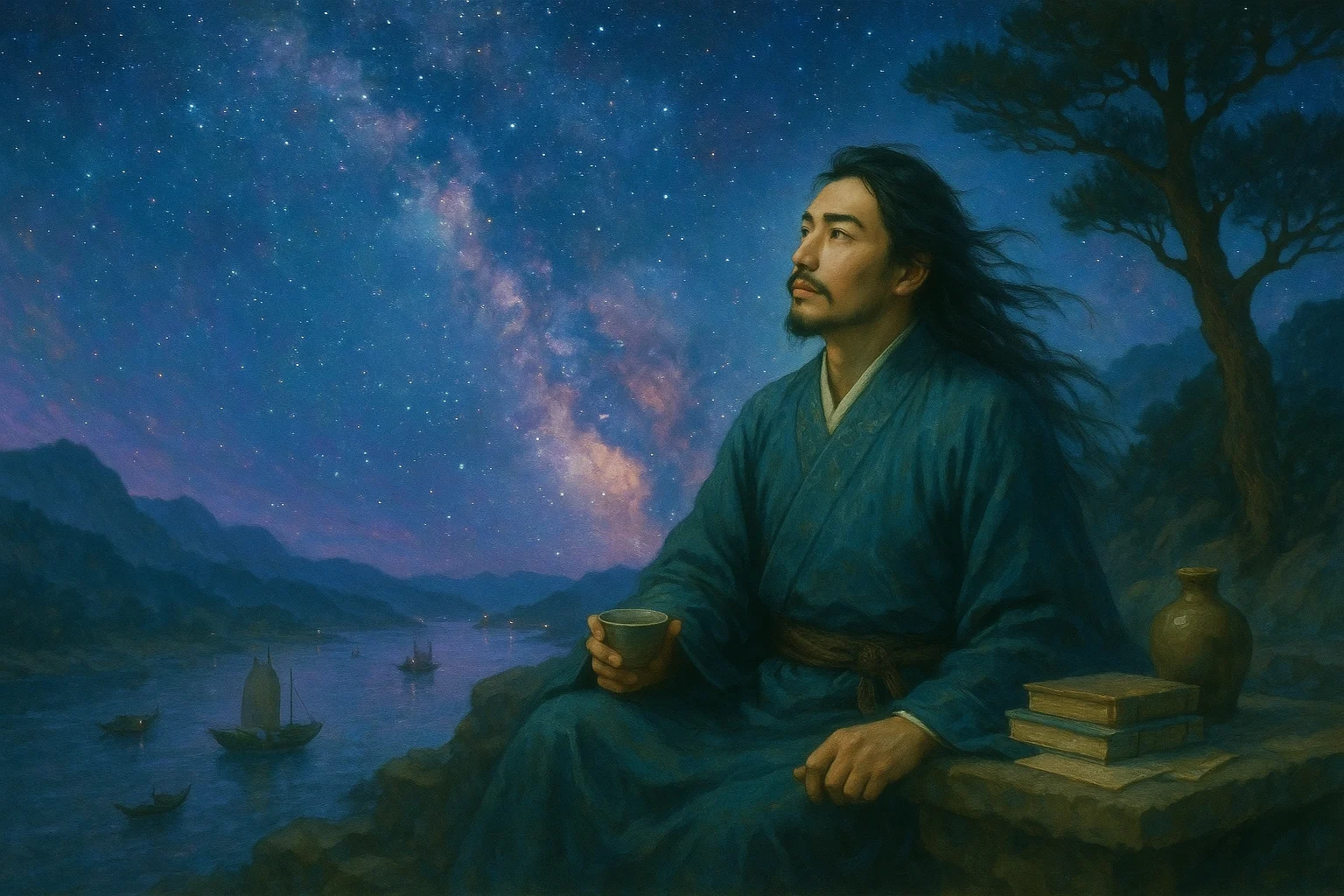
Han Yu (韩愈, 768 - 824), originario de Mengzhou en Henan, fue el líder del Movimiento de la Prosa Antigua durante la dinastía Tang. Obtuvo el título de jinshi en 792 y ascendió al cargo de Viceministro de Personal. Su prosa es vigorosa y poderosa, mientras que su poesía se caracteriza por un estilo audaz y poco convencional. Su poema Rocas de la Montaña (山石) inauguró la técnica de "prosificar la poesía". Fue mentor de poetas como Meng Jiao y Jia Dao, y es considerado el principal de los "Ocho Grandes Maestros de la Prosa de Tang y Song". Sus contribuciones revolucionarias a la literatura tuvieron una influencia profunda y duradera, lo que le valió el título honorífico de "Maestro Literario de las Generaciones".