

The north wind rolls the white grasses and breaks them;
And the Eighth-month snow across the Tartar sky
Is like a spring gale, come up in the night,
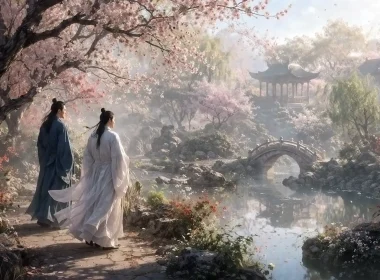
Blowing open the petals of ten thousand pear trees.

It enters the pearl blinds, it wets the silk curtains;
A fur coat feels cold, a cotton mat flimsy;
Bows become rigid, can hardly be drawn,
And the metal of armour congeals on the men;
The sand-sea deepens with fathomless ice,
And darkness masses its endless clouds;

But we drink to our guest bound home from camp,
And play him barbarian lutes, guitars, harps;
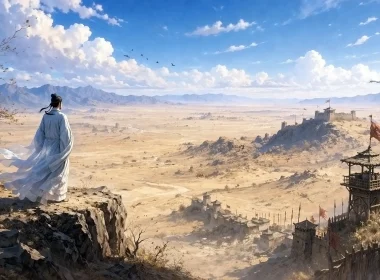
Till at dusk, when the drifts are crushing our tents
And our frozen red flags cannot flutter in the wind,

We watch him through Wheel Tower Gate going eastward,
Into the snow-mounds of Heaven-Peak Road…
And then he disappears at the turn of the pass,
Leaving behind him only hoof-prints.
Original Poem
「白雪歌送武判官归京」
岑参
北风卷地白草折, 胡天八月即飞雪;
忽如一夜春风来, 千树万树梨花开。
散入珠帘湿罗幕, 狐裘不暖锦衾薄。
将军角弓不得控, 都护铁衣冷犹著。
瀚海阑干百丈冰, 愁云黪淡万里凝。
中军置酒饮归客, 胡琴琵琶与羌笛。
纷纷暮雪下辕门, 风掣红旗冻不翻。
轮台东门送君去, 去时雪满天山路;
山回路转不见君, 雪上空留马行处。
Interpretation
This masterpiece was composed approximately between the thirteenth year of the Tianbao era (754 CE) and the first year of the Zhide era (756 CE), when Cen Can served as Administrative Judge on the staff of Feng Changqing, Protector-General of Anxi and Beiting, stationed at Luntai (near present-day Ürümqi, Xinjiang). Judge Wu (name unknown) was likely a colleague of Cen Can's, and was being dispatched back to the capital to report on his duties. The birth of this poem coincided with the golden age of High Tang frontier poetry and with Cen Can's second tour beyond the frontier, when his poetic art had reached its highest refinement.
This is no ordinary farewell poem, but a comprehensive expression, within an extreme natural environment, of the spirit of the High Tang frontier, the aesthetics of exotic borderland scenery, and the depth of genuine human emotion. The August snowfall at Luntai is both a factual climatic record and the source of inspiration that erupted when the poet's artistic spirit encountered this natural wonder. Cen Can set the melancholy of parting entirely within the magnificent world of snow—where "thousands upon thousands of pear trees burst into bloom"—and amid the harsh reality of "the wind tugs the red banner yet it will not turn." Thus, the private emotions of farewell acquired an epic, magnificent backdrop. The poem takes "snow" as its absolute protagonist, running throughout—at once nature's majestic manifestation, the true backdrop of frontier military life, and the catalyst for the poet's surging passion and astonishing imagination, ultimately crystallizing into the most brilliant symphonic poem of snow in High Tang frontier poetry.
First Couplet: "北风卷地白草折,胡天八月即飞雪。"
Běi fēng juǎn dì bái cǎo zhé, hú tiān bā yuè jí fēi xuě.
The north wind rolls across the earth, breaking the white grass;
In the barbarian sky, already in the eighth month, snow flies.
The opening strikes like a panoramic storm shot in a film, with thunderous force instantly plunging the reader into the extreme cold and harshness of the northwestern frontier. "Rolls across the earth" conveys the ferocity of the wind; "breaking" reveals nature's power—both charged with immense force. "In the barbarian sky, already in the eighth month, snow flies" points to the anomaly of time and place; the character "already" is filled with astonishment at the strange climate of the borderlands. This is not merely environmental description but the establishment of a tone of magnificence, vigor, and primal tension that will run throughout the poem.
Second Couplet: "忽如一夜春风来,千树万树梨花开。"
Hū rú yī yè chūn fēng lái, qiān shù wàn shù lí huā kāi.
Suddenly, as if a night of spring wind had come,
On thousands of trees, tens of thousands of pear blossoms burst forth.
This couplet rises like a peak from a plain—a line of immortal fame in the literature of snow. With extraordinary imagination, the poet completes a breathtaking aesthetic transformation: the bitter cold of flying snow is instantly transmuted into the warm radiance of spring pear blossoms. Using "spring wind" as a metaphor for the north wind, "pear blossoms" for snowflakes, and the repetition of "thousands and tens of thousands" to convey the vastness, density, and boundlessness of the snowfall, this is more than a simile—it is a poetic magic that dissolves the bitter cold of the northern frontier in the warmth of Jiangnan spring. It reveals Cen Can's characteristic High Tang broad-mindedness, romantic spirit, and formidable power to transform hardship into beauty when confronting harsh nature.
Third Couplet: "散入珠帘湿罗幕,狐裘不暖锦衾薄。"
Sàn rù zhū lián shī luó mù, hú qiú bù nuǎn jǐn qīn báo.
Scattering into pearl curtains, it dampens silk awnings;
Fox-fur robes are not warm, brocade quilts feel thin.
The perspective shifts from the grand outdoor scene to intimate details within the military tent. Snow penetrates everywhere ("scattering"), and the cold seeps into everything. "Pearl curtains," "silk awnings," "fox-fur robes," and "brocade quilts" are all luxurious, cold-resistant items—yet in this environment they prove utterly inadequate. These four lines, through vivid depiction of everyday life, transform the abstract concept of "cold" into a tangible, palpable physical experience, laying the real physical groundwork for the human activities that follow.
Fourth Couplet: "将军角弓不得控,都护铁衣冷犹著。"
Jiāng jūn jiǎo gōng bù dé kòng, dū hù tiě yī lěng yóu zhe.
The general's horn bow cannot be drawn;
The protector-general's iron armor, cold as it is, he still wears.
The lens focuses on the frontier soldiers. The horn bow "cannot be drawn" because of the cold—martial prowess constrained by nature; the iron armor is "cold as it is" yet "still worn"—military duty transcending physical suffering. The contrast between "cannot" and "still" highlights the frontier soldiers' resilience, fortitude, and devoted spirit in extreme conditions, adding a profound dimension of human character to the poem's magnificent scenery.
Fifth Couplet: "瀚海阑干百丈冰,愁云黪淡万里凝。"
Hàn hǎi lán gān bǎi zhàng bīng, chóu yún cǎn dàn wàn lǐ níng.
Across the vast desert stretch hundred-foot sheets of ice;
Sorrowful clouds, grey and dim, congeal for ten thousand li.
The poet's brush sweeps wide again, painting the frontier panorama with extreme hyperbole. The juxtaposition of "vast desert" with "hundred-foot sheets of ice" highlights nature's immense power and desolation; "sorrowful clouds, grey and dim, congeal for ten thousand li" invests heaven and earth with emotion, projecting the sorrow of parting onto the boundless sky, making the natural scene the grand correlative of the characters' inner feelings, creating an atmosphere of heaven and earth sharing in grief—vast, desolate, and charged with the solemnity of farewell.
Sixth Couplet: "中军置酒饮归客,胡琴琵琶与羌笛。"
Zhōng jūn zhì jiǔ yǐn guī kè, hú qín pí pá yǔ qiāng dí.
In the central camp, wine is set out to feast the returning guest;
Hu fiddles, pipas, and Qiang flutes play together.
This couplet directly introduces the theme of farewell. Against the bitter cold background, the scene of "setting out wine" feels especially precious and warm. The juxtaposition of the three quintessential Western Regions instruments—the hu fiddle, the pipa, and the Qiang flute—not only marks the borderland character of the farewell but also, through the clamorous, exotic strains, contrasts with and deepens the complex emotions of parting. The louder the music, perhaps the deeper the sorrow.
Seventh Couplet: "纷纷暮雪下辕门,风掣红旗冻不翻。"
Fēn fēn mù xuě xià yuán mén, fēng chè hóng qí dòng bù fān.
In swirling dusk snow, the camp gate is covered;
The wind tugs the red banner, yet frozen, it will not turn.
This detail is hailed as a "stroke of genius." Dusk snow continues the poem's snow imagery; "the wind tugs the red banner, yet frozen, it will not turn" is a masterful capture of a frontier marvel: the wind's wild force ("tugs") against the banner's frozen stillness ("will not turn") creates a powerful opposition. The image is sculptural and symbolic. The red banner—emblem of the military camp and the homeland—frozen in the snow and ice, becomes a totem of the border defender's steadfast spirit: solemn, tragic, and sublime.
Eighth Couplet: "轮台东门送君去,去时雪满天山路。"
Lúntái dōng mén sòng jūn qù, qù shí xuě mǎn tiān shān lù.
At Luntai's east gate, I see you off;
As you depart, snow fills the road through the Tianshan Mountains.
The lens moves from the camp gate to the farther point of farewell. Luntai's east gate is both the end of the farewell and the beginning of the friend's solitary journey. "Snow fills the road through the Tianshan Mountains"—five characters that, with the overwhelming snowscape, push the image of a vast, uncertain road stretching into the distance to its extreme, fully preparing the emotional ground for the closing couplet.
Final Couplet: "山回路转不见君,雪上空留马行处。"
Shān huí lù zhuǎn bù jiàn jūn, xuě shàng kōng liú mǎ xíng chù.
The mountain bends, the road turns—I can no longer see you;
Only on the snow remain the tracks of your horse.
These are the emotional culmination of the poem, and its highest artistic achievement. "The mountain bends, the road turns—I can no longer see you" is a common expression in farewell poetry, but followed by "only on the snow remain the tracks of your horse," it achieves a transcendent realm. The traveler has gone, leaving only hoof prints on the snow, stretching into the distance. The two characters "only remain" are an extension of the gaze, a condensation of emotion, investing all the poet's reluctance, melancholy, and blessings in this vast, empty snowfield. The hoof prints are both evidence of the friend's departure and an extension of the poet's watching gaze—he can no longer see the person, yet he continues to watch the tracks slowly being covered by snow. Silence speaks louder than words, leaving endless resonance.
Overall Appreciation
This is the pinnacle of the perfect fusion of frontier poetry and farewell poetry. In nine couplets and eighteen lines, with "snow" as its thread and "farewell" as its core, the poem fuses the extreme cold of the borderlands, exotic scenery, military life, and the bonds of old friendship into a single whole, achieving in a magnificent and wondrous world of snow a comprehensive expression of the High Tang frontier spirit and the depths of human emotion.
Structurally, the poem progresses from outside to inside, from scene to feeling, from the grand to the lingering. The first couplet bursts in with thunderous force: "the north wind rolls across the earth, breaking the white grass" and "in the eighth month, snow flies." The second couplet, with the astonishing simile "suddenly, as if a night of spring wind had come," achieves an aesthetic transcendence of hardship. The third and fourth couplets move from outdoors to the tent interior, transforming the abstract "cold" into a palpable physical sensation through details like "fox-fur robes are not warm" and "the horn bow cannot be drawn." The fifth couplet, with "hundred-foot sheets of ice" and "sorrowful clouds congealed for ten thousand li," projects the sorrow of parting onto the vast heavens and earth. The sixth couplet introduces the farewell theme with the feast "in the central camp." The seventh couplet, with the extraordinary image of "the wind tugs the red banner, yet frozen, it will not turn," freezes the scene in a uniquely tragic and sublime frontier moment. The eighth couplet pushes the lens to Luntai's east gate, with "snow fills the road through the Tianshan Mountains" conveying the vast uncertainty of the road ahead. The final couplet closes with the lingering gaze upon "only on the snow remain the tracks of your horse." The nine couplets move from outdoors to indoors, from environment to character, from natural wonder to human warmth, from the joy of a farewell feast to the solitary contemplation of empty tracks—layer upon layer, with lingering resonance.
In terms of theme, the poem pivots on the resonance between "suddenly, as if" and "only remain." The "suddenly, as if" of "suddenly, as if a night of spring wind had come" is the poet's poetic magic of dissolving the northern frontier's bitter cold in the warmth of Jiangnan spring—he transmutes the freezing snow into radiant pear blossoms, achieving an aesthetic transcendence of reality through the power of imagination. And the "only remain" of "only on the snow remain the tracks of your horse" is the serene gaze that returns to reality after that transcendence—the friend is gone, only hoof prints remain, and the poet condenses all his blessings, reluctance, and melancholy into this empty snowfield. Between this "suddenly, as if" and "only remain" lies the most precious quality of High Tang poets: they could transcend the harshness of reality through magnificent imagination, and after that transcendence, they could calmly face the emptiness of reality—neither fleeing from hardship nor indulging in sentimentality, but accepting all—hardship and beauty, reunion and parting, heroic spirit and melancholy—as integral parts of life, and solidifying them as eternity through poetry.
Artistically, the most striking qualities of this poem are the innovative reverse simile of writing winter through spring and the multi-dimensional writing of cold. The poet transforms the world of snow into a scene of spring splendor with "thousands upon thousands of pear trees burst into bloom." This reverse, life-filled simile is not only a genius creation in literary history but also endows the harsh environment with vitality and poetic beauty. In depicting cold from multiple dimensions—tactile (fox-fur robes are not warm), behavioral (the horn bow cannot be drawn), visual (hundred-foot sheets of ice), and symbolic (the red banner frozen stiff)—the poet makes the abstract "cold" a tangible, bodily memory. The image of "the wind tugs the red banner, yet frozen, it will not turn" is hailed as a "stroke of genius"—the wild force of the wind against the frozen stillness of the banner creates a powerful opposition, an image of sculptural force, where the red banner frozen in ice and snow becomes a totem of the border defender's unyielding spirit, solemn and sublime. The entire poem is like a masterfully edited film, its lens seamlessly shifting between wide panoramas, medium shots, and close-ups. These scene changes drive the emotional ebb and flow and the rhythmic cadence, creating a narrative tempo of alternating tension and release, of vast and varied atmosphere. It closes with the lingering image of "only on the snow remain the tracks of your horse," placing all the reluctance, melancholy, and blessings of farewell upon that silent snowfield—silence speaks louder than words, leaving endless resonance.
Artistic Features
- A Paradigm of Figurative Innovation
"Suddenly, as if a night of spring wind had come, on thousands of trees, tens of thousands of pear blossoms burst forth" transforms the cold snowscape into a scene of warm, radiant spring. This reverse simile, full of life, is both apt in describing the appearance of snow and endows the harsh environment with vitality and poetic beauty—a genius creation in literary history. - Multi-Dimensional Writing of Cold
The poet writes of "cold" from multiple dimensions: tactile cold (fox-fur robes are not warm), behavioral cold (the horn bow cannot be drawn), visual cold (hundred-foot sheets of ice, clouds for ten thousand li), auditory cold (combined with the imagined sound of music), and even symbolic cold (the red banner frozen stiff). This comprehensive, multi-sensory rendering immerses the reader in the scene, greatly enhancing the poem's emotional power. - Cinematic Scene Editing and Rhythmic Control
The entire poem is like a masterfully edited film, the lens seamlessly shifting between wide-angle panoramas (flying snow in the barbarian sky, ice on the desert), medium shots (the central camp, the camp gate), and close-ups (pearl curtains, the horn bow, the red banner, hoof prints). These scene changes drive the emotional ebb and flow and the rhythmic cadence, creating a narrative tempo of alternating tension and release. - Poetic Transfiguration of Frontier Scenery
The poem's dense imagery—"white grass," "barbarian sky," "vast desert," "camp gate," "Luntai," "Tianshan Mountains," "hu fiddles, pipas, and Qiang flutes"—distinctively marks the unique space of the Western Regions frontier. Cen Can's genius lies not in merely cataloguing these exotic elements, but in poetizing and aestheticizing them through magnificent imagination and full emotion, making them literary witnesses to the expansion of the High Tang spirit.
Insights
This magnificent poem is the most powerful echo of the High Tang spirit resounding from the distant frontier. It shows us that true heroism and poetry are often born from the most severe challenges. First, it reveals a wisdom of adversity and transcendence. Facing the extreme environment of "flying snow in the eighth month" and "hundred-foot sheets of ice," Cen Can does not wallow in the groanings of bitter cold; instead, through the magnificent image of "thousands upon thousands of pear trees burst into bloom," he achieves an aesthetic transcendence of reality's hardship. This reminds us that in our own "frigid" moments, we might learn this spiritual capacity to transform challenges into sources of creation and to sublimate suffering into artistic beauty.
Second, it reveals the resonance between individual emotion and the spirit of the age. The feeling of parting in this poem, placed within the broader context of defending the frontier and interwoven with the heroic spirit of the soldiers, transcends the realm of private friendship to attain a broader grandeur. This shows us that when personal emotions and values connect with a larger cause or the spirit of an age, they often shine with greater brilliance.
Ultimately, this poem leaves us with a way of affirming emotion and existence amid the vastness of heaven and earth. No matter how fierce the wind and snow, the red banner still stands at the camp gate; no matter how far the returning guest has gone, friendship lingers in the hoof prints on the snow. Through his poetic art, Cen Can tells us: even in the bleakest of places, human friendship, courage, and poetry can take root, blossom, and, through time, warm the hearts of countless future readers. This is perhaps the immortal power of literature and spirit.rm the hearts of countless readers for generations to come. This, perhaps, is the immortal power of literature and the human spirit.
Poem translator
Kiang Kanghu
About the poet
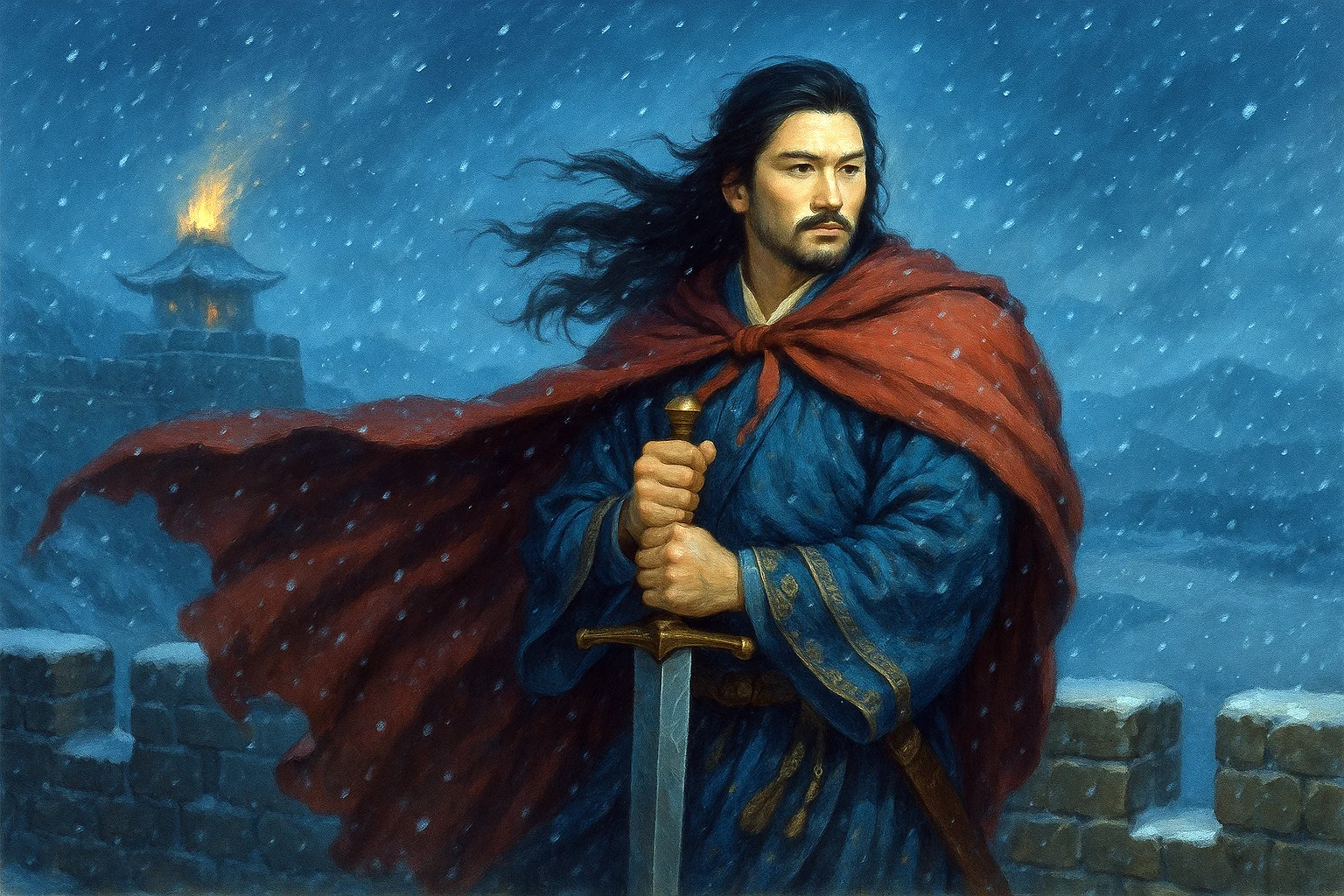
Cen Can(岑参), 715-770 AD, was a native of Jingzhou, Hubei Province. He studied at Mt. Songshan when he was young, and later traveled to Beijing, Luoyang and Shuohe. Cen Can was famous for his border poems, in which he wrote about the border scenery and the life of generals in a majestic and unrestrained manner, and together with Gao Shi, he was an outstanding representative of the border poetry school of the Sheng Tang Dynasty.