It is almost as hard for friends to meet
As for the morning and evening stars.
Tonight then is a rare event,
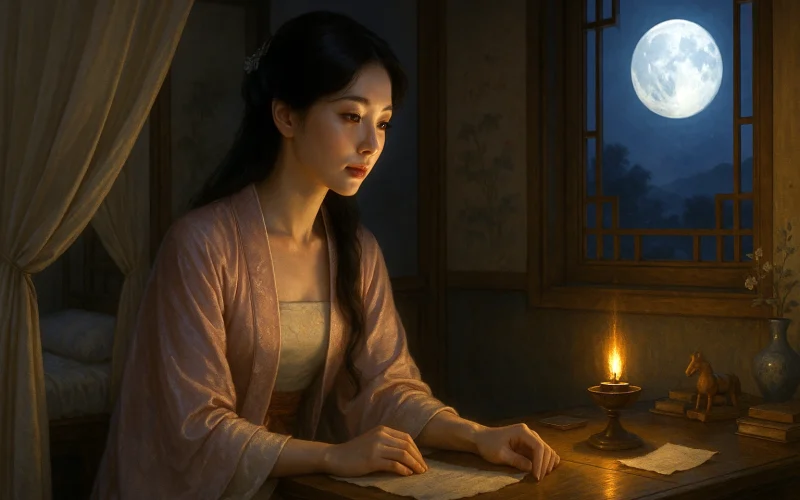
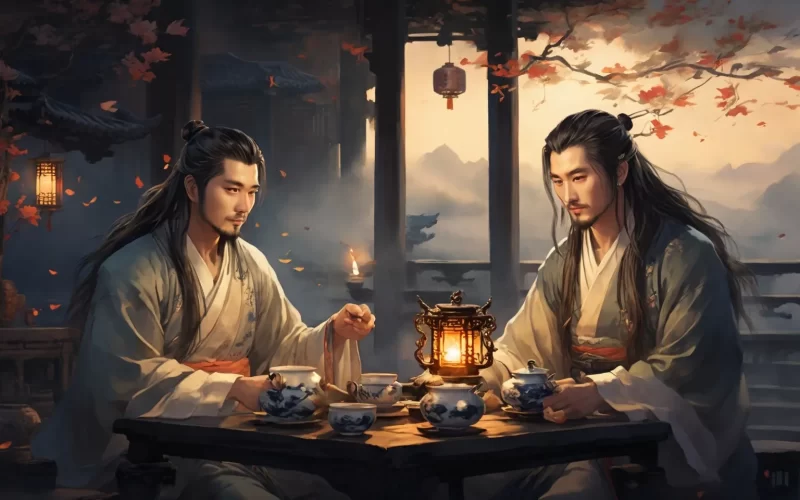
Joining, in the candlelight,
Two men who were young not long ago
But now are turning grey at the temples.

…To find that half our friends are dead
Shocks us, burns our hearts with grief.
We little guessed it would be twenty years
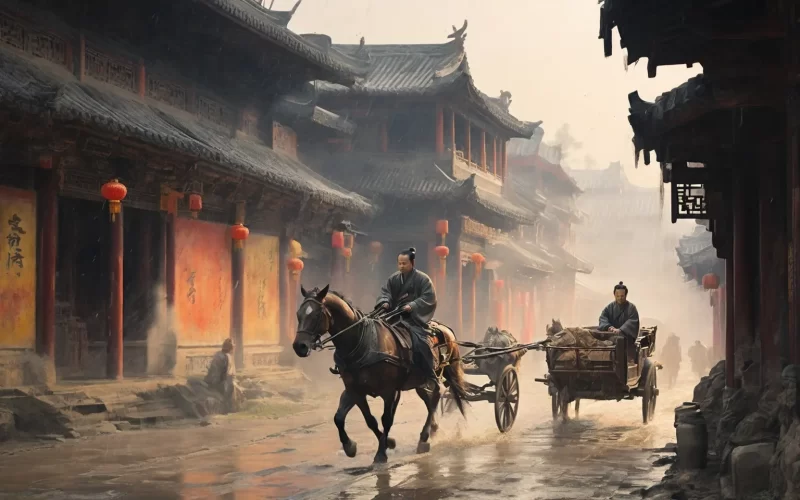
Before I could visit you again.
When I went away, you were still unmarried;
But now these boys and girls in a row
Are very kind to their father's old friend.
They ask me where I have been on my journey;
And then, when we have talked awhile,
They bring and show me wines and dishes,
Spring chives cut in the night-rain
And brown rice cooked freshly a special way.

…My host proclaims it a festival,
He urges me to drink ten cups --
But what ten cups could make me as drunk
As I always am with your love in my heart?

…Tomorrow the mountains will separate us;
After tomorrow-who can say?
Original Poem
「赠卫八处士」
杜甫
人生不相见, 动如参与商。
今夕复何夕, 共此灯烛光。
少壮能几时, 鬓发各已苍。
访旧半为鬼, 惊呼热中肠。
焉知二十载, 重上君子堂。
昔别君未婚, 儿女忽成行。
怡然敬父执, 问我来何方。
问答乃未已, 驱儿罗酒浆。
夜雨剪春韭, 新炊间黄粱。
主称会面难, 一举累十觞。
十觞亦不醉, 感子故意长。
明日隔山岳, 世事两茫茫。
Interpretation
This poem was composed in the spring of 759 CE, the second year of the Qianyuan era under Emperor Suzong of the Tang dynasty, during Du Fu's journey from Luoyang back to his post in Huazhou. The An Lushan Rebellion still raged, famine plagued the capital region, and the poet, having weathered the storms of officialdom and the displacements of war, chanced upon an old friend from his youth, the Recluse Wei Ba, on the vast and uncertain road of life. Twenty years had passed since their last meeting. Reunited on a wind-swept, rain-lashed night, Du Fu, with a poetic brush as plain as speech and as profound as aged wine, recorded this ordinary yet precious human encounter amidst a turbulent age.
First Couplet: “人生不相见,动如参与商。”
Rén shēng bù xiāng jiàn, dòng rú shēn yǔ shāng.
In life, farewells are frequent, meetings rare, / As with the morning and the evening star.
The poem opens with an astronomical metaphor, setting the separations and reunions of human existence against the vast backdrop of celestial movement. The phrase "As with" captures the helpless inevitability that characterizes much of life, establishing a somber and far-reaching tone for the entire work.
Second Couplet: “今夕复何夕,共此灯烛光。”
Jīn xī fù hé xī, gòng cǐ dēng zhú guāng.
What night is tonight, that we two share / The light of this same candle's glare?
The focus shifts from the boundless cosmos to a single lamp in the human world. Posed with dreamlike wonder, this question highlights the sheer chance and preciousness of meeting again in such troubled times. "The light of this same candle's glare" is not merely a physical detail but a symbol of warmth and stability amidst turmoil, its comfort piercing to the bone.
Third Couplet: “少壮能几时,鬓发各已苍。”
Shào zhuàng néng jǐ shí, bìn fà gè yǐ cāng.
The prime of youth—how long did it last? / Our temples now are streaked with grey.
From the surprise of reunion, the verse turns to the stark reality of time's passage. The sharp contrast between "The prime of youth" and "streaked with grey" strikes directly at the heart of life's transience, the lament deep yet restrained.
Fourth Couplet: “访旧半为鬼,惊呼热中肠。”
Fǎng jiù bàn wéi guǐ, jīng hū rè zhōng cháng.
I ask about old friends—half are ghosts; / Cries of shock burn my heart within.
The scope widens from personal aging to the fate of a generation, revealing war's cruel toll on human life. "Cries of shock" captures the visceral reaction, while "burn my heart within" conveys the inner scorching pain. The fragility and profound sorrow of existence in a chaotic era burst forth.
Fifth Couplet: “焉知二十载,重上君子堂。”
Yān zhī èr shí zǎi, chóng shàng jūn zǐ táng.
Who could have dreamed that after twenty years, / I'd enter once again your hall?
Led by the words "Who could have dreamed," the poet's thoughts return to the present, finding a note of solace within sorrow. The tone blends a sigh over fate's unpredictability with a sense of gratitude for this post-calamity reunion.
Sixth Couplet: “昔别君未婚,儿女忽成行。”
Xī bié jūn wèi hūn, ér nǚ hū chéng háng.
When we parted, you were still unmarried; / Now suddenly a row of children stand.
Through the contrast between "still unmarried" and "a row of children stand," the poem juxtaposes the continuation of life against its passing. Amidst impermanence, there is vitality; within the ravages of time, a touch of warmth.
Seventh Couplet: “怡然敬父执,问我来何方。”
Yí rán jìng fù zhí, wèn wǒ lái hé fāng.
Content, they greet their father's old, good friend, / And ask me whence and where I've been.
The word "Content" paints the simple, respectful demeanor of the next generation, creating a vivid and warm scene. In these casual questions and answers flows a human connection that remains alive across two decades.
Eighth Couplet: “问答乃未已,驱儿罗酒浆。”
Wèn dá nǎi wèi yǐ, qū ér luó jiǔ jiāng.
Before our talk ends, you urge your sons and daughters dear / To bring in wine without delay.
The hurried action of "urge" reveals the host's eager and deep affection. Friendship moves from words to concrete deeds within the simple rituals of domestic life.
Ninth Couplet: “夜雨剪春韭,新炊间黄粱。”
Yè yǔ jiǎn chūn jiǔ, xīn chuī jiàn huáng liáng.
They bring fresh chives cut in the evening rain, / And steamed millet mixed with rice, newly done.
The plainest of country fare enters the poem. "Fresh chives cut in the evening rain" particularly evokes genuine feeling and rustic vitality. This simple yet heartfelt hospitality surpasses any delicacy; it is the truest feast in a troubled world.
Tenth Couplet: “主称会面难,一举累十觞。”
Zhǔ chēng huì miàn nán, yī jǔ lèi shí shāng.
You say it's hard to meet, / And drain at once ten cupfuls of your wine.
"Hard to meet" is the stark truth of human connection in chaotic times; "drain at once ten cupfuls" is an outpouring of pent-up emotion. Wine becomes the medium to dissolve the gulf of years and express a friendship too deep for words.
Eleventh Couplet: “十觞亦不醉,感子故意长。”
Shí shāng yì bù zuì, gǎn zǐ gù yì cháng.
Even ten cups cannot make me drunk; / I'm moved by our old friendship deep.
"Cannot make me drunk" speaks not of alcohol tolerance but of the depth of feeling. The phrase "our old friendship deep" carries the weight of a mountain, conveying the poet's profound esteem and gratitude for a bond unchanged by the passage of time.
Final Couplet: “明日隔山岳,世事两茫茫。”
Míng rì gé shān yuè, shì shì liǎng máng máng.
Tomorrow you'll be severed by mountain peaks, / And lost in the endless events of the world.
From the peak of warm conviviality, the poem plunges back into desolate reality. The spatial barrier of "severed by mountain peaks" intertwines with the existential uncertainty of "lost in the endless events," framing the night's warmth against the vast, turbulent backdrop of the era. The aftertaste is endless, a poignant mingling of joy and sorrow.
Holistic Appreciation
Using time as its axis and framed by "tonight's" gathering and "tomorrow's" parting, the poem unfolds a vivid miniature of life's journey between the warmth of "candlelight" and the desolation of "mountain peaks" and "endless events." With a brushstroke akin to plain description, Du Fu weaves two decades of change, the loss of old friends, the propagation of life, a single night's feast, and the sorrow of impending separation into this spring-rain evening.
Its power lies in how it "reveals the tides of an era within ordinary details, and universal human feeling within personal meetings and partings." The poem contains no grand historical narration. Yet, through the "half are ghosts" among old friends, the "suddenly a row of children," the "evening rain" cutting chives, and the "ten cupfuls" drained dry, it makes the profound impact of the An Lushan Rebellion—that colossal historical upheaval—on ordinary lives tangible and concrete in the relatable dynamics of human relations and emotional tremor.
Artistic Merits
- Structure as Natural as Speech, Emotion Deepening Layer by Layer
The entire poem flows like spoken conversation, following the natural course of thought and scene: from lamenting life's ways to the shock of confronting age, from sorrowful news of old friends to the joy of seeing children, from earnest hospitality to heartfelt drinking and gratitude, finally returning to the desolation after parting. The emotional cadence is clear and distinctly layered. - Vivid Use of Contrast, Tension Sustained Throughout
The cosmic distance between "the morning and the evening star" versus the intimate closeness of "candlelight"; "The prime of youth" versus "streaked with grey"; "half are ghosts" versus "suddenly a row of children"; "tonight's" shared light versus "tomorrow's" severed mountains—these multiple contrasts create a powerful emotional tension that runs through the poem, profoundly revealing the bittersweet flavor of life's uncertain meetings and partings. - Precise Capture of Detail, Rich with the Breath of Life
Details like "urge your sons and daughters…to bring in wine," "fresh chives cut in the evening rain," and "drain at once ten cupfuls" are imbued with vivid, tangible life and the atmosphere of everyday human existence. They give concrete form to deep friendship, making it intimate and moving. - Language Plain and Unadorned, Realm Profound and Expansive
The work largely avoids allusion and ornamentation. Lines like "lost in the endless events of the world" are simple in diction yet immensely rich in meaning, elevating a private gathering and parting into a profoundly resonant elegy on the shared human condition within a chaotic age.
Insights
This work reveals to us that amidst the great upheavals of history, what upholds human dignity and warmth is often the simplest human bonds and everyday rituals. War can destroy cities but cannot extinguish a friend's sincere hospitality of cutting chives in the night rain. An era can scatter people but cannot sever the attachment expressed in "I'm moved by our old friendship deep."
The lesson this poem offers modern readers is this: In lives filled with change and uncertainty, we should cherish even more those seemingly ordinary gatherings, and conscientiously nurture sincere bonds. Just as the poem demonstrates, the substance of life lies not only in how many grand events we experience, but also in how we honor the warmth of a simple meal, how we remember the faces illuminated by a single lamp, and how, before the unknown of a "world lost in endless events," we still retain the pure sincerity and ardent passion to "drain at once ten cupfuls." This is the luminescence of humanity that Du Fu preserved for us amidst chaos, and the power that, transcending a millennium, still moves hearts today.
Poem translator
Kiang Kanghu
About the poet
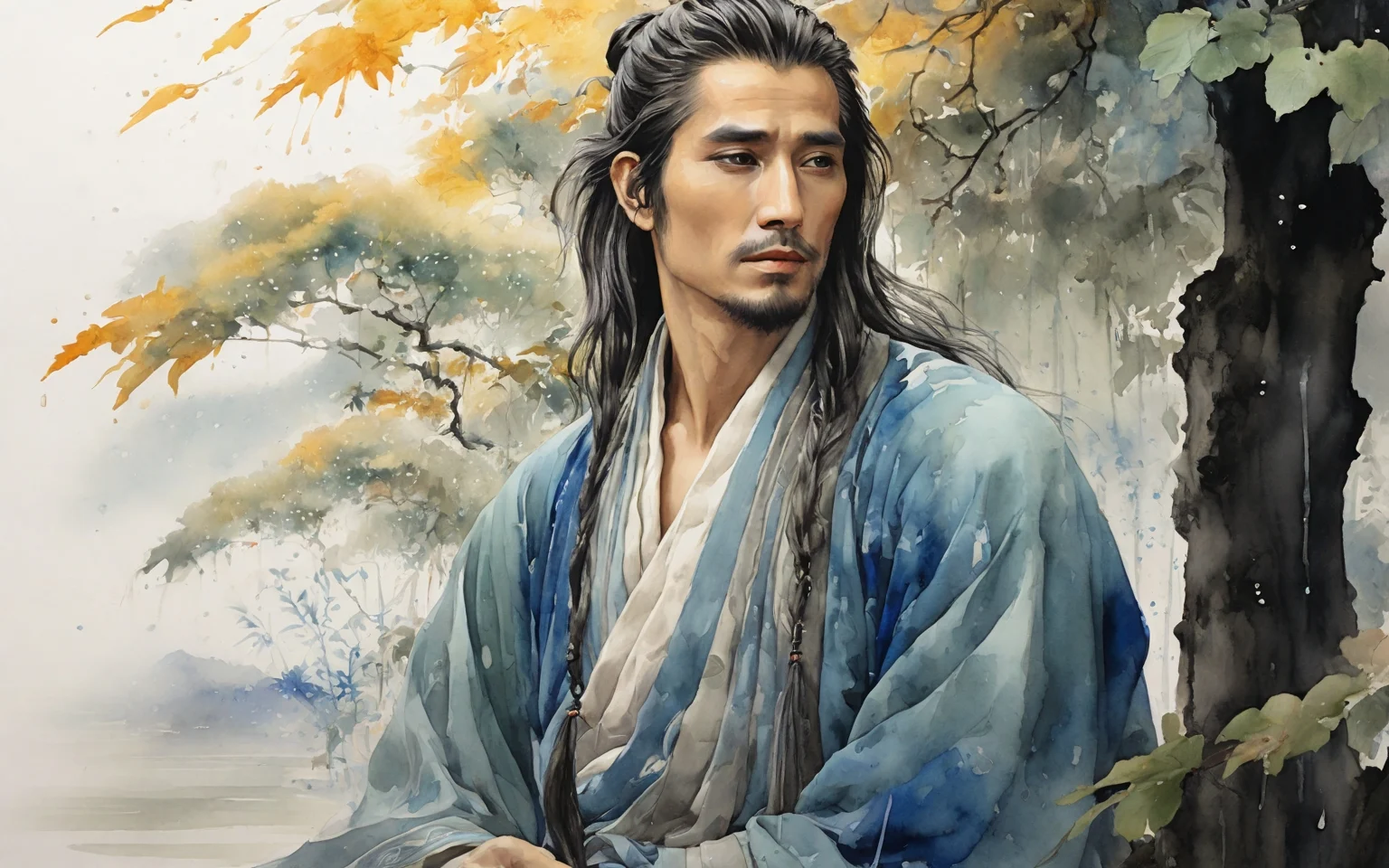
Du Fu (杜甫), 712 - 770 AD, was a great poet of the Tang Dynasty, known as the "Sage of Poetry". Born into a declining bureaucratic family, Du Fu had a rough life, and his turbulent and dislocated life made him keenly aware of the plight of the masses. Therefore, his poems were always closely related to the current affairs, reflecting the social life of that era in a more comprehensive way, with profound thoughts and a broad realm. In his poetic art, he was able to combine many styles, forming a unique style of "profound and thick", and becoming a great realist poet in the history of China.