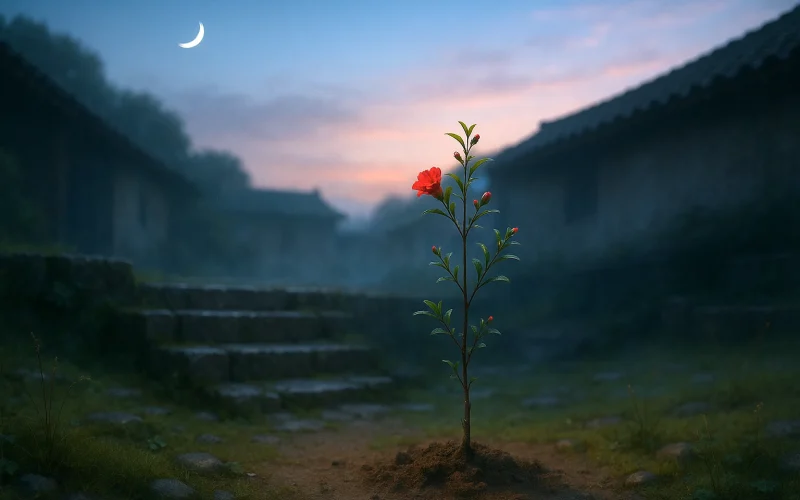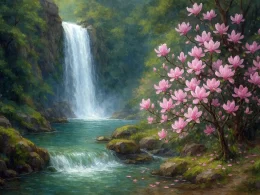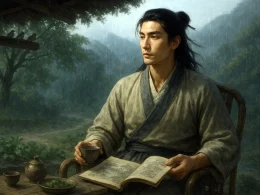



Aloft, the early mume blooms flare,
Against Chu's azure sky so fair.
Night wind carries their fragrance wide,
Dawn frost paints their petals white with pride.
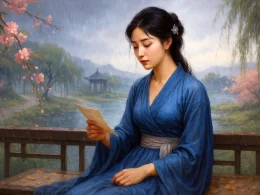
I'd send a branch ten thousand miles,
But endless peaks and streams beguile.
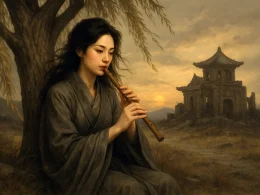
These cold flowers will fade and fall—
What comfort left for one so far in thrall?
Original Poem
「早梅」
柳宗元
早梅发高树,迥映楚天碧。
朔风飘夜香,繁霜滋晓白。
欲为万里赠,杳杳山水隔。
寒英坐销落,何用慰远客?
Interpretation
This poem was composed during Liu Zongyuan's exile in Yongzhou. After the failure of the Yongzhen Reforms, he was demoted from a ministry official to Marshal of Yongzhou, enduring a long ten-year period of exile in the remote wilderness of southern Hunan. Politically discarded, his ideals denied, friends and family scattered, letters cut off—this was Liu Zongyuan's daily reality in Yongzhou. Yet it was precisely in such circumstances that he wrote this work. The "early plum blossoms" in the poem refer to a plum tree blooming in Yongzhou during winter or early spring. It blossoms on a tall tree, strikingly conspicuous beneath the vast Chu skies; it emits a faint fragrance in the northern wind, growing ever more pure white amidst heavy frost. Moved by its noble purity, the poet wished to break off a branch to send to distant friends and family, yet was thwarted by the barrier of mountains and rivers; and the plum blossoms will ultimately wither—how could these un-sendable "cold blossoms" console distant loved ones?
These early plum blossoms are precisely Liu Zongyuan's metaphor for himself. They bloom alone on a tall tree, not competing with other flowers for spring; they endure wind and frost yet still emit fragrance; situated remotely, yet their hearts are tied to afar. The poet uses the plum to write of himself, employs an object to express his aspiration, lodging deep feelings about his own fate and thoughts of home and country within the sparse, distant language.
First Couplet: "早梅发高树,迥映楚天碧。"
Zǎo méi fā gāo shù, jiǒng yìng Chǔ tiān bì.
Early blossoms crown the lofty tree;
A lone glow answers Southern skies.
The opening uses a lofty scene to write of lofty aspiration. "Early blossoms crown the lofty tree"—plum blossoms could naturally bloom on lower branches, but the poet intentionally makes them "crown the lofty tree," emphasizing their noble purity, solitary pride, and refusal to associate with common flowers. This "lofty tree" is both literal description and symbol—though the poet is in a lowly position, his aspirations reside on high.
"A lone glow answers Southern skies"—the word "lone" writes of the blossoms' conspicuousness and independence; the word "answers" writes of their resonance with the vast heavens and earth. Those vast "Southern skies" are precisely the space of the poet's inner world—though his body is confined to a corner, his mind can gallop between heaven and earth. This couplet, with its pure and beautiful imagery, outlines the noble image of the plum blossoms (and the poet), setting the tone for the entire poem.
Second Couplet: "朔风飘夜香,繁霜滋晓白。"
Shuò fēng piāo yè xiāng, fán shuāng zī xiǎo bái.
The northern wind wafts their scent at night;
Thick frost at dawn enhances their pure white.
This couplet writes of the plum blossoms' perseverance in the bitter cold. "Northern wind" is a biting, bone-chilling wind; "thick frost" is dense, piercingly cold frost. Yet it is amidst this wind and frost that the plum blossoms "waft their scent at night"—still emitting fragrance; "thick frost at dawn enhances their pure white"—growing even more pure and crystalline. The word "wafts" captures the fragrance's far-reaching quality; the word "enhances" captures the fusion of frost and blossom, as if the cold frost not only fails to ravage them but nourishes their purity.
These two lines use the harshness of the environment to set off the firmness of character. The fiercer the wind and frost, the more fragrant and pure the plum blossoms—just as the harsher the poet's situation, the firmer his integrity. This is Liu Zongyuan's affirmation of his own spirit: even in political wind and frost, he still maintains the fragrance and nobility of his inner self.
Third Couplet: "欲为万里赠,杳杳山水隔。"
Yù wéi wàn lǐ zèng, yǎo yǎo shān shuǐ gé.
I'd break a spray and send it thousands of miles,
But peaks and streams stretch endless, hopeless ways.
This couplet shifts from description to lyrical expression, alluding to Lu Kai's allusion of "breaking off plum blossoms to send afar." Lu Kai once broke off plum blossoms in Jiangnan to send to Fan Ye in Chang'an, inscribing a poem: "Meeting a courier, I break a sprig of plum, / To send to the friend at Longtou." Liu Zongyuan, in his place of exile, likewise longed for distant friends and family, likewise wished to send his thoughts via plum blossoms. Yet "peaks and streams stretch endless"—those mountains and rivers are too distant, that communication long severed.
Between "I'd break" and "stretch endless" lies a vast chasm between desire and reality. The more the poet desires to send a gift, the more profound his loneliness appears; the more he misses his friends, the more he realizes his own isolated situation. This couplet places personal emotion against a vast spatial background, letting longing and separation form a powerful tension.
Fourth Couplet: "寒英坐销落,何用慰远客?"
Hán yīng zuò xiāo luò, hé yòng wèi yuǎn kè?
These cold blooms will fade and fall;
What use to cheer the distant traveler then?
The final couplet is the culmination and sublimation of the poem's emotion. "Cold blooms" refers to the plum blossoms; "will fade and fall" means they are about to wither. The word "will" implies "about to" or "soon," expressing the poet's keen perception of time's passage and the blossoms' impending end. No matter how beautiful, the plum blossoms will ultimately fall; no matter how steadfast, the poet will ultimately age.
"What use to cheer the distant traveler?"—this question asks both the plum blossoms and himself: Once the plum blossoms have fallen, with what shall I comfort my distant loved ones? With what shall I prove my own existence? With what shall I lodge my longing? These two words, "what use," intertwine personal helplessness with life's impermanence, letting the poem conclude amidst melancholy, yet with a lasting resonance.
Holistic Appreciation
This object-praising poem uses the plum to write of the man, blending object and self. The first two couplets describe the plum's nobility and steadfastness; the last two couplets describe the melancholy of being unable to send the gift and the blossoms' inevitable fading. It progresses from object to person, from scene to emotion, layer by layer, step by step deeper.
The entire poem is pure in imagery, profound in emotion. Images like "early blossoms," "lofty tree," "Southern skies," "northern wind," and "thick frost" construct a pure, cold, and lofty world; emotional words like "send it thousands of miles," "peaks and streams stretch endless," "fade and fall," and "cheer the distant traveler" present the poet's inner loneliness, longing, helplessness, and sorrow one by one. The poet does not directly express his feelings but lets emotion flow naturally through the depiction of scenery, achieving the realm of "not a word written explicitly, yet charm fully captured."
Compared to poems that directly express indignation, this one is more subtle, restrained, and more poignantly moving. The steadfastness of "The northern wind wafts their scent at night," the longing of "I'd break a spray and send it thousands of miles," and the helplessness of "What use to cheer the distant traveler then?" together constitute a soliloquy of a solitary soul, allowing readers a thousand years later to still feel that sorrow and nobility traversing time and space.
Artistic Merits
- Using an Object to Express Ambition, Blending Object and Self: The entire poem uses the early plum as a metaphor for the self; the plum's character is the man's character, the plum's fate is the man's fate; object and self are blended into an integral whole.
- Pure Imagery, Lofty Artistic Conception: The vastness of "A lone glow answers Southern skies," the harshness of "northern wind" and "thick frost," the subtle purity of "scent at night" and "pure white" together construct a pure, cold, and lofty poetic world.
- Natural Allusion, Deepening Emotion: Alluding to Lu Kai's "breaking off plum blossoms to send afar" seamlessly, merging personal longing into historical tradition, giving the emotion broader and deeper connotations.
- Concluding Question, Lasting Resonance: Ending with "What use to cheer the distant traveler then?", condensing helplessness and melancholy into a single question, answering by not answering, leaving endless afterthought.
Insights
This poem first enlightens us on maintaining spiritual steadfastness in adversity. "The northern wind wafts their scent at night; / Thick frost at dawn enhances their pure white"—the fiercer the wind and frost, the more fragrant and pure the plum blossoms. This posture of still emitting fragrance in adversity is precisely a portrayal of Liu Zongyuan's character. It tells us: The environment can ravage our bodies, but cannot ravage our character; as long as our inner selves are strong enough, the harshest wind and frost can instead become nourishment for our spirit.
The helplessness in the poem, "I'd break a spray and send it thousands of miles, / But peaks and streams stretch endless, hopeless ways," also makes us contemplate the eternal conflict between longing and separation. Liu Zongyuan wished to break off plum blossoms to send afar but was thwarted by the barrier of mountains and rivers. This melancholy of "wishing to send but being unable" is an experience familiar to modern people as well—we and our loved ones are often separated by time and space; our heartfelt feelings often cannot reach them. Liu Zongyuan's poem enlightens us: Longing itself is a form of arrival. That un-sent plum branch, that un-deliverable sentiment, is forever preserved in the poem, becoming a spiritual resonance spanning millennia.
The poem's question, "These cold blooms will fade and fall; / What use to cheer the distant traveler then?" also makes us contemplate the finitude of life and the immortality of spirit. The plum blossoms will ultimately fall, the poet will ultimately age, those "wishing to send" sentiments will ultimately vanish with life. Yet Liu Zongyuan wrote this poem, letting those early plum blossoms forever bloom within the words, letting that "wishing to send" sentiment forever remain in readers' hearts. This enlightens us: The flesh may perish, but the spirit can be immortal. As long as we preserve our thoughts and feelings in some form (words, art, action), we can transcend life's finitude and achieve a kind of eternity.
Those "early blossoms" that "crown the lofty tree" are especially moving. They do not compete with other flowers for spring, do not change color because of wind and frost, bloom alone on high, strikingly conspicuous beneath the vast Southern skies. This posture of lofty pride without loneliness, of independence without isolation is the most precious spiritual legacy Liu Zongyuan left us. It teaches us: True strength is not the absence of vulnerability, but standing firm within vulnerability; true beauty is not the absence of scars, but blooming still amidst scars.
About the Poet
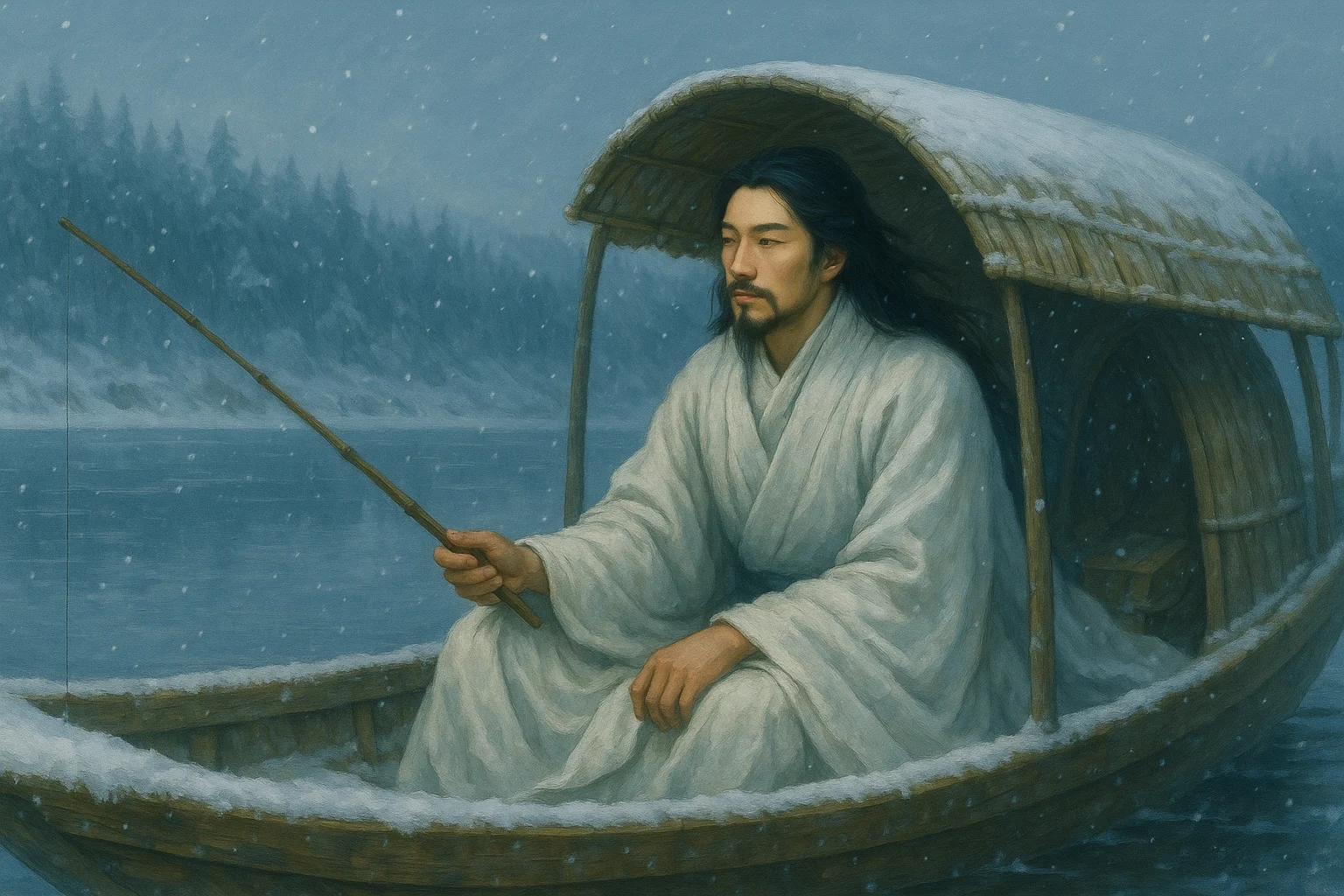
Liu Zongyuan (柳宗元, 773 - 819), a native of Yuncheng in Shanxi province, was a pioneering advocate of the Classical Prose Movement during China's Tang Dynasty. Awarded the prestigious jinshi degree in 793 during the Zhenyuan era, this distinguished scholar-official revolutionized Chinese literature with his groundbreaking essays. His prose works, remarkable for their incisive vigor and crystalline purity, established the canonical model for landscape travel writing that would influence generations. As a poet, Liu mastered a distinctive style of luminous clarity and solitary grandeur, securing his place among the legendary "Eight Great Masters of Tang-Song Prose" - an honor reflecting his enduring impact on Chinese literary history.