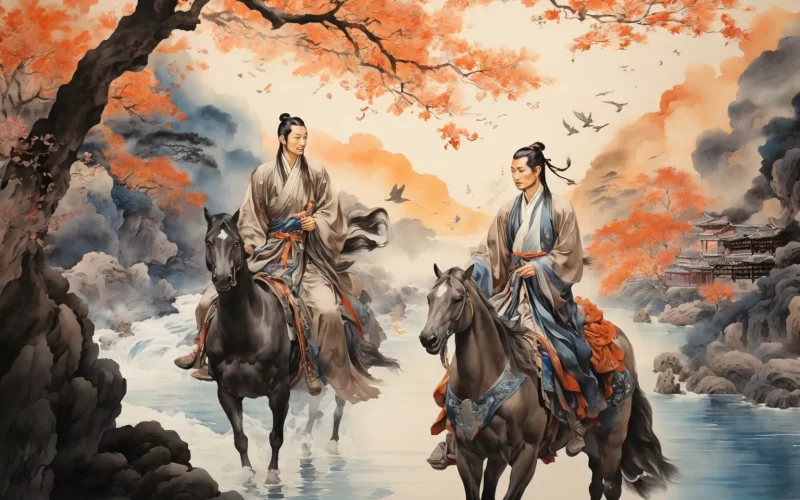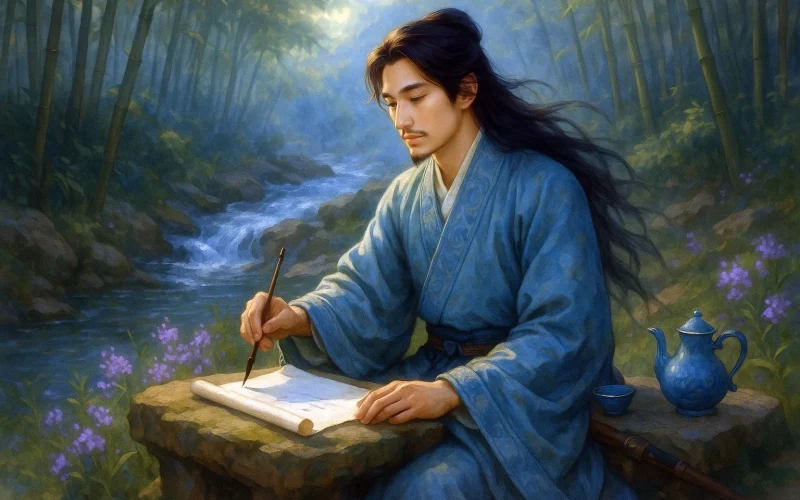



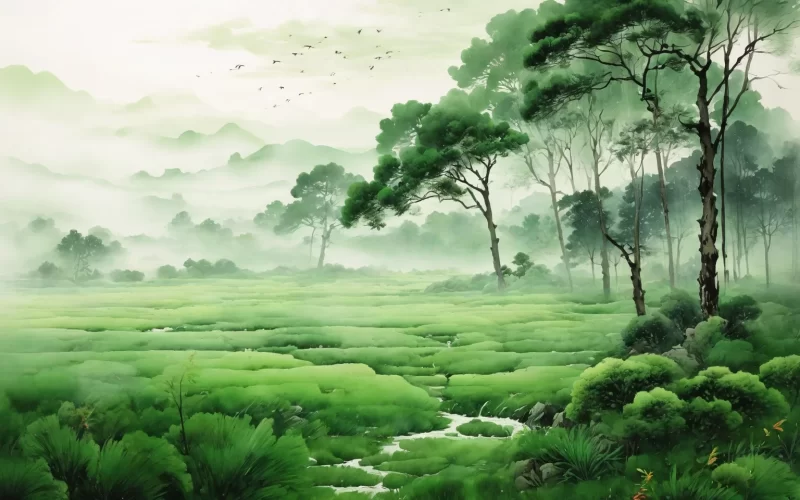
Sweet rain moistens the street like cream so fine;
Green grass seen far and near makes no clear line.
This is the best time of a springtime day,
Better than willow‑down in full display.
Original Poem
「早春呈水部张十八员外」
韩愈
天街小雨润如酥,草色遥看近却无。
最是一年春好处,绝胜烟柳满皇都。
Interpretation
This poem was composed in the 3rd year of the Changqing era of Emperor Muzong of Tang (823 AD), while Han Yu was serving as Vice Minister of Personnel. This was among the final years of his life and a period of relative stability in his official career. Zhang Eighteen refers to Zhang Ji, a close friend and disciple of Han Yu, who was the eighteenth among his brothers and held the position of Vice Director of the Waterworks Bureau at the time. Han Yu and Zhang Ji shared a profound friendship, supporting each other politically and resonating as kindred spirits in literature. Zhang Ji had studied under Han Yu and received his patronage; the two often exchanged poetic compositions.
In the early spring of that year, fine rain drizzled over Chang'an city, and all things began to stir. Strolling along the imperial avenue, the poet was deeply moved by this early spring scenery and thus wrote this fresh, bright little poem for his good friend. At this time, Han Yu, having weathered the vicissitudes of officialdom and the hardships of exile, had gradually attained a peaceful state of mind, and his understanding of nature and life had become increasingly penetrating. The keen capture of subtle beauty and the heartfelt praise for the early spring scenery in the poem are precisely the gentle luster emanating from a poet seasoned by life's trials during the serene twilight of his years. "最是一年春好处,绝胜烟柳满皇都" (This is the very best time of spring, / Far better than the misty willows that crown the capital.)—while most people considered resplendent blooms the height of beauty, Han Yu uniquely cherished this early spring with its faint, barely-there hue of grass and the rain that moistened like fresh cream. This unique aesthetic vision is both a reflection of his lifelong refusal to follow the crowd and a profound insight into the essence of life gained after experiencing its vicissitudes.
First Couplet: "天街小雨润如酥,草色遥看近却无。"
Tiānjiē xiǎo yǔ rùn rú sū, cǎo sè yáo kàn jìn què wú.
On the imperial avenue, the fine rain moistens like fresh cream; The color of grass seen from afar seems near, yet on approach, appears not.
The opening line, "天街小雨润如酥" (On the imperial avenue, the fine rain moistens like fresh cream), uses a richly tactile metaphor to describe the spring rain. "天街" (imperial avenue) specifies the location as the streets of Chang'an; "小雨" (fine rain) indicates the weather; the three characters "润如酥" (moistens like fresh cream) are the soul of the line. Fresh cream is fine, soft, and smooth, nourishing all things. The poet uses it to describe the spring rain, capturing not only the lightness and density of the rain but, more importantly, the gentle, moistening feeling of rainwater seeping into the soil to nourish all living things. The word "酥" (cream) synthesizes visual, tactile, and even gustatory sensations, making one feel as if they can sense the warmth and fragrance of the fine rain.
The second line, "草色遥看近却无" (The color of grass seen from afar seems near, yet on approach, appears not), is a line celebrated throughout the ages. In early spring, grass shoots have just sprouted. Viewed from a distance, the light green hue connects into a patch, as if draping a thin veil of bluish gauze over the earth; upon closer inspection, however, one sees only sparse shoots, seemingly there yet not. The contrast between "seen from afar" and "on approach, appears not" precisely captures the illusory, ethereal quality of the early spring grass color. It is masterful that the poet does not say "grass shoots" but "the color of grass"—it is an overall tint, a diffuse atmosphere, not a concrete object. These seven characters bring the unique, hazy beauty of early spring to its ultimate expression.
Second Couplet: "最是一年春好处,绝胜烟柳满皇都。"
Zuì shì yī nián chūn hǎo chù, jué shèng yān liǔ mǎn huángdū.
This is the very best time of spring, Far better than the misty willows that crown the capital.
This couplet shifts from description to reflection, directly expressing the poet's feelings in an affirmative tone. The two words "最是" (This is the very best) are resolute and leave no room for doubt. The poet believes that the finest moment of spring's beauty is not in mid-spring with its clusters of blossoms, nor even in late spring with the capital full of misty willows, but precisely in this early spring with its barely-there grass color and rain moist as cream. The next line, "绝胜烟柳满皇都" (Far better than the misty willows that crown the capital), strengthens this judgment through contrast. "烟柳满皇都" (the misty willows that crown the capital) is a scene of late spring, with willow catkins like mist and green shade everywhere—certainly beautiful, but in the poet's eyes, it is far inferior to the freshness and subtlety of early spring. The two words "绝胜" (far better than) express the poet's aesthetic preference to the fullest—what he loves is the first stirrings of hope, the implicit vitality, that delicate state of being on the verge of fullness.
Holistic Appreciation
This is a gem among Han Yu's seven-character quatrains and one of the most famous pieces in Chinese literary history depicting early spring scenery. In four lines and twenty-eight characters, with the most economical brushstrokes, it sketches a hazy, moist, fresh, and elegant picture of early spring. Beyond description, it contains the poet's unique aesthetic taste and insights into life.
In terms of structure, the poem presents a clear progression of "description—reflection." The first two lines are purely descriptive, using the two typical images of "fine rain" and "the color of grass" to capture the most moving instant of early spring. The last two lines directly express heartfelt feeling, using the affirmative constructions "最是" (This is the very best) and "绝胜" (far better than) to voice wholehearted praise for early spring. Between the four lines, the poem moves from the concrete to the abstract, from scene to emotion, forming a seamless whole.
In terms of conception, the core of this poem lies in "discovery" and "choice." The scenery of early spring is ordinary, visible to all, yet not everyone can recognize its beauty. With a poet's unique sensitivity, Han Yu discovered the beauty of that "color of grass seen from afar seems near, yet on approach, appears not" and, with the definitive statement "This is the very best time of spring," elevated this beauty above that of "the misty willows that crown the capital." This discovery is the poeticization of daily life; this choice is a transcendence of commonplace aesthetics. It tells us: True poetry does not lie in seeking spectacular scenery, but in viewing the most ordinary things around us with an eye that discovers beauty.
Artistically, the most moving aspect of this poem lies in the unity of "precision" and "subtlety." The metaphor "moistens like fresh cream" is astonishingly precise; the description "seen from afar seems near, yet on approach, appears not" is accurately irreplaceable. Yet this precision is not rigid realism; it is a "spiritual likeness" infused with the poet's subjective feeling—that "cream" is not only the quality of the rain but also the warmth in the poet's heart; that "appears not" is not only the state of the grass but also the unique subtlety of early spring. It is precisely this unity of precision and subtlety that gives the poem both the texture of realism and the ethereal quality of impressionism.
Artistic Merits
- Exquisite Metaphor, Vivid Synesthesia: "润如酥" (moistens like fresh cream) uses a tactile term to describe a visual phenomenon, transforming the formless rain into something with substance, making one feel as if they could touch the warmth of the fine rain. The brilliance of a single word brings the entire line to life.
- Meticulous Observation, Capturing the Spirit: "草色遥看近却无" accurately captures the illusory, barely-there quality of early spring grass color, merging the visual change between far and near with a subtle psychological perception. Seven characters exhaust the spirit of early spring.
- Clear Contrast, Novel Conception: Contrasting the freshness of early spring with the lushness of late spring, and expressing a distinctive aesthetic taste through the definitive statements "最是" (This is the very best) and "绝胜" (far better than). Not following the crowd, but standing uniquely alone.
- Concise Language, Rich Meaning: The entire poem has no superfluous words, yet it encompasses the rain, grass, color, and atmosphere of early spring, and even incorporates the poet's profound insights into life. The unusual is seen in the plain; the profound is seen in the simple.
- Sincere Emotion, Fresh Style: The whole poem overflows with heartfelt delight in the early spring scenery, without a trace of affectation. Reading it is like being bathed in a spring breeze or drinking sweet dew. True feeling flows forth, moving naturally.
Insights
Through a gentle spring rain and the barely-there color of grass, this poem speaks of the wisdom of discovering the extraordinary within the ordinary and perceiving great beauty in the smallest details, offering profound insights for later generations. First, it teaches us how to discover those subtle yet precious beauties in life. "草色遥看近却无" (The color of grass seen from afar seems near, yet on approach, appears not)—that faint, barely-there green hue, that seemingly-present yet absent herald of spring, if not looked at attentively, can be easily missed. Yet the poet, with keen perception, captures this fleeting beauty and elevates it into eternal verse. It reminds us: The beauty in life often lies not in grand, spectacular events, but in those subtle moments overlooked by most. Learning to slow our pace, learning to look with our hearts, allows us to discover that poetry exists everywhere.
Secondly, the definitive statement in the poem, "最是一年春好处,绝胜烟柳满皇都" (This is the very best time of spring, / Far better than the misty willows that crown the capital), reveals an independent, unwavering aesthetic attitude. While most people considered resplendent blooms the height of beauty, Han Yu uniquely loved the freshness and subtlety of early spring. This refusal to follow the crowd stems from his profound understanding of life—that initial stirring state of being on the verge of fullness, that implicit, restrained vitality, is more precious than the splendor that peaks and then declines. It enlightens us: True wisdom lies not in going with the flow, but in establishing one's own standards of value; true maturity lies not in pursuing external brilliance, but in knowing how to appreciate inner richness.
On a deeper level, this poem also allows us to see the clarity and penetration of Han Yu's state of mind in his later years. Having weathered the vicissitudes of officialdom and the hardships of exile, he could still find joy in a hint of grass color and a fine rain, and could still praise life with such a fresh, bright brush. This childlike heart maintained after experiencing life's trials is more precious than any achievement. It tells us: No matter how many storms one endures, one must not lose sensitivity to beauty nor close the heart that perceives the world.
About the Poet
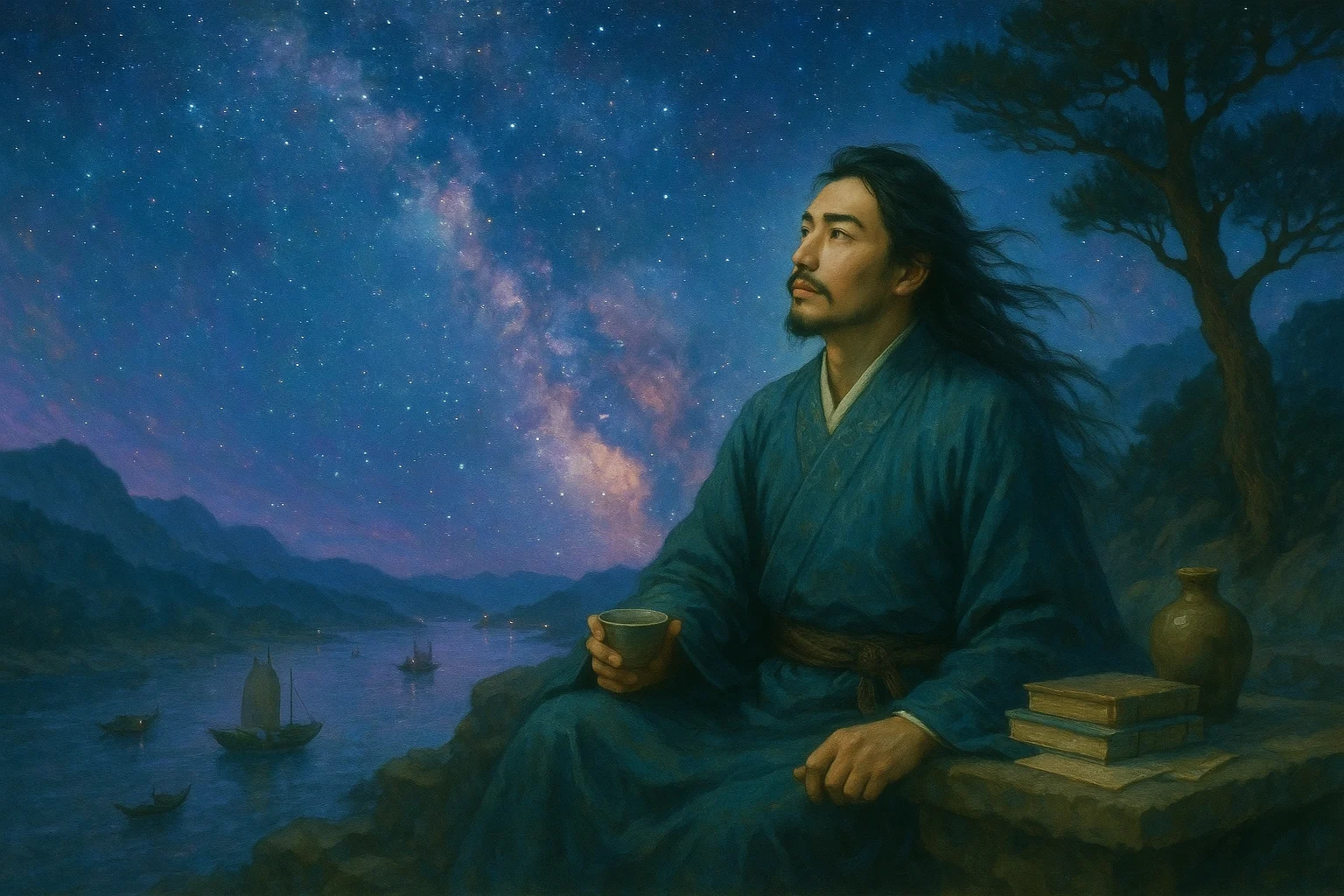
Han Yu (韩愈, 768 - 824), originario de Mengzhou en Henan, fue el líder del Movimiento de la Prosa Antigua durante la dinastía Tang. Obtuvo el título de jinshi en 792 y ascendió al cargo de Viceministro de Personal. Su prosa es vigorosa y poderosa, mientras que su poesía se caracteriza por un estilo audaz y poco convencional. Su poema Rocas de la Montaña (山石) inauguró la técnica de "prosificar la poesía". Fue mentor de poetas como Meng Jiao y Jia Dao, y es considerado el principal de los "Ocho Grandes Maestros de la Prosa de Tang y Song". Sus contribuciones revolucionarias a la literatura tuvieron una influencia profunda y duradera, lo que le valió el título honorífico de "Maestro Literario de las Generaciones".