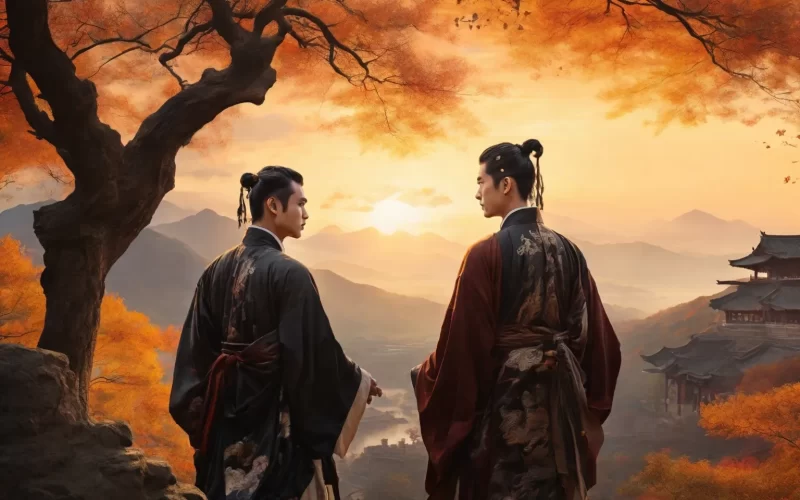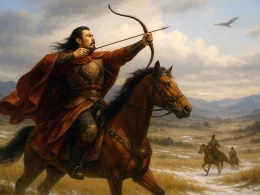



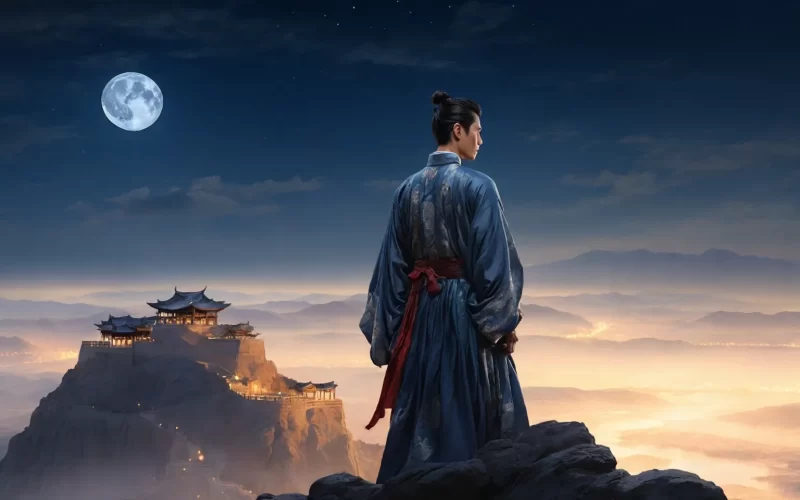
The sand below the border-mountain lies like snow,
And the moon like frost beyond the city-wall,
And someone somewhere, playing a flute,
Has made the soldiers homesick all night long.
Original Poem
「夜上受降城闻笛」
李益
回乐烽前沙似雪,受降城外月如霜。
不知何处吹芦管,一夜征人尽望乡。
Interpretation
This poem was composed during the Mid-Tang period and belongs to the frontier poetry genre. It sketches a bleak scene of garrison soldiers hearing a flute on a cold night and longing for home. The author, Li Yi, is famous for his frontier poetry. His lines, "回乐烽前沙似雪,受降城外月如霜," are desolate, solemn, and have been recited for centuries—he excelled at capturing the harsh barrenness of the borderlands and the quiet resentment of the soldiers, using concise strokes to write of inexhaustible emotion, capable of portraying the vastness of the battlefield as well as the heart-wrenching ache of homesickness.
During the Mid-Tang, the Tang empire was declining from its peak. Military governors wielded autonomous power, and border troubles were frequent. Garrison soldiers were stationed for years in bitter, cold lands, and their longing for home was more intense than in the Early and High Tang periods, with less of the heroic spirit to achieve merit and more of the desolation of hopeless return. The "City of Accepting Surrender" (受降城, Shòuxiáng Chéng) mentioned in the poem was once a militarily vital town in the Early Tang where the Turks were decisively defeated and their surrender accepted. However, by the Mid-Tang, it no longer held heartening power but had become a witness to protracted warfare and endless sorrow of parting. The sands before the "Joy-Returning Beacon" (回乐烽, Huílè Fēng), the moonlight beyond the "City of Accepting Surrender"—all tell of the frontier's loneliness and the soldiers' helplessness.
Li Yi served in frontier military headquarters several times in his life and had personal experience of garrison life. He roamed the Yan-Zhao region in his youth and drifted through military campaigns in his later years. It was precisely this vicissitude of firsthand experience that allowed him to empathize and write of the collective homesickness encapsulated in the soldiers' line, "All soldiers watch for home that night." With refined and unadorned language, he directly and poignantly depicts the harsh cold of the frontier and the soldiers' homesickness, and with a technique blending sound and scene, makes the poetic sentiment even more profound and moving. The entire poem is only twenty-eight characters, yet it possesses the lingering charm of High Tang frontier poetry and the depth of Mid-Tang reflection. Opening the scroll, one seems to be present in the scene; closing it, one seems to hear the sound. Reading this poem a thousand years later, it is as if one can still see that stretch of cold moonlight and chill sand, hear that flute sound traversing time and space.
First Couplet: "回乐烽前沙似雪,受降城外月如霜。"
Huílè fēng qián shā sì xuě, Shòuxiáng chéng wài yuè rú shuāng.
The sand below the beacon seems like snow;
And the moon like frost beyond the city wall.
The poet ascends the tower and gazes afar; before his eyes is a stretch of harsh barrenness soaked in moonlight. Sand is not snow, yet under moonlight it takes on the cold whiteness of snow; the moon is not frost, yet on an autumn night it congeals into the chill of frost. The two metaphors, "like snow" and "like frost," not only depict the bitter cold and loneliness of the borderlands but also transform the visual sensation of cold into a tactile sensation on the skin, as if that chill penetrates the page, blowing in one's face. The Joy-Returning Beacon and the City of Accepting Surrender were originally military strongholds, yet now, bathed in moonlight, they have lost their edge, leaving only boundless desolation. This couplet is purely descriptive scene, yet it lays a clear, cold, and murderous undertone for the entire poem—people within it are as tiny as ants; home lies where, impossibly remote.
Second Couplet: "不知何处吹芦管,一夜征人尽望乡。"
Bù zhī hé chù chuī lú guǎn, yī yè zhēng rén jìn wàng xiāng.
But where is the flute that makes homesickness fall,
All soldiers watch for home that night?
The previous two lines are silent stillness; this line suddenly has a sound piercing the air. The flute sound arises from "none knows from where," precisely highlighting its omnipresence, its inescapability—it seems to grow from the moonlight, seep from the sandy ground, blown by the wind from the depths of every soldier's memory. That music is desolate and mournful, like a wandering thread, tugging at ten thousand heartsick for home. The final line, "All soldiers watch for home that night"—the character "all" (尽, jìn) carries immense weight. It is not one or two men, but all garrison soldiers, sleepless the whole night, gazing together in the direction of home. Those gazes pierce the border walls, pierce the cold night, pierce the thousand mountains and rivers, yet ultimately cannot pierce the barriers of fate. The poet does not speak of sorrow, yet sorrow is seen; he does not speak of resentment, yet resentment runs deep.
Holistic Appreciation
With concise and compact strokes, this poem constructs a picture filled with frontier desolation and soldiers' sorrow of parting. The poet moves from scene to emotion, progressing layer by layer: the first two lines begin visually, writing of sand, moon, and the color of frost and snow, laying out a stretch of silent harshness; the third line turns with an auditory image—a flute sound breaks the quiet night, giving concrete, audible form to the intangible homesickness; the final line concludes with emotion—the character "all" (尽, jìn) crystallizes the fate of all soldiers in a single moment, bringing the poetic sentiment to its climax. Moving from stillness to movement, from external to internal, from the heart of one man extending to the shared feeling of ten thousand—within twenty-eight characters, it accomplishes an expansion of space and a sublimation of emotion.
The poem's language is extremely simple, yet its artistic conception is extremely far-reaching. "Seems like snow" and "like frost" are all plain speech, yet combined, they become a famous line for the ages—this is Li Yi's skill: using the most ordinary words to write the deepest emotion, where words end but meaning is inexhaustible. What tune exactly is that flute playing? The poem does not say. What do the soldiers see as they gaze homeward? The poem does not say. Precisely because it is not said, the reader is left to fill it with their own imagination, to resonate with their own homesickness.
Artistic Merits
- Scene and Emotion Intertwined, Emotion Lodged in Scene: The first two lines use the metaphors "seems like snow" and "like frost" to depict the bitter cold and desolation of the frontier to the extreme, laying a foundation for the homesickness that follows—descriptive words are all words of emotion; that cold moon and chill sand are precisely the externalization of the soldiers' inner world.
- Layered Progression, from Scene to Emotion: The entire poem begins visually, turns with an auditory image, and concludes with emotion. Within twenty-eight characters, it completes a transformation from external to internal, from object to heart, its structure rigorous and full of tension.
- Using Sound to Write Emotion, Leaving Lingering Resonance: The flute sound arises from "none knows from where," precisely highlighting its omnipresence. The sound ceases, but the feeling does not end, leaving the reader limitless space for imagination.
- Concise Language, Profound Meaning: The poem contains no superfluous words. The character "all" (尽, jìn) carries immense weight, crystallizing the shared fate of countless soldiers in a single moment—words end, but meaning is inexhaustible.
Insights
With the frontier's cold moon and flute, this poem speaks to an eternal theme—the body in a distant place, the heart turned towards home.
First, it lets us see "the power of sound." Why can that single flute from an unknown place keep countless soldiers awake all night? Because it awakens not something else, but the softest part deep in every person's heart. In the silent cold night, vision is already numb, touch already dulled; only hearing can penetrate layers of defense, reaching straight to the inner heart. That music is like a key, unlocking all suppressed longing—this is the secret of art: it does not force you to feel something; with just a light touch, you open the door to your own heart.
On a deeper level, this poem makes us ponder the meaning of "watching." The soldiers "all... watch for home," but can they actually see it? They cannot. Before the Joy-Returning Beacon, there is only sand like snow; beyond the City of Accepting Surrender, there is only moon like frost. Home lies beyond a thousand mountains, in a place the gaze can never reach. Yet they still watch—this "watching" is not a visual arrival, but an orientation of the heart. When the body is confined at the border, only the gaze can climb mountains and cross rivers, returning to that soul-stirring, dream-entwined place. This is humanity's last freedom when facing hardship: the body can be imprisoned, but the heart can forever watch towards distant places.
A thousand years later, this poem can still move us because every wanderer has, on some night, become that soldier "watching for home." Whether a student studying abroad, a migrant worker seeking livelihood in a strange land, or a Chinese person settled overseas—that flute sound could be a train's whistle, a foreign land's bell, any sound that awakens homesickness. And that night of "watching" becomes the deepest emotional bond between us and the ancients. This is the vitality of poetry: it writes of the Mid-Tang soldier, but it is read by the wanderer of every era.
Poem Translator
Kiang Kanghu
About the Poet
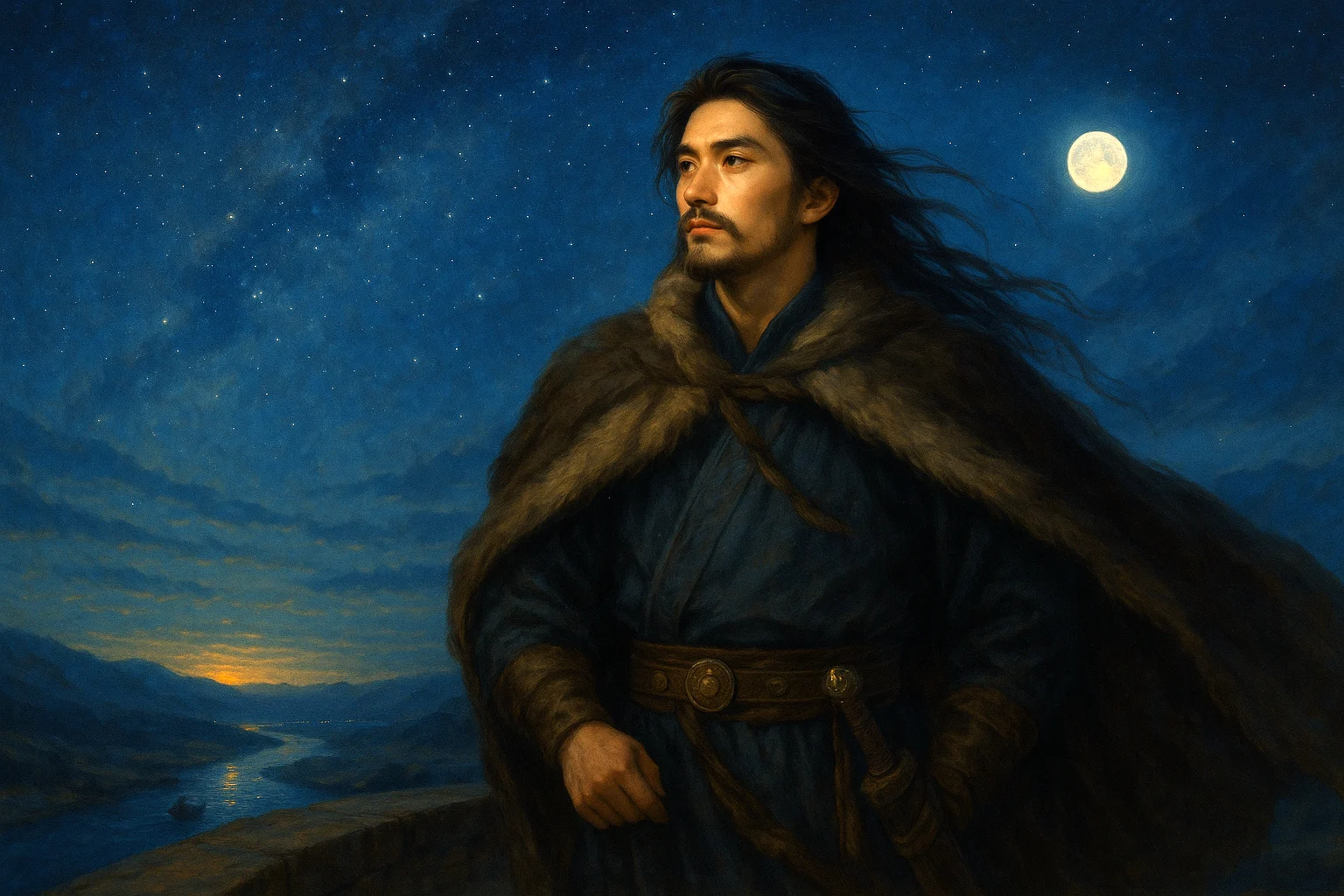
Li Yi (李益 748 - 829), a native of Wuwei, Gansu Province, was a representative poet of the Frontier Fortress School in the Mid-Tang period. He became a jinshi (presented scholar) in the fourth year of the Dali era (769 AD) and served through the reigns of Emperor Xianzong and Emperor Wenzong, eventually rising to the position of Minister of Rites. His poetry is particularly renowned for its seven-character quatrains, characterized by a style that is both solemn and poignant, blending the grandeur of High Tang frontier poetry with the plaintive elegance of the Mid-Tang. Inheriting the legacy of Wang Changling and inspiring later poets like Li He, his frontier poems carved out a unique and distinctive place in the Mid-Tang literary world.