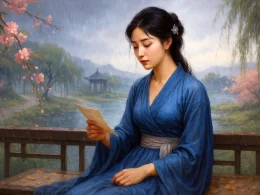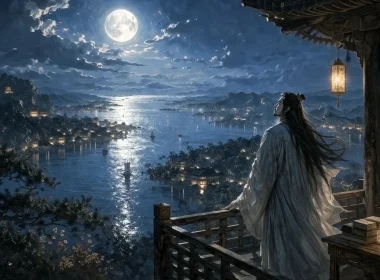
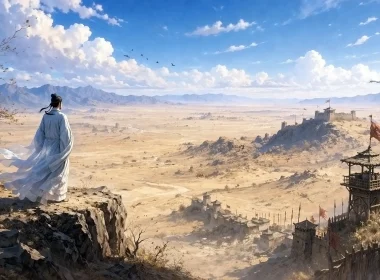
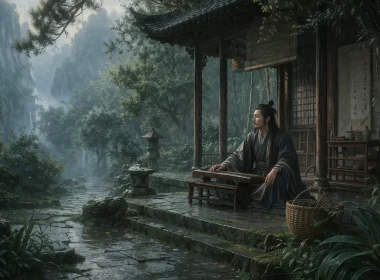
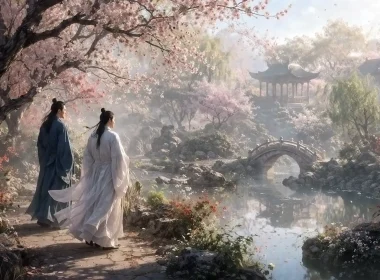
Up the mountain I'd force myself to go,
But nobody would bring me wine around.
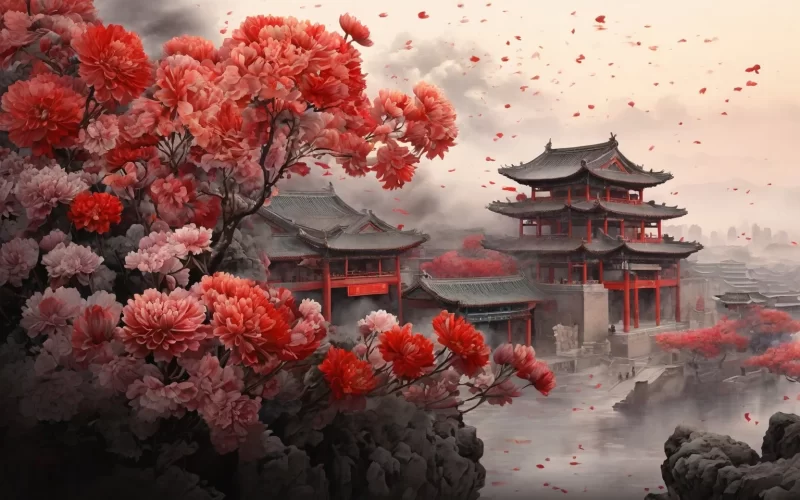
Chrysanthemums of my homeland should blow
To beautify the far-off battleground.
Original Poem
「行军九日思长安故园」
岑参
强欲登高去,无人送酒来。
遥怜故园菊,应傍战场开。
Interpretation
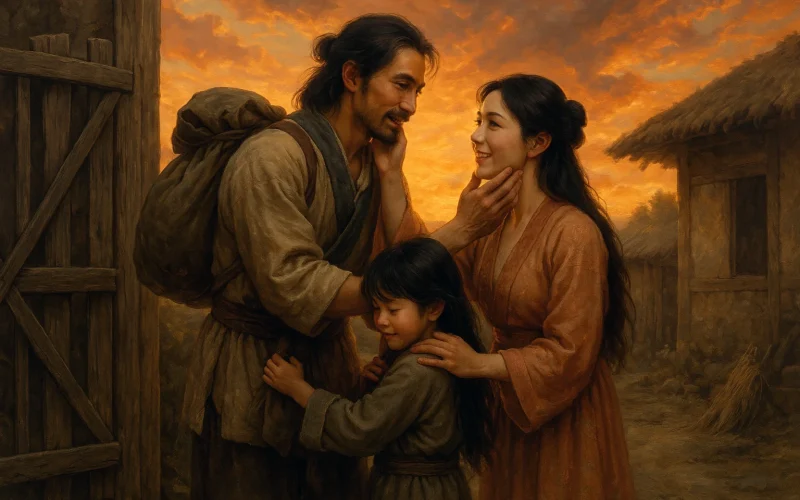
This poem was composed on the Double Ninth Festival in the second year of the Zhide era of Emperor Suzong of Tang (757 CE). By this time, the An Lushan Rebellion had eThis poem was composed on the Double Ninth Festival in the second year of the Zhide era of Emperor Suzong of Tang (757 CE). By this time, the An Lushan Rebellion had entered its third year; Chang'an had fallen the previous year, Emperor Xuanzong had fled to Shu, and Suzong had ascended the throne at Lingwu. Cen Can was serving as Right Remonstrator with the emperor's army on campaign. This Double Ninth Festival found him not climbing high and enjoying chrysanthemums with family and friends in his Chang'an garden, but amid the upheaval of military life. The character "行军" (on campaign) in the title points to the poem's peculiar temporal and spatial circumstances—a traditional festival meant for reunion and celebration, now intertwined with war, displacement, and the brutal reality of a fallen nation.
This five-character quatrain is one of the most deeply somber and introverted works in Cen Can's oeuvre, standing in stark contrast to the magnificent grandeur of his frontier poetry. It abandons all elaboration of external scenery and cuts directly to the deepest pain within: against the backdrop of a shattered nation and lost home, even the most basic festival customs (climbing high, drinking wine, enjoying chrysanthemums) have lost their original meaning, becoming instead media that sting the heart with longing for home and country. This poem thus transcends personal homesickness to become a microcosm of the broken memories of home and profound anxieties shared by an entire generation of scholars during the An Lushan Rebellion. With its immense emotional density and historical weight, it occupies a unique place in Tang poetry.
First Couplet: "强欲登高去,无人送酒来。"
Qiǎng yù dēng gāo qù, wú rén sòng jiǔ lái.
Reluctantly I wish to climb high and go—
But no one brings wine to me.
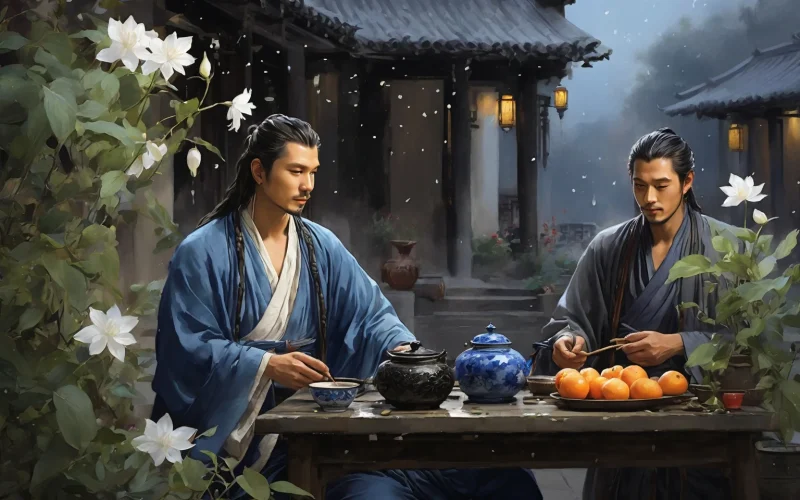
The opening is charged with contradiction and helplessness. "强欲" (reluctantly wish / force oneself to wish) is the poem's eye—it reveals the difficulty and futility of trying to maintain cultural habits and spiritual rituals under enormous psychological resistance. Climbing high is the Double Ninth custom, yet amid the flames of war and displacement, what joy could there be in this act? "无人送酒来" (no one brings wine to me) alludes to the story of Tao Yuanming of the Eastern Jin, who had no wine on the Double Ninth until the governor of Jiangzhou sent someone to bring him some. Through this allusion, the poet both writes of his present reality (lonely in the military camp, no one thinking of the festival) and, more deeply, expresses a sense of cultural rupture—the peaceful, refined world in which one could leisurely enjoy chrysanthemums in the company of friends has collapsed. The individual is cast into a cold and unfamiliar reality stripped of cultural warmth.
Final Couplet: "遥怜故园菊,应傍战场开。"
Yáo lián gù yuán jú, yìng bàng zhàn chǎng kāi.
From afar I pity the chrysanthemums in my old garden—
They must be blooming beside the battlefield.
The poet's thoughts traverse space, flying back to fallen Chang'an. "遥怜" (from afar I pity) is an emotional leap across distance, filled with the sorrow of helpless guardianship. The "chrysanthemums" of the "old garden" are the core image of the Double Ninth—symbols of noble purity, reclusion, longevity, and the peace and beauty of home. Yet the poet imagines them "blooming beside the battlefield." These five characters create an image of startling impact, filled with absurdity and tragic beauty: the chrysanthemums, emblems of serene beauty, are juxtaposed with the battlefield, emblem of death and destruction. The chrysanthemums' silent blooming here does not convey leisure but rather highlights the lifelessness and cruelty of the battlefield; the battlefield's existence, in turn, utterly defiles and subverts all the values the chrysanthemums represent. This is the most devastating and poetic indictment of war.
Overall Appreciation
This is one of the most deeply somber and introverted works in Cen Can's poetry. In just twenty characters across four lines, with the Double Ninth Festival on campaign as its entry point, it fuses personal loneliness, cultural loss, and anxieties for home and country into a single whole, containing within the briefest form the violent turmoil and profound sorrow of the individual, culture, and nation.
Structurally, the poem moves from outside to inside, from self to others. The first couplet begins with the action of "reluctantly wishing to climb high," focusing on the individual's isolation and the loss of cultural ritual; the allusion to Tao Yuanming in "no one brings wine to me" uses the literary warmth of historical memory to contrast with the coldness of wartime human relations. The final couplet suddenly widens the field of vision: "from afar I pity the chrysanthemums in my old garden" projects the individual's "pity" onto the distant homeland, and closes with the shocking juxtaposition of "blooming beside the battlefield," elevating personal grief into compassion for the suffering of an entire age. Between the two couplets, from action to inner state, from self to homeland, layer upon layer in seamless unity.
In terms of theme, the poem pivots on the character "傍" (beside). The "傍" of "blooming beside the battlefield" is the juxtaposition of chrysanthemums and battlefield, of serene beauty and death and destruction. It creates an image of profound rupture: the chrysanthemums' silent blooming does not convey leisure but highlights the lifelessness and cruelty of the battlefield; the battlefield's existence, in turn, utterly subverts all the values the chrysanthemums represent. This character "傍" is the poet's most devastating indictment of war—it is not merely the fall of a homeland, but the trampling of the very foundations of civilization.
Artistically, the most striking quality of this poem lies in the subversive juxtaposition of imagery and the precise deployment of function words. The poet forcibly juxtaposes the images of "old garden chrysanthemums" and "battlefield," two images belonging to entirely different, even opposing, semantic spaces, producing a tremendous sense of meaning-rupture and aesthetic shock, expressing condemnation of war and anxiety for civilization with penetrating force. The reluctance of "强欲," the helplessness of "遥怜," and the supposition of "应傍" (containing within it the almost certain cruelty of imagination)—these function words and function-word-like phrases play a crucial role in conveying complex states of mind and regulating emotional intensity, demonstrating classical Chinese's remarkable capacity for expressing complexity through simplicity. The poem closes with an imagined scene, not directly depicting the horrors of war, yet achieving a more startling artistic effect than direct depiction—a concentrated embodiment of classical Chinese poetry's aesthetic power of "implicit resonance" and "meaning beyond words."
Artistic Features
- Seamless and Deepened Use of Allusion: "无人送酒来" alludes to the story of Tao Yuanming yet is fully integrated into the present moment. The allusion is not for erudite display but, through the memory of literary warmth between scholars in historical memory, to contrast with the coldness of wartime human relations and cultural desolation, giving the sense of loneliness a historical depth.
- Subversive Juxtaposition of Imagery: The poem's core artistic creation lies in forcibly juxtaposing the images of "old garden chrysanthemums" and "battlefield"—two images from entirely different, even opposed, semantic spheres—through the phrase "blooming beside." This juxtaposition produces a tremendous sense of meaning-rupture and aesthetic shock, expressing condemnation of war and anxiety for civilization with penetrating force.
- Emotional Weight of Function Words: The reluctance of "强欲," the helplessness of "遥怜," and the supposition of "应傍" (containing within it the almost certain cruelty of imagination)—these function words and function-word-like phrases play a crucial role in conveying complex states of mind and regulating emotional intensity, demonstrating classical Chinese's remarkable capacity for expressing complexity through simplicity.
- Cruel Intertextuality Between Festival and Reality: The poem is built on the sharp contradiction between the cultural script of the "Double Ninth Festival" and the wartime reality of "on campaign." Every reference to festival customs (climbing high, drinking wine, enjoying chrysanthemums) deepens the contrast with the present situation (loneliness, no wine, homeland become battlefield). This sustained conflict between cultural memory and lived experience constitutes the poem's inner emotional drive.
Insights
This little poem is like a silver needle piercing the wound of history, its insights profound and painful. It tells us that when the flames of war rise, what is first destroyed is often not city walls of brick and stone, but that web of cultural rituals and emotional connections that sustains the meaning of daily life and settles the individual soul. The struggle of "reluctantly wishing to climb high" is an experience that resonates with modern people too—in the face of collective trauma or personal hardship, have we not also felt how difficult it is to maintain even the most basic life rituals?
More importantly, the poem's "pity from afar" for the "old garden chrysanthemums" embodies a broad compassion that transcends personal gain or loss. The poet's pain lies not only in his own inability to climb high and drink wine, but in the thought that those innocent, beautiful things in his homeland (like the chrysanthemums) are enduring devastation they should never have had to bear. This ability to connect one's own suffering with the suffering of a wider other (even things) is a noble humanistic spirit.
Ultimately, this work warns us that those seemingly ordinary festival reunions and familiar home scenes in times of peace are in fact the most precious fruits of civilization, worth protecting with our greatest wisdom and courage. And Cen Can's preservation in poetry, amid the flames of war, of this grief over "chrysanthemums beside the battlefield" is an undying spiritual ember of civilization amid the ruins—it illuminates suffering and proclaims an unyielding longing for reconstruction and peace.
Poem translator
Xu Yuanchong (许渊冲)
About the poet
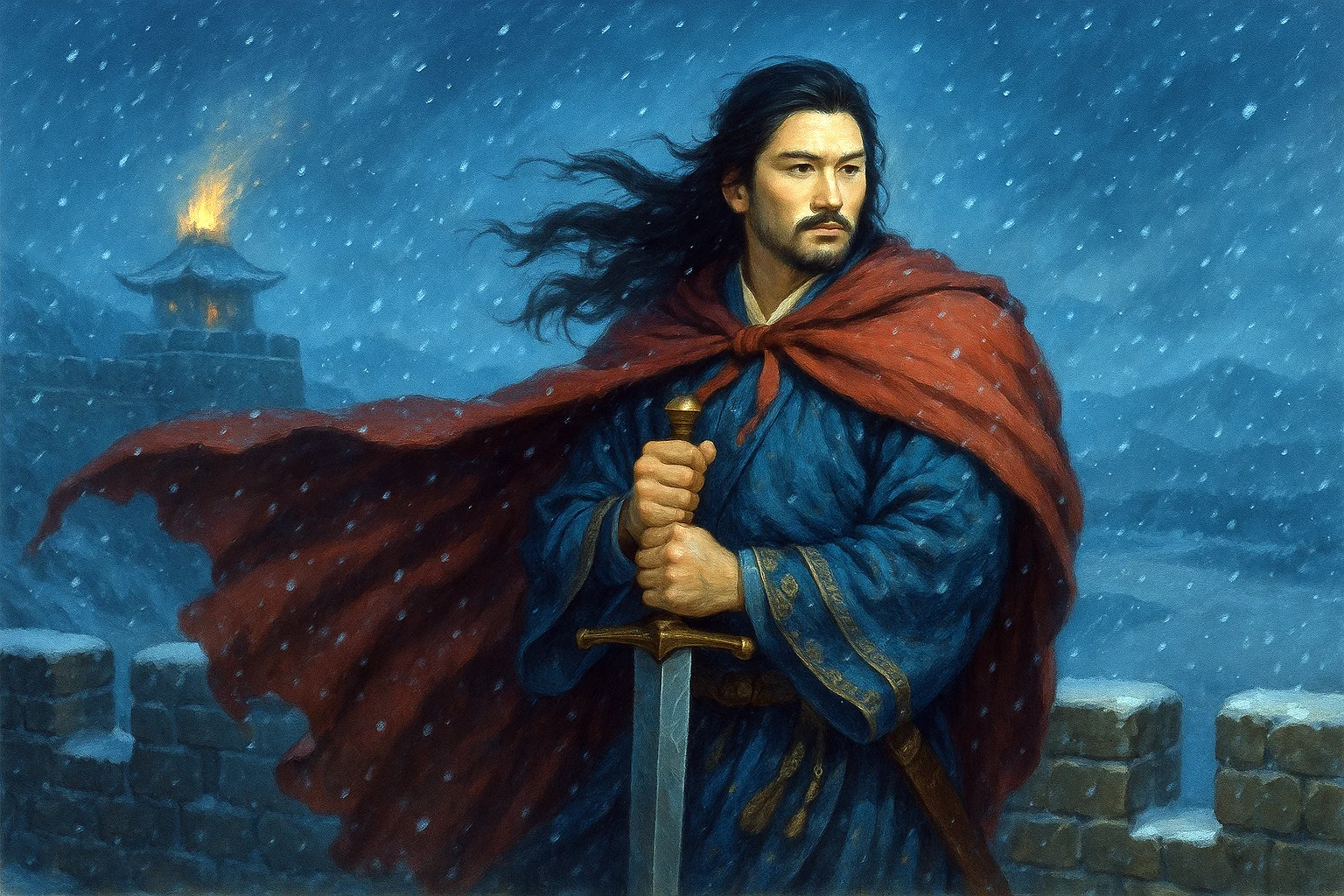
Cen Can(岑参), 715 - 770 AD, was a native of Jingzhou, Hubei Province. He studied at Mt. Songshan when he was young, and later traveled to Beijing, Luoyang and Shuohe. Cen Can was famous for his border poems, in which he wrote about the border scenery and the life of generals in a majestic and unrestrained manner, and together with Gao Shi, he was an outstanding representative of the border poetry school of the Sheng Tang Dynasty.