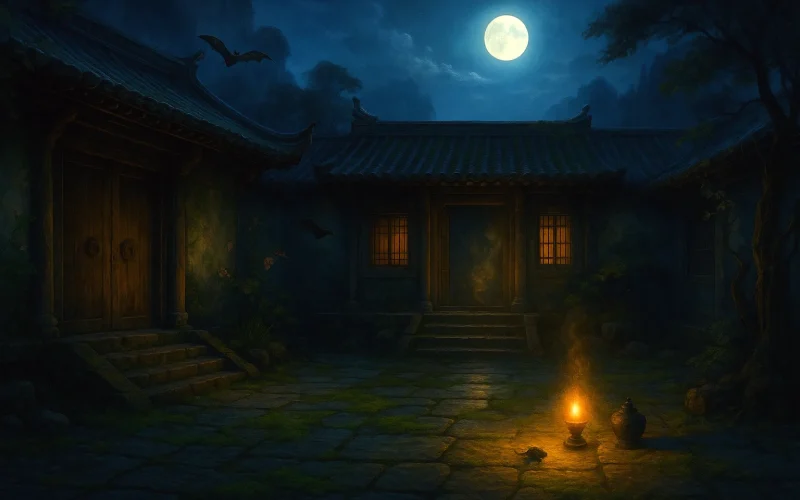



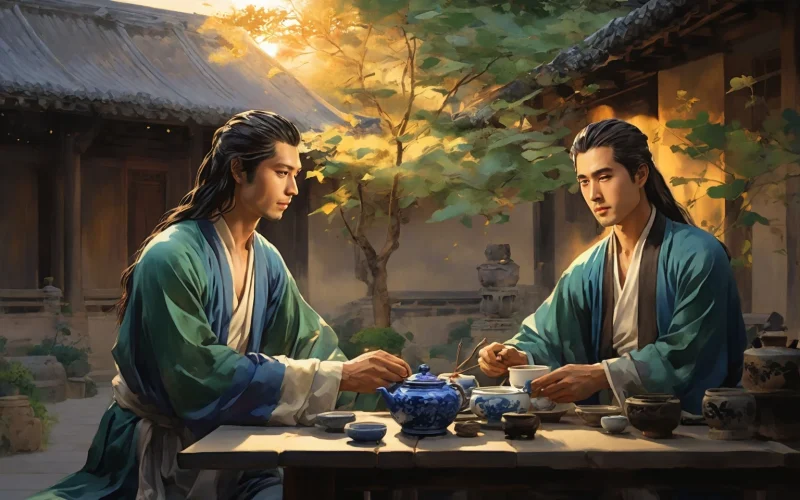
Three years gone by since I last saw my brother’s face;
Now I am home again, a day and a brief space.

This is the wine we drink tonight, rich to the taste;
Those are the books I left, still in their yellowed case.

My bones, though ill, have kept me here against the grain;
What in this life is sure, what free from change and pain?

Why question if the cast be “horse” or if “ox” fall?
Throw down the dice — let “owl” or “black” decide it all.
Original Poem
「示弟」
李贺
别弟三年后,还家一日余。
醁醽今夕酒,缃帙去时书。
病骨犹能在,人间底事无?
何须问牛马,抛掷任枭卢!
Interpretation
In the eighth year of Yuanhe (813 AD), Li He resigned from his post as Ritual Ceremonialist and returned to his hometown, Changgu. He was twenty-seven that year. Three years prior, recommended by Han Yu, he had gone to Chang'an to sit for the Jinshi (Advanced Scholar) examinations. However, because his father's name, "Jinsu" (晋肃), shared a homophonic character with the "Jin" (進) in "Jinshi" (進士), he was reported for violating naming taboo and ultimately barred from entering the examination hall. Later, relying on hereditary privilege as a member of the imperial clan, he managed to secure the minor ninth-rank post of Ritual Ceremonialist, which he held in the Court of Imperial Sacrifices for three years. The duties mainly involved shouting ceremonial commands and managing formations during sacrifices, far removed from the official career he had envisioned. Coupled with persistent poor health, he decided to resign and return home.
Upon returning to Changgu, exactly three years had passed since he last left home. His younger brother had wine ready for him. In his luggage were still the same few volumes of books he had taken with him three years ago. These books had gone with him to Chang'an and now returned with him, unchanged, having served no purpose. This poem was written that very day. It mentions the wine, the books, the fact that he had managed to return alive, and also his attitude towards worldly affairs. The final couplet uses the analogy of gambling, saying success or failure—let it be—serving as a reckoning for the experiences of those three years.
First Couplet: "别弟三年后,还家一日余。"
Bié dì sān nián hòu, huán jiā yī rì yú.
Three years parted from my younger brother;
Now, home again, a day and a little more.
The opening juxtaposes "three years" and "a day," creating a powerful temporal contrast. Three years is the length of his wasted official career; a day, the brevity of his reunion at home. The phrase "a day and a little more" conveys both the joy of reunion and a hidden worry about the reunion being too short, with parting imminent again. Ten characters at the outset condense complex emotions.
Second Couplet: "醁醽今夕酒,缃帙去时书。"
Lùlíng jīn xī jiǔ, xiāng zhì qù shí shū.
This evening's wine, luling vintage fine;
These books, the ones I left with, silk-wrapped, mine.
This couplet juxtaposes "wine" and "books," forming the poem's core contrast. "Luling" is fine wine, the warmth of kinship, a rare comfort for this night; "silk-wrapped books" are the old tomes, the ambitions of three years past, ideals still unrealized. The wine is new, the books are old; the wine is present solace, the books are baggage from the past. His younger brother receives him with wine, yet he faces that bundle of books that never proved useful, his heart filled with mixed feelings.
Third Couplet: "病骨犹能在,人间底事无?"
Bìng gǔ yóu néng zài, rén jiān dǐ shì wú?
This ailing frame could still return alive;
What thing, in this world of men, could not arrive?
This couplet shifts from the immediate wine and books to deeper reflection. "This ailing frame could still return alive" tells of the physical and mental toll of three years in officialdom—he came home sick, and just being alive to see his family is already fortune. Yet the following line, "What thing, in this world of men, could not arrive?" instantly turns this relief into a scoff at worldly affairs. "Could not arrive" implies "what base thing is not possible?" This question is an indictment of the darkness of officialdom, and also a summation of his own three wasted years.
Fourth Couplet: "何须问牛马,抛掷任枭卢!"
Hé xū wèn niú mǎ, pāozhì rèn xiāo lú!
What need to ask of ox or horse, of win or loss?
Just toss the dice—let xiao or lu be boss!
The final couplet uses gambling as a metaphor, pushing life's disappointments to a point of stark resignation. "Ox or horse" refers to winning or losing in gambling; "xiao" and "lu" are two types of winning throws in ancient games of chance. The poet says: Success or failure in an official career is but a game of chance; and I no longer wish to ask the outcome, just let the dice fall, let it be. The five characters, "let xiao or lu be boss," surface-wise express nonchalance, but in reality convey despair; surface-wise express letting go, but in reality convey bitterness.
Overall Appreciation
This poem is a rare piece among Li He's works with kinship as its theme, and also his most poignant self-revelation after the disappointment of his official career. The entire poem takes homecoming as its starting point, wine and books as its medium, reflections on his sickly frame and worldly affairs as its core, and the gambling metaphor as its conclusion, fusing relief, desolation, resentment, and despair.
Structurally, the poem shows a progressive layering from outer to inner, from shallow to deep. The first couplet states the temporal context of homecoming, an external fact. The second couplet juxtaposes wine and books, the immediate scene. The third couplet shifts from scene to reflection, expressing the heart directly. The final couplet concludes with a metaphor, pushing the emotion to its extreme. Between the four couplets, the progression is layered, the emotion continuously deepening.
Conceptually, the poem's core lies in the resonance between the word "无" (nonexistent/impossible) and the word "任" (let/allow). The "无" in the third couplet's "What thing... could not arrive?" is a negation of the world's darkness; the "任" in the final couplet's "let xiao or lu be boss" is an abandonment of his own fate. One negation, one abandonment, together constitute the poet's complete despair regarding an official career.
Artistically, the poem's most moving aspect is "using small matters to express great feeling." "This evening's wine... / These books..." are just two ordinary objects before his eyes, yet they bear the poet's entire burden of sorrow and bittersweetness; "This ailing frame could still return alive" is merely a description of his physical state, yet implies all the ravages of three years in office. This technique of seeing the large through the small is precisely the unique charm of Li He's poetry.
Artistic Features
- Vivid Contrasts, Profound Meaning: Temporal contrast between "three years" and "a day"; contrast of objects between "this evening's wine" and "the books I left with"; emotional contrast between "This ailing frame could still return alive" and "What thing... could not arrive?"—the theme is deepened through these layered contrasts.
- Using Small Matters to Express Great Feeling: Starting from a flask of wine and a bundle of books, it leads to reflections on three years of official life and his whole life, handling weighty themes lightly, seeing the large through the small.
- Subtle Metaphor, Rich Meaning: Using gambling as a metaphor for life, using "xiao or lu" as a metaphor for fate, fitting both the poet's resentful state of mind and possessing a universal flavor of the human condition.
- Concise Language, Intense Emotion: The entire poem is forty characters, yet it fuses the relief of homecoming, the desolation of official life, resentment at worldly affairs, and despair at fate—each word carries immense weight.
- Orderly Structure, Balanced Couplets: The couplets are neatly parallel, the lines both opposing and complementing each other, deepening the poem's emotional tension.
Insights
This poem, through a homecoming, speaks of life's deepest helplessness, also offering profound insights. First, it shows us the warmth and preciousness of kinship. The poet, disappointed in his career, physically and mentally exhausted, finds his only solace in the cup of wine his younger brother pours for him. This cup of wine is the end of the journey home, and also a harbor for the soul. It reminds us: No matter how cruel the world outside, home is always the final refuge; regardless of success or failure, family is always the sturdiest support.
Second, the indignation of "人间底事无" shows the poet's clear-eyed recognition of the world's darkness. He does not beautify reality, does not console himself, but faces directly the harsh truth that "nothing is impossible." This clarity, though painful, is more precious than blind optimism. It tells us: Seeing the truth of the world does not equal abandoning life; acknowledging the darkness of reality does not equal denying the possibility of light.
On a deeper level, this poem also makes us contemplate: When ideals are shattered and the road ahead is obscure, how should a person comport himself? Li He's answer is "Just toss the dice—let xiao or lu be boss"—let fate's dice fall, no more questioning, no more struggle. Surface-wise, this is resignation, but in reality, it is a form of liberation in another sense: since one cannot control it, one ceases to cling; since one cannot change heaven's will, one accepts it calmly. This peace found within despair is perhaps more real than any illusory hope.
About the Poet
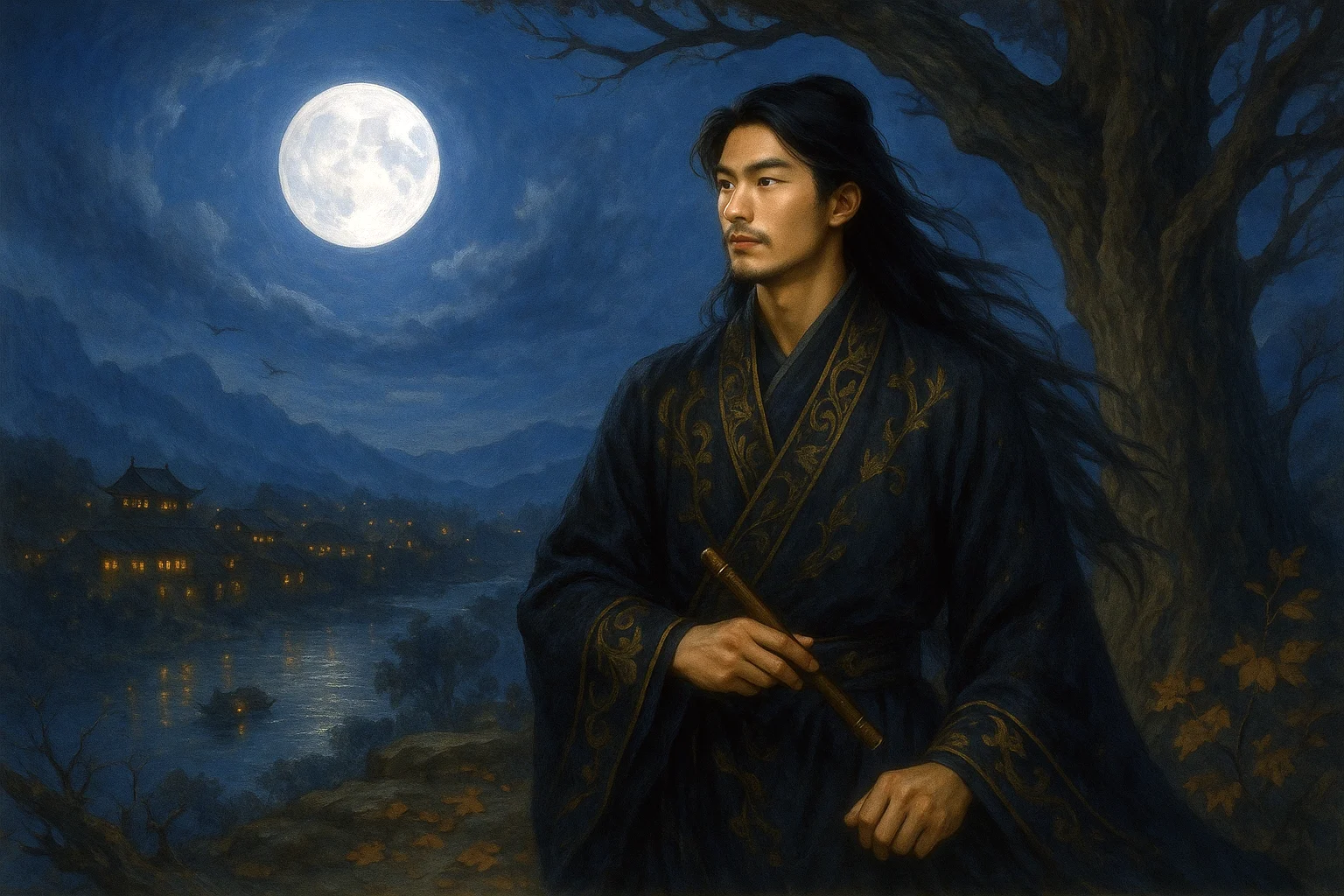
Li He (李贺 790 - 816), a native of Yiyang, Henan, was a Romantic poet of the Mid-Tang dynasty. A descendant of the Tang imperial clan, he was barred from taking the national jinshi civil service examination due to a naming taboo (his father's name contained a character homophonous with "Jin"), which led to a life of frustration and poverty. He died at the age of twenty-seven. His poetry, renowned for its bizarre grandeur, chilling elegance, and fantastical imagination, earned him the title "Ghost of Poetry." He pioneered the distinctive "Changji Style" within Tang poetry, exerting a profound influence on later poets like Li Shangyin and Wen Tingyun and on the expansion of poetic imagery in subsequent eras.