The Mountain’s brow, each leaf and stone,
In Spring’s own gold are merry made.

O do not for a cloud alone
Turn homeward to the waiting shade!

For though the Sun rides clear and high,
And not a drop of Rain is nigh,

Yet if you climb where Cloud is born,
Your Garment will be wet with Morn.
Original Poem
「山中留客」
张旭
山光物态弄春晖,莫为轻阴便拟归。
纵使晴明无雨色,入云深处亦沾衣。
Interpretation
This poem is a famous landscape work by the High Tang poet Zhang Xu. Zhang Xu was renowned for his wild cursive script (caoshu). He was a heavy drinker, often writing furiously after getting drunk, sometimes even using his hair dipped in ink to write. Upon sobering, he would regard his work as divinely aided, and his contemporaries called him "Mad Zhang." His official career was undistinguished, serving in minor posts such as County Defender of Changshu and Chief of the Imperial Guard. In his later years, he resigned from office, retired to nature, and amused himself with poetry and wine.
This poem was likely written during Zhang Xu's period of reclusion and wanderings. At that time, he was far from the official world, entrusting his feelings to mountains and forests, often enjoying excursions with friends. In late spring, as the mountain scenery was at its most lush, a friend intended to return home because the sky was slightly overcast, so the poet wrote this poem to tactfully urge him to stay. The vividness of "Hills glow in varied forms, disporting in sunshine bright", the consolation in "Don’t go back at the sight of a light cloud on the hill!", and the clever analogy in "Even if it’s fine and won’t rain, going deep / Into the cloud, you’ll wet your gown with moisture still" write the word "stay" with subtlety and deep affection. He does not insist on his friend's stay as a host, but persuades his friend as a kindred spirit of the landscape: do not miss the true delight of the hills because of a fleeting, light cloud; the fun of "wet your gown" deep in the clouds is the mountain's most unique gift of spring.
In classical poetry, works urging a guest to stay often express feelings directly, either by hosting a banquet or raising a cup in persuasion. Zhang Xu's poem, however, breaks new ground, using the beautiful scenery of the spring hills as an invitation and the fun of "wet your gown" as a reason, hiding the intention to persuade within the delights of the landscape. The word "disporting" in "Hills glow in varied forms, disporting in sunshine bright" is the liveliness of the spring hills. The word "still" in "wet your gown with moisture still" is the gift of the landscape. He viewed the hills with a calligrapher's eye and wrote poetry with the temperament of "Mad Zhang." Thus, ordinary words urging a guest to stay acquired extraordinary poetic feeling and deep affection. The entire poem consists of four lines and twenty-eight characters, blending the scenery of the spring hills, the feeling of urging a guest to stay, and the delight of the landscape into one. It is a vivid portrayal of the High Tang literati's transcendent, broad-minded spirit of entrusting their feelings to mountains and rivers.
First Couplet: "山光物态弄春晖,莫为轻阴便拟归。"
Shān guāng wù tài nòng chūn huī, mò wèi qīng yīn biàn nǐ guī.
Hills glow in varied forms, disporting in sunshine bright; Don’t go back at the sight of a light cloud on the hill!
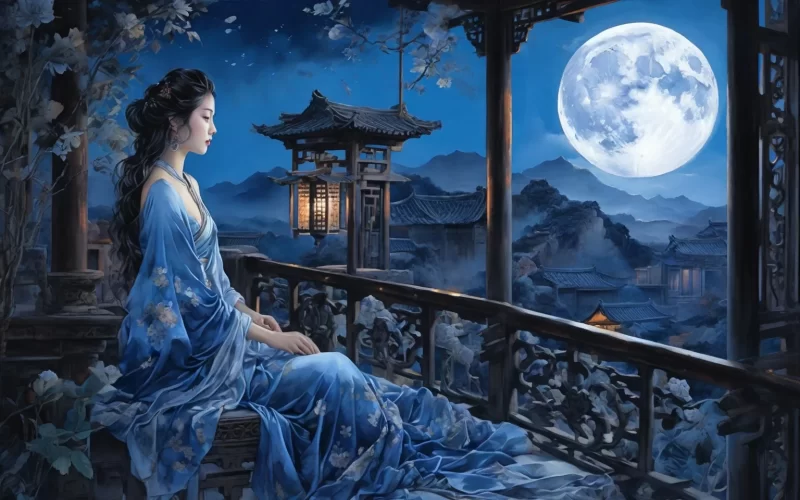
The poem opens with the four words "山光物态" (Hills glow in varied forms) encompassing the entire mountain scenery. "山光" (Hills glow) is the sunlight of spring; "物态" (varied forms) is the myriad things in the mountains; "弄春晖" (disporting in sunshine bright)—the single word "弄" (disporting) renders the glow and forms of the hills lively and spirited—as if the mountain is also playing with this spring light, and all things are frolicking with the spring radiance. This word "弄" is the first "key" of the entire poem: it is not a static depiction, but a dynamic presentation; it is not objective realism, but subjective fondness. The next line, "莫为轻阴便拟归" (Don’t go back at the sight of a light cloud on the hill!), shifts from scene to feeling, directly urging to stay. "轻阴" (light cloud) is merely a thin shadow of clouds, fleeting, yet enough to make the friend think of returning. The poet gently negates this with the two words "莫为" (Don’t), the tone tactful yet earnest. This couplet uses "disporting" to write the delight of the spring hills, and "Don’t" to write the feeling of urging a guest to stay, encompassing within it both the beauty of the mountain scenery and the host's heart.
Second Couplet: "纵使晴明无雨色,入云深处亦沾衣。"
Zòng shǐ qíng míng wú yǔ sè, rù yún shēn chù yì zhān yī.
Even if it’s fine and won’t rain, going deep Into the cloud, you’ll wet your gown with moisture still.
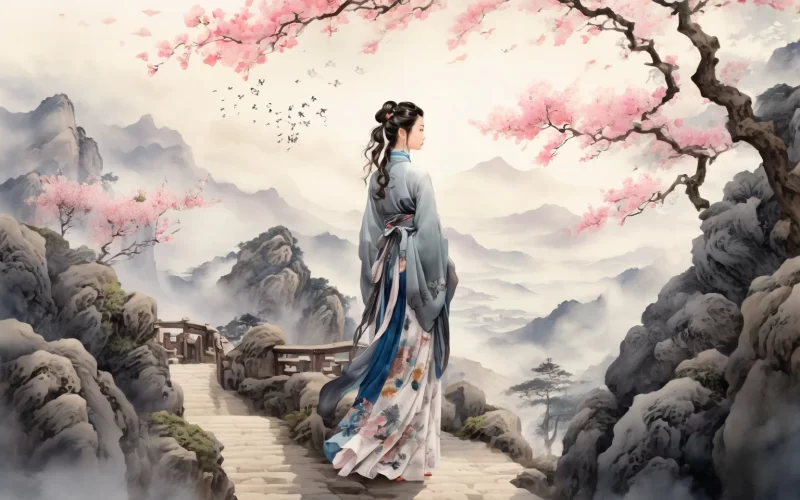
This couplet is the soul of the entire poem, resolving the friend's concern with a clever reason. "纵使晴明无雨色" (Even if it’s fine and won’t rain) is a hypothesis—even without the "light cloud", even if the weather is clear and fine; "入云深处亦沾衣" (going deep / Into the cloud, you’ll wet your gown with moisture still) is a fact—the mountains are wrapped in mist and clouds, rich with moisture; regardless of overcast or fine weather, going deep into the mountains will inevitably moisten one's clothes. This word "still" is the second "key" of the entire poem: since clothes get damp on cloudy days, and also on fine days, then why hesitate because of a "light cloud"? The poet advances by retreating, using "Even if" to lead to a deeper truth: the delight of the mountains lies precisely in this experience of "wet your gown"; the joy of a spring mountain excursion lies in this exploration of "going deep / Into the cloud". He tells his friend: Do not worry about getting your clothes damp, for that is precisely the most unique gift of the spring hills; do not miss it because of a momentary change in weather, for the beauty of the mountains lies far beyond overcast or fine.
Holistic Appreciation
This is an excellent work among Zhang Xu's landscape poems. The entire poem consists of four lines and twenty-eight characters. Using "urging a guest to stay" as the thread, it blends the scenery of the spring hills, the feeling of urging a guest to stay, and the delight of the landscape into one, showcasing the poet's love for nature and his transcendent, broad-minded spirit.
Structurally, the poem presents a progressive layering moving from scene to feeling, from reality to illusion. The first couplet starts with "Hills glow in varied forms, disporting in sunshine bright", writing of the vibrant vitality of the spring hills, and directly urges to stay with "Don’t go back at the sight of a light cloud on the hill!" The second couplet sets up a hypothesis with "Even if it’s fine and won’t rain" and concludes with "going deep / Into the cloud, you’ll wet your gown with moisture still", elevating the reason for urging to stay from "weather" to the "delight of the landscape." Between the two couplets, it moves from scene to feeling, from reality to illusion, progressing layer by layer, forming a seamless whole.
Thematically, the core of this poem lies in the interplay between the words "弄" (disporting) and "亦" (still). That "弄" in "disporting in sunshine bright" is the liveliness and vitality of the spring hills; that "亦" in "wet your gown with moisture still" is the gift and embrace of the landscape. Between this "disporting" and this "still" lies the poet's deep affection for the landscape: the spring hills do not change their delight because of overcast or fine weather; the landscape does not alter its form according to human wishes. It has its own beauty, waiting only for a person of heart to discover and experience it. The poet urges his friend with "Don’t go back at the sight of a light cloud" and reasons with "Even if it’s fine and won’t rain", transforming the intention to "urge to stay" into a deep, affectionate declaration of the delight of the landscape.
Artistically, the poem's most moving aspect lies in the clever conception of "using scene to write feeling, using reason to convey emotion." The poet does not directly say "the mountains are so beautiful," but only uses "Hills glow in varied forms, disporting in sunshine bright" to encompass the mountain scenery. He does not directly say "stay," but only hints at the delight of the mountains with "going deep / Into the cloud, you’ll wet your gown with moisture still." That experience of "wet your gown" is both the gift of the landscape and the joy of roaming the hills; that exploration of "going deep / Into the cloud" is both physical space and a spiritual realm. This technique of hiding the intention to persuade within the delight of the landscape, transforming the worry of parting into the joy of exploration, is precisely the highest realm of Chinese classical poetry's "subtlety and suggestiveness."
Artistic Merits
- Using Scene to Write Feeling, Subtle and Profound: Using "Hills glow in varied forms, disporting in sunshine bright" to write the delight of the spring hills, and "going deep / Into the cloud, you’ll wet your gown with moisture still" to write the joy of the landscape. The intention to urge to stay is hidden within the beauty of the landscape; without saying "stay," the intention to stay naturally appears.
- Exquisite Word Choice, Rich in Meaning: The word "disporting" writes the liveliness of the spring hills; the word "still" writes the gift of the landscape. Within a single word, there is scene, feeling, and reason.
- Tactics of a Feint, Advancing by Retreating: Setting up a hypothesis with "Even if it’s fine and won’t rain" leads to the conclusion of "wet your gown with moisture still", cleverly and naturally transforming the friend's concern into the gift of the landscape.
- Concise Language, Far-reaching Artistic Conception: The entire poem is as natural as spoken language, yet every word carries feeling. Using the simplest language to write the most sincere emotion, where words end but meaning is inexhaustible.
Insights
This poem, through urging a guest to stay in the hills, speaks to an eternal theme—True beauty lies not beyond overcast or fine weather, but in "going deep / Into the cloud"; true joy lies not in avoiding the dampness that wets your gown, but in embracing the delight of the landscape.
First, it lets us see "the gift of the spring hills." The vividness of "Hills glow in varied forms, disporting in sunshine bright" and the moistening of "going deep / Into the cloud, you’ll wet your gown with moisture still" are the unique gifts of the spring hills. It does not ask you to admire from afar, but to immerse yourself within it, to feel the dampness of "wet your gown" and the mistiness of "Into the cloud". It reminds us: True beauty is not observing from a distance, but immersing oneself wholeheartedly; true experience is often accompanied by a little cost of "wet your gown."
On a deeper level, this poem makes us contemplate the deeper meaning of "urging a guest to stay." The poet does not insist on his friend's stay as a host, but persuades as a kindred spirit of the landscape. He tells his friend: Do not miss the true delight of the hills because of a fleeting, light cloud; the scenery of "going deep / Into the cloud" is worth your going in. It makes us understand: What is truly precious is not the overcast or fine weather, but the time shared with a kindred spirit enjoying the delight of the landscape; what is truly unforgettable is not the quality of the scenery, but the path walked together within the landscape.
And what is most lingering is the poem's broad-mindedness of "taking the landscape as a kindred spirit." The poet does not worry about overcast or fine weather, does not fret about clothes getting damp, but only urges his friend to stay with the attitude of the landscape. This broad-mindedness is the true nature of "Mad Zhang," and also the spiritual foundation of High Tang literati—they indulged in mountains and rivers, delighted together with heaven and earth, and in the embrace of nature, found a place for their souls to rest.
This poem writes of urging a guest to stay in the hills during the High Tang, yet allows everyone troubled by a "light cloud" on life's journey to find resonance within it. The vividness of "Hills glow in varied forms, disporting in sunshine bright" is the scenery in the eyes of everyone who loves nature. The consolation in "Don’t go back at the sight of a light cloud on the hill!" is the words in the heart of everyone who deeply knows the value of friendship. The gift of "going deep / Into the cloud, you’ll wet your gown with moisture still" is the joy that can only be reaped by those who dare to go deep within. This is the vitality of poetry: it writes of Zhang Xu urging a guest to stay, but one reads of people in all eras who know how to cherish the landscape and cherish friendship.
About the poet
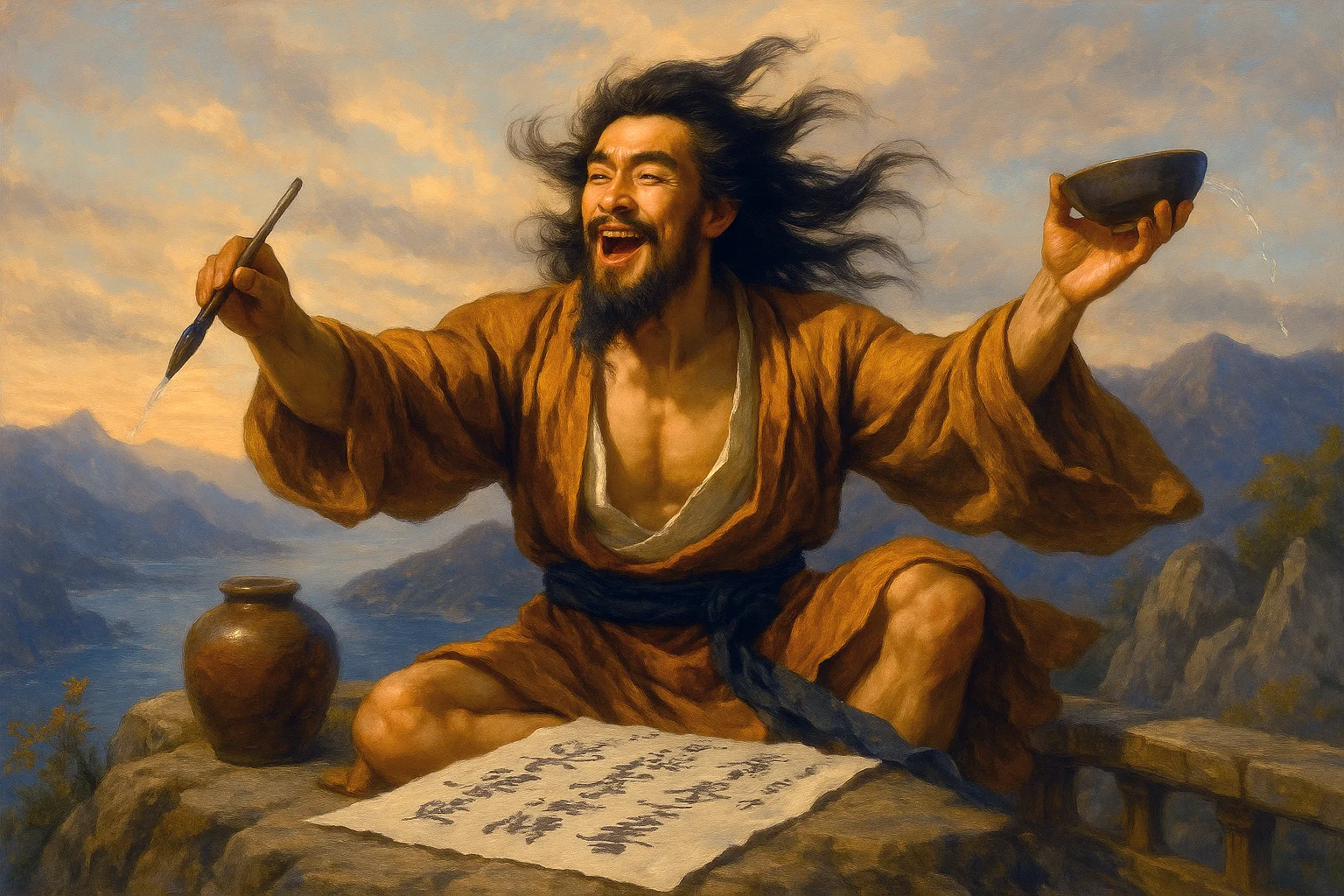
Zhang Xu (张旭 c. 675 - c. 750), a native of Suzhou, Jiangsu Province, was a renowned calligrapher and poet of the High Tang period. Born in the Early Tang but active during the High Tang, he was unrivaled in cursive calligraphy. His personality was wild and unrestrained, and he was famously addicted to wine. He often wielded his brush with great speed after drinking, sometimes even dipping his hair in ink. His contemporaries called him “Madman Zhang,” and Du Fu listed him as one of the “Eight Immortal Drinkers.” Although his poetic achievements were overshadowed by his fame in calligraphy, his poetry still embodies the spirit of the High Tang. His artistic hallmark lies in the “unity of calligraphy and poetry,” both distinguished by a seamless flow of energy and an untrammeled natural elegance.