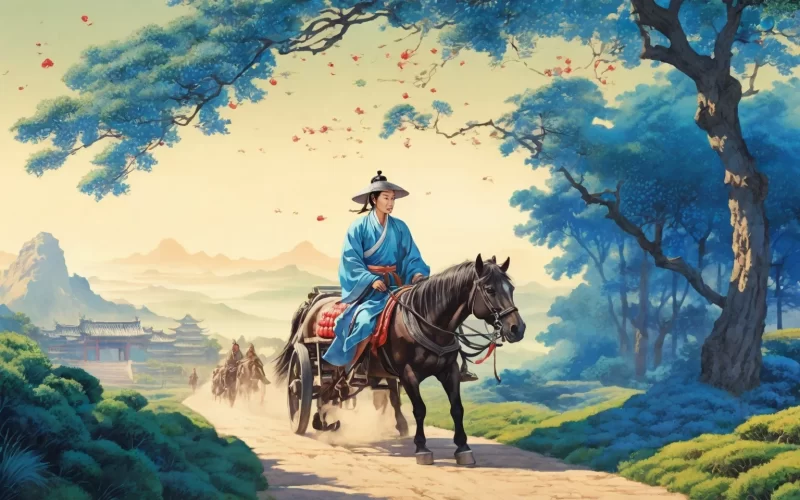



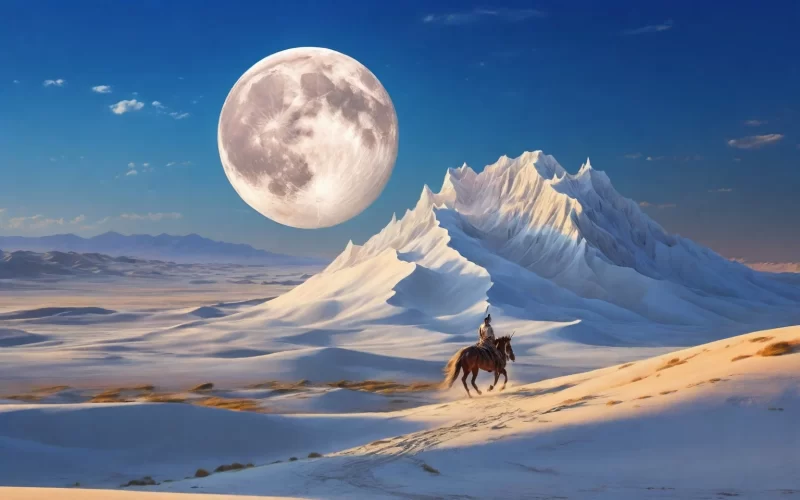
The desert sands are as a sea of snow, immense and pale;
The moon o’er Mount Yan is a silver hook, a weapon, a grail.

Oh, when shall I be harnessed in that fretted gold, and feel
The swift flight granted, and the crisp autumn beneath my thunderous heel?
Original Poem
「马诗 · 其五」
李贺
大漠沙如雪,燕山月似钩。
何当金络脑,快走踏清秋。
Interpretation
"Horse Poems" is a series of twenty-three object-chanting poems written by Li He during his tenure in Chang'an. This is the fifth. During the Zhenyuan and Yuanhe eras, regional military governors held separatist power, and border conflicts were frequent. The vast deserts and the Yan Mountains region were the very front lines where the Tang Dynasty clashed with northern nomadic peoples. Against this historical backdrop, scholars eager to achieve merit and glory often turned their gazes toward the frontier—there lay military exploits, opportunity, and the possibility of changing one's destiny. When Li He wrote this series, he was confined to Chang'an, serving in the minor post of Ritual Ceremonialist. This lowly ninth-rank official, responsible for managing ceremonial tablets and directing sacrificial rites, was far removed from the official career he had envisioned. The poignant question in the poem, "When will a bridle of gold deck my head?" can be understood as his yearning for opportunity—when will he be entrusted with important duties, when will he be able to realize his ambitions?
"A bridle of gold" (金络脑, jīn luò nǎo) is a valuable bridle, symbolizing a warhorse being recognized, fully equipped, and ready for the battlefield. "Gallop in the clear autumn air" (快走踏清秋, kuài zǒu tà qīng qiū) depicts the act of galloping, speeding across the plains on a crisp autumn day. The first couplet's "vast deserts" and "Yan Mountains" provide the backdrop for this gallop: a world vast, desolate, full of challenge, yet also full of opportunity.
First Couplet: "大漠沙如雪,燕山月似钩。"
Dàmò shā rú xuě, Yānshān yuè sì gōu.
Vast desert—sands like snow;
Yan Mountains—moon like a hook.
The opening sketches a frontier scene with two precise similes. "Sands like snow" (沙如雪) describes color and also conveys cold—the desert under moonlight glimmers with a chill, white light. "Moon like a hook" (月似钩) describes shape and also suggests sharpness—the crescent moon resembles a hook, subtly hinting at weaponry. Both lines purely depict scenery, yet they already exude the stark, austere aura particular to the frontier. "Sands like snow" is stillness; "moon like a hook" is a stillness that contains an edge. This scene is both magnificently beautiful and coldly severe, precisely the atmosphere where martial spirit is brewed.
Second Couplet: "何当金络脑,快走踏清秋。"
Hé dāng jīn luò nǎo, kuài zǒu tà qīng qiū.
When will a bridle of gold deck my head,
Galloping in the clear autumn air?
The latter couplet shifts from scene to emotion, from stillness to potential motion. The two words "When will" (何当, hé dāng) are the key to the entire poem—they express yearning, a pressing question, the anguish of the timing not being right. "A bridle of gold" (金络脑) symbolizes being trusted with responsibility, being equipped, being put to use. A horse needs a golden bridle just as a scholar needs achievement and recognition. The next line, "Galloping in the clear autumn air" (快走踏清秋), depicts the posture of galloping. The character "gallop/tread" (踏, tà) is powerful. "Clear autumn" (清秋, qīng qiū) specifies the season and also subtly connects with the moonlight and sand color of the first couplet—it is precisely the right season for campaigning.
Holistic Appreciation
This short poem of only twenty characters captures a state of potential energy poised for release. The first couplet depicts the stillness of the frontier. Vast desert, Yan Mountains, sands like snow, moon like a hook—everything lies silent, waiting to be awakened. The second couplet speaks of the horse's movement. But the words "When will" push this movement into the future tense: it has not yet moved; it is only waiting, waiting for the moment the golden bridle is put on.
This state of "poised potential" is precisely the poet's own condition. His body is in Chang'an, but his heart yearns for the frontier; he is trapped in a petty official post yet longs to achieve glory. That vast desert, those Yan Mountains, are his imagination and also his aspiration. He knows where he should go, he just does not know when he will be able to go.
Nowhere in the entire poem does emotion spill out directly, yet emotion permeates every line. "Sands like snow" is cold; "moon like a hook" is sharp; "a bridle of gold" is glorious; "galloping in the clear autumn air" is exhilarating. The poet hides all his longing within these images.
Artistic Merits
- Apt Similes, Vivid Imagery: "Sands like snow" captures color; "moon like a hook" captures form. Both similes accurately capture the features of the frontier landscape while also subtly containing connotations of chill and sharpness.
- Natural Shift from Scene to Emotion: The first couplet is pure description; the second is pure feeling. The pivotal "When will" connects them, making the transition natural and fluid.
- Concise Language, Rich Tension: Twenty characters convey the vastness of the frontier, the austerity of the moonlit night, the warhorse's yearning, and the poet's anticipation—not a single word is superfluous.
- Use of Symbolism, Profound Meaning: By using "a bridle of gold" to symbolize being entrusted with responsibility, and "galloping in the clear autumn air" to symbolize achieving merit and glory, the poem expresses the poet's aspiration through the depiction of the object, achieving an effect of subtlety and power.
- Seasonal Resonance, Tight Structure: "Clear autumn" resonates with the first line's "sands like snow"—an autumn night with a bright moon, sand white as snow, is precisely the perfect time for galloping.
Insights
In twenty characters, this poem expresses a universal state of waiting: waiting to be seen, waiting to be of use, waiting for one's own moment. It shows us the posture within the wait. The horse in the poem does not whinny or struggle; it simply waits. But it does not wait passively—it paws the ground, energy coiled, waiting only for that "When will" to become "now." This kind of waiting is prepared waiting, capable waiting.
"金络脑" is a symbol. It represents being recognized, being equipped, being put to use. What the poet yearns for is not empty fame, not profit or rank, but a real opportunity to play a role. This reminds us: true ambition is not about securing a title, but about finding a stage upon which to act.
On a deeper level, this poem writes of a horse, but also of a person; of the frontier, but also of the inner world. That vast desert, those Yan Mountains, are both a geographical reality and a spiritual realm. The poet projects his own longing onto this vast land, letting an imagined horse complete, for him, the gallop that cannot be realized in reality.
About the Poet
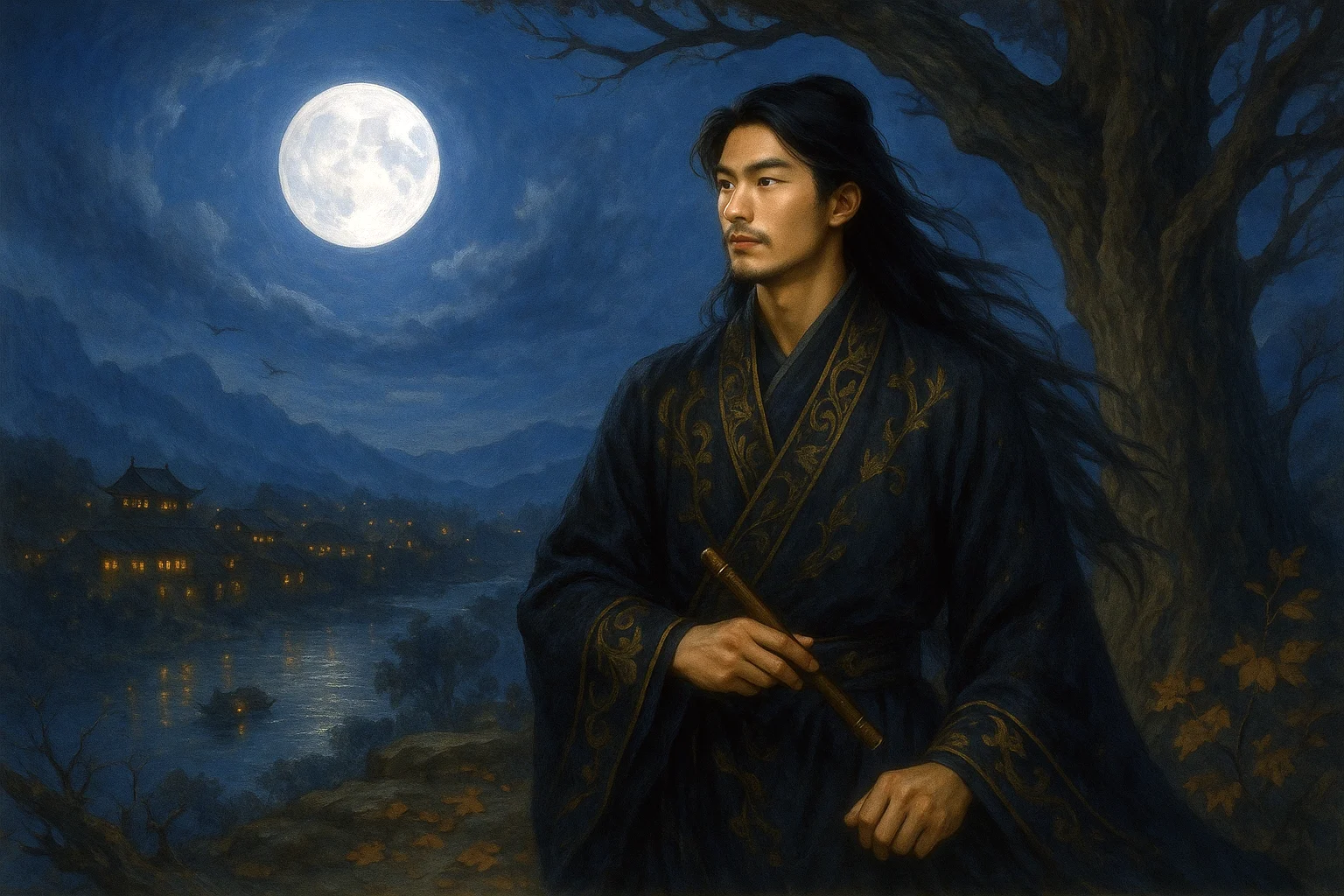
Li He (李贺 790 - 816), a native of Yiyang, Henan, was a Romantic poet of the Mid-Tang dynasty. A descendant of the Tang imperial clan, he was barred from taking the national jinshi civil service examination due to a naming taboo (his father's name contained a character homophonous with "Jin"), which led to a life of frustration and poverty. He died at the age of twenty-seven. His poetry, renowned for its bizarre grandeur, chilling elegance, and fantastical imagination, earned him the title "Ghost of Poetry." He pioneered the distinctive "Changji Style" within Tang poetry, exerting a profound influence on later poets like Li Shangyin and Wen Tingyun and on the expansion of poetic imagery in subsequent eras.