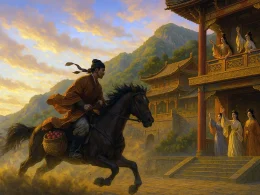



The changeless hills round ancient capital still stand;
Waves heating on ruined walls, unheeded, roll away.
The moon which shone by riverside on flourished land
Still shines at dead of night over ruined town today.
Original Poem
「金陵五题 · 石头城」
刘禹锡
山围故国周遭在,潮打空城寂寞回。
淮水东边旧时月,夜深还过女墙来。
Interpretation
This poem was composed in the second year of the Baoli era (826 AD), when Liu Yuxi was fifty-five. That year, having completed his tenure as Prefect of Hezhou, he was returning north to Luoyang and passed through Jinling. Jinling was the old capital of the Six Dynasties, once a place of utmost splendor, now reduced to broken walls and ruins. When Liu Yuxi arrived, 260 years had passed since the fall of the Chen Dynasty, and 200 years since the founding of the Tang. Stone Fortress was no longer a fortress, just a pile of discarded stones by the river. And Liu Yuxi himself had just emerged from over twenty years of exile. Langzhou, Lianzhou, Kuizhou, Hezhou—every place he had passed through was a desolation more prolonged than Stone Fortress. Standing by the river at that moment, what he saw was not only the ruins of the Six Dynasties, but also the reflection of more than half his own life.
This poem has only four lines, yet it exhausts the relationship between humanity and time. The mountains remain, the tide still comes, the moon still shines. Only the people are gone; only those who once laughed and wept within the city walls are gone, every single one.
First Couplet: "山围故国周遭在,潮打空城寂寞回。"
Shān wéi gù guó zhōu zāo zài, cháo dǎ kōng chéng jìmò huí.
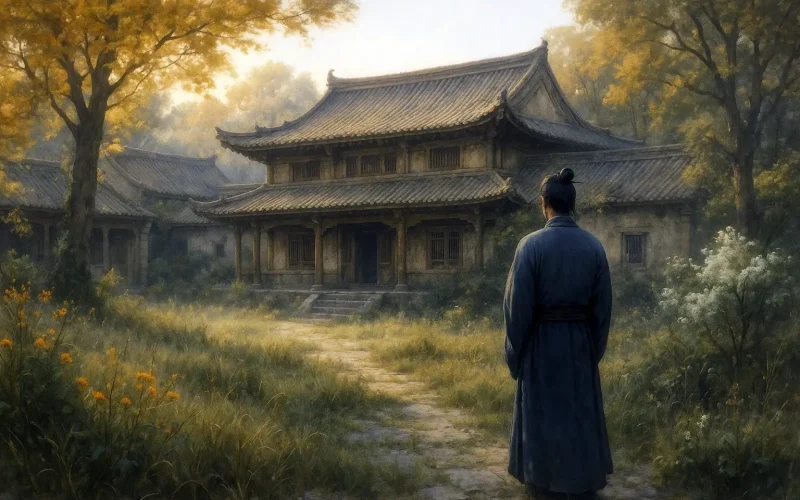
The mountains still surround the old capital, as they ever did;
The tide beats at the empty fortress, then turns back, forlorn.
The opening depicts stillness and motion. "The mountains still surround the old capital" is stillness—the unmoving mountains encircle a "capital" long since ceased to be one. "The tide beats at the empty fortress" is motion—the tide surges forward time and again, beats against the walls, and then—"turns back, forlorn." "Turns back, forlorn" is the poem's first heavy accent. The tide, by nature unfeeling, its beating and retreating a law of nature. Yet Liu Yuxi makes it "forlorn," because the object of its beating is an empty fortress, offering no response. This forlornness is not the tide's; it is the poet's.
Final Couplet: "淮水东边旧时月,夜深还过女墙来。"
Huái shuǐ dōng biān jiù shí yuè, yè shēn hái guò nǚ qiáng lái.
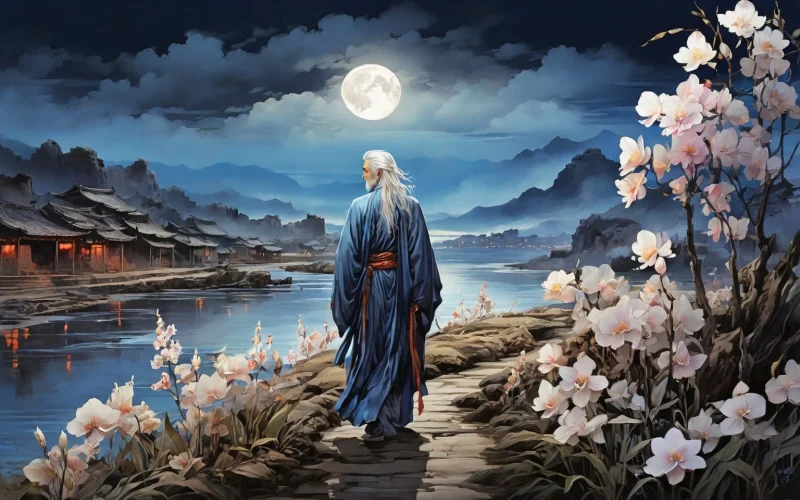
Over the Huai River's east bank, the same moon of bygone years;
Deep in the night, it still comes, passing over the parapet's rim.
This couplet is an unparalleled masterpiece through the ages. "The same moon of bygone years"—this moon witnessed the gilded splendor of the Six Dynasties, the lanterns that burned all night, the countless people who gazed at the moon from the city walls. Those people are dead; the moon remains. The word "still" in "it still comes" is the poem's coldest stroke. The moon does not know the city is now empty; following its habit of a thousand years, it passes over the low parapet on time, to shine upon an empty fortress. Within this "still" lies the moon's eternity, and, even more, humanity's insignificance and swift decay.
Holistic Appreciation
This poem represents the pinnacle of Liu Yuxi's historical meditation poetry and is also one of the most thoroughgoing poems in Chinese poetic history on the theme of "emptiness." The poem's four lines present four things: mountains, tide, moon, fortress. The mountains are the mountains of the "old capital," but the "old capital" is empty; the tide is the tide that beats the "fortress," but the "fortress" is empty; the moon is the moon of "bygone years," but "bygone years" are empty. Each line points to "emptiness"; not a single line explicitly states "emptiness." The poet simply places the mountains, tide, moon, and fortress there, letting them speak for themselves.
The most marvelous part is the conclusion. The moon is still that same moon, the parapet is still that same parapet; deep in the night, it still comes over. This action is so ordinary, so ordinary that one forgets it has repeated for centuries. Yet it is precisely this ordinariness that writes the cruelty of time to its extreme—the world operates as usual, only the people within it have changed, generation after generation, until finally it is completely empty. When Bai Juyi read this poem, he sighed in admiration for a long time. He said of the line "The tide beats at the empty fortress, then turns back, forlorn" that later generations could never write its like again.
Artistic Merits
- Not a single word writes of people, yet every word writes of people: The entire poem contains only mountains, tide, moon, fortress—not a single mention of "people." Yet every line asks the question: Where are those people? Those who created the splendor? Those who gazed at the moon from the walls? The answer lies outside the poem, in the reader's heart.
- The weight of a thousand jin in the word "still": The "still" in "it still comes" is the poetic eye of this poem. It conveys both the cycle and the heartlessness of time. The moon comes every year, punctual, faithful, tireless. But precisely because of its punctuality, it throws the utter completeness of humanity's "absence" into stark relief.
- Three layers of spatial contrast: The mountains (eternal), the tide (cyclical), the moon (punctual) form a threefold contrast with the fortress (swiftly decaying). Each layer reminds the reader: Some things persist; some things are already gone.
- Mastering the profoundest with the simplest: Twenty-eight characters exhaust the rise and fall of three hundred years of the Six Dynasties, and also exhaust the poet's twenty-three years of exile. Not a single sigh of emotion, not a single line of commentary—only the scenery presenting itself. This is the highest realm of historical meditation poetry.
Insights
These four lines about Stone Fortress write of a moment everyone encounters—you stand in a place, knowing it was once bustling, and now nothing remains. The mountains are still those mountains, the tide still beats, the moon rises as usual. Only the people in the city have changed, generation after generation, until finally it is completely empty. Liu Yuxi does not weep, does not cry out; he simply places these scenes there: the mountains surrounding, the tide beating, the moon shining. He presents the facts clearly, and the emotion follows naturally.
This is the most powerful aspect of this poem. He does not say "I am so sad," does not say "the world is inconstant," yet after reading it, you feel that vast emptiness and solitude. Because truly deep emotion often needs not be spoken aloud. The word "still" in the poem is most worth pondering. The moon does not know the city is now empty; following its habit of a thousand years, it passes over the low parapet on time, to shine upon an empty fortress. Within this "still" lies the moon's punctuality, and, even more, humanity's absence. The moon comes every year, while those who once gazed at the moon from the walls are gone, every single one.
When we read this poem today, we do not need to understand the history of the Six Dynasties to be moved by it. Because everyone has their own "Stone Fortress" moment—returning to an old childhood home to find the tree in the courtyard still there, but the person who waited for you beneath it is gone; passing a once-familiar street to find the shops still there, but the familiar faces are nowhere to be seen. The mountains surround, the tide beats, the moon shines, only the people are gone. Liu Yuxi, with twenty-eight characters, captures this feeling to its extreme. He gives you no answer, offers you no comfort; he only lets you see: some things persist; some things are already gone. And all you can do is stand here, watching the moon rise as usual. This attitude, in itself, is an answer.
Poem translator
Xu Yuanchong (许渊冲)
About the poet
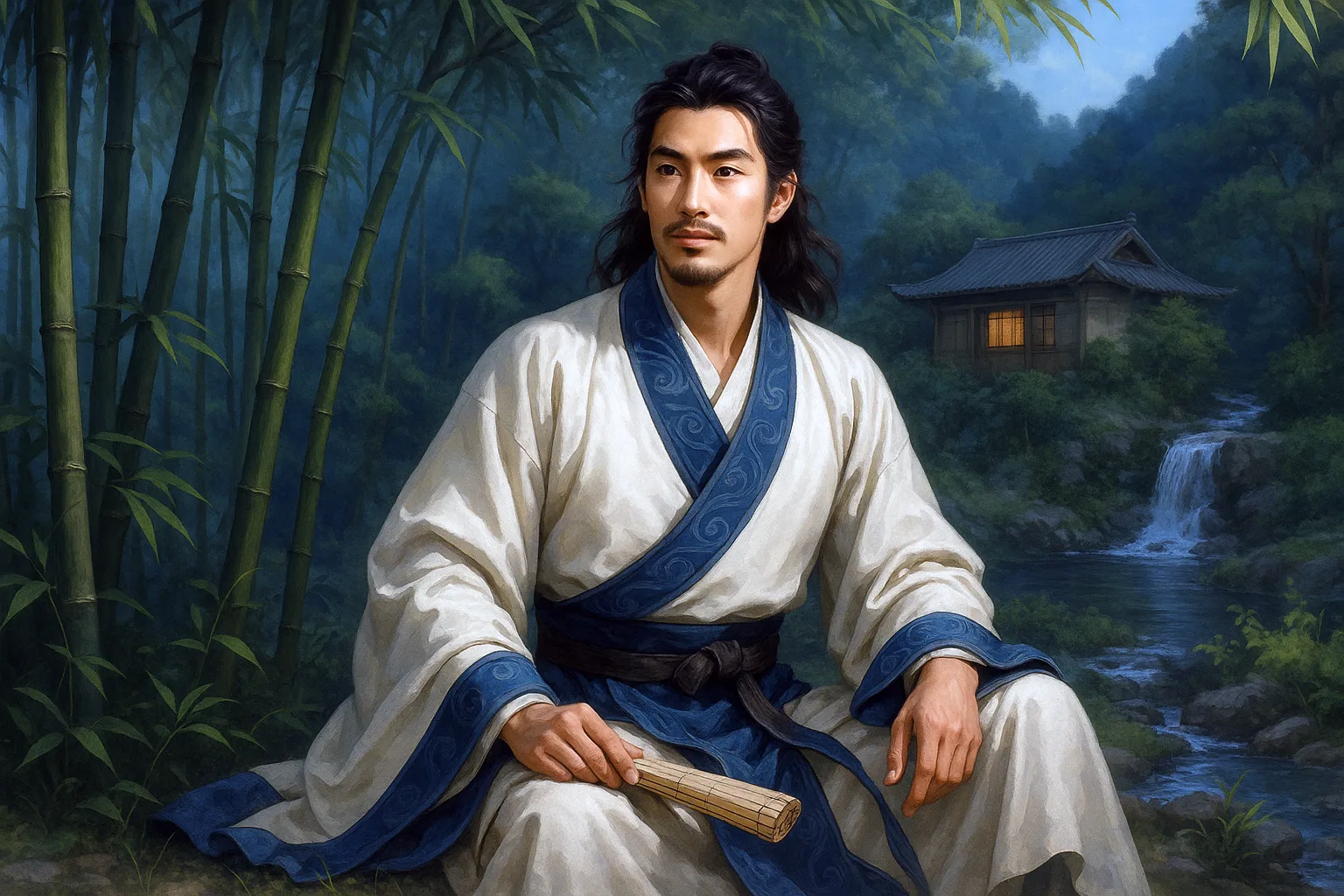
Liu Yuxi(刘禹锡), 772 - 842 AD, was a native of Hebei. He was a progressive statesman and thinker in the middle of the Tang Dynasty, and a poet with unique achievements in this period. In his compositions, there is no lack of poems reflecting current affairs and the plight of the people.