
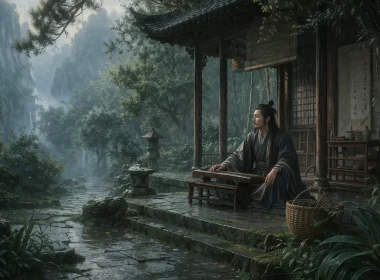
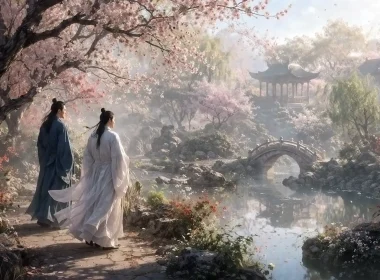
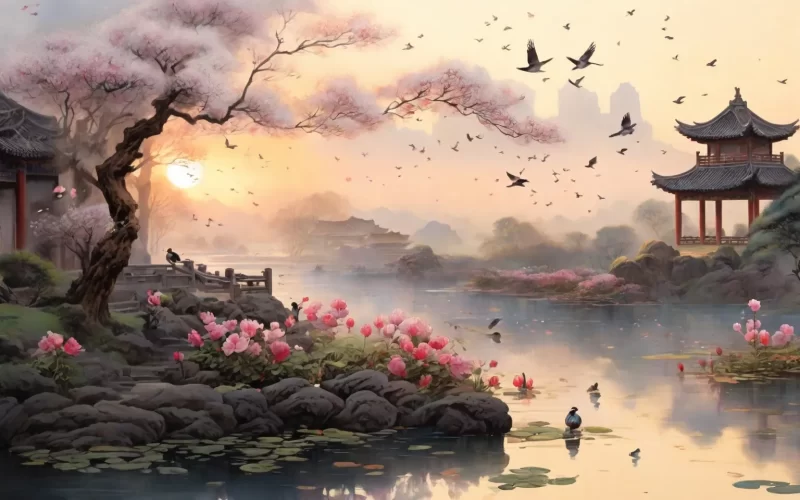
I awake light-hearted this morning of spring,
Everywhere round me the singing of birds --
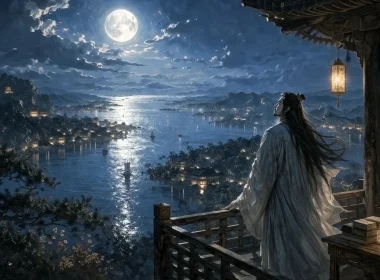
But now I remember the night, the storm,
And I wonder how many blossoms were broken.
Original Poem
「春晓」
孟浩然
春眠不觉晓,处处闻啼鸟。
夜来风雨声,花落知多少。
Interpretation
This famous poem was composed after Meng Haoran had permanently retired to Xiangyang, though the exact year is unknown. Judging from its mood, it likely dates from between the seventeenth year of the Kaiyuan era (729 CE) and the twenty-eighth year (740 CE)—the final phase of his life, after his failure in the Chang'an examination, his wanderings through Wu and Yue, and his eventual return to Lumen Mountain.
These were years in which he no longer harbored thoughts of "the Northern Palace," nor wrote laments of "longing to cross." He was no longer the office-seeker of "寂寂竟何待" (in stillness, what am I waiting for), no longer the wandering guest of "还将两行泪" (I'll bring these two streams of tears), no longer the destitute man of "黄金燃桂尽" (gold burned like cassia). He was simply a commoner in plain clothes, outside Xiangyang city, among the hills of Lumen—rising at dawn to hear the birds, lying at night to feel the wind, waking on an ordinary spring morning to write this ordinary poem. Yet this "ordinary" poem has become one of the most extraordinary works in the history of Chinese poetry. For a thousand years, three-year-olds have recited it, and centenarians have understood it; peddlers and laborers love its simplicity, while learned scholars savor its depth. In twenty characters, it contains the state of mind that Meng Haoran took a lifetime to reach: no more questions for the world, no more grievances against fate—only quiet perception and tender compassion.
First Two Lines: "春眠不觉晓,处处闻啼鸟。"
Chūn mián bù jué xiǎo, chù chù wén tí niǎo.
Spring slumber—unaware of dawn's breaking;
Everywhere I hear the cries of birds.
The opening captures a moment of awakening, yet it is not being startled awake, but waking naturally. The three characters "不觉晓" (unaware of dawn) convey the deep, satisfying sleep of a spring night. This is not a night mooring on a journey, nor a light sleep in a traveler's inn, nor the anxious, half-awake state of "移舟泊烟渚,日暮客愁新" (moving the boat to moor by the misty islet, dusk brings new sorrow to the traveler). This is being in one's own home, in one's own bed, with nothing to worry about—a state of utter relaxation.
"处处闻啼鸟" (everywhere I hear birds crying) is the first message the poet receives from the world upon waking. He does not write "see," but "hear"—he has not yet opened his eyes, yet the birdsong pours in from all directions. The word "处处" (everywhere) pushes the sense of spring's presence to its extreme: it is not one bird singing, nor birds in one direction, but the entire space filled with their sound. This sound is not an intrusion, but a welcome; not noise, but spring announcing itself.
In these two lines, not a single character says "I," yet "I" is present everywhere—it is I who sleep, I who wake, I who hear. This hidden "I" is no longer the wanderer of "宿桐庐江" who would "bring two streams of tears", no longer the destitute man of "秦中感寄" whose "aspirations withered with the years". He is one who has returned, one who dwells in peace, one finally reconciled with the world.
Last Two Lines: "夜来风雨声,花落知多少。"
Yè lái fēng yǔ shēng, huā luò zhī duō shǎo.
Last night I heard the sound of wind and rain;
How many petals have fallen, I wonder?
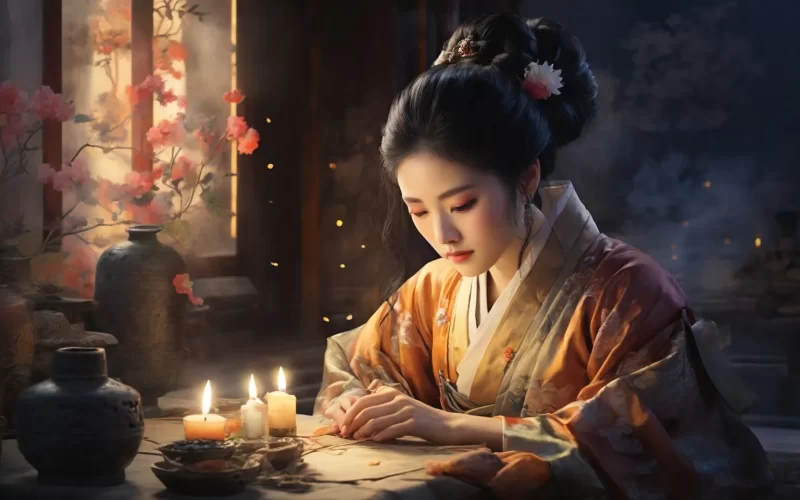
From morning to night, from the real to the imagined, from hearing to recollection. "夜来风雨声" (last night's sound of wind and rain) is a sound from memory—the poet did not write these lines on that rainy night, but on the following morning, retrieving from the present stillness the noise of last night, already swept away by time. The temporal structure here is exquisite: the poet stands in "this moment," looking back at "last night," separated by only a few hours, yet as if by an entire spring.
"知多少" (how many, I wonder) is a question that needs no answer. This is not a quest for the exact number of fallen petals, but a contemplation of passing itself. The poet does not mourn, does not pursue, does not climb to look, does not count. He merely lies in bed, listening to the birds of the present, thinking of last night's wind and rain, and softly, almost to himself, asks. This question is the most moving part of Spring Dawn, and the most concentrated expression of Meng Haoran's late-life state of mind. He is no longer the man of "欲济无舟楫" (longing to cross but without oar or boat), no longer the man of "不才明主弃" (unworthy, abandoned by the wise ruler), no longer even the man who would "bring two streams of tears" to send his longing afar. He simply lies still, letting last night's wind and rain flow through his heart, letting those unseen petals drift down, one by one, in his imagination.
He knows the flowers have fallen. He knows spring is passing. But he no longer tries to hold onto a single petal.
Overall Appreciation
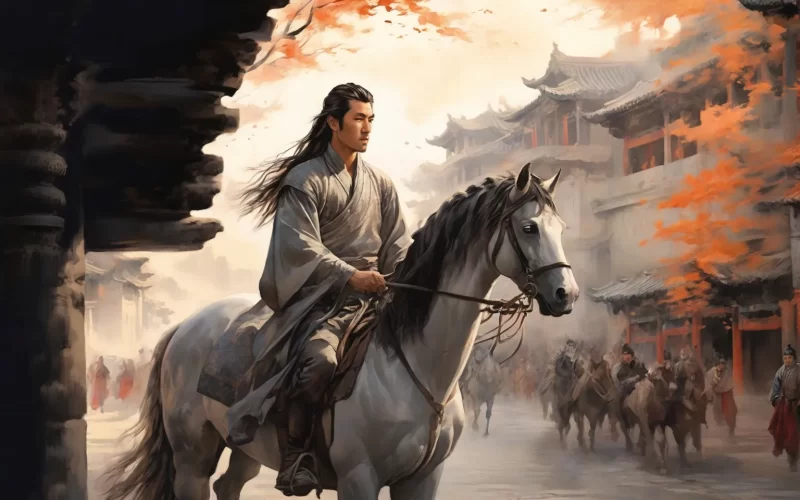
This is Meng Haoran's shortest poem, yet it is the terminus of his lifelong spiritual journey. It captures a morning of return. In the thirty long years before, he had left the mountains, sought office, failed the exam, wandered, struggled, aged—walking all the way to Chang'an, and then all the way back to Xiangyang. Those resolutions of "北阙休上书" (no more memorials to the Northern Palace), those sorrows of "还将两行泪", those destitutions of "黄金燃桂尽", those pains of "壮志逐年衰"—all quietly faded on this spring morning. He was no longer a "guest" in any sense—not a guest in Chang'an, not a guest in Wu and Yue, not a guest on the Tonglu River. He was the master of his own home, the recluse of Lumen's moonlight, the dweller at peace in his spring slumber.
Structurally, the twenty characters build a threefold temporal structure. "春眠不觉晓" is the awakening of the present; "处处闻啼鸟" is perception at this moment; "夜来风雨声" is the echo of last night; "花落知多少" is a question cast toward the unknown tomorrow. From present to past, from past to present, and from present toward an unseen future. This cyclic, nested temporal structure gives the brief four lines a profound, enduring depth.
In terms of theme, the poem pivots on the three characters "知多少." The "处处闻啼鸟" is spring's presence; the "夜来风雨声" is spring's passing; and the "花落知多少" is a gentle gathering of all the tension between presence and passing. He is not seeking knowledge, but offering a salute; not questioning the world, but bowing to transience.
Artistically, the most striking quality of this poem is its restraint in achieving the deepest through the simplest. Twenty characters—not a single obscure word, not a single allusion, not a single complex sentence. A three-year-old can read it; a centenarian can understand it. Yet these twenty characters contain Meng Haoran's entire life—his ideals, his hardships, his wanderings, his return, his letting go, his tenderness. The shallowest language carries the deepest life.
Artistic Features
- Cyclic, Nested Temporal Structure: The poem moves from present to past, from past to present, and from present toward an unknown tomorrow. This cyclic, nested structure gives the brief four lines a profound, enduring depth.
- The Absolute Reign of Hearing: Of the four lines, three are devoted to sound—birdsong, wind and rain, and the imagined sound of falling petals. Meng Haoran deliberately withholds the visual: he does not describe blossoming branches, dazzling sunlight, or even whether he has opened his eyes. This monopoly of hearing gives the poem a unique purity—it is not a world filtered through the eyes, but a world that flows directly into the soul.
- The Complete Concealment of the Subject: There is not a single "I" in the poem, yet every line speaks of "I." The sleeper is "I," the waker is "I," the hearer is "I," the rememberer is "I," the questioner is "I." This hidden subjectivity is more inclusive than a direct "I"—every reader can place themselves into this spring morning, becoming the one lying in bed listening to birds and asking about flowers.
- The Aesthetics of the Suspended Question in "知多少": The poem ends with a question that requires no answer. This is the most mature mode of emotional expression in classical Chinese poetry—a question that seeks no solution is itself the answer. The poet is not seeking knowledge, but offering a salute; not questioning the world, but bowing to transience.
- The Paradoxical Unity of Extreme Simplicity and Extreme Depth: Twenty characters—not a single obscure word, no allusions, no complex syntax. A three-year-old can read it; a centenarian can grasp it. Yet these twenty characters hold Meng Haoran's entire life. The shallowest language carries the deepest life.
Insights
This poem teaches us: one can, after experiencing all that life offers, still maintain a tender perception of the world.
Meng Haoran had seen the splendors of Chang'an and the desolation of failure; he had endured the destitution of "黄金燃桂尽" and the wandering of "还将两行泪". He knew that spring would pass, flowers would fall, and people would age. He knew that fate had not given him what he had sought. Yet on this spring morning, waking, he felt no resentment, no lament, no self-pity. He simply listened to the birds, thought of last night's wind and rain, and softly, almost gently, asked: I wonder how many have fallen? This is not regret for spring—it is reverence for life—reverence for its brevity, for its beauty, for its ceaseless coming and going in its own unique way, generation after generation.
Contemporary life is obsessed with the pursuit of certainty: we need answers, we must control outcomes, we must predict the future, we must hold fate in our own hands. Yet in this little poem, Meng Haoran offers an entirely different stance toward life: without control, yet still present; without certainty, yet still caring. He does not know how many petals have fallen. That does not prevent him, on this spring morning, from thinking of those flowers.
For a thousand years, countless people have woken on such a spring morning, heard birds, and remembered last night's wind and rain. They may not know who Meng Haoran was, or where Lumen Mountain lies, or that a poet in plain clothes of the Kaiyuan era once wrote this poem. Yet in their hearts, that question will softly arise. It is no longer Meng Haoran asking. It is spring itself asking.
花落知多少.
Poem translator
Kiang Kanghu
About the poet
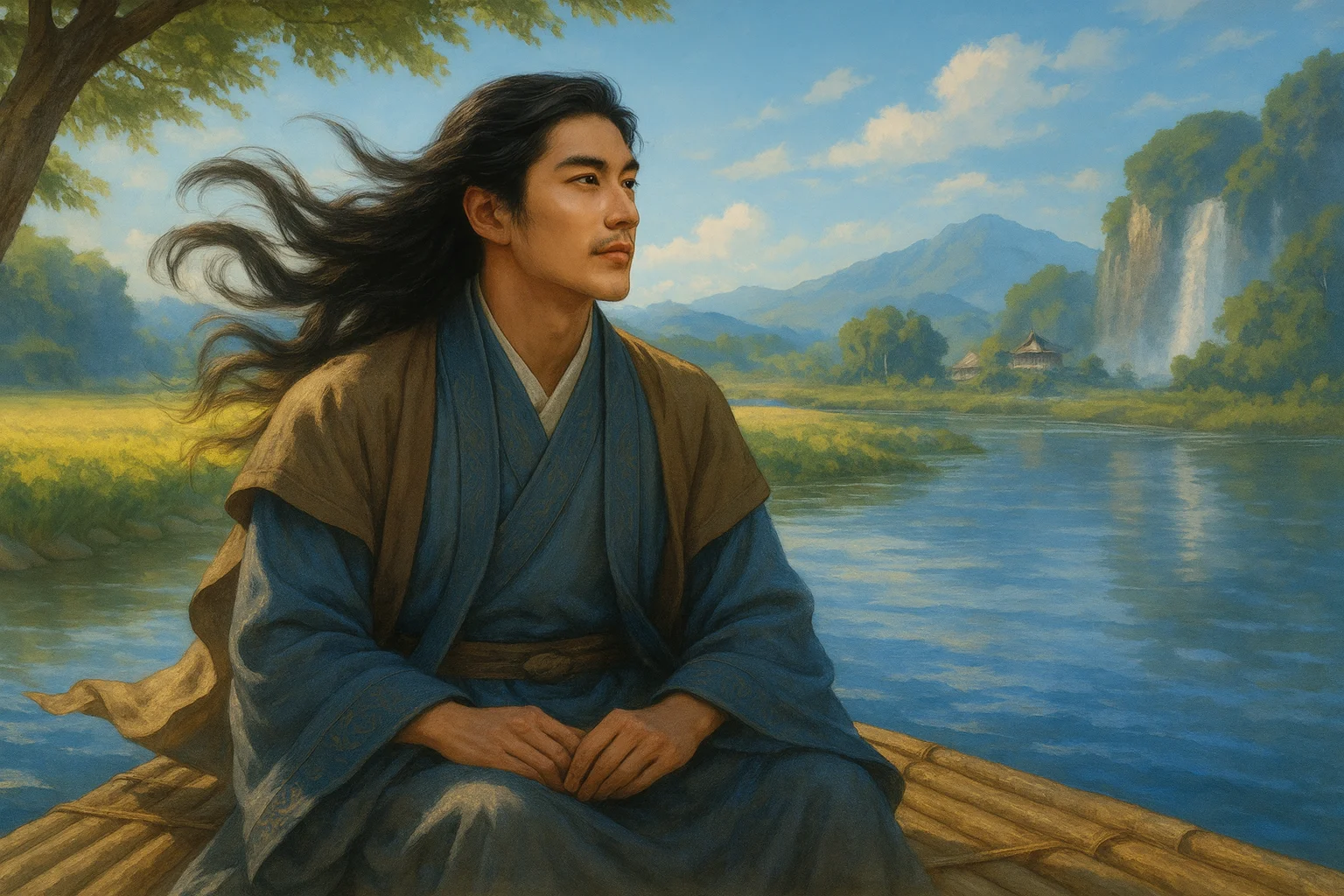
Meng Haoran (孟浩然 689 - 740), a native of Xiangyang, Hubei Province, was a renowned landscape and pastoral poet of the Tang Dynasty. In his early years, he lived in seclusion on Mount Lumen, reading for his own pleasure. At the age of forty, he traveled to the capital to take the jinshi examination but failed. Thereafter, he remained a commoner for the rest of his life, roaming the Wu and Yue regions and finding contentment in poetry and wine. He excelled in five-character verse, with a style that is light and natural, often depicting the pleasures of landscapes and reclusion. He is regarded as a representative of the High Tang landscape and pastoral poetry school. His collected works, Meng Haoran Ji, have been handed down, and his poetry exerted a profound influence on later hermitic poetic traditions.