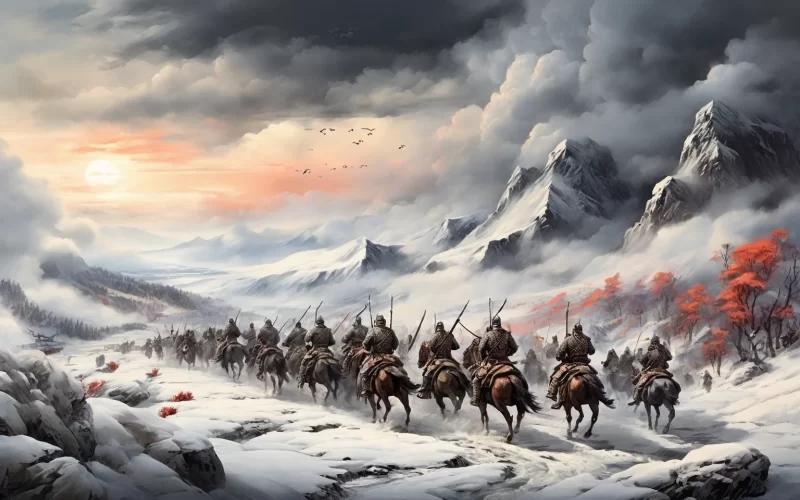
The five Holy Mountains have the rank of the Three Dukes.
The other four make a ring, with the Sung Mountain midmost.
To this one, in the fire-ruled south, where evil signs are rife,
Heaven gave divine power, ordaining it a peer.
All the clouds and hazes are hidden in its girdle;
And its forehead is beholden only by a few.

...I came here in autumn, during the rainy season,
When the sky was overcast and the clear wind gone.
I quieted my mind and prayed, hoping for an answer;
For assuredly righteous thinking reaches to high heaven.
And soon all the mountain-peaks were showing me their faces;
I looked up at a pinnacle that held the clean blue sky:
The wide Purple Canopy joined the Celestial Column;
The Stone Granary leapt, while the Fire God stood still.

Moved by this token, I dismounted to offer thanks.
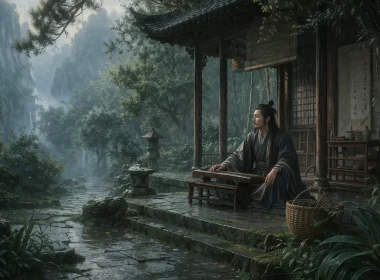
A long path of pine and cypress led to the temple.
Its white walls and purple pillars shone, and the vivid colour
Of gods and devils filled the place with patterns of red and blue.
I climbed the steps and, bending down to sacrifice, besought
That my pure heart might be welcome, in spite of my humble offering.

The old priest professed to know the judgment of the God:
He was polite and reverent, making many bows.
He handed me divinity-cups, he showed me how to use them
And told me that my fortune was the very best of all.
Though exiled to a barbarous land, mine is a happy life.
Plain food and plain clothes are all I ever wanted.
To be prince, duke, premier, general, was never my desire;
And if the God would bless me, what better could he grant than this? -

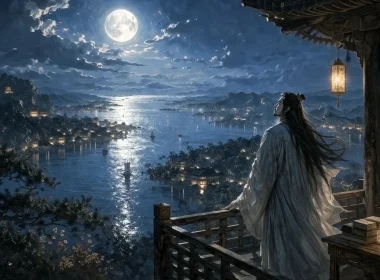
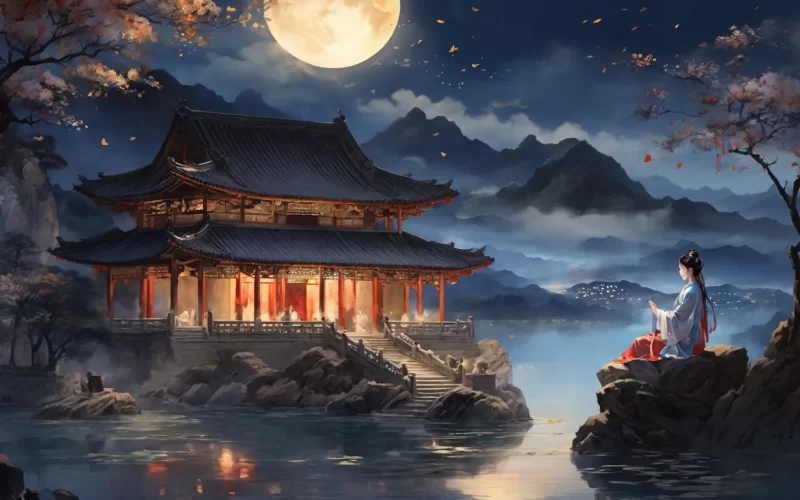
At night I lie down to sleep in the top of a high tower;
While moon and stars glimmer through the darkness of the clouds...
Apes call, a bell sounds. And ready for dawn,
I see arise, far in the east, the cold bright sun.
Original Poem
「谒衡岳庙遂宿岳寺题门楼」
韩愈
五岳祭秩皆三公, 四方环镇嵩当中。
火维地荒足妖怪, 天假神柄专其雄。
喷云泄雾藏半腹, 虽有绝顶谁能穷?
我来正逢秋雨节, 阴气晦昧无清风。
潜心默祷若有应, 岂非正直能感通?
须臾静扫众峰出, 仰见突兀撑青空。
紫盖连延接天柱, 石廪腾掷堆祝融。
森然魄动下马拜, 松柏一迳趋灵宫。
纷墙丹柱动光彩, 鬼物图画填青红。
升阶伛偻荐脯酒, 欲以菲薄明其衷。
庙内老人识神意, 睢盱侦伺能鞠躬。
手持杯珓导我掷, 云此最吉余难同。
窜逐蛮荒幸不死, 衣食才足甘长终。
侯王将相望久绝, 神纵欲福难为功。
夜投佛寺上高阁, 星月掩映云曈昽。
猿鸣钟动不知曙, 杲杲寒日生于东。
Interpretation
This poem was composed in the autumn of 805 AD, the first year of the Yongzhen era under Emperor Xianzong of Tang, when Han Yu was forty-two years old. The previous year, Han Yu had been demoted to the magistracy of Yangshan in Lianzhou (present-day Yangshan, Guangdong) for submitting a memorial titled "On the Famine Caused by Drought" which exposed the extortionate taxation by capital officials. Yangshan was a remote, barbarous place, where Han Yu endured hardship for nearly a year. In the eighth month of 805, Emperor Shun abdicated in favor of his son, and Emperor Xianzong ascended the throne, proclaiming a general amnesty. Han Yu received pardon and was to return north, appointed as a Legal Officer in the Jiangling Prefecture administration. It was precisely on his journey from Yangshan to Jiangling that he made a special trip to ascend and visit the Southern Marchmount, Mount Heng, and wrote this poem.
At this time, Han Yu had experienced major vicissitudes in his official career: in his early years, he passed the jinshiexamination only on his fourth attempt at the Ministry of Rites, and obtained an official post only after three attempts at the Ministry of Personnel. After entering officialdom, he was repeatedly sidelined, ultimately leading to exile in a malarial, distant region. Although this pardon and return north granted him only a lowly post, it at least meant a return to life. The poem contains both awe at the majestic scenery of Mount Heng and deep reflection on his personal fate; it holds both the piety of a supplication to the spirits and self-consolation born of despair regarding worldly success. Fusing description, narration, lyricism, and reflection into one, the poem displays the unique style of Han Yu's poetry—using prose techniques in poetry, creating a work of majestic grandeur and unrestrained force.
Stanza One: «五岳祭秩皆三公,四方环镇嵩当中。火维地荒足妖怪,天假神柄专其雄。喷云泄雾藏半腹,虽有绝顶谁能穷?»
Wǔyuè jì zhì jiē sāngōng, sìfāng huán zhèn Sōng dāngzhōng. Huǒ wéi dì huāng zú yāoguài, tiān jiǎ shén bǐng zhuān qí xióng. Pēn yún xiè wù cáng bàn fù, suī yǒu juédǐng shuí néng qióng?
The Five Marchmounts' sacrificial ranks all equal the Three Dukes; / The four directions ring their guardians, Song in the center. The fire-region's earth is wild, teems with monsters and demons; / Heaven lends divine authority, to it alone belongs the might. Belching clouds, discharging mists, it hides its midriff; / Though it has an ultimate peak, who can reach its end?
The opening begins with reflection, summarizing the lofty status of the Southern Marchmount. «五岳祭秩皆三公» indicates its national-level sacrificial rank; «四方环镇嵩当中» outlines the spatial arrangement of the Five Marchmounts—with Mount Song at the center, the other four guarding the cardinal directions. The next four lines focus on Mount Heng: because it lies in the «火维», with its «地荒» and abundance of «妖怪», Heaven specially granted it divine authority, letting it «专其雄». The four words «喷云泄雾» describe both reality (Mount Heng is often cloud-shrouded) and imbue it with mysterious color. The rhetorical question «虽有绝顶谁能穷?» elevates Mount Heng to a sacred height beyond human reach. This stanza is both a paean to the mountain and sets the solemn context for the poet's "dialogue" with the deity that follows.
Stanza Two: «我来正逢秋雨节,阴气晦昧无清风。潜心默祷若有应,岂非正直能感通?须臾静扫众峰出,仰见突兀撑青空。»
Wǒ lái zhèng féng qiūyǔ jié, yīnqì huìmèi wú qīngfēng. Qiánxīn mò dǎo ruò yǒu yìng, qǐfēi zhèngzhí néng gǎntōng? Xūyú jìng sǎo zhòng fēng chū, yǎng jiàn tūwù chēng qīngkōng.
My coming chanced on the autumn rains' season; / Yin vapors murky and dim, no clear breeze. With whole heart silently prayed, as if there were answer; / Could it be an upright man can commune with the numinous? In a moment, quietly swept clear, the massed peaks appear; / Lift my gaze, see the sheer mass propping the blue void.
The focus shifts from the mountain to the man, from static description to dynamic narration. «阴气晦昧» describes both the actual scene of autumn rain and projects the poet's mood during exile. The four words «潜心默祷» show his piety; the word «若» in «若有应» captures a real feeling while leaving room for doubt. Immediately, the poet asks himself, «岂非正直能感通?»—this questions whether the spirit truly responded, but more importantly, affirms his own «正直» character. The last two lines echo the earlier «默祷» with «须臾静扫», as if the numinous being, moved, scattered the clouds and mist, revealing all peaks. The three words «撑青空» carry immense force, simultaneously presenting the peak's loftiness and the vastness of heaven and earth.
Stanza Three: «紫盖连延接天柱,石廪腾掷堆祝融。森然魄动下马拜,松柏一迳趋灵宫。纷墙丹柱动光彩,鬼物图画填青红。»
Zǐgài liányán jiē Tiānzhù, Shílǐn téng zhì duī Zhùróng. Sēnrán pò dòng xià mǎ bài, sōngbǎi yī jìng qū línggōng. Fēn qiáng dān zhù dòng guāngcǎi, guǐwù túhuà tián qīnghóng.
Purple-Canopy stretches continuous, joins Heaven's Pillar; / Stone-Granary leaps and hurls, piles up to Zhu Rong. Awed, soul astir, dismount and bow; / A path of pines and cypresses leads to the Numinous Palace. Whitewashed walls, vermilion pillars, stir with gleaming hues; / Pictures of ghostly beings fill them with azure and red.
This stanza moves from viewing the mountain's form from afar to observing closely and entering the temple. The four peaks—«紫盖», «天柱», «石廪», «祝融»—are linked by verbs like «连延», «腾掷», and «堆», endowing static mountains with a dynamic vitality through robust brushwork. «森然魄动» describes the feeling of awe while ascending; «下马拜» shows his reverence. The last two lines shift to the temple interior: the bright colors of white walls and red pillars interplay with the interwoven blue and red of ghost and spirit paintings, depicting both the temple's solemn splendor and evoking the mysterious atmosphere of the sacrificial site.
Stanza Four: «升阶伛偻荐脯酒,欲以菲薄明其衷。庙内老人识神意,睢盱侦伺能鞠躬。手持杯珓导我掷,云此最吉余难同。»
Shēng jiē yǔlǚ jiàn fǔjiǔ, yù yǐ fěibó míng qí zhōng. Miào nèi lǎorén shí shén yì, suīxū zhēnsì néng jūgōng. Shǒu chí bēijiào dǎo wǒ zhì, yún cǐ zuì jí yú nán tóng.
Climb the steps, stooping, present dried meat and wine; / Wish with these paltry things to make clear my innermost heart. An old man in the temple knows the god's intent; / Gazing about, peering watchful, he can make a bow. Holds the divination blocks, guides me to cast them; / Says this is the most auspicious, others seldom its match.
The poem enters the core ritual of sacrifice. The detail «伛偻荐脯酒» shows the poet's reverence in performing the rites; «菲薄明其衷» modestly calls the offerings meager, emphasizing the sincerity of the heart. The appearance of the old temple attendant adds a dramatic element to the divination scene: the four words «睢盱侦伺» vividly portray his manner of sizing up the situation and being deliberately mysterious. He «导我掷» and proclaims «此最吉余难同». This result, which should be cause for joy, leads instead to the unexpected turn in the following lines.
Stanza Five: «窜逐蛮荒幸不死,衣食才足甘长终。侯王将相望久绝,神纵欲福难为功。»
Cuànzhú mánhuāng xìng bùsǐ, yīshí cái zú gān cháng zhōng. Hóu wáng jiàngxiàng wàng jiǔ jué, shén zòng yù fú nán wéi gōng.
Banished to savage wilds, lucky not to have died; / Food and clothing just enough, content to end my days so. Hope for lords and kings, generals and ministers, long cut off; / The god, though he wish to bless, can hardly work success.
Facing the "most auspicious" result from the divination, the poet feels no joy. Instead, with a somber tone, he states his own mind. «窜逐蛮荒幸不死» looks back on past suffering; «衣食才足甘长终» expresses contentment with his present modest sufficiency. Yet behind this word «甘» lies the complete despair of «侯王将相望久绝»—not that he does not wish for it, but that he dares not, and no longer does. The last line, «神纵欲福难为功», is especially poignant: even if the deity wishes to bestow blessings, it cannot change this already settled fate. This is both a detached response to the divination result and, more deeply, a clear-eyed recognition that his official career path is utterly closed.
Stanza Six: «夜投佛寺上高阁,星月掩映云曈昽。猿鸣钟动不知曙,杲杲寒日生于东。»
Yè tóu fósì shàng gāo gé, xīngyuè yǎnyìng yún tónglóng. Yuán míng zhōng dòng bùzhī shǔ, gǎogǎo hán rì shēng yú dōng.
Nightfall, lodge at a Buddhist temple, ascend the high tower; / Stars and moon gleam and gloom through misty dimness. Gibbons cry, bells sound, unaware dawn has come; / The bright, bright cold sun is born in the east.
The conclusion shifts to the scene of lodging overnight at a Buddhist temple. «星月掩映云曈昽» describes the dimness of the night scene, also subtly mirroring the uncertainty of his state of mind. «猿鸣钟动» uses sound to break the stillness; the three words «不知曙» describe both deep sleep and suggest the poet's temporary forgetting of worldly worries. The final line, «杲杲寒日生于东», concludes the poem with a bright scene—though the sun is «寒», it is nonetheless «杲杲», symbolizing rebirth after darkness. Though the poet says «侯王将相望久绝», he has not utterly succumbed to despair. That «杲杲寒日» is precisely the symbol of his unyielding spirit.
Holistic Appreciation
This is a model of the perfect fusion of Han Yu's landscape poetry and reflective, personal poetry. Using the visit to and sacrifice at the Mount Heng temple as its thread, the poem constructs a complete narrative framework of "ascending-visiting—praying—divining—lodging overnight." But Han Yu's ambition extends beyond mere travelogue; he aims to infuse this framework with profound reflection on personal fate.
The most powerful element in the poem is the great tension between the "most auspicious" result of the divination and the poet's own declaration that success is «难为功». Logically, receiving an auspicious omen should bring joy, but the poet, with the stark honesty of «窜逐蛮荒幸不死» and «侯王将相望久绝», gently pushes the good omen away. This paradoxical handling precisely reveals the complexity of his state of mind: it is not that he disbelieves the spirits, but that he holds no illusions about an official career; it is not that he does not desire "blessing," but that he deeply knows the standard for "blessing" has long been different from the worldly one—to be able to live on with just enough «衣食» is already the greatest blessing. This stubborn clarity shining through despair is the unique appeal of Han Yu's character.
Artistic Merits
- Narrative Structure: Applying Prose Techniques to Poetry The poem unfolds chronologically: ascending the mountain (autumn rain, gloom)—praying (clouds part, mountain appears)—entering the temple (viewing the paintings)—making offerings (presenting wine, divining)—lodging overnight (stars, moon, gibbons' cries)—rising at dawn (cold sun in the east). This complete narrative framework embodies Han Yu's creative concept of "using prose techniques in poetry," giving the poem both the documentary quality of a travel account and the emotional power of lyric poetry.
- Unity of Vigorous Brushwork and Delicate Description The poem contains both the majestic outlines of «紫盖连延接天柱,石廪腾掷堆祝融» and the fine detailing of «庙内老人识神意,睢盱侦伺能鞠躬». The former shows the strength of his brushwork, the latter the fineness of his observation; the two complement each other.
- Multiple Emotional Shifts The poem's emotions undergo several turns: from the awe toward Mount Heng at the opening, to the oppression of «阴气晦昧», to the delight of the clouds parting and the mountain appearing, to the expectation from receiving an auspicious divination, to the sobriety of «难为功», finally settling into the calm of «寒日东升». This undulating emotional rhythm gives the poem powerful dramatic tension.
- Subtle Technique of Concluding with Scene to Convey Emotion The conclusion, «猿鸣钟动不知曙,杲杲寒日生于东», offers not a word of direct reflection, ending only with the morning scene, yet it fully contains the poet's complex state of mind within it. This subtle technique of concluding with scene to convey emotion adds a distant, lingering resonance to the entire poem.
Insights
The core insight this poem offers contemporary readers concerns how to settle oneself amidst adversity. Han Yu, having endured the bitterness of exile, faced with the "most auspicious" result from divination, nevertheless spoke the sobering words: «侯王将相望久绝,神纵欲福难为功». This is not pessimism, but clarity—he deeply knew that the vicissitudes of an official career contained too many factors beyond human control. Rather than pin hopes on an intangible "blessing," it was better to accept the present situation and seek peace in having just enough «衣食才足».
This wisdom of "stepping back" is not compromise, but a higher form of life awareness. When external goals are difficult to achieve, turning inward to seek spiritual balance is precisely the essence of the Chinese cultural tenet, «穷则独善其身». The word «幸» in «窜逐蛮荒幸不死» speaks of another scale of value—after losing everything, to be able to return alive is already the greatest fortune. This ability to redefine "fortune" within dire straits is perhaps more precious than any external success.
Finally, the image of «杲杲寒日生于东» offers an eternal insight: no matter how long the night, the sun will eventually rise; even if that sun is a «寒日», its light can still illuminate the path forward. Through his poem, Han Yu tells us: the person of true strength is not one who never falls, but one who, after each fall, can continue forward in the light of the cold sun.
Poem translator
Xu Yuan-chong (许渊冲)
About the poet
Han Yu (韩愈, 768 - 824), a native of Mengzhou, Henan Province, he was the leader of the Ancient Prose Movement in the Tang Dynasty. He became a jinshi (presented scholar) in the eighth year of the Zhenyuan era (792 AD). His prose was vigorous and powerful, and he patronized notable poets such as Meng Jiao and Jia Dao. Regarded as the foremost of the "Eight Great Masters of the Tang and Song Dynasties," Han Yu revolutionized both poetry and prose, exerting a profound and lasting influence. Later generations honored him as the "Literary Patriarch of a Hundred Generations."