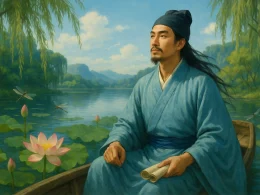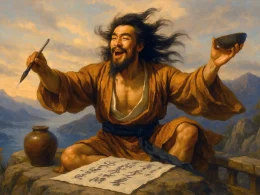



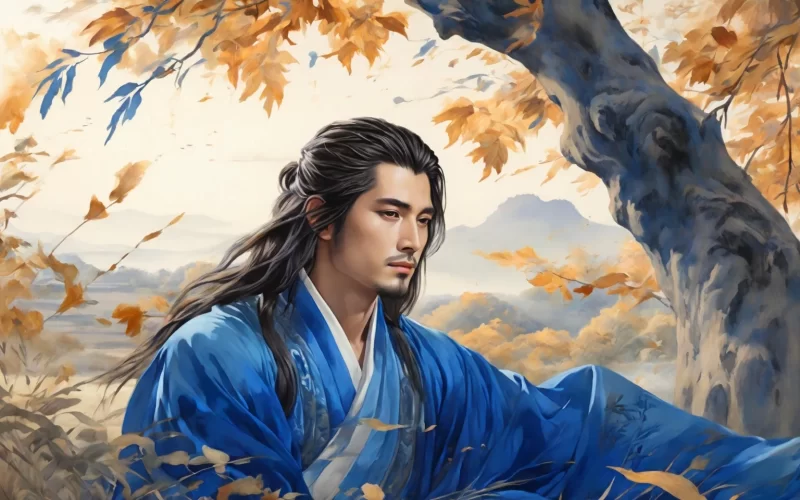
Yuan Zhen (元稹 779 - 831), a native of Luoyang, Henan Province, was a descendant of the Northern Wei imperial family and a renowned poet and statesman of the Mid-Tang Dynasty. As an important figure in Tang literary history, Yuan Zhen co-advocated the New Yuefu Movement with Bai Juyi. His poetic achievements are most distinguished in the yuefu (Music Bureau) style and erotic poetry. His romantic relationship with a woman named Yingying inspired the legendary tale The Story of Yingying. Yuan Zhen’s poetic style is characterized by its accessible clarity, occasionally interspersed with bold and striking expressions. During the transition from the Mid-Tang to the Late Tang, his accessible style exerted a profound influence, laying the foundation for the Yuan-Bai Poetic School.
元稹
yuán zhěn
Major Works

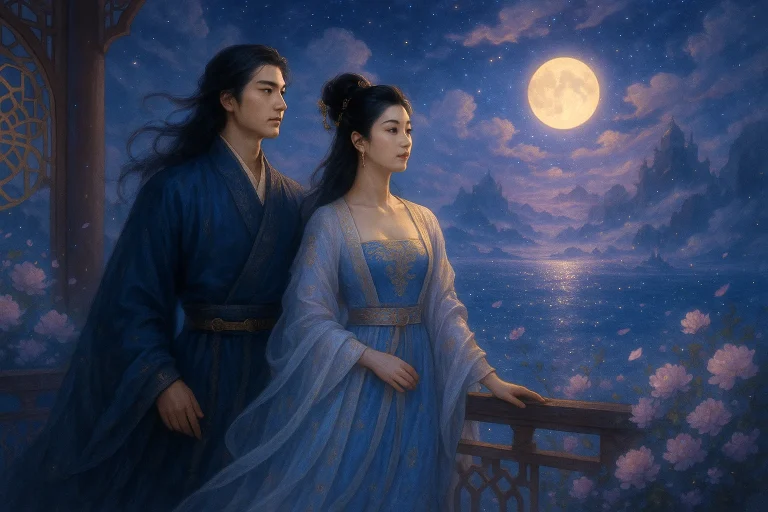
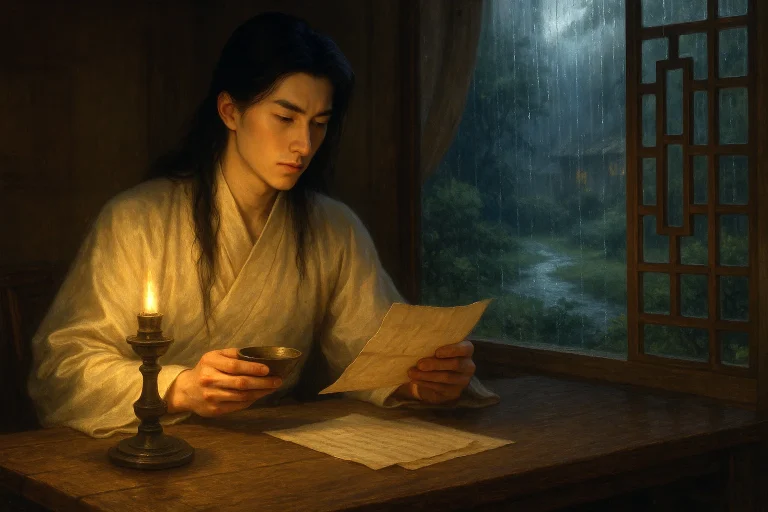



Life
Yuan Zhen was born into a declining family of official background. His ancestors were members of the Northern Wei imperial house who later adopted the surname Yuan. His sixth-generation ancestor, Yuan Yan, served as General of Chariots and Cavalry in the Northern Zhou dynasty; his great-grandfather, Yuan Yanjing, held the post of Adjutant in Qizhou; his grandfather, Yuan Fei, served as Assistant Magistrate of Nandun County; his father, Yuan Kuan, held the position of Director of the Ministry of Revenue. When Yuan Zhen was eight years old, his father passed away, and the family fortunes rapidly declined. His mother, née Zheng, supported the family through weaving and raised him through great hardship. The experience of losing his father early and living in poverty gave him a profound understanding of the hardships of society, which had a lasting impact on his literary creations and his outlook on life.
From a young age, Yuan Zhen was intelligent and studious. He could compose essays at nine and passed the Mingjing (Understanding the Classics) examination at fifteen. The Mingjing examination in the Tang dynasty focused on the interpretation of the Confucian classics and was easier than the Jinshi examination, but this was only the beginning of his official career. Thereafter, he studied even more diligently in preparation for the Jinshi examination. In the ninth year of the Zhenyuan era (793 AD), the fifteen-year-old Yuan Zhen and Bai Juyi both passed the Shupan Bacui (Selected for Excellence in Judgments) examination. This marked the beginning of their friendship. From then on, they became lifelong close friends, exchanging poems and sharing ideals, jointly creating a new landscape in the Mid-Tang poetic world.
In the nineteenth year of the Zhenyuan era (803 AD), Yuan Zhen and Bai Juyi both passed the Jinshi examination and were appointed Collators in the Imperial Library. This marked the official start of Yuan Zhen's official career. During his time in Chang'an, he became acquainted with many important figures of the literary world, such as Han Yu, Li Shen, and Yang Juyuan, engaging in poetry and wine gatherings, and gradually gaining renown. However, Yuan Zhen had an upright and straightforward nature, and did not fear the powerful, which led to repeated setbacks in officialdom. In the first year of the Yuanhe era (806 AD), he took the special examination for "Outstanding Talent with Broad Knowledge and Proficiency in Practical Affairs" and was appointed Reminder of the Left. The position of Reminder was a low-ranking but highly responsible post; Yuan Zhen diligently performed his duties, repeatedly submitting memorials pointing out political flaws, thereby incurring the displeasure of the powerful. In the fifth year of the Yuanhe era (810 AD), he was demoted to Military Affairs Assistant in Jiangling. This was the first major setback in his official career.
During his time in Jiangling, Yuan Zhen was depressed and maintained correspondence with Bai Juyi, Li Shen, and others, using poetry to relieve his melancholy. During this period, together with Bai Juyi, he advocated for the New Music Bureau movement, creating a large number of Music Bureau poems that reflected social reality and sympathized with the suffering of the common people. His "Twelve Poems on New Themes, in Response to Collator Li" (和李校书新题乐府十二首) and Bai Juyi's fifty "New Music Bureau" poems became representative works of the New Music Bureau movement. At the same time, he also wrote many poems expressing personal emotions. The most famous among these are the three poems "Consoling My Sorrow" (遣悲怀), mourning his deceased wife Wei Cong. These poems are deeply sincere and profoundly moving.
In the tenth year of the Yuanhe era (815 AD), Yuan Zhen was transferred to the post of Military Advisor in Tongzhou. Tongzhou was located in the remote and desolate region of Bashu, where his mood became even more melancholy. However, it was precisely during this period that his poetry exchanges with Bai Juyi reached new heights. Although separated by great distances, they exchanged poems through post riders, comforting and encouraging each other. The sheer quantity, rich content, and exquisite artistry of their exchange poems are rare in the history of Chinese literature.
In the fourteenth year of the Yuanhe era (819 AD), Yuan Zhen was recalled to the capital and appointed Vice Director of the Imperial Catering Office. Thereafter, his official career entered a relatively smooth phase. In the first year of the Changqing era of Emperor Muzong (821 AD), he was promoted to Director of the Ministry of Rites and Drafting Official, responsible for drafting imperial edicts. In the second year of the Changqing era (822 AD), he was appointed Chancellor of the Secretariat-Chancellery, reaching the pinnacle of his official career. However, the position of chancellor did not bring him glory and satisfaction; instead, it embroiled him in increasingly complex political struggles. Soon after, he was dismissed from his position due to political conflicts and appointed Prefect of Tongzhou. Thereafter, he successively served as Military Commissioner of Zhedong and Military Commissioner of Wuchang.
In the fifth year of the Dahe era (831 AD), Yuan Zhen died of illness while serving as Military Commissioner of Wuchang, at the age of fifty-three. Before his death, he compiled his poems and essays into the Collection of Yuan Zhen from the Changqing Era (元氏长庆集) and entrusted it to Bai Juyi. Overcome with grief, Bai Juyi composed his epitaph and wrote in his "Mourning Address to Yuan Zhen" (祭微之文): "Alas, Yuan Zhen! We began with poetry and ended with poetry. The string and the brush have both ceased, is this the day?"
Looking at his life as a whole, although Yuan Zhen experienced ups and downs in politics, he never fully realized his ambition to govern the state and bring peace to the world. In literature, however, with his outstanding talent and prolific output, he became one of the leading figures of the Mid-Tang literary scene. His deep friendship with Bai Juyi is a celebrated story in the history of Chinese literature.
Stylistic Characteristics
Yuan Zhen's literary achievements are mainly reflected in two areas: poetry and classical prose. His poetry covers a wide range of themes and diverse forms, including New Music Bureau poems reflecting social reality, elegiac poems and romantic poems expressing personal emotions, long, powerful regulated verse, and short, concise quatrains. Stylistically, his work is characterized by simplicity, clarity, and sincere emotion, establishing a unique place for himself in Tang poetry.
New Music Bureau Poems
The New Music Bureau movement, co-advocated by Yuan Zhen and Bai Juyi, was the most important literary innovation movement in the Mid-Tang poetic world. They advocated the principle that "prose should be written for the times, and poetry should be composed for events," emphasizing the allegorical function and social role of poetry. Yuan Zhen's "Twelve Poems on New Themes, in Response to Collator Li" is a representative work of his New Music Bureau poetry.
This group of poems, composed in the fourth year of the Yuanhe era (809 AD), consists of twelve pieces, each with a "new theme," such as "The White-Haired Lady of Shangyang Palace" (上阳白发人), "Five-String Zither" (五弦弹), and "Court Music" (法曲). Using the old Music Bureau titles to write about contemporary events, these poems reflect various social ills of the time: the extravagance of the court, the incompetence of frontier generals, the suffering of the common people, and the tragic fate of women. For example, "The White-Haired Lady of Shangyang Palace" exposes the cruelty of the palace system through the tragic experience of a white-haired palace lady; "Five-String Zither" uses the past to satirize the present, criticizing the political failures of the time. These poems are written in plain language, with vivid narration, and possess a strong spirit of realistic critique.
However, Yuan Zhen's New Music Bureau poems differ from those of Bai Juyi. Bai's poems are more accessible, striving to be understood even by old women; Yuan's poems are relatively more refined and subtle, placing greater emphasis on artistic technique. For example, in "Court Music," the lines "女为胡妇学胡妆,伎进胡音务胡乐" use the prevalence of foreign customs to allude to contemporary politics, subtle yet incisive.
Elegiac Poems
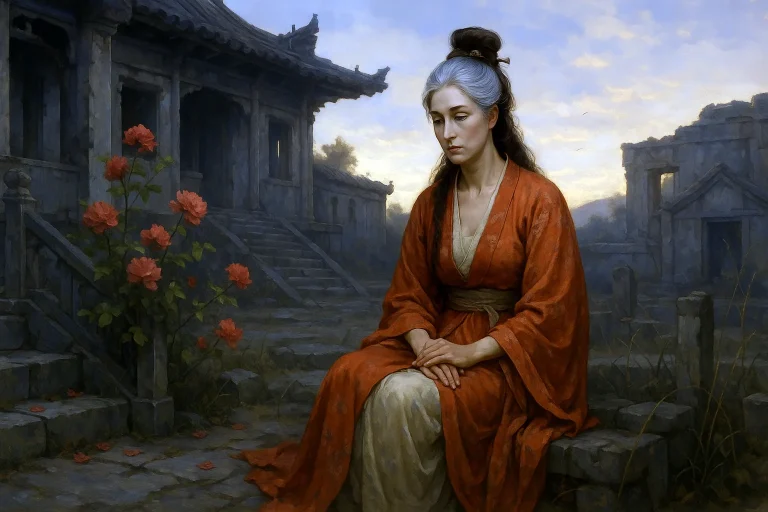
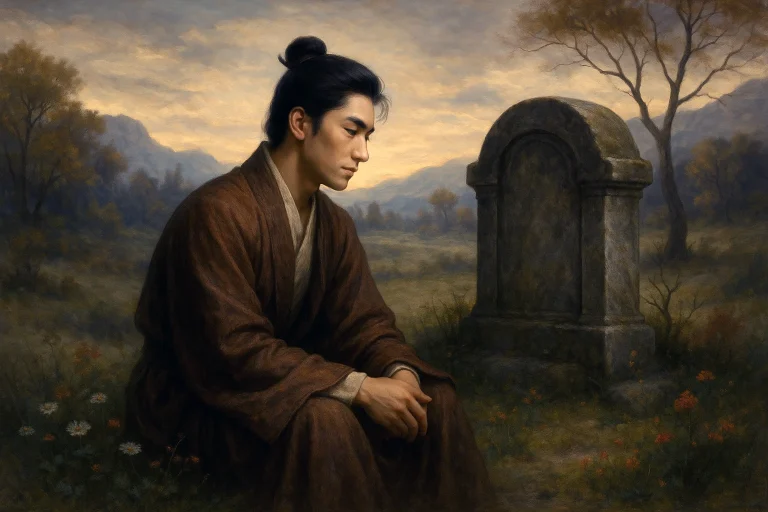
Yuan Zhen's elegiac poems are among the most artistically powerful of his works. He had several marriages in his life, but his relationship with Wei Cong was the deepest. Wei Cong came from a distinguished family, the daughter of Wei Xiaqing, the Junior Guardian of the Crown Prince. When she married Yuan Zhen, he had not yet achieved prominence and lived in poverty. Wei Cong not only did not mind, but was content with their simple life and fully supported her husband's career. In the fourth year of the Yuanhe era (809 AD), Wei Cong died of illness at the young age of twenty-seven. Overwhelmed with grief, Yuan Zhen wrote numerous poems mourning his deceased wife, among which the three poems "Consoling My Sorrow" are the most famous.
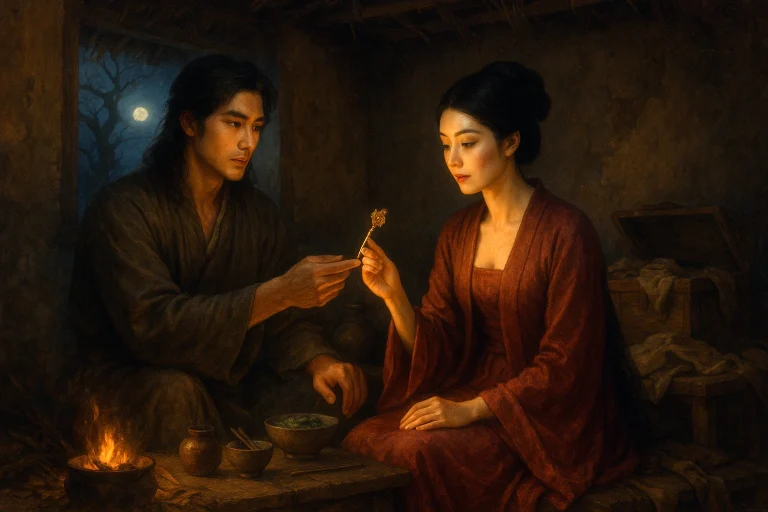
The three poems of "Consoling My Sorrow" use plain, simple language to fondly recall the difficult years spent with his deceased wife, expressing deep longing and irrepressible guilt. The first poem reads: "谢公最小偏怜女,自嫁黔娄百事乖。顾我无衣搜荩箧,泥他沽酒拔金钗。野蔬充膳甘长藿,落叶添薪仰古槐。今日俸钱过十万,与君营奠复营斋." Through detailed descriptions such as "searching the bamboo chest," "pulling out her golden hairpin to buy wine," and "content with wild vegetables," the poem vividly recreates the deceased wife's consideration and support during their impoverished life. The final couplet contrasts today's wealth with the poverty of the past, expressing the profound grief of "the son wishes to nourish his parent but the parent is no longer there." The second poem contains the line "贫贱夫妻百事哀" (In poverty, every misfortune befalls the couple), which speaks to the common experience of countless poor couples. The third poem concludes with "惟将终夜长开眼,报答平生未展眉" (I can only keep my eyes open all night long / To repay you for never having a moment's peace in life), carrying the longing for his deceased wife to its utmost, profoundly moving.
In addition to "Consoling My Sorrow," Yuan Zhen also wrote elegiac works such as "Five Poems on Parting Thoughts" (离思五首). The fourth poem reads: "曾经沧海难为水,除却巫山不是云。取次花丛懒回顾,半缘修道半缘君." Using the metaphors of "having once traversed the vast ocean" and "except for Mount Wu's clouds," it expresses profound devotion to his deceased wife, becoming an eternal famous verse.
Romantic Poems
Yuan Zhen's romantic poems, set against the background of his autobiographical romance "The Story of Yingying" (莺莺传), mostly depict the love story between himself and Cui Yingying. These poems express the bitterness of longing and the sorrow of separation with delicate emotion and elegant language, such as "Poem on Yingying" (莺莺诗) and "Parting Thoughts" (离思).
"Poem on Yingying" reads: "殷红浅碧旧衣裳,取次梳头暗淡妆。夜合带烟笼晓月,牡丹经雨泣残阳。依稀似笑还非笑,仿佛闻香不是香。频动横波嗔阿母,等闲教见小儿郎." With delicate brushstrokes, it depicts the appearance and expression of Cui Yingying, capturing her shyness and deep affection with great vividness.
However, although Yuan Zhen's romantic poems are of high artistic achievement, they have also been criticized for the "seduction and abandonment" ending in "The Story of Yingying." Lu Xun, in his A Brief History of Chinese Fiction (中国小说史略), criticized him for "glossing over his faults," believing that Yuan Zhen's self-justifying attitude in handling this relationship detracted from his character. Nevertheless, in terms of poetic artistry, these works remain masterpieces of Tang romantic poetry.
Responsorial Poems in Matching Rhyme
Yuan Zhen and Bai Juyi's exchange poems, vast in quantity and outstanding in quality, created a new form in the history of Chinese poetry: responsorial poems in strict matching rhyme. This form required the responding poet to use exactly the same rhyme characters and sequence as the original poem—a significant challenge to the poet's learning and skill, but also greatly advancing poetic technique.
Yuan Zhen's "One Hundred Rhymes in Response to Bai Juyi's 'Poems on My Southeast Journey'" (酬乐天东南行诗一百韵) is a representative work of his long regulated verse. The poem consists of one hundred rhyme-sets, one thousand characters, in response to Bai Juyi's "One Hundred Rhymes on My Southeast Journey." The poem draws on a wide range of references and displays remarkable skill, fully demonstrating Yuan Zhen's erudition and poetic artistry. This type of long regulated verse had a profound influence on later generations; the matching-rhyme poems of Su Shi and Huang Tingjian of the Song dynasty carried on this tradition.
Classical Prose
In addition to poetry, Yuan Zhen also achieved great distinction in classical prose. His essays, such as "A Letter Presenting Poems to Bai Juyi" (叙诗寄乐天书) and "Preface to the Draft Edicts" (制诰序), are simple, fluent, natural, and fresh, contributing to the classical prose movement of the Mid-Tang. His "The Story of Yingying" is a masterpiece of Tang chuanqi fiction, profoundly influencing later drama and fiction.
Literary Influence
Yuan Zhen occupies an important position in the Mid-Tang literary scene, and his influence is profound and lasting.
The "Yuan-Bai" Partnership and Co-leadership of the New Music Bureau Movement
Yuan Zhen and Bai Juyi, known together as "Yuan-Bai," were co-leaders of the New Music Bureau movement in the Mid-Tang. Together, they advocated the literary principle that "prose should be written for the times, and poetry should be composed for events," emphasizing the allegorical function and social role of poetry, which had a profound impact on Mid-Tang and even the entire development of Chinese poetry. Su Shi of the Song dynasty, in his "Funeral Oration for Liu Ziyu," referred to "Yuan's frivolity and Bai's vulgarity." Although critical, this statement also acknowledged the fact of their pairing and their influence in the poetic world.
Pioneering Contribution to Elegiac Poetry
Yuan Zhen's elegiac poetry, particularly the three poems "Consoling My Sorrow," elevated the elegiac genre to new heights. Ancient Chinese elegiac poetry began with Pan Yue's "Elegies," and there were fine works in every subsequent dynasty. However, Yuan Zhen's elegies, with their sincere and profound emotion, simple and natural language, and vivid, moving details, became model works of the genre. Later famous elegies, such as Su Shi's "A Dream on the Night of the Twentieth Day of the First Month of the Yimao Year" and He Zhu's "Half-Dead Phoenix Tree," were deeply influenced by Yuan Zhen.
Pioneer of Responsorial Poetry in Matching Rhyme
The responsorial poetry in matching rhyme created by Yuan Zhen and Bai Juyi established a new form in the history of Chinese poetry. This form not only facilitated exchange and interaction between poets but also greatly advanced poetic technique. The matching-rhyme poems of Su Shi and Huang Tingjian of the Song dynasty directly inherited the tradition of Yuan and Bai. Zhao Yi of the Qing dynasty, in his Oubei Shihua (Oubei's Remarks on Poetry), commented: "The matching-rhyme works of Yuan and Bai were truly a new form, unprecedented before." This fully affirms their pioneering contribution.
The Influence and Controversy of "The Story of Yingying"
Yuan Zhen's chuanqi tale "The Story of Yingying" is a masterpiece of Tang fiction and had a profound influence on later drama and fiction. The Jin dynasty Zhu Gongdiao of Dong Jieyuan, the Yuan dynasty Romance of the Western Chamber by Wang Shifu, and others were all adapted from it. However, the ending of "The Story of Yingying," in which Zhang Sheng "seduces and abandons" Cui Yingying, and Yuan Zhen's defense of Zhang Sheng's actions, have made him a subject of controversy for later generations. Lu Xun, in his A Brief History of Chinese Fiction, criticized him for "glossing over his faults." Qian Zhongshu, in his Tan Yilu (Discussions on Art), also criticized his character. Nevertheless, the literary achievements of "The Story of Yingying" and its influence on literary history are undeniable.
Influence on Later Generations
Yuan Zhen's poetic style had a profound influence on later generations. Although Su Shi, Huang Tingjian, and other Song dynasty poets criticized "Yuan's frivolity," they still drew on his poetic artistry. Yang Wanli, Lu You, and others of the Southern Song were also deeply influenced by the Yuan-Bai poetic style. During the Ming and Qing dynasties, with the deepening study of Tang poetry, Yuan Zhen's status was further confirmed. Wang Shizhen of the Qing dynasty, in his poetics advocating "spiritual resonance," drew upon the subtle and suggestive qualities of Yuan Zhen's poetry.
In summary, Yuan Zhen was an outstanding poet and literary figure of the Mid-Tang dynasty. Together with Bai Juyi, he was known as "Yuan-Bai," and they co-founded the New Music Bureau movement. His poetry covers a wide range of themes and diverse forms, including New Music Bureau poems reflecting social reality, and elegiac and romantic poems expressing personal emotions. Lines such as "贫贱夫妻百事哀" from the three poems "Consoling My Sorrow," "曾经沧海难为水,除却巫山不是云" from "Parting Thoughts," and "白头宫女在,闲坐说玄宗" from "The Palace" have all become eternally famous verses. His chuanqi tale "The Story of Yingying" is the source of the later Romance of the Western Chamber. Although his conduct in officialdom and his attitude in "The Story of Yingying" have been criticized by later generations, his literary achievements and historical status are undeniable. Yuan Zhen himself and his poetry represent an important pole in the diverse landscape of Mid-Tang literature, exerting a profound influence on later generations.