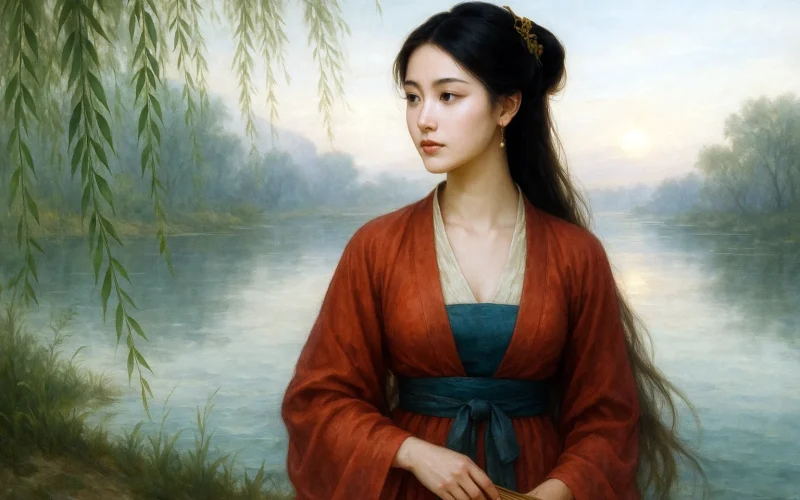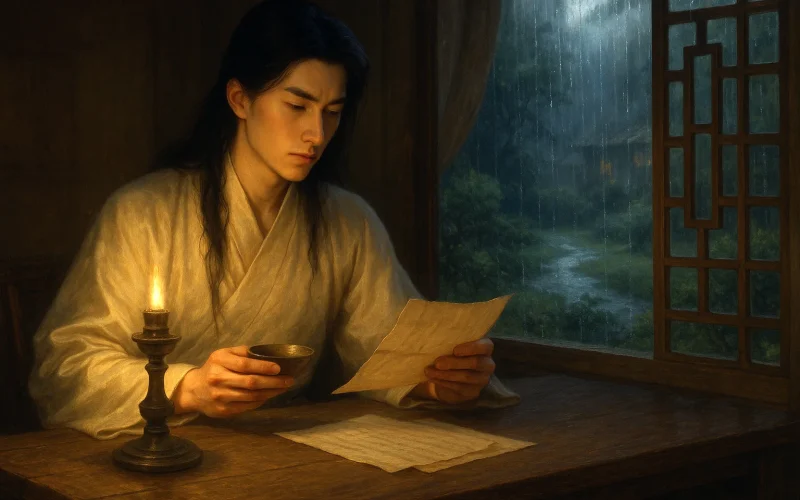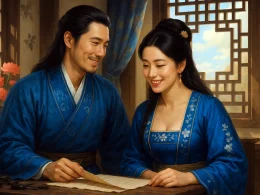



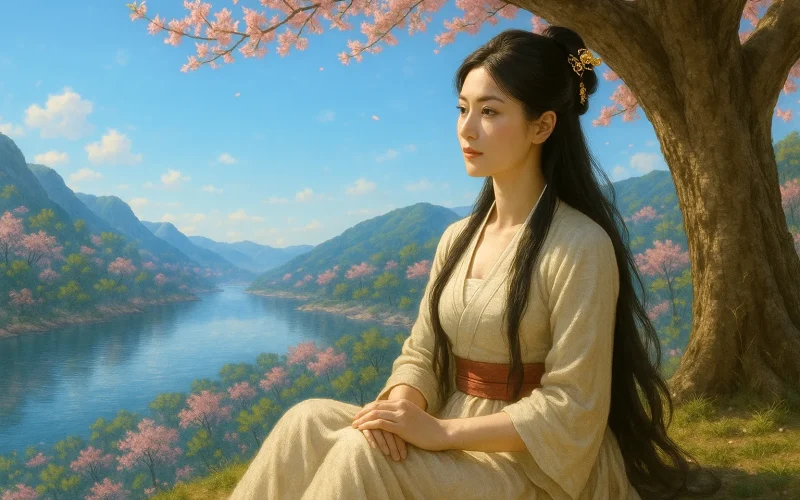
Red peach blossoms cover the mountain high;
Shu River’s spring waters beat the cliffs, flowing by.

Flowers, so red, fade fast — like my lad’s affection, I sigh;
Waters, endless they flow — like my sorrow, ne’er dry.
Original Poem
「竹枝词 · 山桃红花满上头」
刘禹锡
山桃红花满上头,蜀江春水拍山流。
花红易衰似郎意,水流无限似侬愁。
Interpretation
This poem was composed during the Changqing era of Emperor Muzong of Tang, while Liu Yuxi served as Prefect of Kuizhou. This marked the twentieth year of his exile to the land of Ba and Shu following the failure of the "Yongzhen Reform." From Langzhou to Lianzhou, and then to Kuizhou, his long years of exile allowed him to deeply immerse himself in the folk life and culture of various regions. Kuizhou, located in eastern Sichuan, was home to a popular local folk song genre called "Bamboo Branch Songs." These were rustic tunes often sung impromptu by villagers during labor or boating, characterized by straightforward, vivid language and themes frequently celebrating love and local landscapes. Captivated by this vibrant folk art, Liu Yuxi imitated its melodies and style to compose his "Nine Bamboo Branch Songs." This poem, the second of the set, voices the sorrow and resentment of a jilted woman, blending the freshness and naturalness of folk songs with the subtlety and nuance of literati poetry, making it a fine example of the fusion of these two traditions.
First Couplet: "山桃红花满上头,蜀江春水拍山流。"
Shān táo hóng huā mǎn shàng tóu, Shǔ jiāng chūn shuǐ pāi shān liú.
Wild peach blossoms, crimson, clothe the mountain's crest;
Shu River's springtime waters pound the cliffs and flow east.
The poet begins with the majestic scenery of spring mountains and waters. The mountain is ablaze with wild peach blossoms, the Shu River's spring torrent flows ceaselessly—a scene of harmonious vitality where mountain and water, stillness and motion, complement each other. However, for the woman in the poem, this beauty becomes the trigger for her melancholy—the more splendid the scene before her eyes, the more it contrasts with the desolation within. The word "clothe" (满, mǎn) captures the profusion of blossoms; the word "pound" (拍, pāi) conveys the river's relentless force. The landscape continues its heartless cycle, while the human heart is overturned. This technique of using joyful scenery to convey sorrow paves the way for the emotional outpouring in the following lines.
Second Couplet: "花红易衰似郎意,水流无限似侬愁。"
Huā hóng yì shuāi sì láng yì, shuǐ liú wú xiàn sì nóng chóu.
Blossoms' crimson fades as fast as my lad's affection;
These waters flow boundless as the sorrow I hold.
This couplet is the soul of the poem. The poet employs two similes, tightly linking the scene before her eyes with the emotions in her heart. "Blossoms' crimson fades" symbolizes her lad's affection—the peach blossoms' radiant beauty is fleeting, just as a man's love arrives passionately but departs hastily. "These waters flow boundless" symbolizes her sorrow—the river's flow knows no cease, day or night, just as the woman's heartache after being jilted is endless and incessant. The two similes form a sharp contrast: the brevity of his affection versus the longevity of her sorrow—one swift, the other lingering; one shallow, the other profound—vividly capturing the woman's pain and helplessness after being betrayed. It is noteworthy that the poet does not directly accuse the unfaithful lover but allows readers to discern the truth from this natural contrast. This subtle, suggestive technique is precisely where Liu Yuxi's brilliance lies.
Holistic Appreciation
This poem is like a double-layered painting: a landscape on the surface, with melancholy beneath. The first two lines depict the scene before her eyes: blossoms clothe the mountain, river waters pound the banks—vivid in color, dynamic. The last two lines express the feelings in her heart: his affection fades easily, her sorrow is boundless—lingering, plaintive, and moving. The poet uses the technique of metaphor and evocation (比兴, bixing) to merge the two, first speaking of other things to lead to the true subject of praise, letting the natural scenery become the vehicle for emotion. The particular genius lies in how this metaphor and evocation is not a simple case of borrowing scenery to express emotion. Instead, it creates a powerful juxtaposition between scene and feeling: the more beautiful the spring scene, the more it sets off the desolation within; the more eternal the river, the more it highlights the depth of her sorrow. This artistic effect, where scene and emotion generate and oppose each other, gives the entire poem a rich sense of layers and moving power.
Artistic Merits
- Exquisite Use of Metaphor and Evocation (比兴, bixing): The poet first describes the scene of peach blossoms and river, then draws forth the emotions regarding his affection and her sorrow, moving smoothly from object to person, from scenery to emotion.
- Apt Similes and Vivid Contrast: The two similes, "Blossoms' crimson fades" and "These waters flow boundless," are both vivid and form a sharp contrast, thoroughly expressing the transience of love and the enduring nature of sorrow.
- Technique of Using Joyful Scenery to Reflect Sorrow: The first two lines go out of their way to depict the beauty of spring, precisely in order to contrast the woman's inner misery, thereby intensifying the sorrow.
- Fusion of Folk Song Essence and Literati Elegance: The language is simple and fluent, possessing the artlessness of folk songs; the similes are subtle and lasting, possessing the suggestiveness of literati poetry.
Insights
This poem first prompts us to re-examine the fragility and impermanence of love. The seven characters, "Blossoms' crimson fades as fast as my lad's affection," express a shared experience of countless devoted lovers throughout history—those once solemnly pledged depths of affection can sometimes be like mountain peach blossoms, dazzling in bloom but swift to wither. In our current era that prioritizes speed and promotes "seizing the day," this keen insight into love's fleeting nature remains a cautionary reminder: Do we too readily promise forever, and too easily let go?
Second, the line "These waters flow boundless as the sorrow I hold" also leads us to contemplate the self-healing of emotional wounds. The woman's sorrow stretches on like the river's flow—the most authentic psychological state after heartbreak: pain does not vanish instantly, grief does not cease easily. Yet it is worth noting that the poet does not dwell solely in sorrow. By juxtaposing this grief with the eternal river, he elevates individual pain to a level of universal contemplation. When we realize our sadness is not isolated but part of a shared human fate, that pain becomes less unbearable.
Looking deeper, this poem also makes us reflect: Why is it always the woman who gets hurt? From Liu Yuxi's brushstrokes, we can read his deep sympathy for the jilted woman. Yet he does not further question whether this emotional pattern of "his affection fades easily, her sorrow is boundless" conceals a certain unequal power structure. Over a thousand years later, perhaps we can build upon this ancient poem and continue to ponder: In love, how can we both maintain the sincerity of giving and preserve our self-respect? When faced with betrayal, how can we allow ourselves to grieve without being consumed by that grief?
Ultimately, with twenty-eight characters, Liu Yuxi found an eternal vessel for a universal human emotional experience. The sorrowful face of that woman standing by the Shu River, watching the peach blossoms fade, transcends a thousand years and still allows us to empathize profoundly. This is the power of a classic.
About the poet
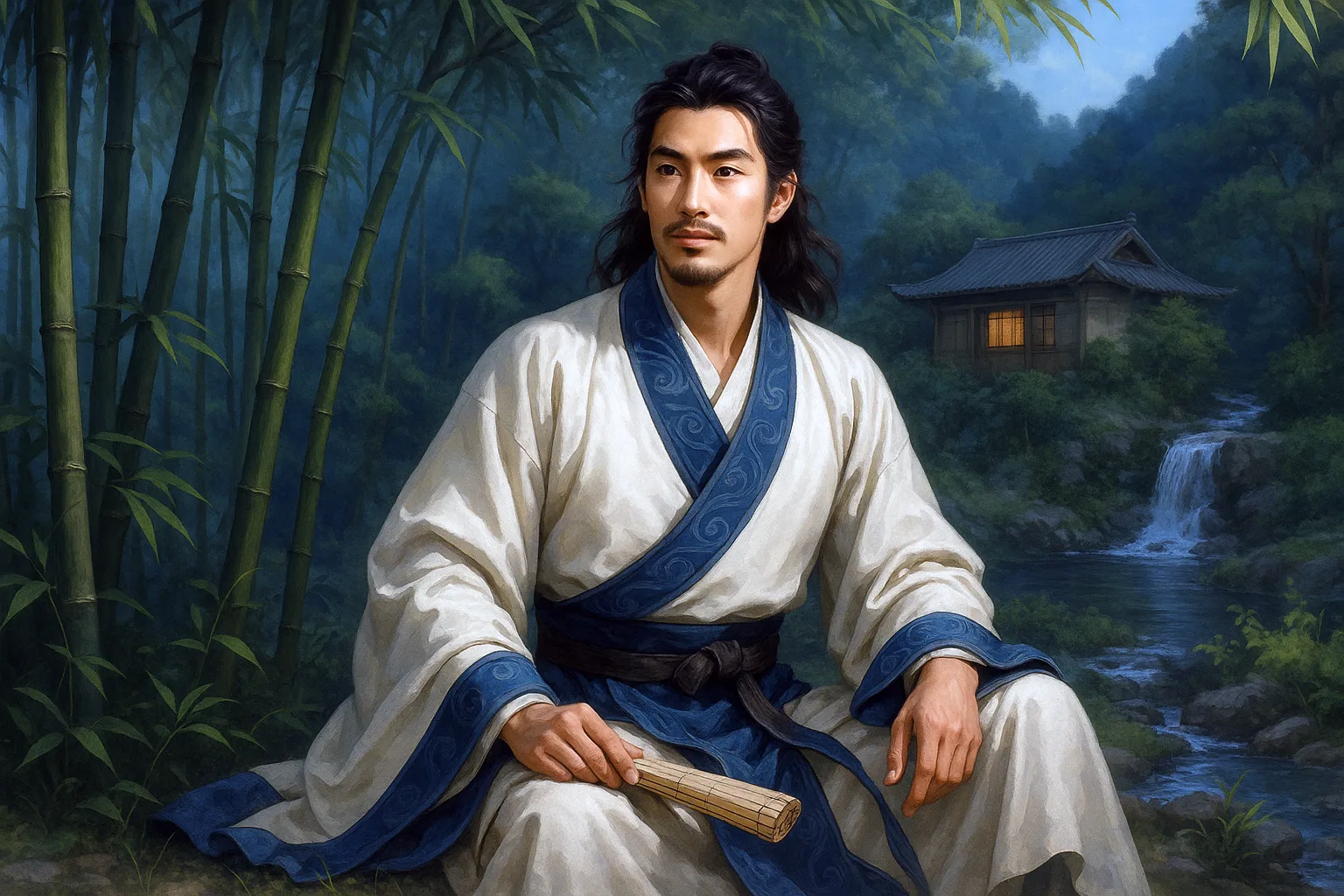
Liu Yuxi(刘禹锡), 772 - 842 AD, was a native of Hebei. He was a progressive statesman and thinker in the middle of the Tang Dynasty, and a poet with unique achievements in this period. In his compositions, there is no lack of poems reflecting current affairs and the plight of the people.