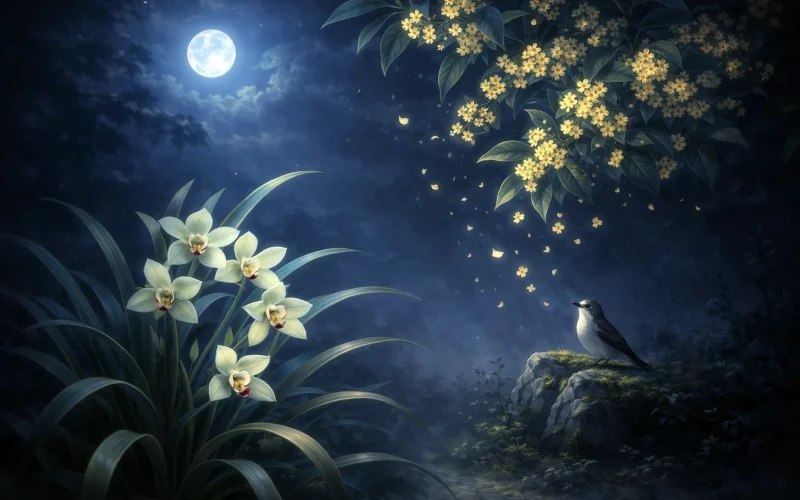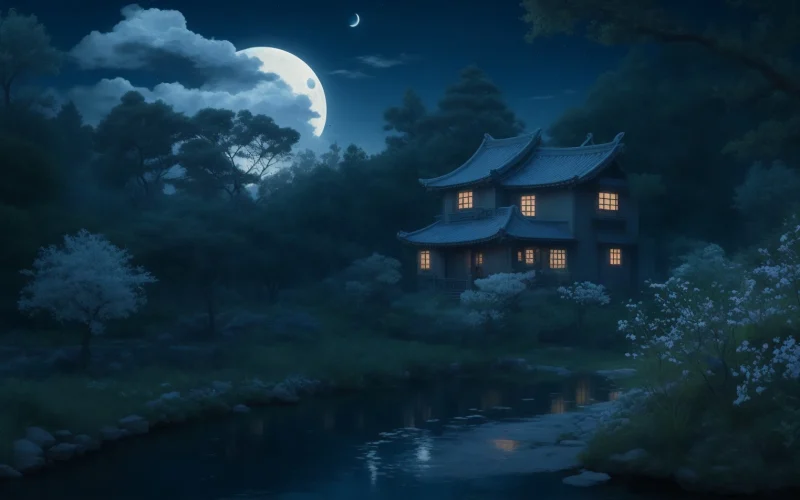



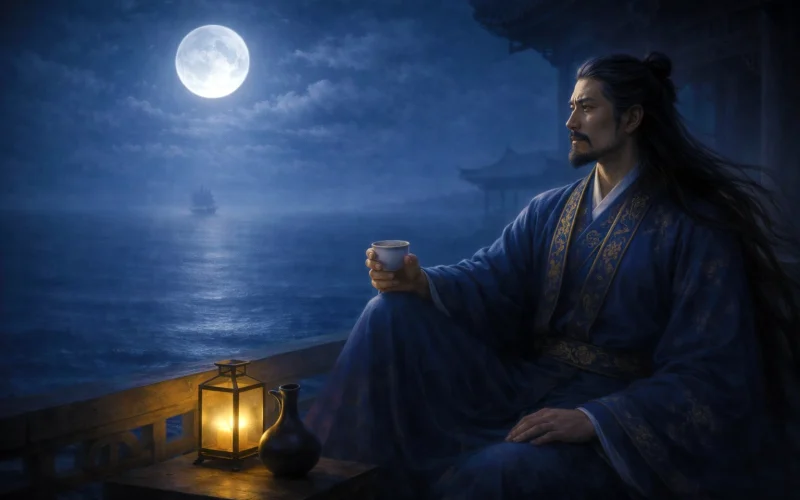
Over the ocean’s brim the glorious Moon doth rise,
And bathes in her pure silver all the sleeping skies —

Though severed by the waste of lands, the roar of seas,
At this same hour, beloved, we behold her, we!

You mourn the lengthening night, the hours that creep and pine,
And through the long, long vigil, thoughts and dreams are thine.

I quench the lamp — her flood of beauty to admire;
I robe myself — and feel the cold dew of desire.

But oh, to gather up that radiance, and to bear
One glistening handful to thy solitude — despair!

Then to my couch I turn, and on the wings of Sleep
Seek the fair season of thy presence, fond and deep.
Original Poem
「望月怀远」
张九龄
海上生明月,天涯共此时。
情人怨遥夜,竟夕起相思。
灭烛怜光满,披衣觉露滋。
不堪盈手赠,还寝梦佳期。
Interpretation
This poem is a famous work of longing by the High Tang poet Zhang Jiuling, composed during his tenure as Chancellor. Zhang Jiuling, a renowned chancellor of Emperor Xuanzong's Kaiyuan era, was known for his uprightness and outspoken admonishments. His poetic style is elegant, refined, and serene, and he made important contributions to sweeping away the ornate style of the Six Dynasties poetry and ushering in the High Tang's imagery and spirit.
This poem uses the "moon" as an allegorical start, entrusting it with thoughts of longing for someone afar. "Over the sea grows the moon bright" establishes a vast, majestic scope; "We gaze on it, far, far apart" shifts from scene to emotion, condensing the distance of ten thousand li into a moment of shared experience. Holding the position of Chancellor, the poet's heart was concerned with the empire. The "afar" longed for in this poem is both a distant beloved or kindred spirit, and also the lofty ideal, the fate of the nation. The "lovers" who "complain of long, long night" are all who long on a moonlit night; the tossing and turning in "They rise and long for the loved one with all their heart" is the poet's persistent pursuit of his ideal and his kindred spirit. Using the "moon" as a thread, the poem moves from scene to emotion, from emotion to dream, rendering the theme of gazing at the moon and longing for the distant with both deep affection and a lofty realm, making it a masterpiece among High Tang five-character regulated verse.
First Couplet: "海上生明月,天涯共此时。"
Hǎi shàng shēng míng yuè, tiān yá gòng cǐ shí.
Over the sea grows the moon bright; We gaze on it, far, far apart.
The poem opens with a magnificent seascape moonlit scene, establishing the grand tone of the entire work. "海上生明月" (Over the sea grows the moon bright) captures the scene of the moonrise in five characters—the word "生" (grows) is exquisite: the moon is already in the sky, yet the poet has it "grow" from the sea, as if the moon were birthed from the sea's waters, possessing both dynamic magnificence and the joy of new birth. The next line, "天涯共此时" (We gaze on it, far, far apart), shifts from scene to emotion, condensing the vast distance into a moment of shared experience. The word "共" (share/gaze on) is the first "key" of the entire poem: though we are separated by the ends of the earth, at this moment we are under the same bright moon; the spatial distance is dissolved by this moment in time. In this couplet, with extremely concise brushstrokes, the poet writes the most essential emotion of gazing at the moon and longing for the distant—because we share this moon, our hearts are connected.
Second Couplet: "情人怨遥夜,竟夕起相思。"
Qíng rén yuàn yáo yè, jìng xī qǐ xiāng sī.
Lovers complain of long, long night; They rise and long for the loved one with all their heart.
This couplet shifts from scene to emotion, describing the inner turmoil after gazing at the moon. "情人怨遥夜" (Lovers complain of long, long night) writes of the resentful feeling affectionate people have towards the long night—not because the night is too long, but because longing is too long; not because they cannot sleep, but because they are unwilling to sleep. "竟夕起相思" (They rise and long for the loved one with all their heart) writes of tossing and turning all night, longing without cease. The phrase "竟夕" (all night) expresses the length of time and also the persistence of longing. This couplet uses "怨" (complain) to write deep affection, and "竟夕" to write persistence, vividly portraying the unrelenting longing after gazing at the moon.
Third Couplet: "灭烛怜光满,披衣觉露滋。"
Miè zhú lián guāng mǎn, pī yī jué lù zī.
All candlelight blown out, I love the moon more bright; I put on my coat and find the dew wet on the floor.
This couplet describes the poet's actions and feelings upon rising in the middle of the night to gaze at the moon and long for the distant. "灭烛怜光满" (All candlelight blown out, I love the moon more bright) writes of the poet extinguishing the candle, solely to let the moonlight fill the entire room—this "怜" (love) is cherishing, is treasuring; the phrase "光满" (moon more bright) writes of the abundance of moonlight, and also of the fullness of longing. The next line, "披衣觉露滋" (I put on my coat and find the dew wet on the floor), writes of the poet throwing on clothes and going outside, only to discover the dew has already moistened his garments—this "滋" (wet) is the soaking of the dew, and also the spreading of longing. This couplet, through the two actions of "灭烛" (blowing out candlelight) and "披衣" (putting on coat), expresses the poet's attachment to the bright moon; through the two sensations of "光满" (moonlight's abundance) and "露滋" (dew's wetness), it expresses the omnipresence of longing.
Fourth Couplet: "不堪盈手赠,还寝梦佳期。"
Bù kān yíng shǒu zèng, huán qǐn mèng jiā qī.
Unable to hand you the moonbeams full and round, I go to bed to dream of a joyous meeting in the land of dreams.
The final couplet is the soul of the entire poem, concluding the piece by blending reality and illusion. "不堪盈手赠" (Unable to hand you the moonbeams full and round) alludes to Lu Ji's poem Imitating "How Bright the Moon Shines": "Its light shines abundantly; / Gathering it, it does not fill the hand." It writes of the poet wishing to gather this moonlight in his hands to give to the distant one, yet being unable to do so—the phrase "不堪" (unable) is helplessness, and also deep affection. The next line, "还寝梦佳期" (I go to bed to dream of a joyous meeting in the land of dreams), writes that the poet can only return to his room, placing hope in meeting in a dream. This word "梦" (dream) is the helplessness of reality, and also the lodging of ideals; the phrase "佳期" (joyous meeting) is anticipation for the future, and also comfort for the present. In this couplet, the poet uses "不堪" to write the helplessness of reality, and "还寝梦" to write the hope in his heart, bringing the emotion of gazing at the moon and longing for the distant to a climax, then returning to tranquility in the illusion of the dream, with an enduring resonance.
Holistic Appreciation
This is a masterpiece among Zhang Jiuling's poems of longing. The entire poem consists of eight lines and forty characters. Using "gazing at the moon" as the thread and "longing for the distant" as the theme, it blends the magnificence of the moonlit night, the depth of longing, and the illusion of the dream, showcasing the poet's profound concern for distant loved ones, kindred spirits, or ideals.
Structurally, the poem presents a progressive layering moving from scene to emotion, from outer to inner, from reality to illusion. The first couplet starts with "Over the sea grows the moon bright," its vast realm establishing the grand tone of the entire poem. The second couplet shifts inward with "Lovers complain of long, long night," writing of the longing and resentment after gazing at the moon. The third couplet, with "All candlelight blown out, I love the moon more bright" and "I put on my coat and find the dew wet on the floor," writes the actions and sensations of rising at midnight, materializing longing into a palpable scene. The final couplet concludes with "Unable to hand you the moonbeams full and round, / I go to bed to dream of a joyous meeting in the land of dreams," shifting from reality to dream, entrusting the irrepressible longing to the illusory "joyous meeting." Between the four couplets, the poem moves from scene to emotion, from outer to inner, from reality to illusion, each layer deepening, forming a seamless whole.
Thematically, the core of this poem lies in the words "共" (share) and "梦" (dream). That "共" in "We gaze on it, far, far apart" is the most essential emotion of gazing at the moon and longing for the distant—because we share this moon, our hearts are connected. That "梦" in "I go to bed to dream of a joyous meeting" is the lodging after the helplessness of reality—since meeting is impossible, we meet in a dream. Between this "共" and this "梦" lies the poet's deep affection for the distant one, and also his persistence towards his ideal—even if reality cannot fulfill it, he can still pursue it in a dream.
Artistically, the poem's most moving aspect lies in the clever conception of "using scene to write emotion, blending reality and illusion." The poet uses the magnificent scene of "Over the sea grows the moon bright" to write the deep affection of "We gaze on it, far, far apart"; uses the delicate action of "All candlelight blown out, I love the moon more bright" to write the persistence of "They rise and long for the loved one with all their heart"; uses the helplessness of "Unable to hand you the moonbeams full and round" to write the anticipation of "I go to bed to dream of a joyous meeting." Every scene is a vehicle for emotion; every action is a portrayal of longing. This technique of using scene to write emotion and blending reality and illusion is the highest realm of Chinese classical poetry's "subtlety and suggestiveness."
Artistic Merits
- Vast Artistic Conception, Profound Emotion: Starting with "Over the sea grows the moon bright," the realm is expansive, placing personal longing against the backdrop of heaven and earth, granting the emotion a grand aesthetic space.
- Using Scene to Write Emotion, Scene and Feeling Fused: Using the "moon" as a thread, using "moon more bright" and "dew wet" to write the pervasion of longing. Descriptions of scene are expressions of emotion; objects are images of the mind.
- Natural Use of Allusions, Seamless Integration: "Unable to hand you the moonbeams full and round" alludes to Lu Ji's verse; "I go to bed to dream of a joyous meeting" subtly echoes the meaning of the Rhapsody on the Moon. The allusions fuse with the emotion, with no sense of forcedness.
- Blending Reality and Illusion, Enduring Resonance: The final couplet uses "unable" to write the helplessness of reality, and "dream" to write the hope in the heart, moving from reality to illusion, blending reality and illusion, where the words end but the meaning is inexhaustible.
Insights
This poem, through a single bright moon, speaks to an eternal theme—separated by the ends of the earth, we share this moon; longing is endless, we meet in a dream.
First, it lets us see "the moon's connection." Though we are separated by the ends of the earth, we can admire the same bright moon. This moon is a connection that spatial distance cannot sever; this word "共" (share) is the deepest comfort between those who long. It reminds us: Even separated by ten thousand li, as long as we look up at the moon, we are under the same sky.
On a deeper level, this poem makes us contemplate "the forms of longing." The tossing and turning in "They rise and long for the loved one with all their heart," the cherishing in "All candlelight blown out, I love the moon more bright," the obsession in "I put on my coat and find the dew wet on the floor," the helplessness in "Unable to hand you the moonbeams full and round"—longing, it turns out, can be such a concrete, palpable existence. It makes us understand: The deepest affection is often not spoken, but transformed into these subtle actions and sensations.
And what is most lingering is the gentleness in the poem of "placing hope in a dream." If meeting is impossible in reality, then meet in a dream. "I go to bed to dream of a joyous meeting"—it is not despair, but entrusting hope to another world; it is not giving up, but continuing the pursuit in another way. This gentleness is the self-possession of the deeply affectionate, and also the perseverance of the idealist.
This poem writes of a scene of moon-gazing in the High Tang, yet allows everyone who longs on a moonlit night to find resonance within it. The magnificence of "Over the sea grows the moon bright" is the view in the eyes of every gazer. The comfort of "We gaze on it, far, far apart" is the deepest tacit understanding in the heart of every long-er. The helplessness of "Unable to hand you the moonbeams full and round" is the shared regret of everyone unable to meet. The anticipation of "I go to bed to dream of a joyous meeting" is the final gentleness of every deeply affectionate person. This is the vitality of poetry: it writes of Zhang Jiuling's moon-gazing, but one reads of people in all eras who long under the moonlight.
About the Poet
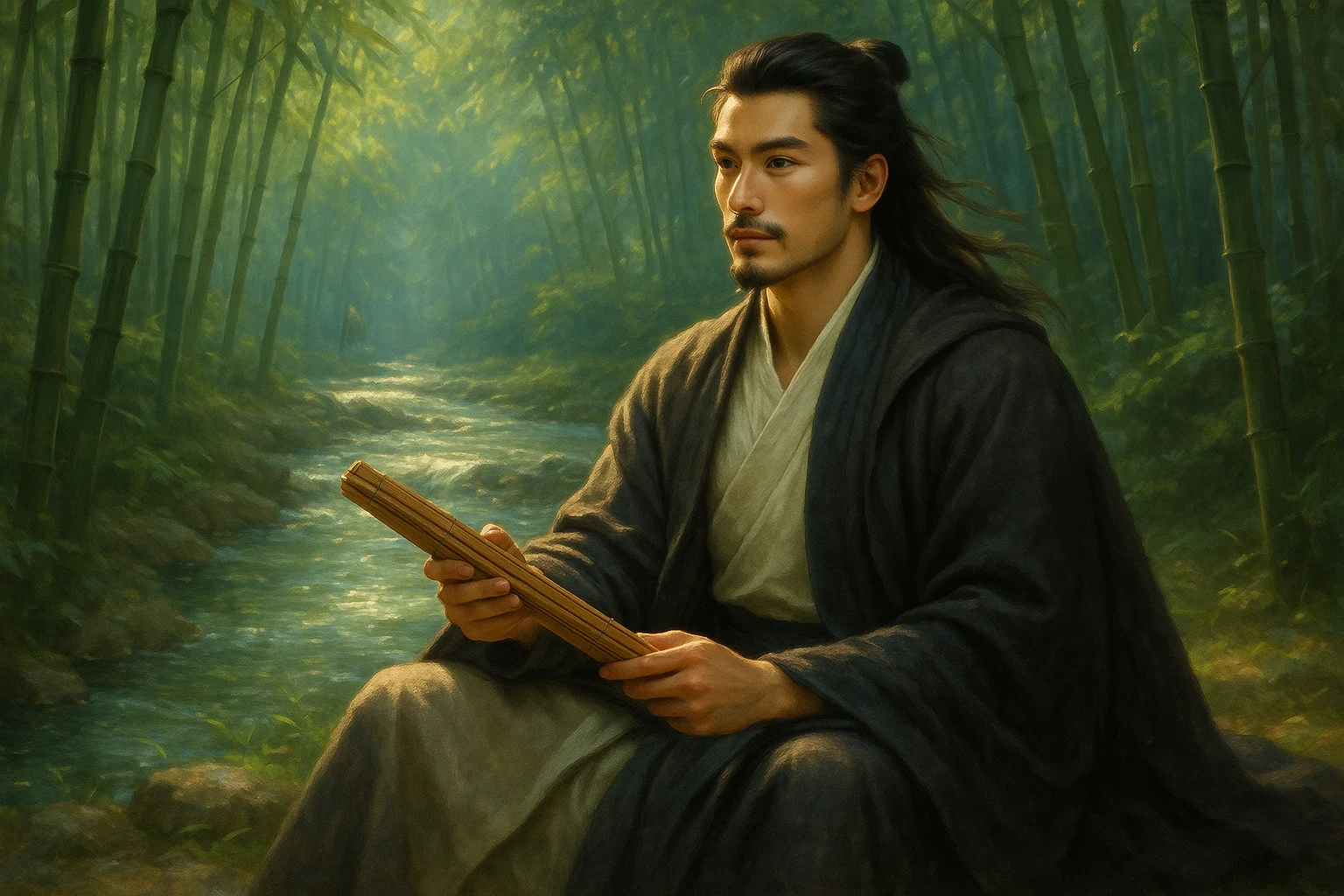
Zhang Jiuling (张九龄 678 - 740), a native of Shaoguan, Guangdong Province, was an outstanding statesman and literary figure during the transitional period from the Early Tang to the High Tang Dynasty. Born into a humble family in Lingnan, he rose to the position of Chancellor (Zhongshu Ling) during the Kaiyuan era, becoming the last virtuous chancellor of Emperor Xuanzong’s reign. He was renowned for his refined demeanor and his willingness to offer frank remonstrances. His poetic style is pure, natural, subtle, and profound, with particular excellence in five-character ancient verse. As a statesman with great vision, he mentored and promoted younger talents such as Wang Wei and Meng Haoran, holding a milestone position in the history of Tang poetry as a link between preceding and succeeding generations.