


The trees and grass know that soon spring will go away;
Of red blooms and green leaves they make gorgeous display.
But willow catkins and elm pods are so unwise,
They wish to be flying snow darkening the skies.
Original Poem
「晚春」
韩愈
草树知春不久归,百般红紫斗芳菲。
杨花榆荚无才思,惟解漫天作雪飞。
Interpretation
This poem was written in Han Yu's later years, around the Changqing era (821-824 AD). By this time, having weathered the vicissitudes of official life and the trials of exile, Han Yu's career had gradually stabilized, and his state of mind had become increasingly broad and serene. Late spring, when flowers fade and willow catkins drift, is typically a moment prone to stirring feelings of lament for the passing spring. Yet, with a unique perspective and a humorous tone, Han Yu wrote this fresh and unconventional short poem.
In classical poetry, late spring is often associated with "regretting" or "lamenting" the spring, with poets frequently sighing over the swift passage of springtime and the falling of blossoms. Han Yu's poem, however, breaks from this convention. Far from expressing sorrow, it depicts a vibrant late spring scene with a light and playful touch. He personifies plants and trees, saying they "know that spring will soon be gone" and thus "vie in splendour and perfume"; he also teasingly says of the willow catkins and elm seeds that they "have no talent or feeling" and "only know how to fly like snowflakes all over the sky." This humorous and broad-minded attitude precisely reflects Han Yu's state of mind in his later years—having experienced life's great ups and downs, he could face the passage of time with equanimity, even finding unique delight and vitality in the departing spring.
First Couplet: "草树知春不久归,百般红紫斗芳菲。"
Cǎo shù zhī chūn bùjiǔ guī, bǎibān hóng zǐ dòu fāngfēi.
Grass and trees know that spring will soon be gone; A hundred reds and purples vie in splendour and perfume.
The opening line immediately employs personification, endowing plants and trees with human perception and emotion. The five characters "知春不久归" (know that spring will soon be gone) both indicate the season of late spring and express the flora's attachment to spring—knowing that spring's glory is ending, they seize the final opportunity to bloom in full splendor. The word "斗" (vie) is especially vivid: the myriad blossoms seem to be in a contest, seeing who can bloom more brilliantly, whose fragrance is sweeter, describing the fervor and bustle of late spring to the fullest. This couplet is not a sigh of regret for spring, but a celebration of vitality—even as spring departs, the plants still complete their final, most resplendent display.
Second Couplet: "杨花榆荚无才思,惟解漫天作雪飞。"
Yánghuā yújiá wú cáisī, wéi jiě màntiān zuò xuě fēi.
The willow down and elm pods have no talent or feeling, They only know how to fly like snowflakes all over the sky.
This couplet turns the focus, shifting from the myriad blossoms to the willow catkins and elm seeds. Against the backdrop of blooming flowers vying for beauty, the willow catkins and elm seeds appear plain and unadorned, lacking both brilliant color and rich fragrance. The poet teasingly calls them "无才思"—without talent, without grace, seemingly having no chance of winning in this contest of "vying in splendour and perfume." Yet, they have their own way: they do not compete in brilliance; they only "fly like snowflakes all over the sky." Those drifting, fluttering willow catkins and elm seeds, though lacking the vivid hues of "reds and purples," adorn the scene with a different kind of poetic imagery through their sky-filling flight. The two characters "惟解" (only know how to) contain both gentle teasing and appreciation—they do not understand how to vie in splendor, but they know how to add a distinct kind of scenery to late spring in their own way.
Holistic Appreciation
This is an excellent work among Han Yu's seven-character quatrains. In four lines and twenty-eight characters, with a unique perspective and humorous tone, it paints a vibrant picture of late spring.
Structurally, the poem presents distinct, contrasting layers. The first two lines describe the myriad blossoms vying in brilliance, a scene of fervor and dazzling color. The latter two lines describe the willow catkins and elm seeds flying like snow, a scene of lightness and ethereal grace. These two images, these two postures, set each other off and complement one another beautifully. The poet does not favor one over the other but observes with an equal eye, appreciating the unique beauty inherent in each form of life.
In terms of conception, the core of this poem lies in a unique understanding of "value." The myriad blossoms have their resplendence; the willow catkins have their ethereal grace. The poet teases the willow catkins for having "no talent or feeling," yet, through the depiction of them "flying like snowflakes all over the sky," he grants them a different kind of "talent"—a way of being that does not strive or contend, but is spontaneous and free. This understanding transcends conventional aesthetic standards, affirming and embracing pluralistic values.
Artistically, the most moving aspect of this poem is its use of personification and humor. Depicting plants and trees as "knowing spring" and "vying in splendour" is itself full of charm and interest; teasing the willow catkins for having "no talent or feeling" is even more humorously witty. Yet, behind this humor lies the poet's profound understanding of life—he sees the fervor of the blossoms and also the freedom of the catkins; he appreciates resplendence and also appreciates simplicity. It is precisely this inclusive gaze that gives the poem, beyond its lighthearted humor, a warm humanistic sentiment.
Artistic Merits
- Vivid Personification, Full of Wit and Charm: "草树知春" (Grass and trees know that spring…) and "百般红紫斗芳菲" (A hundred reds and purples vie in splendour…) endow plants with human emotion and action, filling the entire poem with lively charm. Personality is seen in the personification; profound meaning is hidden within the wit.
- Clear Contrast, Mutually Enhancing: The fervor of the blossoms vying in brilliance and the lightness of the willow catkins flying like snow form a clear contrast, yet neither is deemed superior—only different kinds of beauty. Tolerance is seen in the contrast; harmony is revealed in the mutual enhancement.
- Humorous Language, Unconstrained Emotion: The teasing remark "无才思" (have no talent or feeling) is both a jest at the willow catkins and a deconstruction of conventional standards, revealing the poet's broad-minded and free-spirited disposition. Wisdom is seen in the humor; genuine simplicity is seen in the freedom.
- Vivid Imagery, Strong Visual Quality: "百般红紫" (A hundred reds and purples) captures the resplendence of late spring; "漫天作雪飞" (fly like snowflakes all over the sky) captures the ethereal grace of the willow catkins. A few words create a picture before the eyes. There is painting in the poetry; there is poetry in the painting.
- Novel Conception, Breaking from Convention: Instead of lamenting or regretting the passing spring, it describes the vitality and delight of late spring, creating a fresh and unconventional approach within classical poetry. Ingenuity is seen in the novelty; talent is revealed in the uniqueness.
Insights
This poem, through the blossoms and willow catkins of late spring, speaks of the appreciation and acceptance of life's diversity, offering profound insights for later generations. It allows us to see that every form of life has its unique way of existing and its own value. The myriad blossoms have their resplendence; the willow catkins have their ethereal grace. The poet does not belittle the willow catkins for having "无才思" (no talent or feeling); instead, through the depiction of them "惟解漫天作雪飞" (only know how to fly like snowflakes all over the sky), he grants them a unique aesthetic significance. This enlightens us: when evaluating things or others, we should not measure them by a single standard, but should learn to appreciate diversity and accept difference. Just as there are no two completely identical leaves in the world, every form of existence has its irreplaceable value.
The plants and trees in the poem that "知春不久归" (know that spring will soon be gone) and thus "斗芳菲" (vie in splendour) demonstrate a positive attitude towards life. They know spring is ending, yet they do not wait passively; instead, they complete their final blossoming in the most splendid form. This courage of "being-towards-death" is deeply moving. It teaches us that the value of life lies not in its length, but in how it is lived. Even knowing the end is near, one can still give one's all and live as one's most brilliant self.
The poet's appreciation for the willow catkins that "惟解漫天作雪飞" (only know how to fly like snowflakes all over the sky) makes us reflect on the definition of "才思" (talent/feeling). The world often considers brilliance as beauty and talent as precious, but the willow catkins, in their plain form and drifting posture, also create unforgettable poetry. It reminds us: there is no need to blindly follow mainstream standards, nor to feel inferior for one's own lack of conventional "才思" (talent/feeling). Finding one's own way, living at one's own rhythm, is the best "才思" (talent/ingenuity).
In an era that esteems competition and pursues success, this poem is like a refreshing breeze, reminding us to slow down and appreciate those existences that, though perhaps "无才思" (lacking talent), are equally beautiful. It also reminds us that while chasing the "百般红紫斗芳菲" (vying in splendour and perfume), we should not forget our own potential to "漫天作雪飞" (fly like snowflakes all over the sky).
Poem translator
Xu Yuan-chong (许渊冲)
About the poet
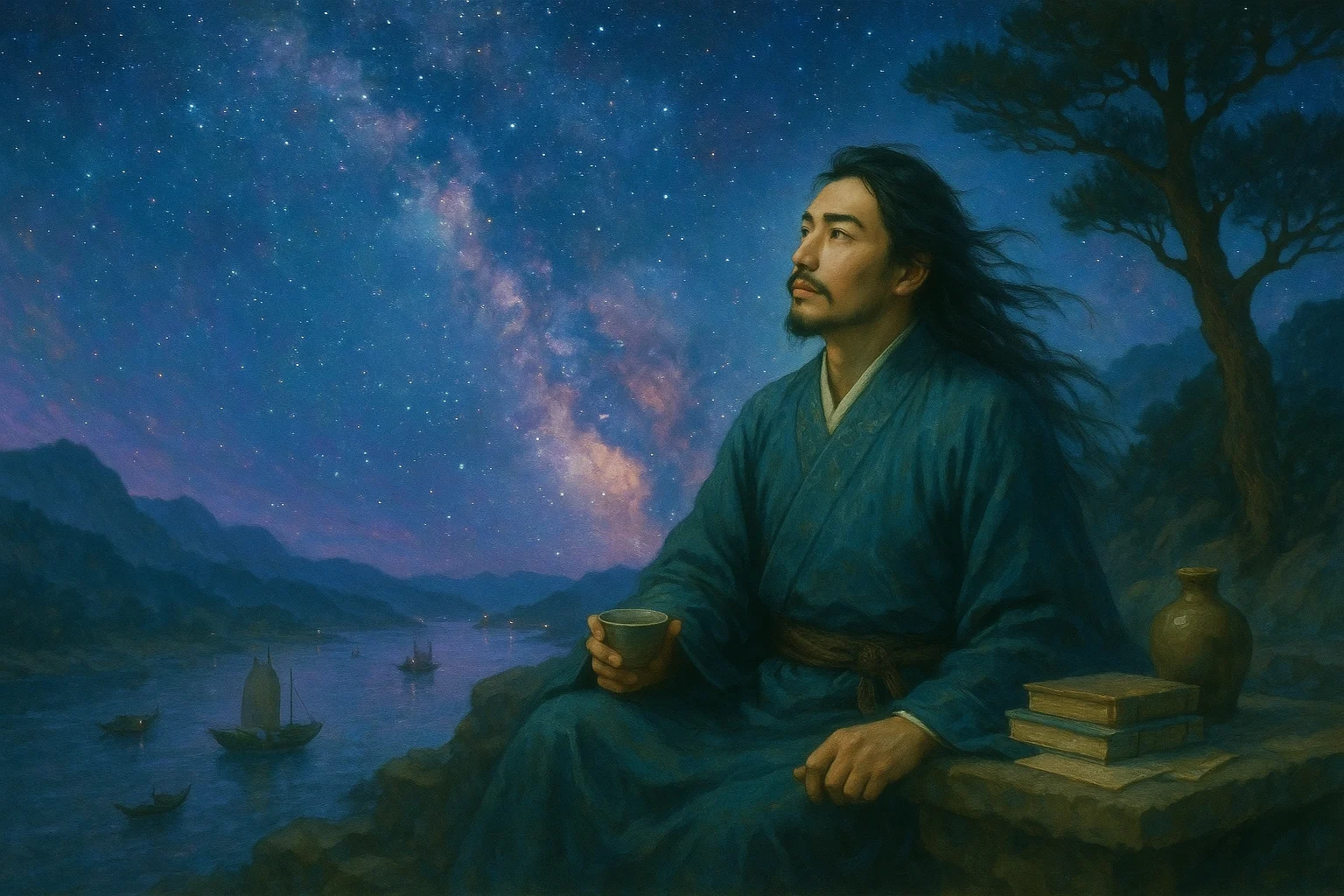
Han Yu (韩愈, 768 - 824), a native of Mengzhou, Henan Province, he was the leader of the Ancient Prose Movement in the Tang Dynasty. He became a jinshi (presented scholar) in the eighth year of the Zhenyuan era (792 AD). His prose was vigorous and powerful, and he patronized notable poets such as Meng Jiao and Jia Dao. Regarded as the foremost of the "Eight Great Masters of the Tang and Song Dynasties," Han Yu revolutionized both poetry and prose, exerting a profound and lasting influence. Later generations honored him as the "Literary Patriarch of a Hundred Generations."