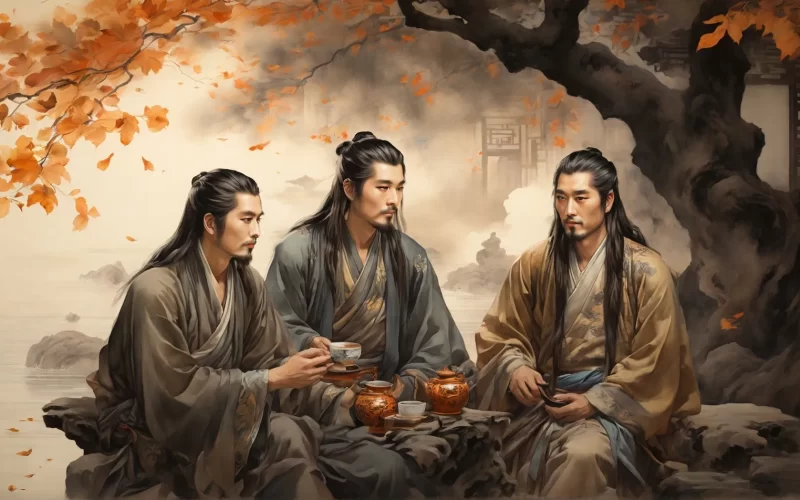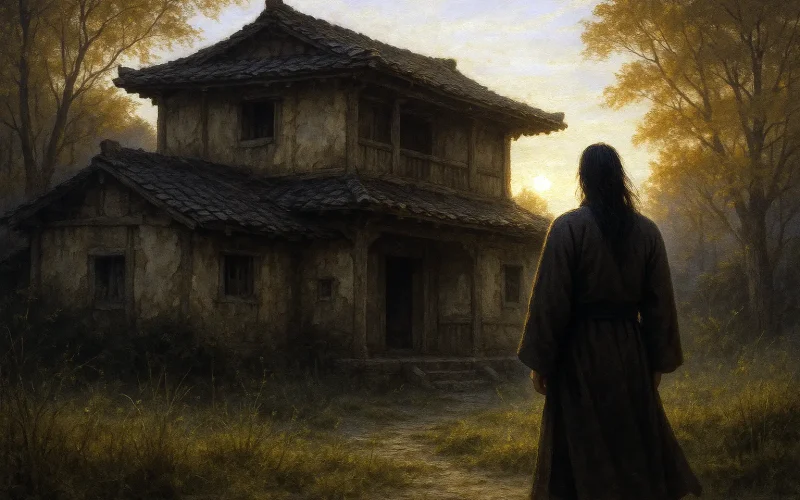




Your seven strings are like the voice
Of a cold wind in the pines,
Singing old beloved songs
Which no one cares for any more.
Original Poem
「听弹琴」
刘长卿
泠泠七弦上, 静听松风寒。
古调虽自爱, 今人多不弹。
Interpretation
This short poem by Liu Zhangqing uses an object to express personal feelings. Through the coldness of the ancient harp and the rarity of its antique tunes, it fully conveys his aloof sentiment of being out of step with the times and finding no kindred spirit. Liu Zhangqing suffered two demotions in his lifetime; the phrase "刚而犯上" (unyielding and offending superiors) almost entirely sums up the fate of his official career—his upright and unyielding nature, his refusal to follow vulgar trends, led to his repeated rejection by the court. This state of mind, projected into poetry, became this timeless masterpiece of twenty characters.
The poem was likely composed during the Mid-Tang period, a time when musical tastes had already undergone significant change. Since the Kaiyuan and Tianbao eras, a great deal of Western Region music had been introduced; banquet music (燕乐, yànyuè) gradually gained popularity, and instruments like the pipa and konghou became all the rage in court and common society. Meanwhile, the ancient harp (qín), the orthodox sound of Huaxia, was increasingly neglected. The beautiful legend of Boya and Ziqi, the lofty understanding between friends, had become a lost echo; the clear notes from the seven cold strings could hardly find a connoisseur anymore. Liu Zhangqing uses the ancient harp as a metaphor for himself, and the antique tunes as a reflection of his own state—the unplayed harp is like unrecognized talent; the abandoned tunes are like unvalued ideals. That solitary figure "quietly listening to the cold wind in the pines" is none other than the poet himself: while the world is drunk, he alone is sober; while the whole age chases the new, he alone clings to the old. This cultural loneliness and spiritual transcendence are interwoven to form the poem's austere and far-reaching底色 (dǐsè, underlying tone).
First Couplet: "泠泠七弦上,静听松风寒。"
Líng líng qī xián shàng, jìng tīng sōngfēng hán.
From seven strings there comes a sound of cold, I seem to hear the wind through pine-trees sough.
The poem opens with a scene of pristine purity. The two characters "泠泠" (líng líng) mimic the clear, crisp sound of the harp, like spring water striking stone, like a jade chime striking ice, refreshing to the ear and mind. The two characters "静听" (jìng tīng, quietly listening) outline the listener's posture—holding one's breath, concentrating, free from distraction, immersed in the world evoked by the seven strings. The three characters "松风寒" (sōngfēng hán, the cold wind in the pines) are especially wonderful: using the sound of wind through pines to describe the harp's music not only conveys the distant, secluded quality of the sound but also introduces the character "寒" (cold), injecting a hint of chilly tone into the entire poem. This cold is the cold of the pine wind, the cold of the harp's notes, and also the cold in the poet's heart—with no kindred spirit present, sitting alone in an empty hall, only these seven cold strings accompany his solitude.
Second Couplet: "古调虽自爱,今人多不弹。"
Gǔ diào suī zì ài, jīn rén duō bù tán.
Although the ancient tune is favoured by me, It is not liked by people of the day.
The first two lines describe the beauty of the harp's sound; these two lines suddenly shift to a sigh, moving into lyrical expression. The three characters "虽自爱" (suī zì ài, although I myself love it) reveal the poet's persistence—knowing well the antique tunes are not in harmony with popular taste, he does not change his love for them; knowing well a kindred spirit is hard to find, he still maintains his ideals. The following line, "今人多不弹" (jīn rén duō bù tán, most people nowadays do not play it), is a cold statement of reality: those clear, cold notes from the seven strings, that antique flavor within the pine wind, have become a lost echo in the present day. The three characters "多不弹" seem plain, but are in fact deeply painful—it is not that no one can play, but that no one is willing to play; it is not a lack of skill, but a lack of meeting of minds. This line expresses the helplessness of the decline of elegant music, and also the loneliness of the poet's solitary appreciation.
Holistic Appreciation
This is a fine work by Liu Zhangqing, using an object to express personal feelings. The entire poem consists of four lines and twenty characters. Using listening to the harp as an entry point, it merges the pristine purity of the harp's sound, the desolation of the antique tunes, and the poet's own lofty aloofness, revealing the deep sigh of a disappointed literatus facing the changes in the trends of the Mid-Tang era.
Structurally, the poem presents a progressive layering from sound to emotion, from object to person. The first two lines describe the beauty of the harp's sound—"泠泠" imitates its sound, "松风" metaphorically describes its atmosphere, "静听" depicts the listener's state—purely using auditory imagery to create an artistic space of pristine purity and secluded distance. The last two lines express the sorrow of the state of mind—"虽自爱" shows his persistence, "多不弹" shows his desolation. Moving from the harp to the person, from past to present, they illuminate the emotion accumulated in the previous two lines. Between the lines, moving from the external to the internal, from the object to the heart, the poem completes a transition from aesthetic experience to a reflection on life.
Thematically, the core of this poem lies in the word "独" (alone, solitary). The harp is ancient, the tunes are ancient, the love is a solitary love—this "独" is both the situation of the harp and the situation of the person; it is both the fate of the music and the fate of the poet. What flows from those seven cold strings is none other than the poet's own inner music, is it not? That sigh of "most people nowadays do not play it" is none other than the poet's sorrowful lament for his own circumstances, is it not? This technique of using the harp as a metaphor for the person, of entrusting one's ideals to an object, allows the individual's aloofness to find aesthetic expression, elevating momentary desolation into an eternal question.
Artistically, the poem's most moving aspect lies in the dual reflection of "using an object to write the heart, concise in words yet deep in meaning." The first two lines are purely about the harp, yet every line is a reflection of the poet himself—the cold sound of the harp is like the poet's state of mind; the cold solitude of the pine wind is like the poet's situation. The last two lines suddenly introduce reflection, yet do not directly state his sorrow, only saying, "Although the ancient tune is favoured by me, / It is not liked by people of the day." These eight characters express both the sorrow of the harp and the sorrow of the person; they are both the fate of the antique tunes and the fate of talented men. This technique of expressing emotion through an object, of achieving much with little, is precisely the highest realm of classical Chinese poetry, where "not a single word is used, yet all its charm is captured."
Artistic Merits
- Using Object to Convey Feeling, Subtle and Profound: The entire poem uses the harp to write of the person, the tunes to write of ideals. It does not speak of personal sorrow, yet sorrow is evident; it does not speak of personal loneliness, yet loneliness is profound.
- Concise Language, Pristine and Far-reaching Artistic Conception: Words like "泠泠", "静听", and "松风寒" create an ethereal, pristine artistic space that is deeply captivating.
- Vivid Contrast, Lingering Resonance: The first two lines describe the beauty of the harp's sound to the utmost, the last two lines suddenly lament the rarity of the antique tunes. Between this rise and fall, we see the helplessness of changing times and the persistence of the poet's坚守 (jiānshǒu, steadfastness).
- Achieving Much with Little, Profound Meaning: In twenty characters, there is the harp, sound, scene, emotion, and reflection. The words are finite, but the meaning is endless; reading it is like drinking clear tea—the aftertaste reveals its sweetness and bitterness.
Insights
Using the coldness of the ancient harp and the rarity of its antique tunes, this poem speaks to an eternal theme—true value is often not recognized by contemporaries.
It first allows us to see the "value of solitude." Those antique tunes on the seven cold strings, though "今人多不弹" possess their own indelible beauty. By using the ancient harp as a metaphor for himself, Liu Zhangqing precisely wants to tell us: True character never changes for lack of applause; true elegance never depreciates because the world neglects it. In an era of clamorous voices, being able to maintain a portion of inner clarity and solitude is in itself a form of nobility.
On a deeper level, this poem prompts us to contemplate the meaning of a "kindred spirit" (知音, zhīyīn). Boya broke his harp because Ziqi had died; the antique tunes are not played because a kindred spirit is hard to find. Liu Zhangqing's life was full of hardships, with two demotions. What he yearned for was none other than a kindred spirit who could understand the "sound of cold" from his seven strings. Yet a kindred spirit was ultimately not found; he could only entrust all the worries in his heart to this short piece of twenty characters. This loneliness, with no one to confide in, is the deepest sorrow of talented men through the ages, and also one of the most moving themes in Chinese literature.
And what is most thought-provoking is the steadfastness in the poem, that sense of "古调虽自爱" "Although the ancient tune is favoured by me"—the word "although" reveals the poet's persistence in knowing it cannot be done yet doing it anyway. He does not follow the trends, does not pander to vulgar taste, does not go with the flow, does not compromise for expediency. This spiritual posture is more precious than any achievement—because what it preserves is a person's original aspiration, the character of a scholar.
This poem writes of the ancient harp and antique tunes of the Tang dynasty, yet allows everyone who holds fast to their inner self amidst the torrent of the times to find resonance within it. The clear sound from the seven cold strings is the heartfelt voice of everyone who does not follow vulgar trends; that sigh of "most people nowadays do not play it" is the shared whisper of all who steadfastly maintain their solitude. This is the vitality of poetry: it writes of one person's experience, but reads as the heart's concern of all.
Poem translator
Kiang Kanghu
About the Poet
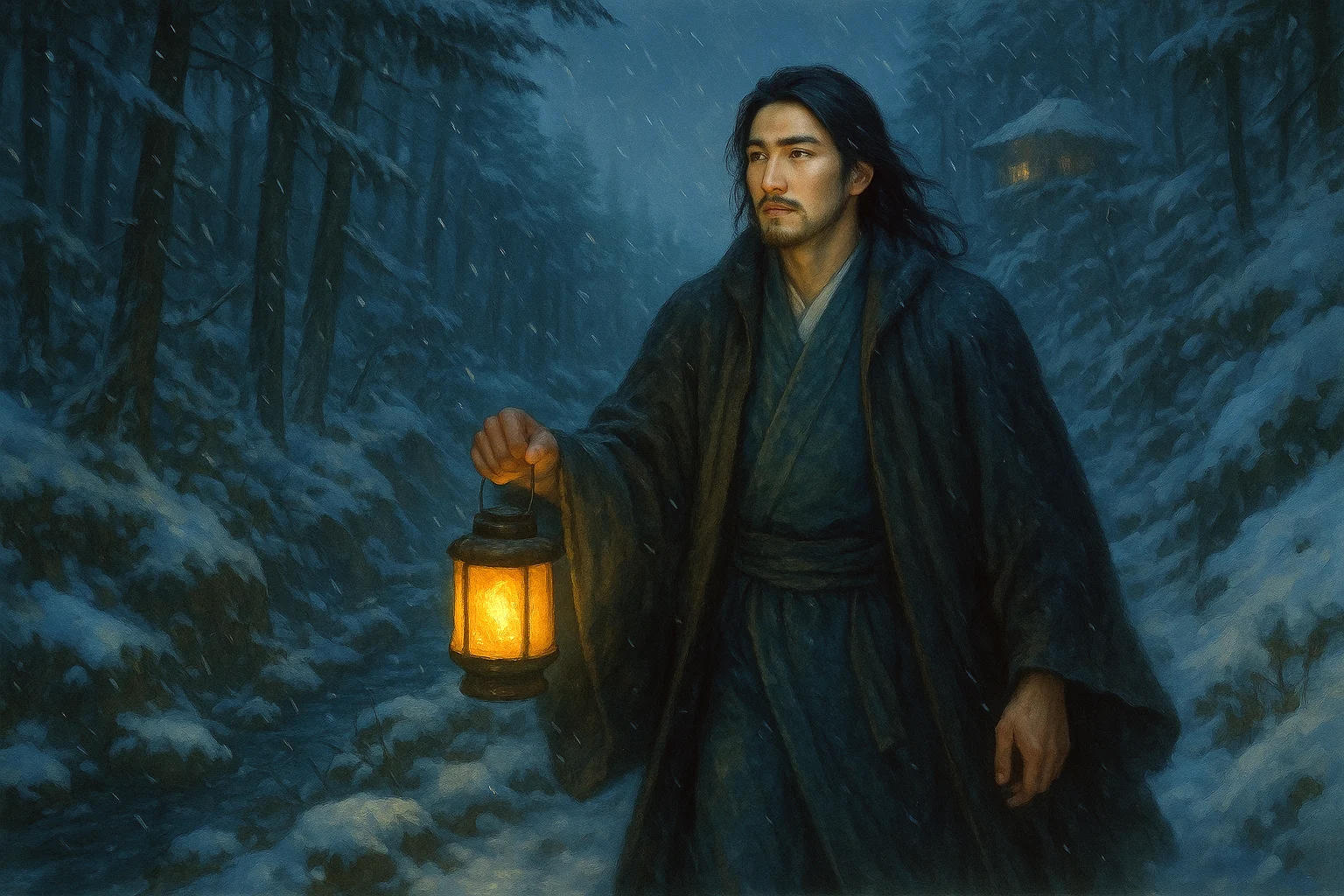
Liu Zhangqing (刘长卿 c. 726 – c. 786), a native of Xuancheng, Anhui Province, was a poet of the Mid-Tang Dynasty. He obtained the jinshi degree (presented scholar) in the late Tianbao era and successively held official posts such as Sheriff of Changzhou and Investigating Censor. Due to his upright and unyielding character, he was exiled twice. His poetry, particularly his five-character verses, achieved the highest distinction, often depicting the melancholy of exile and the joys of reclusion in landscapes. His poetic style is refined, elegant, and ethereal, blending a desolate undertone with the meticulousness characteristic of the Ten Talented Poets of the Dali era. He excelled in using plain sketching to create an atmosphere of tranquil emptiness and profound remoteness. As a pivotal poet bridging the High Tang and Mid-Tang periods, his work inherits the idyllic charm of Wang Wei and Meng Haoran while foreshadowing the bleak and cool elegance of Dali poetry. He exerted a certain influence on late Tang poets such as Yao He and Jia Dao, who belonged to the "painstaking school."