


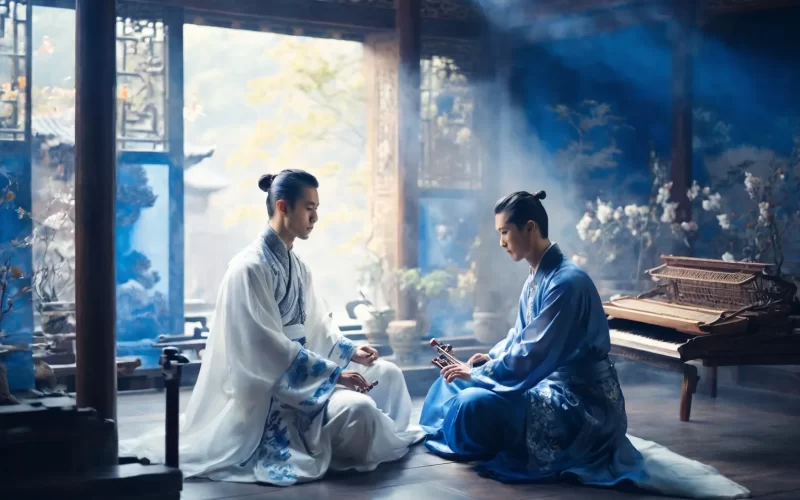
Bamboo from the southern hills was used to make this pipe.
And its music, that was introduced from Persia first of all,
Has taken on new magic through later use in China.
And now the Tartar from Liang-chou, blowing it for me,
Drawing a sigh from whosoever hears it,
Is bringing to a wanderer's eyes homesick tears.
Many like to listen; but few understand.

To and fro at will there's a long wind flying,
Dry mulberry-trees, old cypresses, trembling in its chill.
There are nine baby phoenixes, outcrying one another;
A dragon and a tiger spring up at the same moment;
Then in a hundred waterfalls ten thousand songs of autumn
Are suddenly changing to The Yu-yang Lament;
And when yellow clouds grow thin and the white sun darkens,
They are changing still again to Spring in the Willow-Trees.

Like Imperial Garden flowers, brightening the eye with beauty,
Are the high-hall candles we have lighted this cold night,
And with every cup of wine goes another round of music.
Original Poem
「听安万善吹觱篥歌」
李颀
南山截竹为觱篥,此乐本自龟兹出。
流传汉地曲转奇,凉州胡人为我吹。
傍邻闻者多叹息,远客思乡皆泪垂。
世人解听不解赏,长飙风中自来往。
枯桑老柏寒飕飗,九雏鸣凤乱啾啾。
龙吟虎啸一时发,万籁百泉相与秋。
忽然更作《渔阳掺》,黄云萧条白日暗。
变调如闻杨柳春,上林繁花照眼新。
岁夜高堂列明烛,美酒一杯声一曲。
Interpretation
This is one of the representative works of the Tang dynasty poet Li Qi, composed approximately during the Kaiyuan and Tianbao eras. The bili (觱篥, bì lì) is a reed wind instrument originating from Kucha in the Western Regions (present-day Kuqa, Xinjiang), with a bamboo body and a reed mouthpiece, known for its sorrowful yet stirring tone. It was immensely popular in both the Tang court and among the common people. An Wanshan was a Hu (non-Han) musician from Liangzhou (present-day Wuwei, Gansu), renowned for his skill on the bili. Li Qi, deeply moved upon hearing him play on one occasion, composed this poem. It not only vividly captures the rich variations of the bili melody but also, through the lament "The world can hear, but none can truly prize," expresses the loneliness of finding a kindred spirit. The entire poem skillfully fuses musical description, personal reflection, and a festive atmosphere, showcasing the unique aesthetic taste and spiritual world of a High Tang scholar.
First Stanza: 南山截竹为觱篥,此乐本自龟兹出。流传汉地曲转奇,凉州胡人为我吹。
Nán shān jié zhú wéi bìlì, cǐ yuè běn zì Qiūcí chū. Liúchuán hàndì qǔ zhuǎn qí, Liángzhōu húrén wéi wǒ chuī.
From the South Hills bamboo is cut to make a bili;
This music came at first from Kucha.
When passed to the land of Han, its notes grew stranger yet;
A man of Liangzhou, of Hu race, played it for me.
The opening succinctly explains the instrument's material and origin. "Bamboo is cut" points to the simplicity of its making, and "This music came at first from Kucha" reveals its exotic heritage, laying a unique cultural foundation for the musical description. The next two lines, "When passed to the land of Han, its notes grew stranger yet," suggest how cultural exchange nourishes art, while "A man of Liangzhou... played it for me" introduces the performer, An Wanshan. The phrase "played it for me" (为我吹, wèi wǒ chuī) shows the poet's closeness to the musician and foreshadows the deep resonance described later.
Second Stanza: 傍邻闻者多叹息,远客思乡皆泪垂。世人解听不解赏,长飙风中自来往。
Bàng lín wén zhě duō tànxī, yuǎn kè sīxiāng jiē lèi chuí. Shìrén jiě tīng bù jiě shǎng, cháng biāo fēng zhōng zì láiwǎng.
Hearers nearby mostly heaved heavy sighs;
Travellers from far thought of home, and tears fell down.
The world can hear, but none can truly prize;
A long, wild blast of wind, that of itself comes and goes.
This stanza shifts from external effect to internal reflection. The lines "Hearers nearby..." and "Travellers from far..." describe the universal resonance triggered by the bili's melody—sighs and tears prove its powerful impact. However, the poet immediately pivots: "The world can hear, but none can truly prize"—these seven words are the soul of the poem. "Hear" is sensory reception; "prize" is heartfelt resonance. The world can be moved by the music but cannot truly understand its deeper meaning. Thus, the poet compares himself to "a long, wild blast of wind, that of itself comes and goes," drifting alone between heaven and earth like a gale, his loneliness stemming from the rarity of a kindred spirit overflowing from the words.
Third Stanza: 枯桑老柏寒飕飗,九雏鸣凤乱啾啾。龙吟虎啸一时发,万籁百泉相与秋。
Kū sāng lǎo bǎi hán sōuliú, jiǔ chú míng fèng luàn jiūjiū. Lóng yín hǔ xiào yìshí fā, wànlài bǎi quán xiāng yǔ qiū.
A cold wind through withered mulberry and ancient cypress;
Nine young phoenixes cheeping, a disordered clamour;
A dragon’s moan, a tiger’s roar, break out together;
All the voices of autumn, a hundred springs sound as one.
The poem turns to a concrete description of the music itself, offering four metaphors in succession, each intensifying the imagery. "A cold wind through withered mulberry..." captures its desolate, bleak quality; "Nine young phoenixes cheeping..." mimics its complex, chaotic texture; "A dragon’s moan, a tiger’s roar..." portrays its majestic, powerful surge; and "All the voices of autumn..." synthesizes it into the symphony of autumn in the world. These four images capture the tonal characteristics of the bili from different angles, offering both detailed precision and an overarching atmosphere, dazzling the mind's eye.
Fourth Stanza: 忽然更作《渔阳掺》,黄云萧条白日暗。变调如闻杨柳春,上林繁花照眼新。
Hūrán gèng zuò "Yúyáng càn", huáng yún xiāotiáo bái rì àn. Biàndiào rú wén yángliǔ chūn, Shànglín fánhuā zhào yǎn xīn.
Suddenly it changed to the tune "Yuyang Blend";
Drear yellow clouds, the white sun darkened.
The melody shifted—it seemed like "Willows in Spring";
Flowers on flowers in the Park of the Supreme Forest dazzled the eye.
The music continues to unfold, presenting a theatrical transformation. "Suddenly it changed to the tune 'Yuyang Blend'" describes an abrupt shift; "Yuyang Blend" was a military drum tune from the Han dynasty, tragic and stirring. The poet matches it with the grand scene of "Drear yellow clouds, the white sun darkened," where heaven and earth seem to change color, emphasizing its shocking force. Immediately following, "The melody shifted—it seemed like 'Willows in Spring,'" the music turns from sorrow to joy, from somber to bright; "Flowers on flowers in the Park of the Supreme Forest dazzled the eye" compares it to the dazzling spring scenery of the imperial garden, radiant and intense. The stark contrast between dark and bright, sorrow and joy, showcases both the supreme skill of the musician An Wanshan and the infinite capacity of music to traverse emotional boundaries.
Fifth Stanza: 岁夜高堂列明烛,美酒一杯声一曲。
Suì yè gāo táng liè míng zhú, měijiǔ yì bēi shēng yì qǔ.
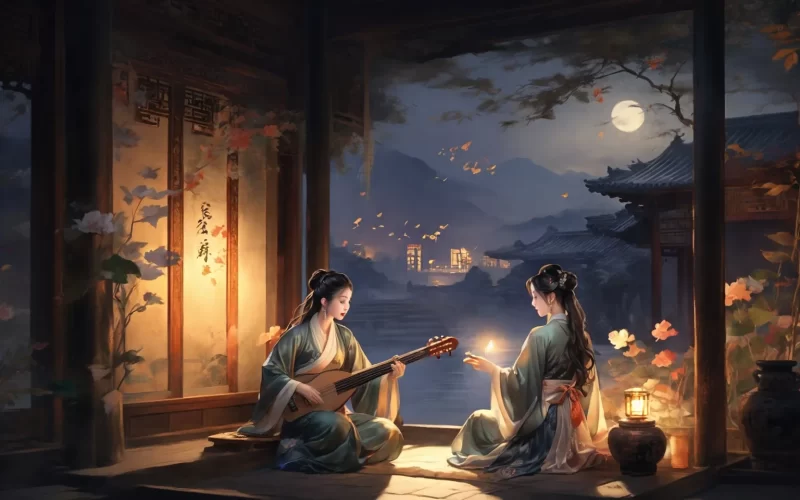
New Year’s Eve, in the high hall bright candles stood in rows;
One cup of wine, and with it, one tune’s sound.
The conclusion gathers the poem into a scene of joyful contentment. "New Year’s Eve" specifies the time—the New Year's Eve, a time for family reunion; "in the high hall bright candles stood in rows" evokes a warm, solemn atmosphere. The poet raises his cup and listens; each cup of wine is accompanied by a beautiful melody. These seven words appear simple, yet they gather all the complex emotions of the preceding lines into a moment of intoxication and satisfaction—whether homesickness, loneliness, or the shifting melodies of sorrow and joy, all finally dissolve into this moment interwoven with candlelight, fine wine, and the sound of music.
Holistic Appreciation
This is another masterpiece of Li Qi's music poetry. Its artistic achievement lies in the perfect fusion of the synesthetic technique of "writing music with poetry" and the life sentiment of "expressing feeling through music." The poem's structure is as rhythmic as a musical composition: the first two stanzas set the scene and introduce the lament for a kindred spirit; the middle section uses dense imagery to depict the music itself; and it concludes with the New Year's Eve banquet scene. Emotion progresses in layers, expanding and contracting with ease.
The most moving part of the poem is the sigh, "The world can hear, but none can truly prize." It is not only the poet's personal lament but also the shared sentiment of all artists—a work can move millions, but those who truly "understand" may be only one or two kindred spirits. Yet the poet does not wallow in this loneliness. The closing scene, "One cup of wine, and with it, one tune’s sound," with a sense of ritualistic intoxication, elevates loneliness to a realm of reconciliation with the world and with oneself.
Artistic Merits
- Masterful Use of Synesthesia: Transforming auditory sensations into visual imagery—"Drear yellow clouds, the white sun darkened" and "Flowers on flowers... dazzled the eye"—allows readers not only to "hear" the music but also to "see" its imagery.
- Contrast and Transformation of Imagery: From the desolation of "withered mulberry and ancient cypress" to the chaotic clamor of "nine young phoenixes," from the majestic power of "a dragon’s moan, a tiger’s roar" to the autumnal symphony of "all the voices of autumn," from the gloom of "drear yellow clouds" to the brilliance of "flowers on flowers," the music's rich layers are revealed through successive contrasts.
- Deepening the Theme of the Kindred Spirit: The line "The world can hear, but none can truly prize" serves as a pivot, summarizing the listeners' reactions while introducing the poet's own sense of loneliness, "A long, wild blast of wind, that of itself comes and goes," thereby granting the musical description a depth of life experience.
- The Art of Open-ended Conclusion: Ending with "New Year’s Eve... One cup of wine, and with it, one tune’s sound" offers no explicit commentary, yet contains within it all the preceding joys and sorrows, leaving a lasting resonance.
Insights
The core insight this poem offers the contemporary reader concerns the essential difference between "hearing" and "prizing." The seven words, "世人解听不解赏" expose a chasm in artistic reception—being moved is not the same as understanding; resonating is not the same as true appreciation. In today's age of information overload, we "hear" countless sounds every day, but how many can truly penetrate the depths of our hearts and become objects of "prizing"?
The dramatic shifts in the music within the poem—from desolate to majestic, from tragic to radiant—also teach us that true art can contain contradictions and cross boundaries. It can make you "think of home, and tears fall down" yet also let you feel "flowers on flowers dazzle the eye"; it can express the bleakness of "withered mulberry and ancient cypress" yet also perform the joyfulness of "willows in spring." This capacity for inclusion and richness is the very hallmark of great art.
Finally, the scene of "美酒一杯声一曲" offers an attitude towards life: however noisy the outside world, whether a kindred spirit is present or not, we can still, on a certain New Year's Eve, light bright candles, fill a cup with fine wine, and be alone with music. The intoxication of that moment is in itself the deepest homage to life.
Poem translator
Kiang Kanghu
About the Poet
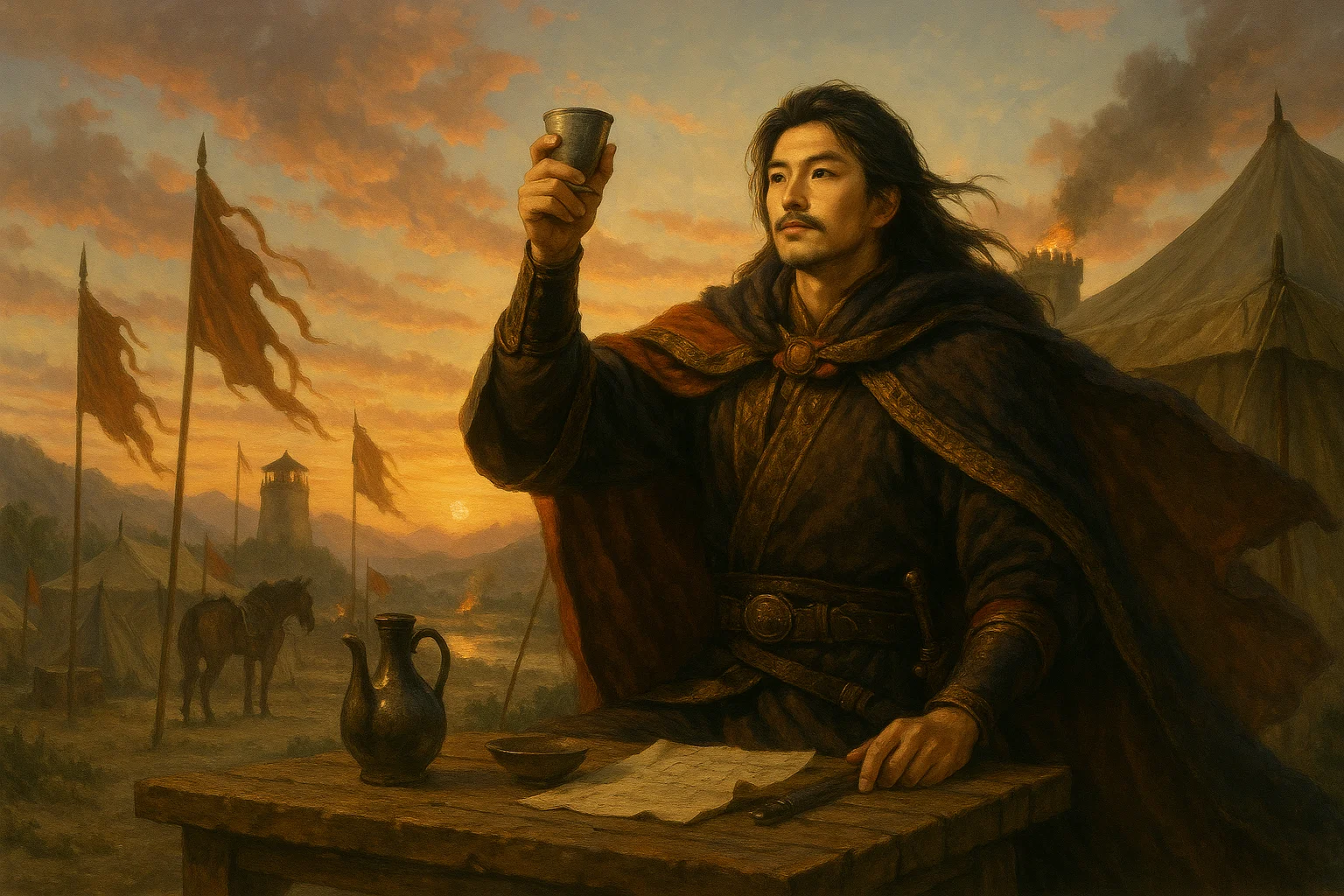
Li Qi (李颀 c. 690 – c. 751), whose ancestral home was in Zhao County, Hebei Province, was a renowned frontier fortress poet of the High Tang period. He became a jinshi (presented scholar) in the 23rd year of the Kaiyuan era (735 AD) and served as the Sheriff of Xinxiang before retiring from official life to live in seclusion. His poetry is best known for its frontier themes, and he excelled particularly in seven-character ancient verse and character portrayal. He had a gift for blending boldness with delicate emotion, and together with Gao Shi and Cen Shen, he collectively shaped the grandeur of High Tang frontier poetry.