At Nan-king Ferry by Zhang Hu
Translation
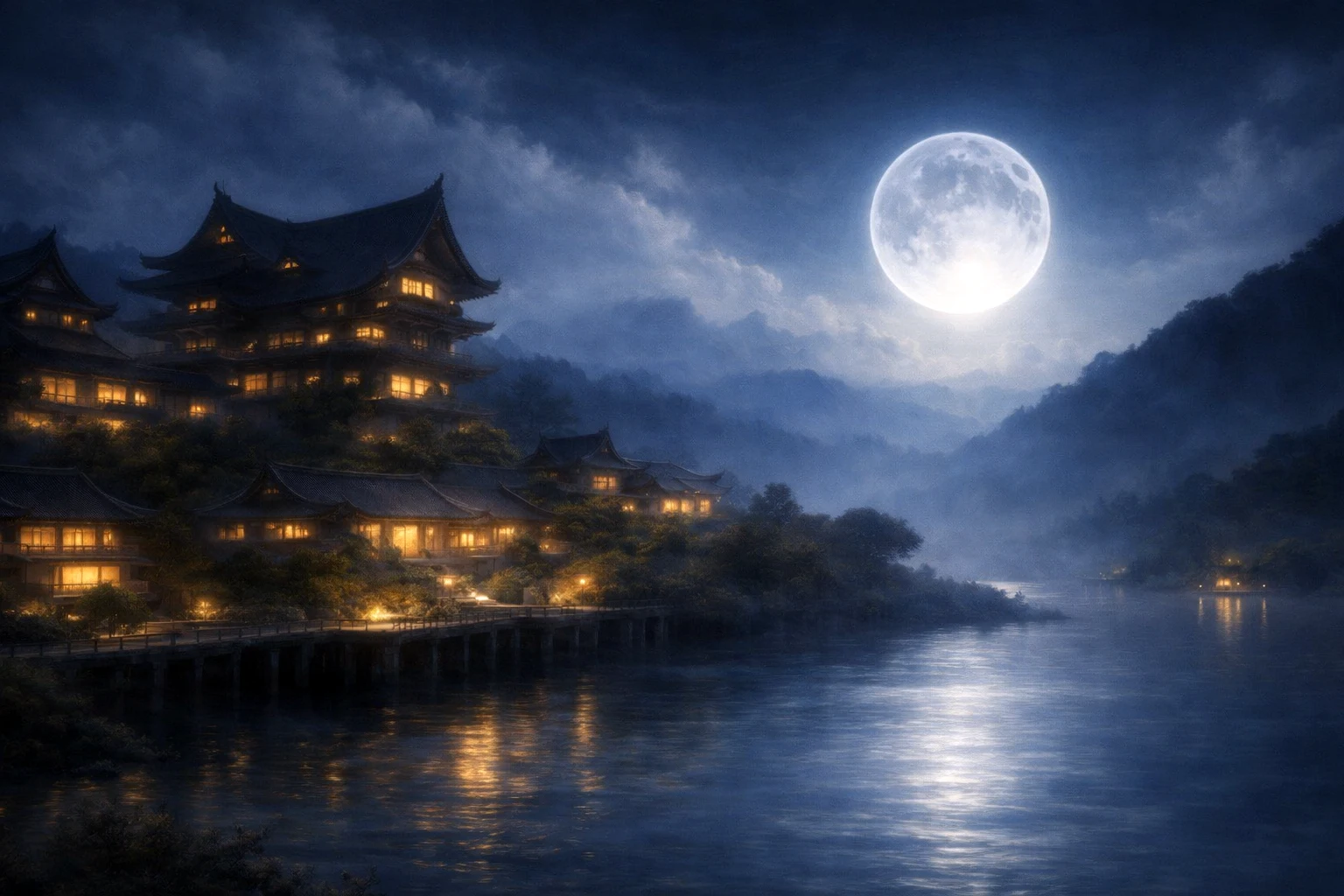
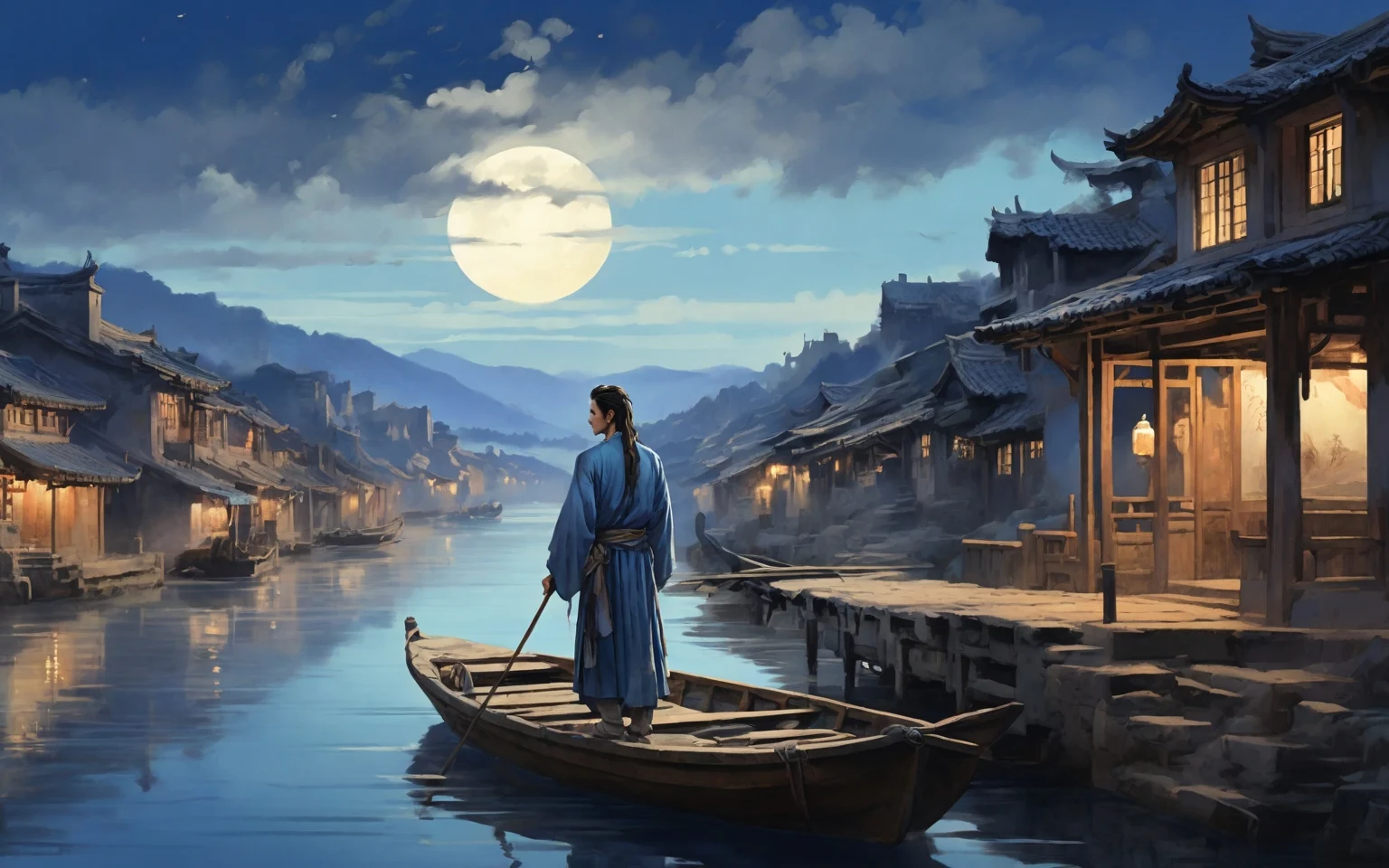
This one-story inn at Nan-king ferry
Is a miserabk lodging-place for the night -
But across the dead moon's ebbing tide,
Lights from Kua-chou beckon on the river.

Original poem
金陵津渡小山楼,一宿行人自可愁。
潮落夜江斜月里,两三星火是瓜洲。
Text and Versions
Textual noteView textual sources
Source and edition notes are being prepared.
About the Poet
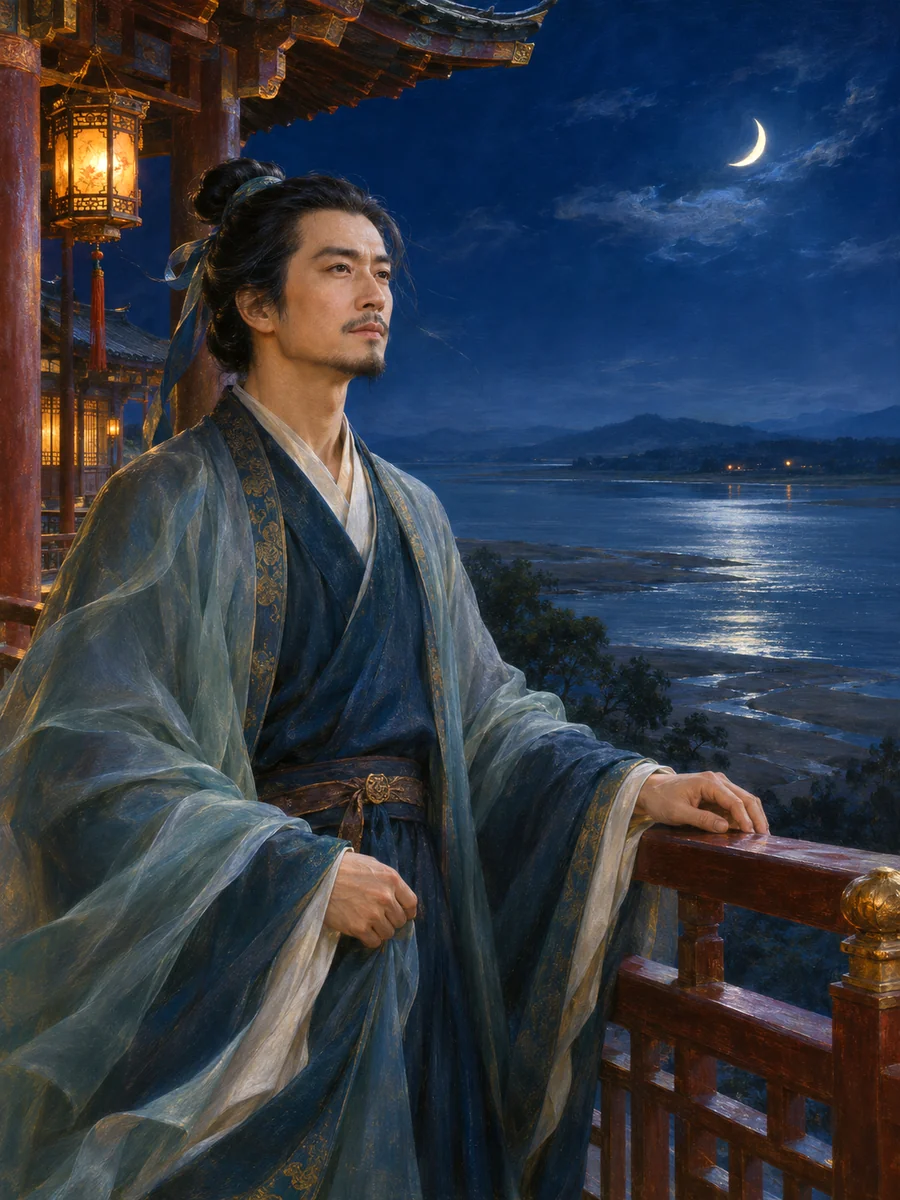
Zhang Hu
Tang DynastyThe poem ends, its resonance remains
Kindred poetic worlds
Related by themeExplore poems by other poets through themes such as “Life Far from Home”, “Melancholy”.

Commentary
Interpretation
Composed during Zhang Hu’s travels through the Jiangnan region in the late Tang period, this poem captures the solitude and contemplative mood of a wandering poet. While the title mentions “Jinling Ferry,” it actually refers to Runzhou (modern Zhenjiang), a strategic crossing point on the Yangtze River. Across the water lies Guazhou, a historic ferry and military outpost near Yangzhou. Sleepless in a riverside inn, the poet channels his wanderer’s melancholy and the river’s nocturnal beauty into these verses.
First Couplet: « 金陵津渡小山楼,一宿行人自可愁。 »
Jīnlíng jīn dù xiǎo shān lóu, yī sù xíngrén zì kě chóu.
At Jinling Ferry’s modest riverside tower, A night’s lodging naturally stirs a traveler’s gloom.
The opening establishes time, place, and perspective. The “modest tower” suggests humble lodgings where the poet lies awake. The phrase “naturally stirs” (自可愁) masterfully conveys inevitable melancholy without heaviness—a refined melancholy that lingers like river mist.
Second Couplet: « 潮落夜江斜月里,两三星火是瓜洲。 »
Cháo luò yè jiāng xié yuè lǐ, liǎng sān xīnghuǒ shì Guāzhōu.
The ebbing night-river bathes in slanting moonlight, Where two or three faint lanterns mark Guazhou’s shore.
Here, the poet’s gaze stretches across the Yangtze. “Slanting moonlight” (斜月) suggests dawn’s approach while intensifying the scene’s quiet chill. The “faint lanterns”—measured precisely as “two or three”—create ethereal counterpoints to the dark waters, their distant glow embodying both physical vista and the poet’s yearning gaze toward unseen horizons.
Holistic Appreciation
The poem transforms a sleepless night into meditative art. Through elemental imagery—ebbing tides, oblique moonlight, scattered lights—it constructs a monochromatic riverscape that mirrors the traveler’s solitude. The closing vision of Guazhou’s lanterns operates on multiple levels: as geographical marker, as symbol of unreachable destinations, and as poetic focal point where observation and longing converge.
Artistic Merits
Zhang Hu’s genius lies in suggestive economy. Ordinary elements—a traveler’s night, moonlight on water—become vessels for profound emotion through precise diction and spatial composition. The poem’s power derives from restraint: the unforced melancholy of “naturally stirs,” the geometric purity of “slanting moonlight,” and the perfect calibration of “two or three” lights. Each image breathes with quiet resonance.
Insights
This riverside vignette reminds us that journeys shape perception. The poet’s insomnia becomes a window to contemplation, where the night’s stillness amplifies inner reflection. Like those distant Guazhou lights, our destinations often glimmer just beyond reach—yet in the watching itself, we find poetry. Zhang Hu teaches us to attend to transitional moments: the tide’s turn, dawn’s approach, and the luminous possibilities hovering at vision’s edge.