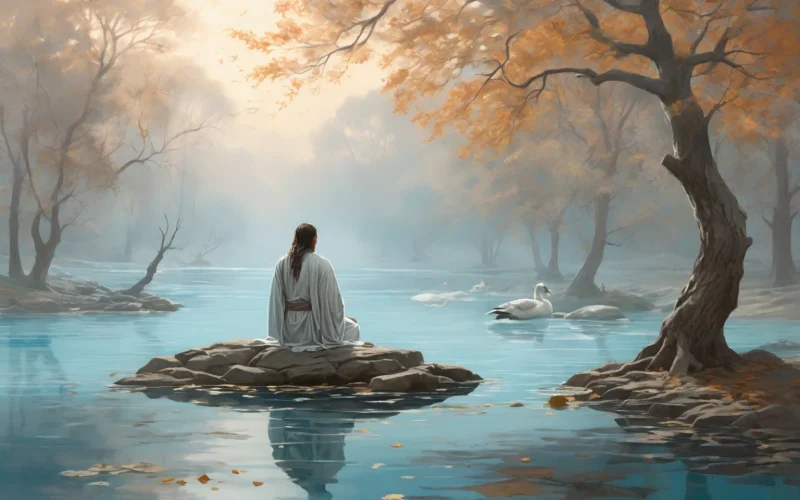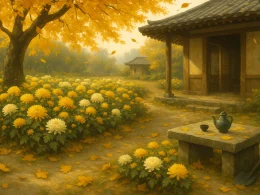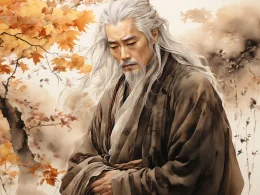



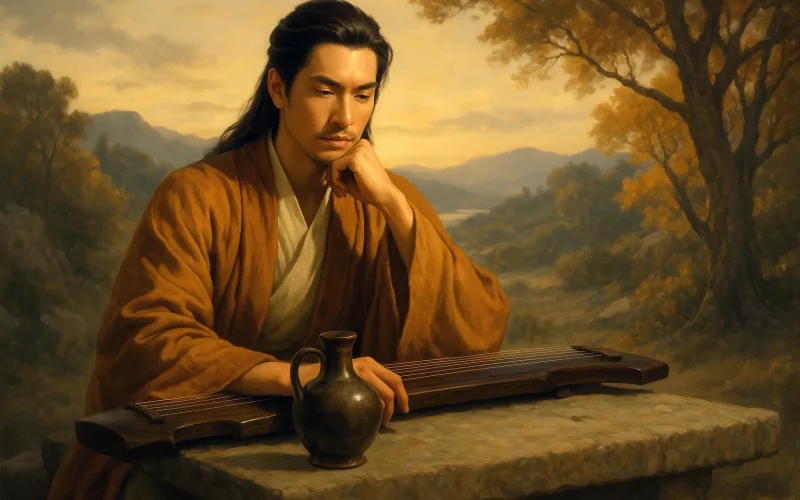
This age discards scholars like weeds,
Cast to Xiang River's reedless shores.
Sunlight floods the seas—but who heeds
Stones that chime where no ear adores?
Plucked-wing birds on dead boughs cry,
Dipping, rising—mournful tune.
North winds spit clouds cold and dry,
Autumn's end—a barren noon.
Nobles still roam at their ease,
While we petty men must freeze.
Day by day our sorrows grow,
Nurturing grief none can know.
Let's drain this cup of wine we share,
Sing loud—though none will ever care.
Pity no musician stays
To string my verse in finer ways.
Original Poem
「零陵赠李卿元侍御简吴武陵」
柳宗元
理世固轻士,弃捐湘之湄。
阳光竟四溟,敲石安所施。
铩羽集枯干,低昂互鸣悲。
朔云吐风寒,寂历穷秋时。
君子尚容与,小人守兢危。
惨凄日相视,离忧坐自滋。
樽酒聊可酌,放歌谅徒为。
惜无协律者,窈眇弦吾诗。
Interpretation
This poem was composed in the autumn of the seventh year of the Yuanhe era (812 AD) under Emperor Xianzong of Tang. By this time, Liu Zongyuan had already spent over seven years in exile in Yongzhou. That year, his like-minded friend Wu Wuling received a pardon and was returning north, about to leave Yongzhou. The recipients mentioned in the title, "Messrs. Li and Yuan" ("Li Qing" and "Yuan Shiyu"), were also local literati, while "To Wu Wuling" ("Jian Wu Wuling") indicates it was composed and sent to him—this is a poem for a departing soulmate. Wu Wuling, styled Qu Chen, earned his jinshi degree in the early Yuanhe years, was exiled to Yongzhou due to some affair, and upon meeting Liu Zongyuan, they became as close as old friends, becoming one of the most intimate companions in the Yongzhou exile. The two often explored mountains, visited historical sites, drank wine, and composed poetry together, comforting each other. Now Wu Wuling was pardoned and returning north, while Liu Zongyuan remained "discarded by the Xiang's side," with no knowing when his own return might be. At this moment of parting, what surged in the poet's heart was not only the sorrow of farewell but, more profoundly, lament for his own fate, indignation at the dark reality, and a deep sigh for the rarity of a true confidant.
The poem opens by directly targeting court politics, not concealing its criticism of those in power for rejecting worthy men. This kind of sharp political satire is not rare in Liu Zongyuan's exile poetry, but in this poem, it intertwines with the sentiment of farewell, giving personal sorrow a broader social dimension. The poem's emotion is somber, its brushwork powerful, a strong work from Liu Zongyuan's Yongzhou period.
First Couplet: "理世固轻士,弃捐湘之湄。"
Lǐ shì gù qīng shì, qì juān Xiāng zhī méi.
In this so-called well-ordered world, talent is held lightly, naturally;
And I'm cast off, discarded by the Xiang's side.
The opening is earth-shattering. "Well-ordered world" is, on the surface, praise for peace, but is actually ironic sarcasm—if it were truly a well-ordered world, how could it "hold talent lightly"? How could it "cast off"? The word "naturally" further suggests this "light regard" is not accidental but a systemic inevitability. The poet uses "by the Xiang's side" to indicate his own discarded, remote place. This couplet establishes the poem's critical tone with irony, feelings of indignation bursting forth.
Second Couplet: "阳光竟四溟,敲石安所施。"
Yángguāng jìng sì míng, qiāo shí ān suǒ shī.
The sunlight fills the four seas, so bright, so high;
What use is there to strike a stone for spark or fire?
This couplet follows the previous one, deepening the satire with metaphor. "Sunlight" metaphorically refers to the so-called "brilliance of a prosperous age"; "strike a stone" refers to the talent and efforts of worthy men—in a "sun-filled" prosperous age, such a small spark is naturally insignificant. However, the reader understands: that "sunlight" is merely false brightness; the real world is in fact dark. And those worthy men who have been demoted are precisely the only "sparks" from striking stone in this darkness. The poet uses irony, superficially self-mocking, but actually a sharp exposure of those in power suppressing talent.
Third Couplet: "铩羽集枯干,低昂互鸣悲。"
Shā yǔ jí kū gān, dī áng hù míng bēi.
Wounded birds on withered boughs together crowd,
Drooping, rising, sadly crying, now loud, now soft.
This couplet shifts from argument to imagery. "Wounded birds" (birds with injured feathers) metaphorically refers to the exiled scholars; "withered boughs" are lifeless branches, metaphor for their desolate environment. "Drooping, rising, sadly crying" describes the birds now bowing, now raising their heads, responding to each other with mournful cries. This image is precisely a portrayal of the scholars' lives in Yongzhou exile—they share the same plight, comfort each other, but can only "cry sadly" to one another, unable to change their fate. The word "together" ("互") expresses the tragedy of the group and implies the hidden anxiety of soon losing a companion for this "mutual crying."
Fourth Couplet: "朔云吐风寒,寂历穷秋时。"
Shuò yún tǔ fēng hán, jí lì qióng qiū shí.
North clouds blow forth a wind both cold and drear;
It is the lonely close of the year.
This couplet describes the scenery, yet the scene contains emotion, the emotion implies reason. "North clouds" and "wind… cold" are both literal descriptions of late autumn's bleakness and symbols of the harsh political environment. The two words "lonely close" ("寂历") completely convey the desolation of all things withering; the word "close" ("穷") in "close of the year" refers both to the season's end and implies the badness of the times, the difficulty of the situation. The poet projects his inner desolation onto external things, making the natural scene a reflection of his state of mind.
Fifth Couplet: "君子尚容与,小人守兢危。"
Jūnzǐ shàng róngyǔ, xiǎorén shǒu jīng wēi.
The true man still finds time and ease;
The mean fellow's on his guard, ill at ease.
This couplet juxtaposes the true man ("君子") and the mean fellow ("小人"), depicting the different postures of two types of people in adversity. "Time and ease" is a state of leisure and contentment—though in hardship, the true man can still maintain inner composure and integrity. "On his guard" is fear and unease—though the mean fellow may hold power, he is constantly in a state of anxiety. This contrast is both the poet's affirmation of his own character and his contempt for those persecutors: you may be at court, but your hearts are as if on the brink of an abyss; we may be in the wilds, but our hearts are calm and at ease.
Sixth Couplet: "惨凄日相视,离忧坐自滋。"
Cǎn qī rì xiāng shì, lí yōu zuò zì zī.
Day after day, in misery, face to face;
Our parting sorrow grows apace.
This couplet shifts from argument back to reality, depicting the daily state of the exiled scholars. "Day after day, in misery, face to face"—each day, they see each other's sorrowful faces, hear each other's sighs. "Our parting sorrow grows apace"—and now, as a friend is about to leave, this sorrow grows silently in the heart. The three words "grows apace" ("坐自滋") intensely describe sorrow's stealthy growth, uncontrollable, like wild grass, unknowingly filling the heart.
Seventh Couplet: "樽酒聊可酌,放歌谅徒为。"
Zūn jiǔ liáo kě zhuó, fàng gē liàng tú wéi.
Wine in the cup, we drink awhile, but it won't last;
Singing aloud, I fear, is labour lost.
This couplet describes seeking solace in wine and dispelling cares through song, yet through the contrast between "we drink awhile, but it won't last" and "labour lost" reveals a deep helplessness. "We drink awhile"—we might as well drink wine, what else can we do? "Labour lost"—presumably it's futile, singing changes no reality. The poet is soberly aware that all diversions are merely temporary numbness; the true pain remains, waiting to assault again after the wine wears off, after the singing stops.
Eighth Couplet: "惜无协律者,窈眇弦吾诗。"
Xī wú xiélǜ zhě, yǎo miǎo xián wú shī.
Alas! I have no one to tune with me;
Faint and far shall the chords sound of my poetry.
The final couplet is the emotional culmination of the poem. "No one to tune with me" refers to someone who understands his heart's voice, a true confidant who can harmonize with him. Now Wu Wuling returns north, the "one to tune with" is reduced by one. "Faint and far" describes a distant, subtle quality—with no one to harmonize, no one to listen, the poet's strings can only resonate alone in the empty valley. This line pushes the sense of loneliness to its extreme, and also allows the entire poem to slowly conclude in a bleak, lingering resonance.
Holistic Appreciation
This farewell poem melds personal fate, social critique, and the feeling for a confidant into one. The poem's eight couplets can be divided into three layers: the first two couplets use irony to mock reality, sharp and direct; the middle four couplets use imagery to depict hardship, contrast to reveal character, somber and forceful; the final two couplets express parting sorrow, sigh for a confidant, desolate and lofty. Moving from indignation to sorrow, from sorrow to stillness, the emotional layers are rich, the structure rigorous and orderly.
The poem contains both fierce attacks on the dark reality, like "In this so-called well-ordered world, talent is held lightly" and "The sunlight fills the four seas," sharp as a blade; and tender depictions of the exiled scholar community, like "Wounded birds on withered boughs together crowd," compassionate as the sea; and deep sighs for the rarity of a true confidant, like "Alas! I have no one to tune with me," desolate as frost. The three interweave, making this poem the most emotionally complex and richly connotative among Liu Zongyuan's exile poetry.
Artistic Merits
- Sharp Irony, Profound Satire: Lines like "In this so-called well-ordered world, talent is held lightly" and "The sunlight fills the four seas" superficially praise but actually criticize, using irony masterfully, the edge is keen.
- Refined Imagery, Strong Symbolism: Images like "wounded birds," "withered boughs," "north clouds," "close of the year" are both realistic and symbolic, carrying the poet's deep grief and indignation.
- Vivid Contrast, Self-Possession of Character: The couplet "The true man still finds time and ease; / The mean fellow's on his guard, ill at ease" juxtaposes the true man and the mean fellow, both criticizing reality and affirming the self, the brushwork weighty.
- Orderly Structure, Reason and Emotion Blended: The poem progresses from mocking the world to self-description, to expressing feeling, layer upon layer, emotion and reason intertwined, the structure rigorous yet the thought flows smoothly.
- Desolate Conclusion, Lingering Resonance: The five words "Faint and far shall the chords sound of my poetry" conclude the entire poem with a musical image, elevating loneliness to a kind of desolate beauty, leaving endless afterthought.
Insights
This poem first enlightens us on how intellectuals should conduct themselves in the face of an unjust reality. Liu Zongyuan's answer is: criticize, but do not lose integrity; grieve and resent, but do not change one's aspirations. "The true man still finds time and ease"—maintaining inner composure and dignity in adversity is itself a form of resistance. In contemporary society, we may also encounter injustice, misunderstanding, and rejection. Liu Zongyuan's posture reminds us: External circumstances cannot be chosen, but inner character can be upheld.
The image of "Wounded birds on withered boughs together crowd, / Drooping, rising, sadly crying" also makes us contemplate the value of companionship in adversity. Those scholars similarly "cast off, discarded" "by the Xiang's side" "cry sadly" to one another, comforting each other in loneliness. This friendship of mutual appreciation and sympathy was an important support against despair. It teaches us: in difficult times, do not isolate yourself; seek out those with whom you can "cry sadly" together; their existence is itself a strength.
The sigh in the poem also makes us consider the meaning of a true confidant. Liu Zongyuan's poetry could resonate, could be transmitted, only with a "tuner"; without a confidant, the most beautiful strings can only sound "faint and far" alone. This is both regret for Wu Wuling's northward return and a profound insight into the situation of all creators—true art needs the listening of a confidant. Today, when we write, create, or express ourselves, are we also seeking those who can "tune" with us? Are we also sighing for having "no one to tune with"?
Finally, the clarity in the poem is especially moving. Liu Zongyuan knew that poetry could not change reality, that wine was only "drink awhile." But he still wrote poetry, still sang aloud, still persisted in what he knew was "labour lost." This persistence in doing what one knows may be in vain is the most moving part of the spirit of Chinese scholars. It teaches us: some things, even if "labour lost," are worth doing; some voices, even if no one listens, should be uttered. For this is not only to change the world, but also to prevent the world from changing oneself.
About the Poet
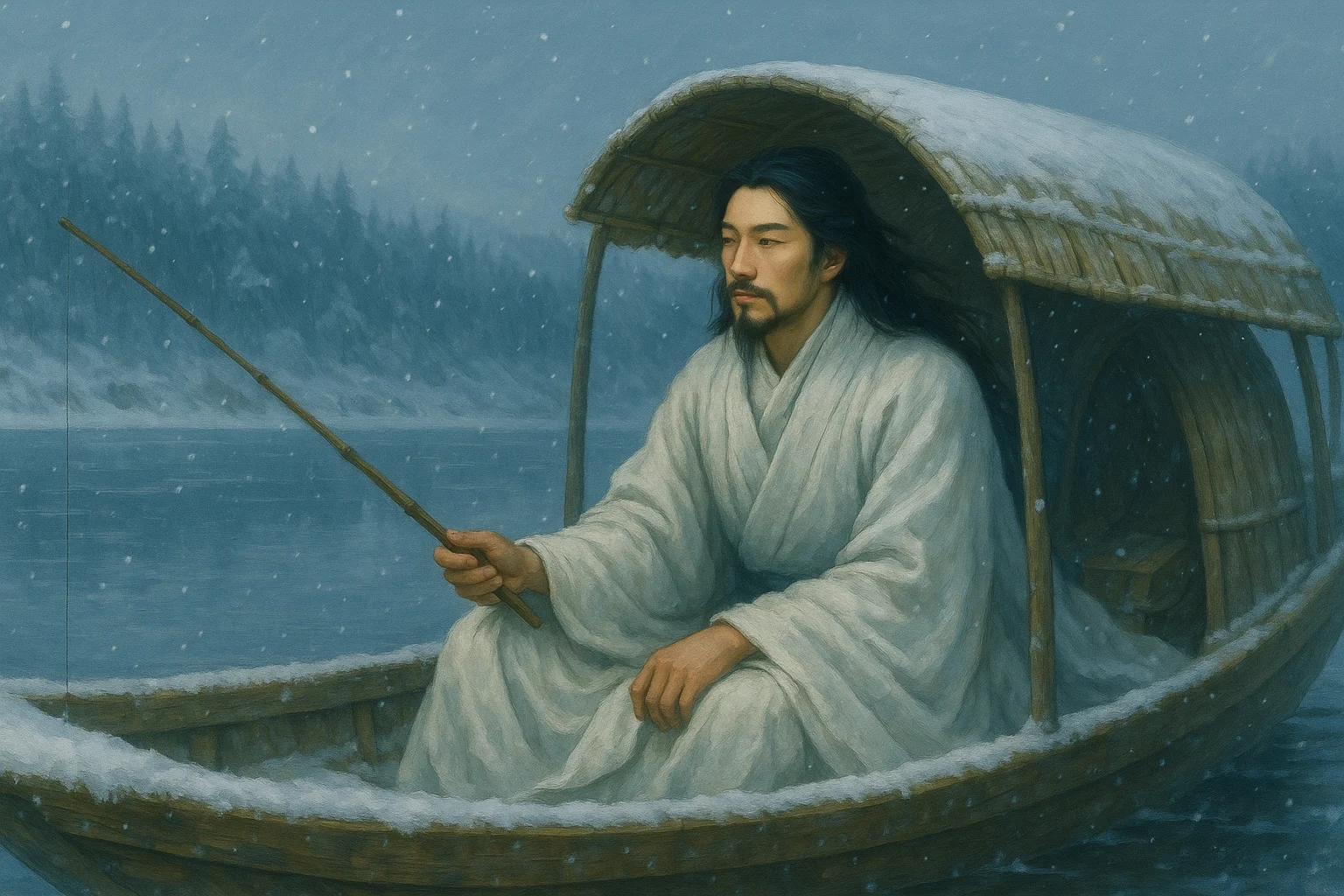
Liu Zongyuan (柳宗元, 773 - 819), a native of Yuncheng in Shanxi province, was a pioneering advocate of the Classical Prose Movement during China's Tang Dynasty. Awarded the prestigious jinshi degree in 793 during the Zhenyuan era, this distinguished scholar-official revolutionized Chinese literature with his groundbreaking essays. His prose works, remarkable for their incisive vigor and crystalline purity, established the canonical model for landscape travel writing that would influence generations. As a poet, Liu mastered a distinctive style of luminous clarity and solitary grandeur, securing his place among the legendary "Eight Great Masters of Tang-Song Prose" - an honor reflecting his enduring impact on Chinese literary history.