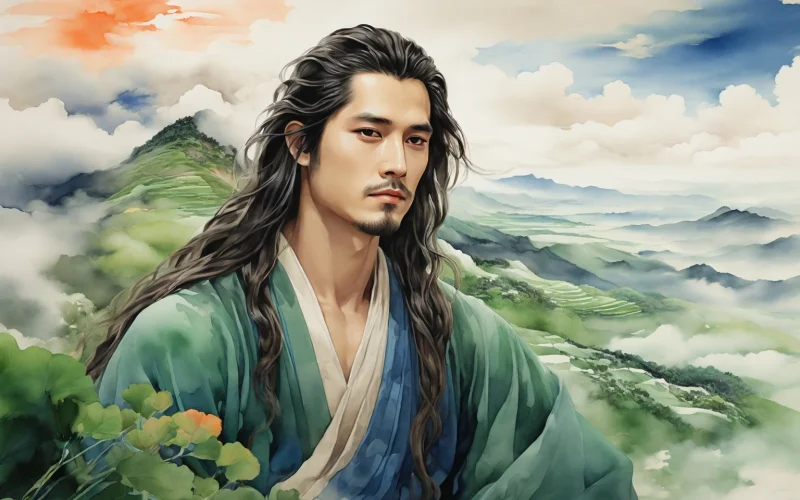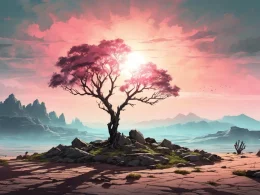

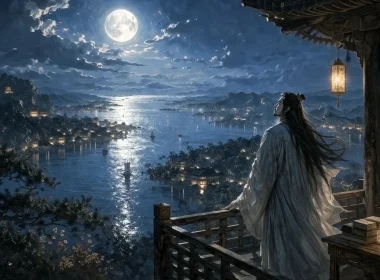
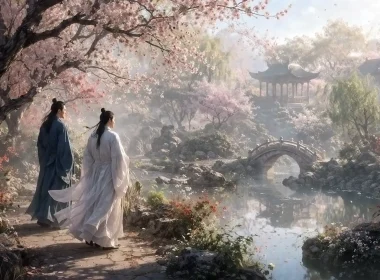
The crescent moon rises and hangs on city wall;
The rising moon on city wall shines over all.
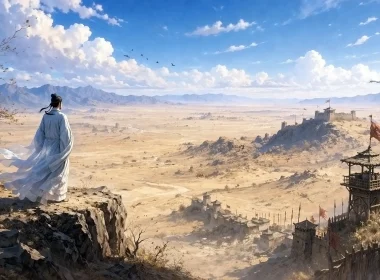
There're a thousand homes in seven districts on frontier;
Half of the Tartars play pipa for us to hear.

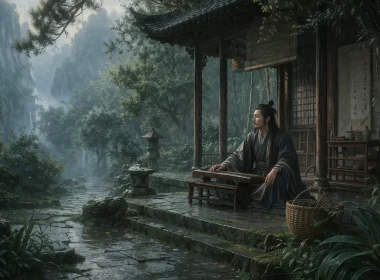
The heart would be broken to hear the pipa song,
When the wind sheds leaves in showers and night is long.
West of the River I have so many compeers;
Many friends are separated from me for many years.
Before the flowery gate we see autumn grass.
Could we bear to see friends grow old like it? Alas!
How many times can we laugh in a life so fleet?
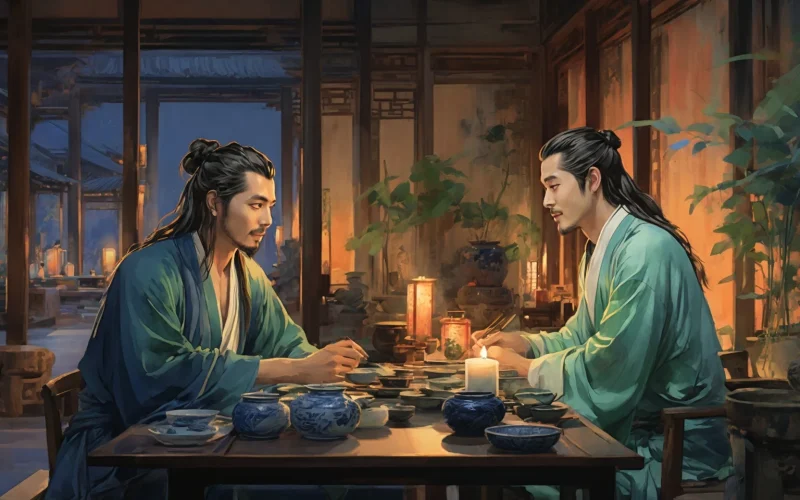
So let us drink our fill till drunken, now we meet!
Original Poem
「凉州馆中与诸判官夜集」
岑参
弯弯月出挂城头,城头月出照凉州。
凉州七里十万家,胡人半解弹琵琶。
琵琶一曲肠堪断,风萧萧兮夜漫漫。
河西幕中多故人,故人别来三五春。
花门楼前见秋草,岂能贫贱相看老。
一生大笑能几回,斗酒相逢须醉倒。
Interpretation
This poem was composed in the thirteenth year of the Tianbao era of Emperor Xuanzong of Tang (754 CE), during Cen Shen's second expedition to the frontier, while he was en route to take up his post at the Beiting Protectorate (present-day Jimsar, Xinjiang). Liangzhou (present-day Wuwei, Gansu), as the seat of the Hexi Military Governorship, was a strategic throat controlling the Western Regions and connecting the Central Plains—a bustling, cosmopolitan hub where merchants gathered and Han and Hu cultures intermingled. Cen Shen stopped here on his journey and had an unexpected reunion with old friends serving in the Hexi headquarters; this poem was born from that night's feast, steeped in the exotic atmosphere of the borderlands.
Unlike Cen Shen's other frontier poems that depict the bitter cold of desolate outposts, this one focuses on the bustle, prosperity, and cultural fusion within the border city itself. It reveals that in the heyday of the High Tang, the empire's frontiers were not only scenes of clashing arms but also vibrant centers of urban life and civilizational exchange. The grand image of "凉州七里十万家" (seven li of Liangzhou with a hundred thousand households) and the vivid detail of "胡人半解弹琵琶" (half the Hu people can play the pipa) together compose a full-bodied "genre painting of a High Tang border city." And against this backdrop, the joyful reunion of old friends is suffused not with the melancholy of parting but with the unbridled optimism of "一生大笑能几回" (how many times in a lifetime can one laugh heartily?) and the carefree spirit of carpe diem. This exemplifies the High Tang literati's characteristic exuberance, their embrace of life, and their spirited engagement with the world.
First Couplet: "弯弯月出挂城头,城头月出照凉州。"
Wān wān yuè chū guà chéng tóu, chéng tóu yuè chū zhào liáng zhōu.
A crescent moon rises, hanging above the city wall;
The moon above the wall shines over all Liangzhou.
The opening employs an anadiplosis (repetition of the end of one clause as the beginning of the next), where the phrase "城头" (city wall) is repeated, simulating the visual process of moonlight moving from a point to a surface. The rhythm flows in a circular, echoing pattern, like the moonlight itself, drawing the reader into the serene and poetic nighttime atmosphere of this border town. This is both scene-setting and the establishment of the poem's bright, lyrical tone.
Second Couplet: "凉州七里十万家,胡人半解弹琵琶。"
Liáng zhōu qī lǐ shí wàn jiā, hú rén bàn jiě tán pí pá.
Liangzhou, seven li around, holds a hundred thousand households;
Half of the Hu people here can play the pipa.
The poet's brush turns from the luminous moon above to the human city below. With the hyperbolic figure of "七里十万家" (seven li, a hundred thousand households), he paints in bold strokes the astonishing scale and dense population of Liangzhou as a major northwestern stronghold, revealing its wealth and prosperity. The line "胡人半解弹琵琶" is the finishing touch: using the most representative instrument of the Western Regions, he highlights the unique character of ethnic integration and cultural convergence. The sound of the pipa here is not mere background music; it is a living symbol of Liangzhou's openness and vibrant soul.
Third Couplet: "琵琶一曲肠堪断,风萧萧兮夜漫漫。"
Pí pá yī qǔ cháng kān duàn, fēng xiāo xiāo xī yè màn màn.
One tune on the pipa—enough to break one's heart;
The wind sighs and sighs, the night stretches long.
The lens zooms in from the grand panorama of the city to the specific banquet table. Amid the revelry, the poet hears in the pipa melody a plaintiveness that "肠堪断"—enough to break one's heart. This may be the nature of the tune itself, but more likely it is the music that stirs up complex feelings of drifting far from home and the passage of time. "风萧萧兮夜漫漫" borrows from the language of the Chu Ci, evoking both the real sensation of the border night and a vast, desolate sense of time and deep emotion, effecting a subtle transition from external festivity to inner reflection.
Fourth Couplet: "河西幕中多故人,故人别来三五春。"
Hé xī mù zhōng duō gù rén, gù rén bié lái sān wǔ chūn.
In the Hexi headquarters there are many old friends;
Since we parted, three or five springs have passed.
Here the poet speaks directly, revealing the core theme of the night's gathering—reunion with old acquaintances. The phrase "多故人" (many old friends) suggests the breadth of his social network and the density of his emotional ties. "三五春" (three or five springs) marks the passage of time since their parting; the tone is matter-of-fact yet tinged with quiet emotion, laying the groundwork for the elevation of feeling to come.
Fifth Couplet: "花门楼前见秋草,岂能贫贱相看老。"
Huā mén lóu qián jiàn qiū cǎo, qǐ néng pín jiàn xiāng kàn lǎo.
Before the Flower Gate Pavilion, I see autumn grasses;
How can we bear to grow old together in poverty and low estate?
This couplet marks the emotional turning point and the moment of elevation. The image of "秋草" (autumn grass) is both a seasonal marker and a powerful metaphor for the passage of life and time. It stirs the poet's deepest anxieties about achievement and mortality. The rhetorical question "岂能贫贱相看老" (How can we bear to grow old in poverty?) is resolute and forthright, brimming with the High Tang literati's characteristic ambition for official success, their enterprising spirit, and their refusal to accept mediocrity. It elevates the pleasure of a private reunion into a shared declaration of purpose and a mutual call to action.
Final Couplet: "一生大笑能几回,斗酒相逢须醉倒。"
Yī shēng dà xiào néng jǐ huí, dǒu jiǔ xiāng féng xū zuì dǎo.
How many times in a lifetime can one laugh heartily like this?
Meeting with wine, we must drink ourselves down!
The final couplet brings the poem's emotional energy to its peak and concludes with a life-affirming declaration. "大笑" (hearty laughter) is an unrestrained release of feeling, a carefree response to life's brevity and the rarity of such reunions. The rhetorical question "能几回" (how many times?) underscores the supreme preciousness of such pure, uninhibited joy. And "斗酒相逢须醉倒" is the most direct, most heroic tribute to and celebration of this precious gathering. These two lines sweep aside the melancholy often found in frontier poetry, and with an almost childlike enthusiasm and absolute commitment to action, celebrate the vitality of life, the warmth of friendship, and the philosophy of living fully in the present—immensely powerful and deeply characteristic of the age.
Overall Appreciation
This is a masterpiece among Cen Shen's frontier poems. In eighteen lines, with the night gathering in Liangzhou as its setting, it weaves together the border city's character, the music of foreign lands, the ties of old friendship, and reflections on life, composing a symphony of joy imbued with the spirit of the High Tang.
Structurally, the poem moves from stillness to movement, from scene to feeling, and from personal reflection to collective exuberance. The first couplet, with the "crescent moon rising," paints a quiet nocturnal panorama of the border town. The second couplet, with "a hundred thousand households" and "half the Hu people play the pipa," turns to the city's bustling streets—a macroscopic close-up. The third couplet, with the plaintive "pipa tune" and the vastness of "the wind sighs and the night stretches," serves as the transition from external clamor to inner emotion. The fourth couplet states the theme of "reunion with old friends." The fifth, with the warning of "autumn grasses before the Flower Gate," leads to the declaration of "how can we bear to grow old in poverty?" The final couplet closes with the ecstatic "how many times can we laugh? Meeting with wine, we must get drunk." All the joy, reflection, and ambition culminate in that one drunken collapse. The six couplets move from scene to emotion, from stillness to motion, from personal lament to collective pride, layer upon layer, in seamless unity.
In terms of theme, the poem pivots on the tension between the "hearty laughter" and the resolve implied by "how can we?" The plaintiveness of "one pipa tune is enough to break the heart" speaks to the deep feelings of a traveler at the edge of the world; the seasonal cue of "autumn grasses before the Flower Gate" sounds an urgent reminder of time's passage; the sharp rhetorical question "how can we bear to grow old in poverty?" transforms that lament into a spirited drive for achievement; and ultimately, the carefree "how many times can we laugh?" offers the most fervent response to life's brevity—since such reunions are rare and time is fleeting, let us honor life itself with a round of laughter and a good drunk. This "hearty laughter" is not frivolity; it is the externalization of the High Tang literati's core ethos: an active engagement with the world, a love of life, and a desire to create maximum value within a finite existence.
Artistically, the most striking quality is the unique technique of capturing the spirit of an age through the sounds of the city. The poet does not write of the harshness of the frontier or military campaigns, nor of the bravery or tragedy of soldiers. Instead, he turns his lens to the myriad lights of Liangzhou and the Hu pipa—the hyperbolic "seven li, a hundred thousand households" serves as a grand footnote to the prosperity of a High Tang border city; the vivid detail of "half the Hu people can play the pipa" is a cultural emblem of ethnic integration. This technique of embedding the spirit of the age in the scenery of the city and transforming heroic ambition into a night feast with old friends allows the poem, beneath its surface of revelry, to pulse with a profound awareness of life and the rhythms of the era—making it a uniquely brilliant chapter among High Tang frontier poems.
Artistic Features
- Anadiplosis and Flowing Rhythm: The opening's repetition of "城头" (city wall) not only mimics the visual movement of moonlight but also creates a musical connection between lines, so that when read aloud it flows like moonlight itself—smooth, melodic, and immersive.
- Combination of Detailed Sketch and Numeric Hyperbole: "七里十万家" uses hyperbolic numbers to depict urban scale, a grand gesture typical of High Tang poets; while "胡人半解弹琵琶" captures a representative life detail that precisely evokes the cultural fusion of Liangzhou. This interplay of macro and micro makes the picture both majestic and authentic.
- Emotional Ebb and Flow and Elevation: The poem's emotional trajectory is not a straight ascent but a winding path: stillness (moonrise)—prosperity (city scene)—sorrow (pipa breaking the heart)—reflection (autumn grasses after parting)—heroic abandon (laughter and drunkenness). This undulation makes the final burst of passion all the more credible and powerful.
- Direct Expression of the High Tang Spirit: The ambition of "how can we bear to grow old in poverty?" and the carpe diem of "how many times can we laugh?" may seem contradictory, but they are unified in the core spirit of the High Tang literati: active engagement with the world, love of life, and the desire to create maximum value within a finite existence. This spirit gives the poem its bright, healthy, and forceful tone.
Insights
This poem is like a time capsule from the High Tang, preserving the bustling scenes of a frontier city and the vigorous spirit of its literati. It reveals that true strength and prosperity lie not only in territorial expanse but also in the vitality, openness, and confident cultural fusion that even a borderland can nurture. Liangzhou, as a frontier city, with its "hundred thousand households" and the pipa-playing Hu, is clear evidence of this civilizational centripetal force.
On a personal level, the poem's celebration of friendship and joyful reunion—especially the question "how many times can we laugh?" and the resolve "meeting with wine, we must get drunk"—calls for a keen perception of and wholehearted investment in life's beautiful moments. It reminds us that amidst our busy pursuits, we should not overlook those genuine emotional connections and pure moments of joy; they too are essential parts of a meaningful life.
Ultimately, what Cen Shen displays in this poem is a wisdom of actively seizing "the present" within the vastness of the world and the brevity of life: neither forgetting the urgency of time and achievement signaled by the "autumn grasses before the Flower Gate," nor neglecting the warmth of "old friends in the Hexi headquarters," and honoring life itself with a hearty laugh and a good drunk. This attitude—both ambitious and open-hearted, both deeply emotional and boldly unrestrained—resonates across a thousand years, still speaking to us today.
Poem translator
Xu Yuanchong (许渊冲)
About the poet
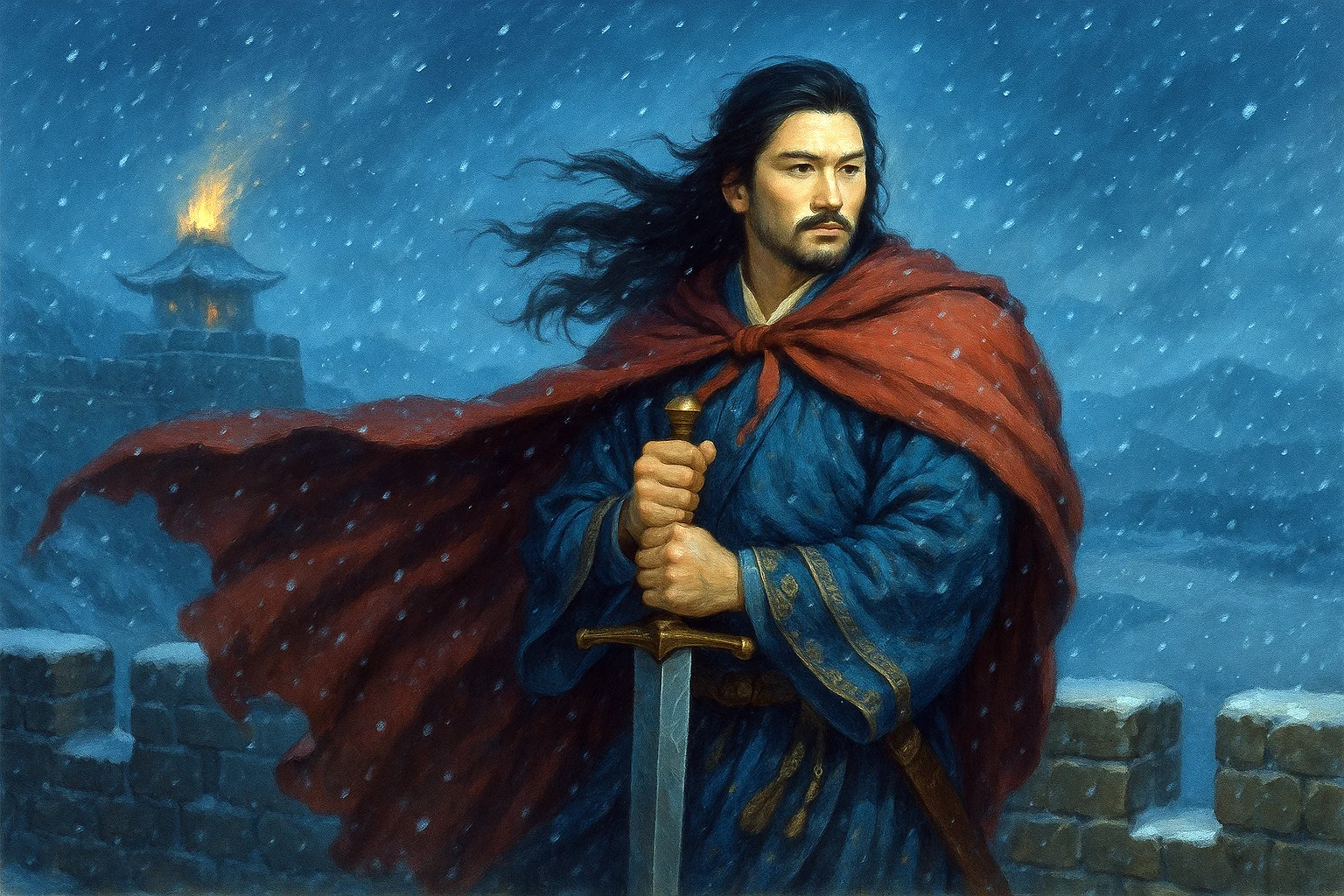
Cén Cān(岑参), 715 - 770 AD, was a native of Jingzhou, Hubei Province. He studied at Mt. Songshan when he was young, and later traveled to Beijing, Luoyang and Shuohe. Cén Cān was famous for his border poems, in which he wrote about the border scenery and the life of generals in a majestic and unrestrained manner, and together with Gao Shi, he was an outstanding representative of the border poetry school of the Sheng Tang Dynasty.