



The leaves are fallen, and the frost doth fly,
And all the air is clarion‑clear and cold;
And lo, where the wide river empties lie,
A hundred leagues the advancing tides unfold.

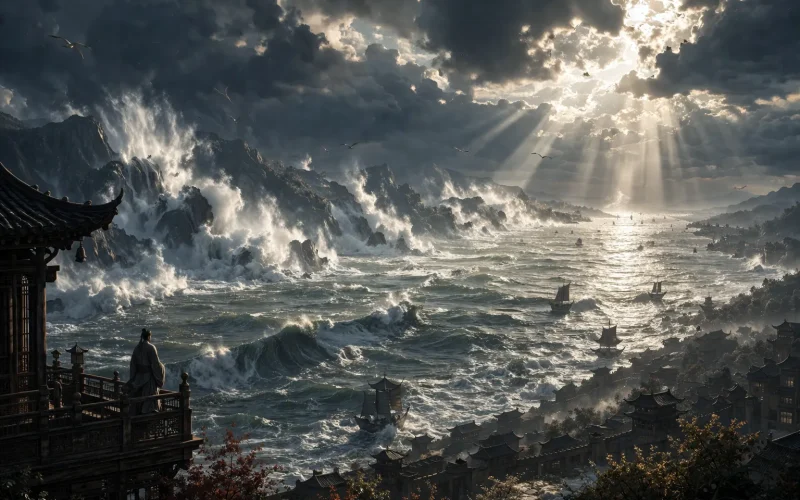
A wind, salt‑sharp, from the unsounded deep
Brings the dank odour of the whale‑path nigh;
And like a burst of snow on crags that keep,
With roar of thunder‑drums the surges cry.

The half‑veiled sun, the cloud‑wrack dim and dun,
Behold the flood that fills the channel’s span;
The merchant‑sails are past, the race is run,
But still the heaving plain of wrath rolls on.

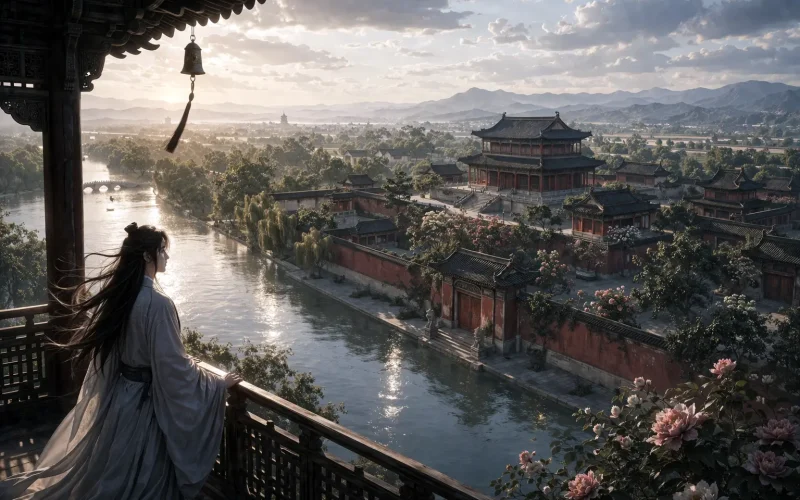
I from the tower at dawn‑time gaze, and find
Thoughts that out‑soar the scene, unbounded, vast;
And round the city, in the autumn wind,
The maple flames, the asters hold them fast.
Original Poem
「观涛」
朱庆馀
木落霜飞天地清,空江百里见潮生。
鲜飙出海鱼龙气,晴雪喷山雷鼓声。
云日半阴川渐满,客帆皆过浪难平。
高楼晓望无穷意,丹叶黄花绕郡城。
Interpretation
This poem is a renowned landscape masterpiece by the Mid-Tang poet Zhu Qingyu. Zhu Qingyu's poetry is known for its elegance and grace, and he excels particularly in depicting female psychology with delicate brushstrokes. However, his landscape poetry also forms a distinctive style of its own, revealing profound thought within its grandeur. This poem was composed during a time when Zhu Qingyu's official career had not yet flourished, while he was residing in the Jiangnan region. At that time, Hangzhou was famous for viewing the Qiantang bore, whose magnificent force was unparalleled in the world. The poet climbed high to watch the billows, being both awed by the majestic spectacle of the autumn river, and moved to sigh by the vicissitudes of the times and the fluctuations of life. The clear autumn of "The leaves fall, frost flies, the world is purified," the vast expanse of "For miles and miles I see the tide on River wide," the dragon-and-fish aura of "The fresh, strong sea wind blows with dragons’ breath," and the thunderous drumming of "The bright snow bursts from hills with thunder-drums’ roar"—all these render the majestic momentum of the Qiantang Bore as thrilling and awe-inspiring. Taking the act of watching the tide as a thread, the entire poem moves from stillness to motion, from motion to thought, from thought to feeling, merging the forces of nature with the sentiments of life. It possesses both the marvelous grandeur of a magnificent spectacle and the profound vastness of deep reflection.
In classical poetry, many have written about watching the bore, some describing its majestic force, others its mighty sound. Zhu Qingyu's poem, however, is uniquely conceived. It begins with "The leaves fall, frost flies, the world is purified," storing the momentum of the surging tide within the solemn stillness of the autumn river. It uses "The fresh, strong sea wind blows with dragons’ breath" and "The bright snow bursts from hills with thunder-drums’ roar" to depict the tide's motion, blending sound and color, thrilling and awe-inspiring. It uses "The sun half veiled, the River’s brimful, wave on wave" and "No sail can quiet the billows" to express thoughts after the tide, subtly implying the unsettled nature of worldly affairs and the insignificance of human effort. It concludes with "From tower high at dawn I gaze with longing eye / At crimson leaves and golden blooms girding the town nearby," turning grandeur into tranquility, transforming emotion into broad-mindedness. The poem's four couplets move from scene to feeling, from feeling to reason, progressing layer by layer. It is a model of "using scene to express the heart" in Tang dynasty landscape poetry.
First Couplet: "木落霜飞天地清,空江百里见潮生。"
Mù luò shuāng fēi tiāndì qīng, kōng jiāng bǎi lǐ jiàn cháo shēng.
The leaves fall, frost flies, the world is purified; For miles and miles I see the tide on River wide.
The poem opens by using the autumn scene to build momentum for watching the tide. "木落霜飞天地清" (The leaves fall, frost flies, the world is purified) writes the seasonal characteristics of clear autumn skies, frosty heavens, and vastness—the word "清" (purified) writes of the clarity of heaven and earth, and also sets a vast, empty background for the tide's entrance. The next line, "空江百里见潮生" (For miles and miles I see the tide on River wide), shifts from stillness to motion, introducing the theme of "watching the tide." "空江百里" (For miles and miles... on River wide) emphasizes the vast openness of the river surface; "见潮生" (I see the tide) writes the dynamic of the tide initially rising, coming from afar. The word "生" (rise) writes the process of the tide emerging from nothingness, from calm to surge, as if the tide is a giant beast birthed by the river surface. Within the couplet, stillness stores motion, clarity writes grandeur, establishing a majestic tone for the entire poem.
Second Couplet: "鲜飙出海鱼龙气,晴雪喷山雷鼓声。"
Xiān biāo chū hǎi yúlóng qì, qíng xuě pēn shān léi gǔ shēng.
The fresh, strong sea wind blows with dragons’ breath, I hear; The bright snow bursts from hills with thunder-drums’ roar sheer.
This couplet is the soul of the entire poem, depicting the tide's force with an extremely imaginative brush. "鲜飙出海鱼龙气" (The fresh, strong sea wind blows with dragons’ breath) writes of the wind—that "鲜飙" (fresh, strong wind) is a fresh yet powerful sea wind, carrying the breath of dragons and fish, as if creatures from the deep sea are also moving with the tide. The three words "鱼龙气" (dragons’ breath), with myth-like imagination, imbue the tide with a mysterious vitality. The next line, "晴雪喷山雷鼓声" (The bright snow bursts from hills with thunder-drums’ roar), writes of the waves—the white waves are like snow, bursting forth like mountains, emitting thunderous, drum-like roars. "晴雪" (bright snow) writes of their white color and abundant force; "喷山" (bursts from hills) writes of their fierce power and wild form; "雷鼓声" (thunder-drums’ roar) writes of their immense sound and awe-inspiring might. This couplet merges the impact of sight and sound, using exaggerated similes to render the majestic momentum of the Qiantang Bore as thrilling and awe-inspiring.
Third Couplet: "云日半阴川渐满,客帆皆过浪难平。"
Yún rì bàn yīn chuān jiàn mǎn, kè fān jiē guò làng nán píng.
The sun half veiled, the River’s brimful, wave on wave; No sail can quiet the billows, though they’re brave.
This couplet shifts from the tide's force to the poet's reflections, describing the scene after the tide's surge and the poet's contemplation. "云日半阴川渐满" (The sun half veiled, the River’s brimful) writes of the scene where the tide is at its peak, the river surface brimming, and the sky half-darkened—the word "满" (brimful) writes that the tide has reached its peak, the river surface full; "半阴" (half veiled) writes of the dimming daylight, as if heaven and earth are also awed by the tide's force. The next line, "客帆皆过浪难平" (No sail can quiet the billows), shifts from scene to thought. "客帆皆过" (No sail can quiet) writes of the boats sailing back and forth on the river, each going about its business; "浪难平" (the billows) writes that although the tide has passed, its aftermath remains, difficult to calm. These three words "浪难平" are both realistic description and subtle metaphor—what is difficult to calm is the tide, and also the poet's inner feelings about the vicissitudes of worldly affairs. This couplet elevates the natural phenomenon to a reflection on life, subtle and profound.
Fourth Couplet: "高楼晓望无穷意,丹叶黄花绕郡城。"
Gāo lóu xiǎo wàng wúqióng yì, dān yè huáng huā rào jùn chéng.
From tower high at dawn I gaze with longing eye At crimson leaves and golden blooms girding the town nearby.
The final couplet concludes emotion with scene, turning the poem's grandeur into tranquility. "高楼晓望无穷意" (From tower high at dawn I gaze with longing eye) writes of the poet climbing high to gaze into the distance, his heart expanding with the tide, his thoughts reaching as high as the sky—those three words "无穷意" (with longing eye) are the emotion after watching the tide, and also contemplation on life's circumstances. The next line, "丹叶黄花绕郡城" (At crimson leaves and golden blooms girding the town nearby), concludes the whole with an autumn scene. "丹叶" (crimson leaves) and "黄花" (golden blooms) are the colors of autumn, and also symbols of the poet's broad-minded state; the word "绕" (girding) writes of the tranquil beauty of autumn colors surrounding the town, echoing the "木落霜飞" (The leaves fall, frost flies) of the first couplet. This couplet concludes the majestic tide force with a tranquil autumn scene, guiding the poem's emotion from agitation to broad-mindedness, with lingering resonance.
Holistic Appreciation
This is a powerful work among Zhu Qingyu's landscape poems. The entire poem consists of eight lines and fifty-six characters. Taking the act of watching the tide as a thread, it merges the solemn stillness of the autumn river, the majestic grandeur of the tide, the contemplation of tide-watching, and the broad-mindedness of autumn scenery, revealing the poet's expansive mind and profound philosophy.
Structurally, the poem presents a progressive sequence from stillness to motion, from motion to thought, from thought to feeling. The first couplet begins with the still scene of "The leaves fall, frost flies," storing dynamic momentum with "I see the tide." The second couplet uses "dragons’ breath" and "thunder-drums’ roar" to write of the tide's grandeur, pushing the dynamic momentum to its climax. The third couplet uses "The River’s brimful" and "the billows" to express thoughts after the tide, shifting from nature to life. The fourth couplet concludes with "with longing eye" and "crimson leaves and golden blooms," turning grandeur into broad-mindedness. Between the four couplets, it moves from stillness to motion, from motion to thought, from thought to feeling, progressing layer by layer, forming a seamless whole.
Thematically, the core of this poem lies in the three words "浪难平" (the billows). That "浪难平" is the aftermath of the tide, and also the ripples in the poet's heart; it is the mighty force of nature, and also the impermanence of life. These two words "难平" (can... quiet) are both a realistic depiction of the tide's force and a subtle metaphor for the vicissitudes of worldly affairs—the tide will ultimately subside, yet the waves in the human heart, the undulations of worldly affairs, are difficult to calm. The poet concludes with "From tower high at dawn I gaze with longing eye," transforming this emotion into broad-minded gazing into the distance, finding a measure of tranquility and detachment within the autumn colors.
Artistically, the poem's most moving aspect lies in the ingenious conception of "using scene to express the heart, using motion to write stillness." The poet uses "The leaves fall, frost flies" to write stillness, uses "I see the tide" to write motion; uses "dragons’ breath" and "thunder-drums’ roar" to write the tide's grandeur, uses "crimson leaves and golden blooms" to write autumn's tranquility. Between motion and stillness, the forces of nature intertwine with the sentiments of life, grandeur coexists with broad-mindedness, giving the poem both the serene distance of landscape poetry and the majestic vigor of frontier poetry.
Artistic Merits
- Using Stillness to Store Motion, Clear Layers: Using the still scene of "The leaves fall, frost flies" to store the momentum of the surging tide, introducing dynamic scenery with "I see the tide." Stillness and motion engender each other, the layers are clear.
- Sound and Color Blended, Majestic Momentum: Using "dragons’ breath" to write the wind, using "thunder-drums’ roar" to write the waves. The impact of sight and sound merges into one, thrilling and awe-inspiring.
- Using Scene to Imply Thought, Subtle and Profound: Using "the billows" to subtly imply the unsettled nature of worldly affairs and the insignificance of human effort. Elevating natural imagery to reflections on life.
- Beginning and End Echo, Structure Seamless: Beginning with "The leaves fall, frost flies," concluding with "crimson leaves and golden blooms." Autumn scenery runs through the entire poem, beginning and end echo, forming a seamless whole.
Insights
This poem, through an act of watching the tide, speaks to an eternal theme—Life is like the tide, with its rises and falls; only by climbing high and gazing far can one perceive broad-mindedness within grandeur, find tranquility amidst the waves.
First, it lets us see "the mighty force of nature." That tide of "The fresh, strong sea wind blows with dragons’ breath, I hear; / The bright snow bursts from hills with thunder-drums’ roar" is one of the most majestic forces between heaven and earth. Before such power, humans are as insignificant as dust. It reminds us: Only by revering nature can we perceive our own limitations; only by placing ourselves within grandeur can we let go of daily trivialities.
On a deeper level, this poem makes us contemplate the meaning of "浪难平" (the billows). The tide will ultimately subside, yet the waves in the human heart, the undulations of worldly affairs, are difficult to calm. The poet concludes with "From tower high at dawn I gaze with longing eye," transforming this emotion into broad-minded gazing into the distance. It makes us understand: Facing the rises and falls of life, only by maintaining the posture of "climbing high and gazing far" can one avoid being swallowed by the giant waves, avoid being trapped by the vicissitudes.
And what is most thought-provoking is the poem's tranquility of "crimson leaves and golden blooms girding the town." The majestic tide will ultimately recede, yet the autumn colors remain, the crimson leaves and golden blooms remain. This technique of returning from grandeur to tranquility, from agitation to broad-mindedness, is precisely a portrayal of the poet's inner realm—true strength is not eternal agitation, but the ability to maintain inner clarity and broad-mindedness even after agitation.**
This poem writes of the Mid-Tang Qiantang Bore, yet it allows everyone facing life's fluctuations, the vicissitudes of worldly affairs, to find resonance within it. The clear autumn of "The leaves fall, frost flies, the world is purified" is the backdrop in the eyes of every contemplative person. The grandeur of "For miles and miles I see the tide on River wide" is the awe in the heart of every observer of the world. The emotion of "the billows" is the shared sigh of everyone who has experienced ups and downs. The tranquility of "crimson leaves and golden blooms girding the town" is the final destination for everyone who remains composed after the winds and waves. This is the vitality of poetry: it writes of Zhu Qingyu watching the billows, but one reads of people in all eras who, amidst the rising and falling tides, still climb high and gaze far.
About the Poet
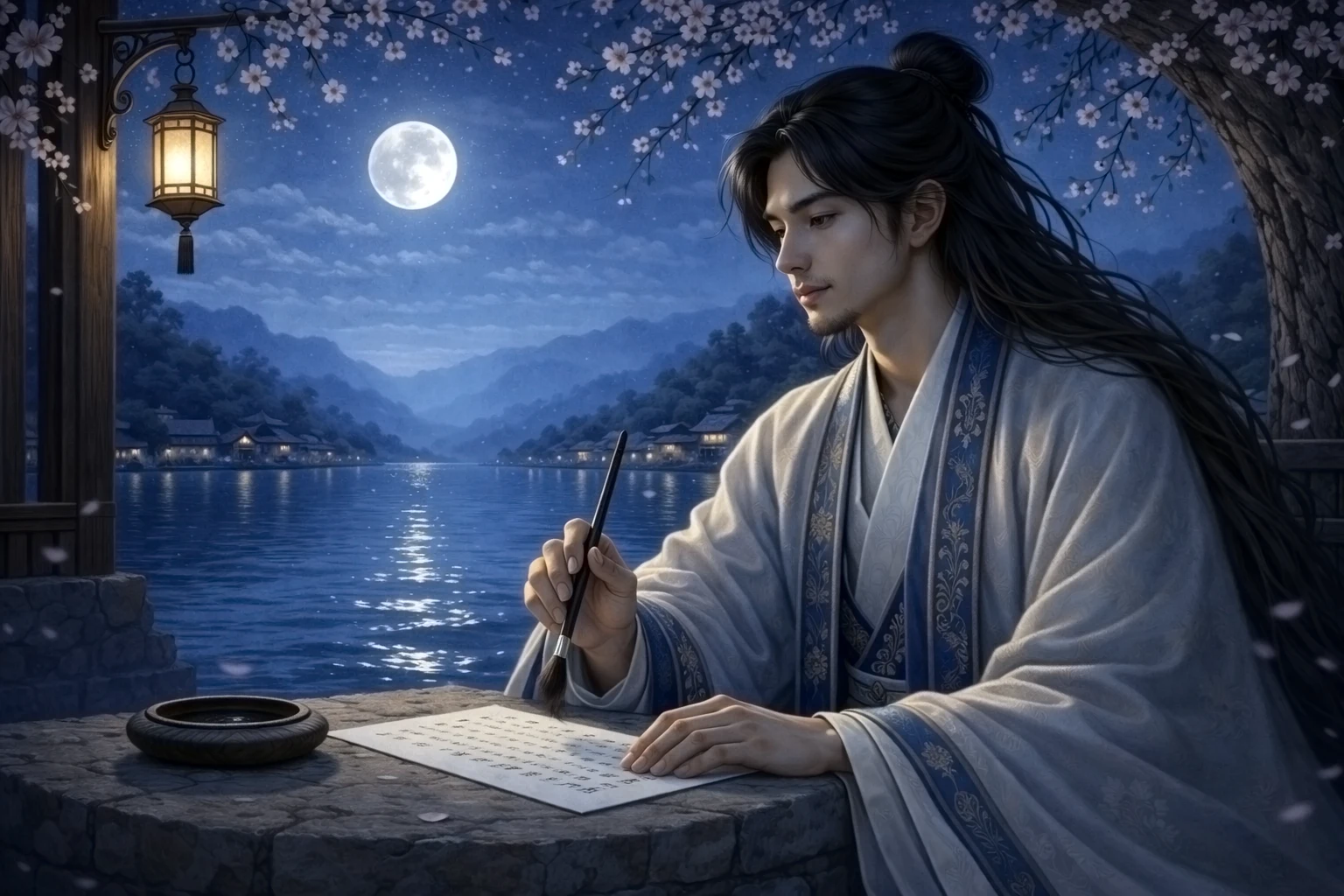
Zhu Qingyu (朱庆馀 dates of birth and death unknown), also known by his given name Kejiu, was a poet of the Mid-Tang period, a native of Yuezhou (present-day Shaoxing, Zhejiang Province). He passed the jinshi examination in the second year of the Baoli era (826 AD) and held the position of Collator in the Imperial Library. His poetry excelled in the five-character regulated verse style, characterized by a refined and subtle elegance, with particular skill in depicting the emotions of boudoir women and palace maidens. In the Complete Tang Poems, two volumes containing 177 of his works are preserved. He was adept at using allegorical and metaphorical techniques, blending everyday emotions with political aspirations. Although not many of his poems survive, his exquisite craftsmanship secures him a unique place in the history of Tang poetry, with his poem Boudoir Sentiments becoming a quintessential example of the fusion of examination-themed and boudoir poetry in later generations.