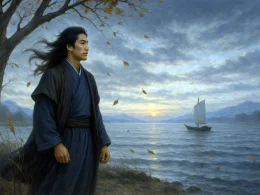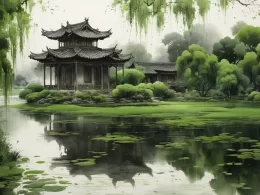



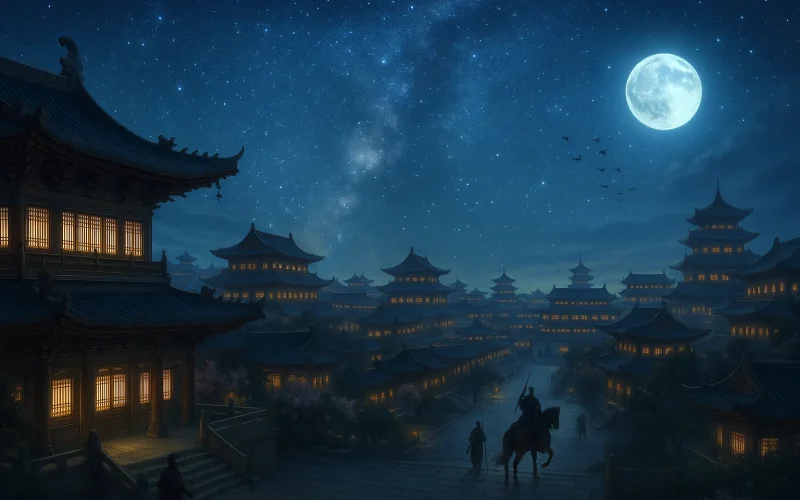
Flowers are shadowed, the palace darkens,
Birds twitter by for a place to perch;
Heaven's ten thousand windows are twinkling,
And nine cloud-terraces are gleaming in the moonlight.
...While I wait for the golden lock to turn,
I hear jade pendants tinkling in the wind...
I have a petition to present in the morning,
All night I ask what time it is.
Original Poem
「春宿左省」
杜甫
花隐掖垣暮,啾啾栖鸟过。
星临万户动,月傍九霄多。
不寝听金钥,因风想玉珂。
明朝有封事,数问夜如何。
Interpretation
This poem was composed in the spring of 758 AD, during Du Fu's service as a Reminder of the Left under Emperor Suzong. Although this was a low-ranking position (lower eighth grade), it was a coveted "proximity post" with the duty of remonstrance, granting him the right to advise the emperor directly or submit confidential memorials. For Du Fu, who had endured the chaos of the An Lushan Rebellion and a perilous escape to Fengxiang, this appointment finally offered a real chance to pursue his political ideals. While on night duty at the Chancellery, his heart filled with the sincere ambition to "make his sovereign surpass the sage-kings Yao and Shun" and a deep hope for the dynasty's restoration, he distilled the observations, sounds, and thoughts of a single night into this masterful portrait of devoted diligence and solemn duty.
First Couplet: 花隐掖垣暮,啾啾栖鸟过。
Huā yǐn yè yuán mù, jiū jiū qī niǎo guò.
Flowers fade by palace walls in the gathering gloom; / Past chirp the birds that seek their nests and home.
The opening paints a tranquil dusk scene at the government compound. "Flowers fade… in the gathering gloom" describes the subtle fading of light, coinciding with the start of the poet's night watch. "Palace walls" locates the scene and suggests the compound's solemn atmosphere. The image of "birds that seek their nests" is especially telling: as all creatures settle for the night, the poet himself prepares for a long vigil, foreshadowing his wakefulness. The quiet twilight scene is charged with a distinct sense of purpose and anticipation.
Second Couplet: 星临万户动,月傍九霄多。
Xīng lín wàn hù dòng, yuè bàng jiǔ xiāo duō.
Stars descend upon a thousand doors, a shimmering sight; / The moon leans on the highest heavens, lavishing its light.
As night deepens, the poet contemplates the sky above the palace. This couplet depicts the imperial grounds under the night sky with majestic precision. In "Stars descend… a shimmering sight," the word "shimmering" captures the twinkling starlight and seems to impart a living pulse to the silent palace complex. In "The moon leans… lavishing its light," the word "lavishing" conveys the moon's radiant abundance, made fuller and brighter by the palace towers reaching toward the sky. The description is both visually grand and symbolically rich, reflecting the poet's awe before the imperial authority and his hope for a national revival.
Third Couplet: 不寝听金钥,因风想玉珂。
Bù qǐn tīng jīn yuè, yīn fēng xiǎng yù kē.
Sleepless, I listen for the golden lock's turning sound; / The wind brings to mind girdle-jades that tinkle all around.
The focus shifts inward to the poet's state of mind. "Sleepless" is the key. He listens intently, perhaps imagining the sound of the "golden lock" on the palace gates—a sign of both his vigilance and his keen anticipation for the dawn audience. "The wind brings to mind…" takes a further imaginative leap: the night breeze seems to carry the imagined tinkling of officials' jade ornaments as they approach the court. This blending of actual sound and imagined anticipation masterfully conveys how the poet's mind is already fixed on the coming day's duties.
Fourth Couplet: 明朝有封事,数问夜如何。
Míng cháo yǒu fēng shì, shuò wèn yè rúhé.
At dawn, a sealed memorial awaits—such is my task; / "How goes the night?" is all that I can think to ask.
The concluding couplet states plainly the reason for his wakefulness, tying the previous imagery and mood to the concrete duty of presenting a "sealed memorial." The simple, repeated question—"How goes the night?"—powerfully captures the image of an official so consumed by his weighty responsibility that he anxiously counts the hours. The poem ends on this note of solemn expectancy, leaving the reader to sense the poet's mix of earnest concern, grave duty, and hopeful purpose.
Holistic Appreciation
The entire poem is structured around the experience of "staying the night on duty." It follows the natural progression of time, from dusk to the anxious wait for dawn, while tracing the poet's deepening emotional focus. The first half depicts the compound at night, moving from the fading flowers at dusk to the lofty stars and moon, with the scenery itself reflecting the poet's solemn frame of mind. The second half reveals the poet's state of anticipation, from wakeful listening, to imagined sounds, and finally to repeated questions about the time. The four couplets form a complete arc, presenting not just the passage of a night but a profound portrait of a devoted official, from his perception of the external world to his inner sense of mission. Throughout, the poet's reverence, diligence, and loyalty are felt without being directly stated.
Artistic Merits
- Scene Sets the Mood with Clear Transitions: The first half describes the setting, the second expresses emotion. The description moves logically from nearby flowers and walls to the distant stars and moon, creating a quiet, solemn atmosphere that perfectly sets the stage for the introspective second half.
- Vivid Detail and Psychological Depth: Details like listening for the lock, imagining the jade ornaments, and asking about the time are specific to the experience of a night watch. They make the abstract virtue of "diligence" tangible and relatable, creating a strong sense of realism.
- Precise Diction and a Blend of Real and Imagined: Verbs like "fade," "shimmering," "lavishing," "listen," and "brings to mind" are chosen with great care to depict both external movement and internal thought. The imagined sounds ("golden lock's turning sound," "girdle-jades") are especially effective in conveying eager anticipation.
- Tight Structure with Resonant Motifs: The poem follows a clear timeline from dusk to the concern for dawn. The opening image of birds returning to roost contrasts with the poet's own wakefulness. The mid-poem vision of the moon near the "highest heavens" symbolically parallels the poet's desire, stated at the end, to convey his counsel to the emperor—a sign of the poem's careful construction.
Insights
This work presents Du Fu as a model Confucian scholar-official, one who "fulfills the duties of his station." His sleepless vigilance and anxious questioning stem not from personal ambition but from a profound sense of responsibility toward his office, his engagement with affairs of state, and his urgent desire to contribute. It reminds us that genuine commitment manifests in an acute awareness of time ("How goes the night?"), an intense focus on detail (listening, imagining), and a conscious alignment of one's own actions with a larger purpose.
The "spirit of the night watch" depicted here remains relevant. It symbolizes a deep respect for one's role, a wholehearted immersion in one's work, and a state of readiness to act on one's convictions. The power of Du Fu's poem lies in showing how such a spirit can imbue even a routine bureaucratic duty with solemn meaning. The heart of loyal service, beating through that quiet spring night, is not merely a trait of individual character but part of the essential moral fabric that sustains a civilization's institutions.
Poem translator
Kiang Kanghu
About the poet
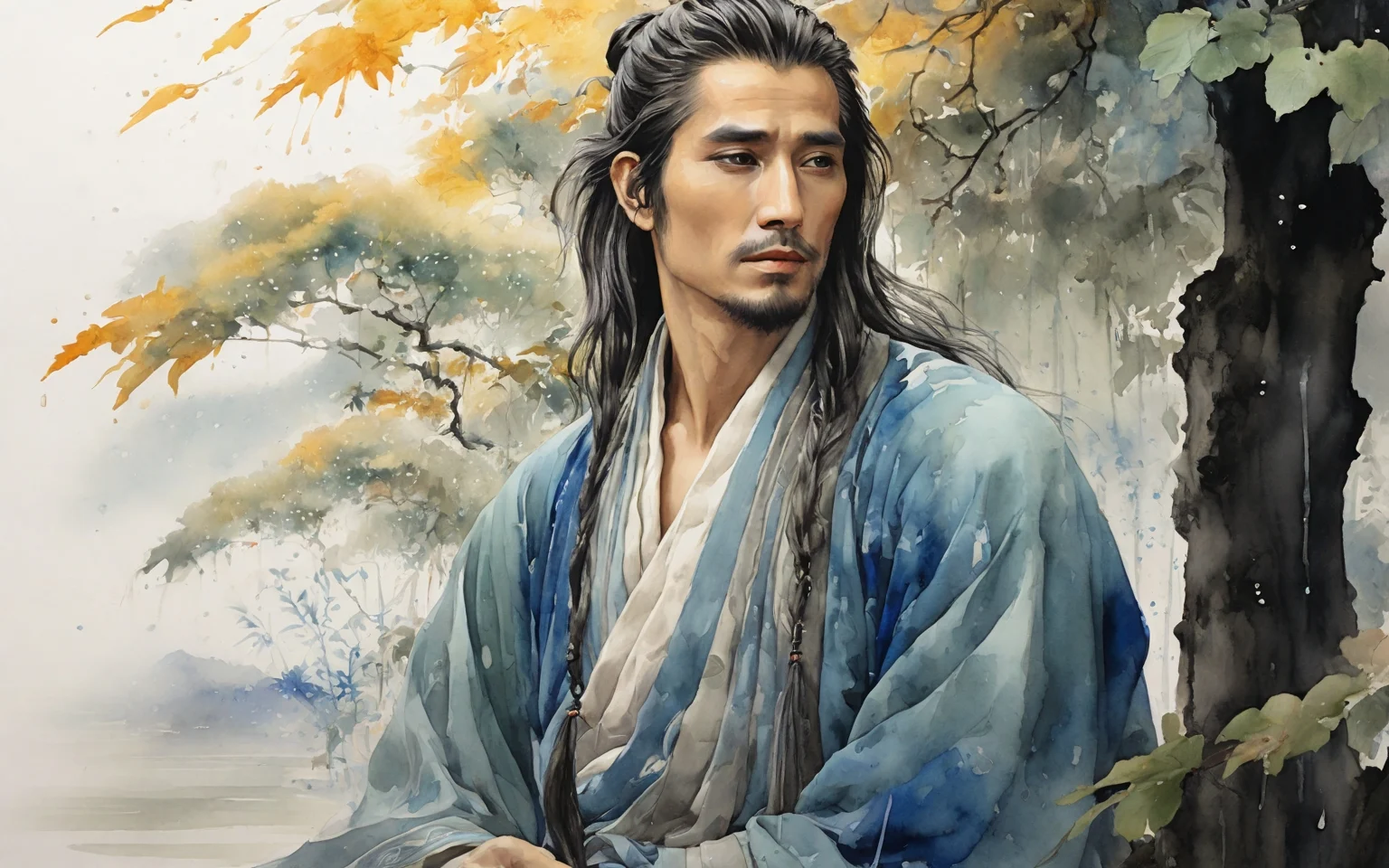
Du Fu (杜甫), 712 - 770 AD, was a great poet of the Tang Dynasty, known as the "Sage of Poetry". Born into a declining bureaucratic family, Du Fu had a rough life, and his turbulent and dislocated life made him keenly aware of the plight of the masses. Therefore, his poems were always closely related to the current affairs, reflecting the social life of that era in a more comprehensive way, with profound thoughts and a broad realm. In his poetic art, he was able to combine many styles, forming a unique style of "profound and thick", and becoming a great realist poet in the history of China.