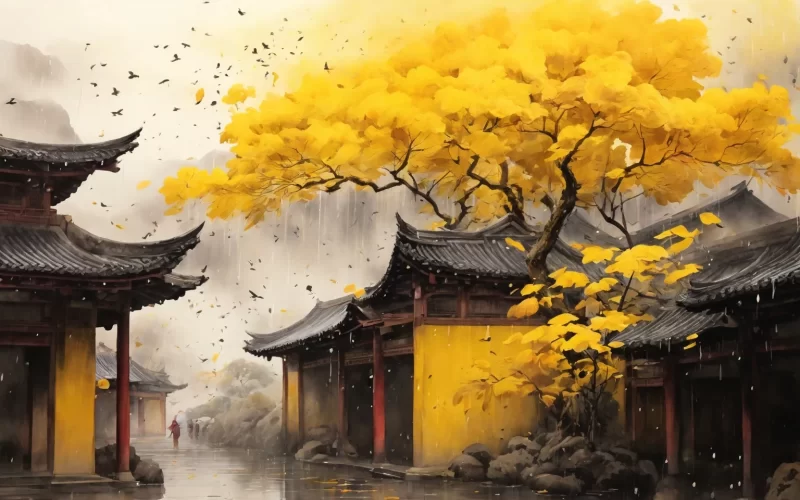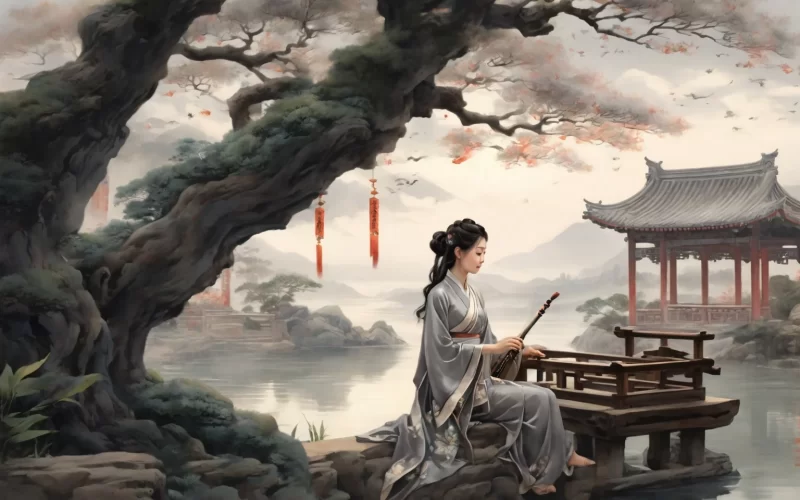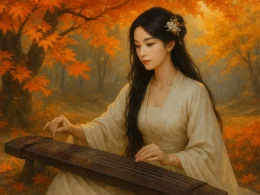

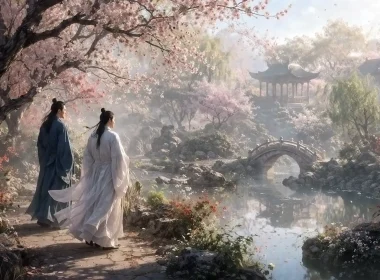
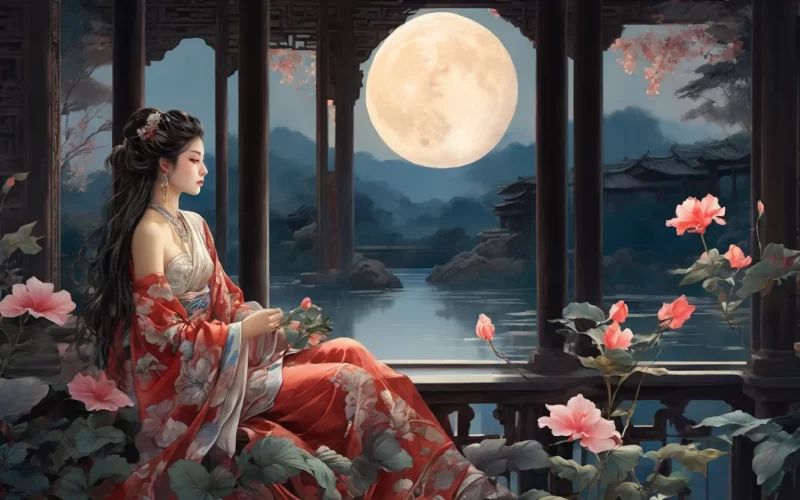
The lotus, for all its hue, is less than her adorning;
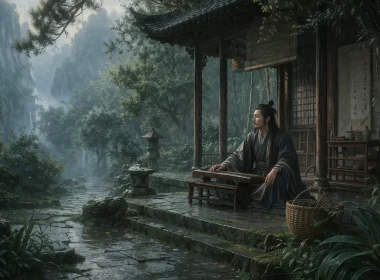
The wind from the lake‑house is scented with jade at morning.

Yet she, her thought brim‑full, will lay the summer fan aside —
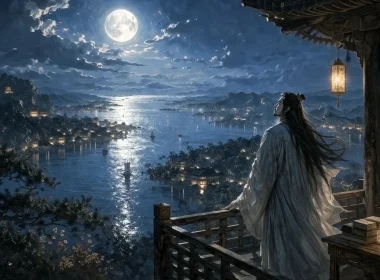
The bright moon hangs, and waits, with nothing left to bide.
Original Poem
「西宫秋怨」
王昌龄
芙蓉不及美人妆,水殿风来珠翠香。
却恨含情掩秋扇,空悬明月待君王。
Interpretation
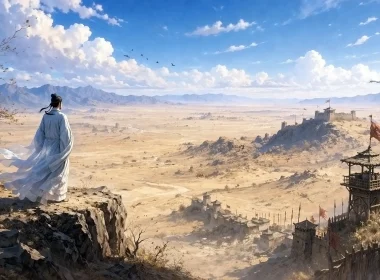
Wang Changling lived during the High Tang period, the golden age of classical Chinese poetry and a time when "palace complaint" poetry flourished. Emperor Xuanzong's harem housed thousands of beauties; many women spent their entire lives without ever catching a glimpse of the emperor. Their youth, beauty, and deep affection were locked behind the high walls of the deep palace, eventually turning into endless waiting and lament. Wang Changling's own official career was fraught with setbacks and repeated demotions; he had a personal understanding of the taste of "being abandoned." When he wrote of palace grievances, was he not also expressing his own feelings about his fate through the experiences of the palace ladies? That palace lady "空悬明月待君王" is like the soldier "不破楼兰终不还"—one grows old in waiting, the other in perseverance. Waiting and perseverance are two sides of the same coin.
First Couplet: "芙蓉不及美人妆,水殿风来珠翠香。"
Fúróng bùjí měirén zhuāng, shuǐ diàn fēng lái zhūcuì xiāng.
Lotus blooms cannot compare with the beauty's adornment;
A breeze through the riverside hall wafts fragrance of pearl and jade.
The opening uses extreme hyperbole to describe the lady's beauty. "Lotus blooms cannot compare with the beauty's adornment"—the lotus is already the gentleman among flowers, pure and elegant, yet it "cannot compare" to the lady's adorned beauty. These two words, "cannot compare," elevate the lady's appearance to the ultimate, as if the most beautiful sight between heaven and earth is not the lotus, not the riverside hall, but this meticulously adorned woman.
"A breeze through the riverside hall wafts fragrance of pearl and jade"—a light breeze passes through the riverside hall, carrying a fragrance of pearls and jade. Pearls and jade themselves are not fragrant; the fragrance comes from the lady's cosmetics, from her very aura. The wind disperses this fragrance, letting the reader sense that this woman is carefully preparing, waiting for someone's arrival. This couplet uses the most ornate brushstrokes to depict the most fervent anticipation—she adorns herself to be more beautiful than the lotus, she lets her fragrance drift on the wind, all for that one person.
Second Couplet: "却恨含情掩秋扇,空悬明月待君王。"
Què hèn hán qíng yǎn qiū shàn, kōng xuán míng yuè dài jūnwáng.
Yet, filled with tender feelings, she must hide her autumn fan;
In vain under the bright moon she waits for her royal lord.
This couplet turns sharply, shifting from fervent anticipation to profound disappointment. The two words "Yet, filled" are the turning point of the entire poem and the eruption point of emotion. All the beauty, all the fragrance from before dissolve into nothingness within this "Yet, filled."
"she must hide her autumn fan"—"autumn fan" alludes to a典故 by Consort Ban Jieyu in her "Song of Resentment": "Often I fear the coming of autumn's season, / The cool wind driving away the heat. / Cast aside into the case, / Affection midway cut off." The autumn fan, used in summer and discarded in autumn, metaphorically refers to a woman who has fallen out of favor. This woman, "filled with tender feelings," "must hide" her fan—she is not without feeling, but her deep feelings have no place; she does not wish to be unseen, but can only conceal this affection. "In vain under the bright moon she waits for her royal lord"—the bright moon hangs in vain, shining upon the empty Western Palace and this woman waiting in vain. The two words "in vain" describe both the moon and the person—the moon hangs idly, the person waits idly; the moon is silent, the person is silent. The word "waits" in "waits for her royal lord" is the heaviest word in the poem. She still waits, though she knows it is futile; she still hopes, though she knows it is hopeless. This "waiting" is obsession, is despair, and also the only reason she keeps living.
Overall Appreciation
The first two lines of this poem describe the lady's beauty in the extreme, the last two lines abruptly turn to her lament, achieving an emotional crescendo through intense contrast. The "cannot compare" and "fragrance" of the first two lines, the more beautiful and vibrant they are, make the "hiding her autumn fan" and "In vain under the bright moon" of the last two lines seem all the more desolate and lonely. This technique of "using a joyful scene to express sorrow" doubles the grief.
The poem's language is ornate but not gaudy, its emotion deep and sincere but not explicit. The hyperbole of "cannot compare," the pervading "fragrance," the action of "hiding," the obsession of "waits"—each word is meticulously crafted yet seems effortless. Particularly the final seven characters, "空悬明月待君王", fuse time (a moonlit night), space (the Western Palace), character (the palace lady), and emotion (waiting) into one, forming an eternal picture of waiting. Compared to other palace complaint poems that express feelings directly, this poem is more subtle, restrained, and thought-provoking. The poet does not let the palace lady voice her pain; he only lets us see her beauty, her fragrance, her action of hiding the fan, her posture gazing at the moon. It is precisely this "not stating directly" that makes the pain deeper, the waiting longer.
Artistic Features
- Strong Contrast, Doubling the Sorrow: The first two lines describe the lady's beauty to the extreme, the last two abruptly turn to her lament, using a joyful scene to express sorrow, creating strong emotional tension.
- Natural Allusion, Deepening Meaning: "Autumn fan" alludes to Consort Ban's典故 seamlessly, adding historical depth and cultural richness to the poem.
- Exquisite Imagery, Implicit and Suggestive: "Lotus," "pearl and jade," "autumn fan," "bright moon"—each image carries rich cultural connotations, yet feels natural and fitting.
- Concise Ending, Lingering Resonance: The seven characters "空悬明月待君王" condense time, space, character, and emotion into one point; the words end but the meaning is endless.
Insights
This poem first illuminates for us the two sides of anticipation and disappointment. The palace lady meticulously adorns herself, more beautiful than the lotus, lets her fragrance drift on the wind, all to wait for the emperor. Yet the result of her waiting is "空悬明月" and "掩秋扇". All her beauty becomes the backdrop to her loneliness; all her anticipation becomes the foundation of her disappointment. It tells us: The greater the anticipation, the deeper the disappointment. This is not to say one should not hope, but to maintain clarity about hope—hope can be a reason to live, and it can also be a source of pain.
The word "掩" (hide) in "却恨含情掩秋扇" also leads us to consider the concealment and expression of emotion. This woman is not without feeling, but "含情" yet can only "掩". Her emotions have no place, cannot be expressed; they can only be hidden behind the autumn fan, concealed within the deep palace. This "concealment of emotion" is the fate of the palace lady, and also the plight of many modern people. It reveals: Emotions need an outlet, need expression. If they can only be "hidden," if they can only be "concealed," then emotions become a burden, become pain.
The word "待" (wait) in "空悬明月待君王" also prompts us to reflect on the meaning and limits of waiting. This palace lady, knowing full well she may wait in vain, knowing the result of waiting is "in vain," still "waits." This "waiting" is obsession, is perseverance, and is also, in a sense, resistance—she uses "waiting" to prove her existence, uses "waiting" to defy the fate of being forgotten. It reveals: The act of waiting itself is an attitude. Even if the desired result never comes, the process of waiting defines who we are.
Finally, the figure of the woman waiting alone under the bright moon is especially moving. She is more beautiful than the lotus, her fragrance drifts on the wind, but no one sees, no one smells. She can only "掩秋扇", can only "待君王". This posture of maintaining beauty where no one sees, this obsession of continuing to wait when there is no response is the most profound emotional experience Wang Changling leaves us. It teaches us: True value lies not in being seen, but in being true to oneself. Even if unseen, one must bloom like the lotus; even if unanswered, one must wait under the bright moon. For this blooming, this waiting, defines who we are.
Poem translator
Xu Yuanchong (许渊冲)
About the poet
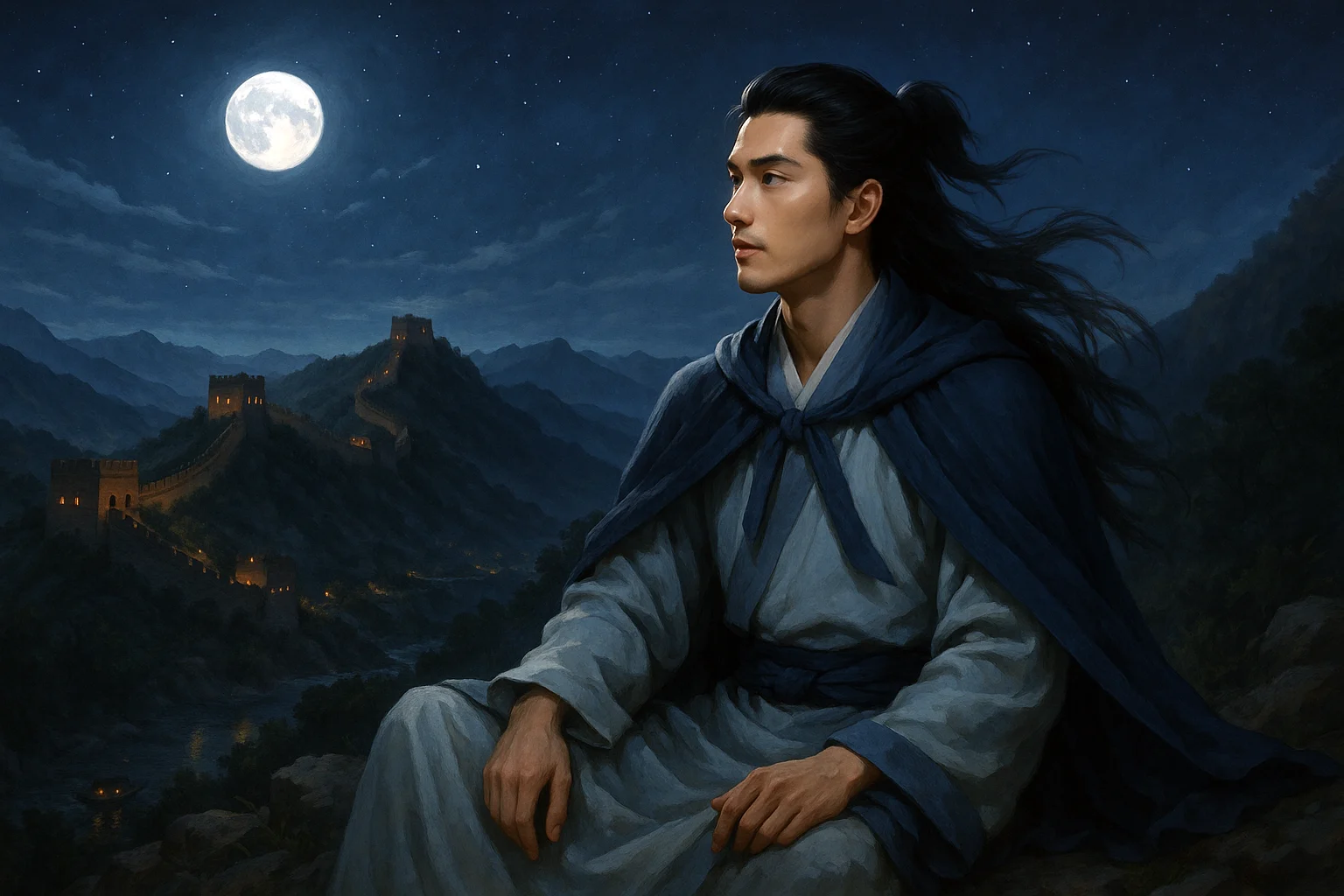
Wang Changling (王昌龄), circa A.D. 690 - 756, was a native of Xi'an, Shaanxi Province. Wang Changling's poems were mostly about the Border Places, love affairs and farewells, and he was well known during his lifetime. His seven poems are equal to those of Li Bai, and he is known as the “Master of seven lines”.