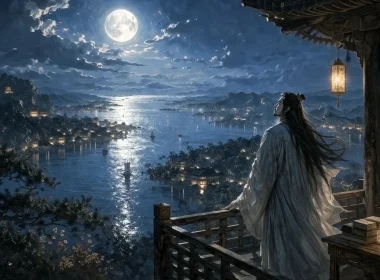
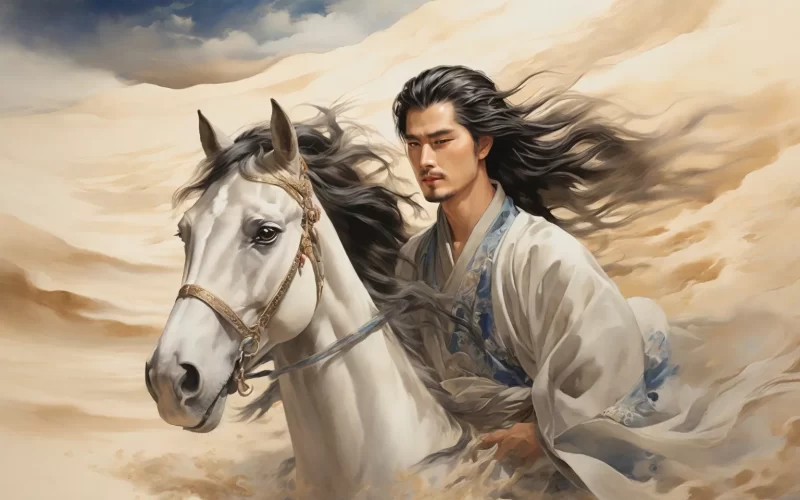
Cicadas complain of thin mulberry-trees
In the Eighth-month chill at the frontier pass.
Through the gate and back again, all along the road,
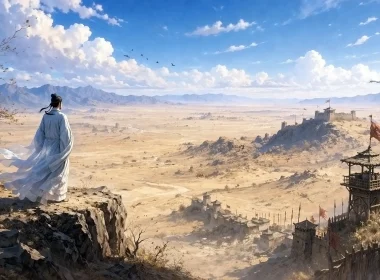
There is nothing anywhere but yellow reeds and grasses
And the bones of soldiers from You and from Bing
Who have buried their lives in the dusty sand.
...Let never a cavalier stir you to envy.
With boasts of his horse and his horsemanship.
Original Poem
「塞上曲」
王昌龄
蝉鸣空桑林,八月萧关道。
出塞复入塞,处处黄芦草。
从来幽并客,皆向沙场老。
莫学游侠儿,矜夸紫骝好。
Interpretation
Wang Changling lived during the High Tang period, the era of the Tang Dynasty's greatest national power and most illustrious military achievements on the frontier. Countless young men, embracing the dream that "功名只向马上取" (Merit and fame are only won on horseback), flocked to the border regions, eager to achieve glory and establish careers. As a result, frontier poetry became a mainstream genre in High Tang verse, with celebrating bravery and praising sacrifice as its dominant themes.
Yet Wang Changling's work here voices a different sentiment. In his early years, he traveled extensively in the northwestern frontier, experiencing border life firsthand. He witnessed the hardship of "黄沙百战穿金甲" (Through a hundred battles in the yellow sands, golden armor is pierced) and the horror of "白骨乱蓬蒿" (Bleached bones lie scattered among the weeds). His attitude towards war was complex: on one hand, he understood the soldiers' loyalty and courage; on the other, he was deeply aware of the suffering and futility war brings. This poem precisely embodies this complex attitude. It contains both the autumn frontier scene of "蝉鸣空桑林" and the desolate bleakness of "处处黄芦草"; it holds the compassionate sigh of "从来幽并客,皆向沙场老" and, more significantly, the stern admonition of "莫学游侠儿,矜夸紫骝好". This is not a poem glorifying war, but a poem reflecting upon it and admonishing the world. It allows us to see that behind the celebrated "merit and fame" lies the fate of countless people growing old on the battlefield.
First Couplet: "蝉鸣空桑林,八月萧关道。"
Chán míng kōng sānglín, bā yuè Xiāoguān dào.
Cicadas shrill in the barren mulberry grove,
On the road to Xiaoguan Pass in the eighth moon.
The opening creates a desolate atmosphere of the frontier autumn through the dual evocation of sound and sight. "蝉鸣"—Cicadas chirp in autumn, their sound plaintive, as if weeping and lamenting. "空桑林"—The mulberry grove is empty, its leaves all fallen, leaving only bare branches. The word "空" (empty/barren) depicts visual desolation and also implies inner emptiness.
"八月萧关道"—The eighth lunar month is deep autumn; Xiaoguan Pass, located in present-day Gansu, was a vital frontier defense point. The poet specifies the time and place, immersing the reader on that ancient road to the frontier. This couplet uses sound to convey sorrow and imagery to convey desolation, establishing the poem's somber tone.
Second Couplet: "出塞复入塞,处处黄芦草。"
Chū sài fù rù sài, chùchù huáng lúcǎo.
Out of the Pass, back into the Pass, again and again;
Everywhere, yellowing reeds and grass.
This couplet describes the ceaseless movement of the garrison soldiers and the barrenness of their surroundings. "出塞复入塞"—The word "复" (again/repeatedly) conveys endless repetition. Not a single campaign, but countless ones; not a brief stay, but years of toil. These soldiers spend their entire lives in this cycle of exiting and re-entering the frontier passes.
"处处黄芦草"—Yellow reeds are the most common plant on the frontier, withering and yellowing in autumn, swaying in the wind. The phrase "处处" (everywhere) emphasizes the pervasiveness of this desolation—wherever one goes, one sees these yellowing reeds, this boundless barrenness. This couplet uses "复" to convey the length of time and "处处" the vastness of space, exhaustively depicting the hardship and bleakness of frontier garrison life.
Third Couplet: "从来幽并客,皆向沙场老。"
Cónglái Yōu Bīng kè, jiē xiàng shāchǎng lǎo.
Since time out of mind, men from You and Bing,
All have gone to grow old on the battlefield.
This couplet shifts from the scene before the eyes to a lament on history. "幽并" refers to Youzhou (northern Hebei) and Bingzhou (northern Shanxi), ancient regions renowned for producing brave warriors. Cao Zhi's "Ode to the White Horse" once wrote of "幽并游侠儿" (the wandering knights of You and Bing), full of heroic spirit. But Wang Changling says: "从来幽并客,皆向沙场老"—Those once high-spirited youths ultimately exhaust their youth on the battlefield, grow old, and die there.
The word "皆" (all) in "皆向沙场老" expresses the universality of this fate and the poet's compassion. It is not one person, not one generation, but has "从来" (since time out of mind) been this way, for generations. This couplet uses historical depth to write of individual fate, lending the compassion a thickness of time.
Fourth Couplet: "莫学游侠儿,矜夸紫骝好。"
Mò xué yóuxiá ér, jīnkuā zǐliú hǎo.
Do not emulate those wandering bravos,
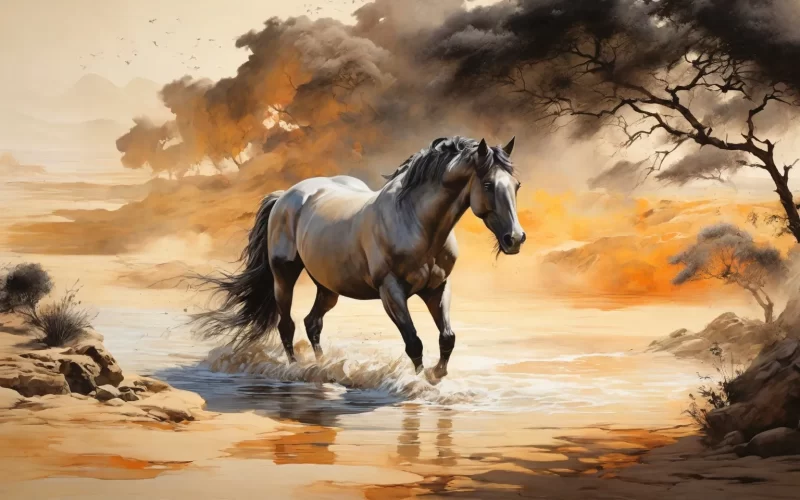
Boasting of their fine purple-steeds.
The final couplet is the poet's admonition and the poem's central message. "游侠儿" refers to those young men fond of fighting and showing off their martial prowess. They ride their fine purple-steeds, swagger through the streets, boast and brag, thinking war is a shortcut to merit and fame, the battlefield a stage for heroes. The poet says: "莫学"—Do not emulate them. "矜夸紫骝好"—They only know how to boast of their fine horses and sharp weapons, but are ignorant of war's cruelty, ignorant of the bleakness of "growing old on the battlefield". This couplet concludes the poem with stern satire, directing its critical edge at those who speak lightly of war.
Holistic Appreciation
Beginning with a frontier autumn scene and concluding with an admonition to the world, this poem accomplishes a profound reflection on war within a desolate landscape. The first couplet uses "蝉鸣空桑林" and "八月萧关道" to depict the frontier's bleakness, setting the poem's tone. The second uses "出塞复入塞" and "处处黄芦草" to describe the soldiers' toil and the environment's barrenness. The third uses "从来幽并客,皆向沙场老" to express historical compassion. The fourth uses "莫学游侠儿,矜夸紫骝好" to deliver its admonishment and satire.
The entire poem is simple in language, somber in emotion. It contains no impassioned cries, only calm observation and sorrowful sighs. The mournfulness of the "cicadas' shrill", the desolation of the "yellowing reeds", the bleakness of "growing old on the battlefield", and the admonition of "Do not emulate"—these are the poet's most authentic feelings about war and his most sincere warning to the world. Compared to poems celebrating "Through a hundred battles in the yellow sands, golden armor is pierced", this poem is more sober, more profound. It does not praise from a hero's perspective, but pities from an ordinary person's; it does not justify war, but questions it. This depth of reflection makes this poem unique among frontier poetry.
Artistic Merits
- Commencing with Scene, Fusing Emotion and Setting: The first couplet uses "cicadas shrill" and "barren mulberry grove" to depict autumn's bleakness, establishing the poem's somber tone, achieving a high unity of scene and feeling.
- Historical Depth, Profound Compassion: "从来幽并客,皆向沙场老" views individual fate through a historical lens, lending the compassion a temporal depth.
- Stern Satire, Potent Admonition: "莫学游侠儿,矜夸紫骝好" concludes with stern satire, directing its critical thrust at those who speak lightly of war, each word carrying immense weight.
- Simple Language, Profound Meaning: The poem's language is concise and plain, yet contains profound reflection on war, life, and value, prompting deep thought in the reader.
Insights
This poem first prompts us to maintain a clear understanding of war. Those "游侠儿" (wandering bravos) see only the handsome appearance of the purple-steed, think only of the glory of achieving merit, but are ignorant of war's true face—the toil of "出塞复入塞" (Out of the Pass, back into the Pass), the desolation of "处处黄芦草" (Everywhere, yellowing reeds and grass), the fate of "皆向沙场老" (All have gone to grow old on the battlefield), the cruelty of countless people exhausting their lives, ultimately turning to bleached bones. It tells us: Do not be deceived by superficial glory; see the cost behind the glory. Whether it is war or any seemingly glorious endeavor, we must calmly consider: Is it worth it? What must be paid?
The word "皆" (all) in "从来幽并客,皆向沙场老" also leads us to contemplate the cycle of history and individual fate. From ancient times to the present, how many young men, drawn by the fantasy of the "游侠儿", have gone to the battlefield, ultimately to "向沙场老" (grow old on the battlefield). The universality of this fate compels us to ask: Have we truly learned from history? Or are we merely repeating the same tragedy? It reveals: Be wary of rhetoric that encourages sacrifice; cherish every individual life. History is written by countless people who "向沙场老", but their names are often forgotten amidst the "黄芦草" (yellowing reeds).
The admonition "莫学游侠儿" (Do not emulate those wandering bravos) also prompts us to reflect on true courage versus false bravery. The bravery of the "游侠儿" is the bravery of "矜夸" (boasting), of ostentation, of ignorance. True bravery should be choosing despite knowing the cost, persisting despite seeing the truth. It reveals: Do not be fooled by superficial "bravery"; distinguish between true courage and false bravery. True courage is silent, clear-eyed, knowing the bleakness of "沙场老" yet still proceeding; false bravery is noisy, blind, knowing only to "矜夸紫骝好" (boast of their fine purple-steeds).
The figure on the "八月萧关道" (road to Xiaoguan Pass in the eighth moon), engaged in "出塞复入塞" (Out of the Pass, back into the Pass), is especially poignant. He has no name, no face; he is merely one among countless frontier garrison soldiers. He moves "出塞复入塞", toils amidst "处处黄芦草", and ultimately "向沙场老". The fate of this ordinary person is more real, and more moving, than any heroic legend. It teaches us: Behind the celebrated "merit and fame" lie the lives and deaths of countless ordinary people. Remembering them, respecting them, is the true understanding of history.
Poem translator
Kiang Kanghu
About the poet
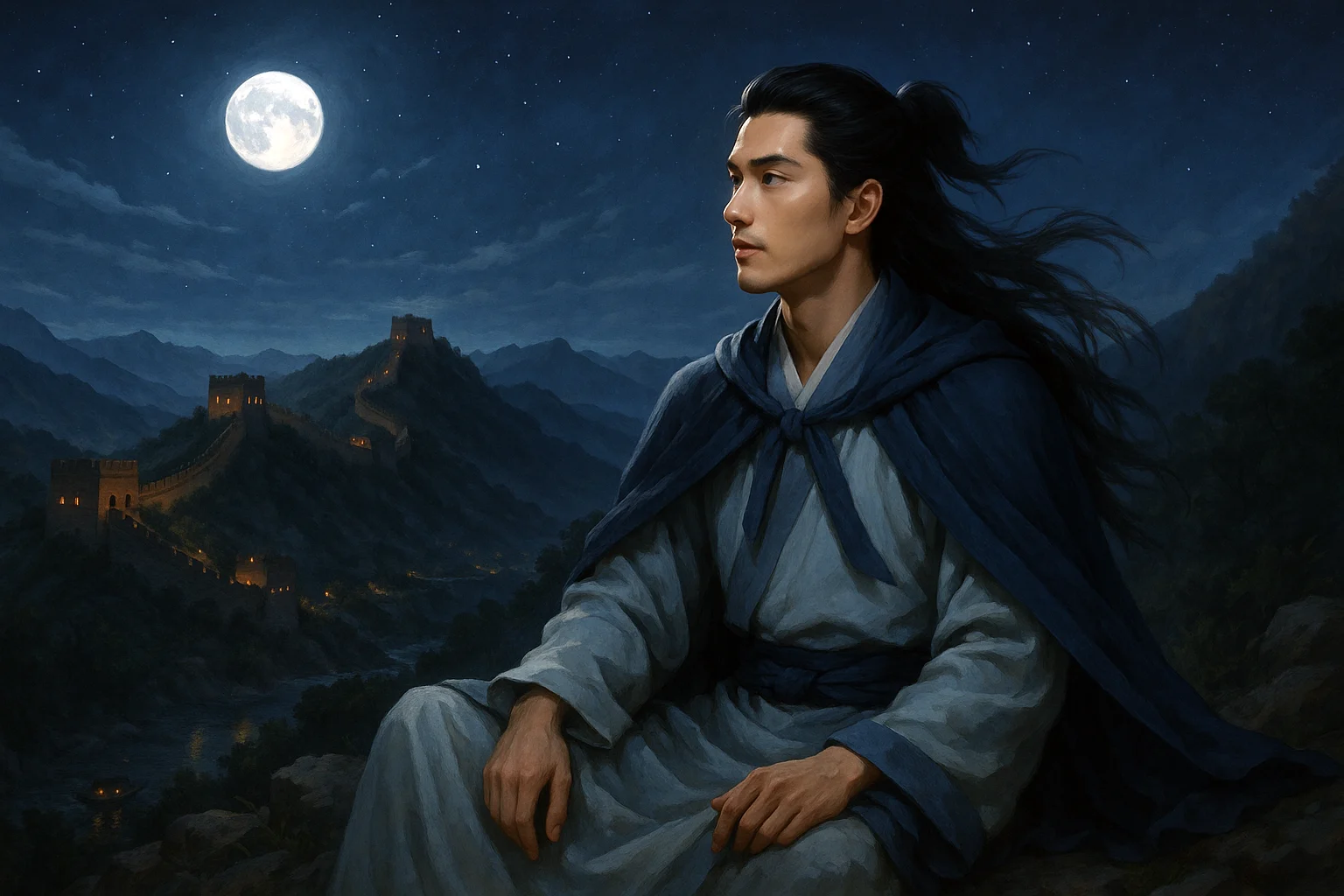
Wang Changling (王昌龄), circa A.D. 690 - 756, was a native of Xi'an, Shaanxi Province. Wang Changling's poems were mostly about the Border Places, love affairs and farewells, and he was well known during his lifetime. His seven poems are equal to those of Li Bai, and he is known as the “Master of seven lines”.