
Dare I, at my age, accept my summons,
Knowing of the world's ways only wine and song?...
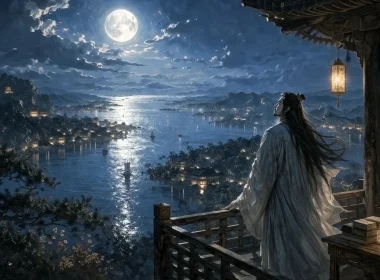
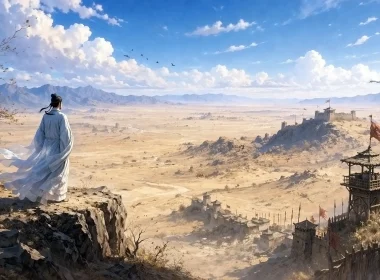
Over the moon-edged river come wildgeese from the Tartars;
And the thinner the leaves along the Huai, the wider the southern mountains...

I ought to be glad to take my old bones back to the capital,
But what am I good for in that world, with my few white hairs?...
As bent and decrepit as you are, I am ashamed to thank you,
When you caution me that I may encounter thunderbolts.
Original Poem
「江州重别薛六柳八二员外」
刘长卿
生涯岂料承优诏,世事空知学醉歌。
江上月明胡雁过,淮南木落楚山多。
寄身且喜沧洲近,顾影无如白发何!
今日龙钟人共老,愧君犹遣慎风波。
Interpretation
This poem was composed during the Dali era of Emperor Daizong of Tang, around AD 766. It was written by Liu Zhangqing as a farewell to his friends Xue the Sixth and Liu the Eighth while passing through Jiangzhou (modern Jiujiang, Jiangxi) on his journey from his demotion post in Panzhou (modern Maoming, Guangdong) to his new, slightly improved appointment in Muzhou (modern Chun'an, Zhejiang). "量移" (liàngyí) was a Tang Dynasty leniency system for demoted officials, allowing relocation from remote areas to nearer prefectures and counties. Although this transfer still carried the stigma of demotion, compared to the savage, miasmic wilds of Panzhou, Muzhou was already part of the wealthy southeastern region. For the poet, this was nothing less than a "fortune within misfortune."
However, behind this "fortune" lay the weighty flavor of life's experience. Since entering officialdom, Liu Zhangqing's life had been marked by the phrase "刚而犯上,两遭迁谪" (unyielding and offending superiors, twice demoted). Having drifted for half a lifetime, he had long seen through the vicissitudes of official life. The years in Panzhou were the darkest page of his career—a land of miasma, with no relatives in sight and no hope of return. Now, though granted a '量移', it came in the years of gray hair and doddering old age. This complex mood of mingled sorrow and joy forms the underlying tone of the poem: a slight relief at escaping hardship, a deep sigh for years misspent; gratitude for the court's "gracious decree," yet knowing it is merely fate's charity; contentment with the "seashore near" for refuge, yet helplessness before the aging body with its "white hair."
Even more precious is the weighty friendship in the poem. The two officials, Xue the Sixth and Liu the Eighth, were likely confidants the poet made amidst the ups and downs of official life. This parting at Jiangzhou would surely have involved farewell words from his friends, urging him to "beware of wind and wave"—referring both to the dangers of river storms and the malice of officialdom and human relations. The poet responds with the word "愧" (kuì, ashamed/grateful)—gratitude for his friends' concern, yet also helplessness at his own situation: I am already a doddering old man, nearing my end, yet I still trouble you to worry for me. This friendship, made more precious in hardship, becomes the poem's warmest light.
First Couplet: "生涯岂料承优诏,世事空知学醉歌。"
Shēngyá qǐliào chéng yōu zhào, shìshì kōng zhī xué zuì gē.
I have not thought to be pardoned for a better life; I know I can do nothing but croon wine-song in strife.
The poem opens with ironic, self-mocking rhetoric. The two words "岂料" (qǐliào, how could I have expected) seem to express pleasant surprise, but are in fact full of satire—after twenty years of vicissitudes in officialdom, he had long ceased to harbor any expectation of a "gracious decree." The three words "承优诏" (chéng yōu zhào, receiving a gracious decree), under the poet's pen, long acquainted with the ways of the world, become a cold self-mockery: the so-called imperial favor is merely moving him from one place of exile to another. The next line, "世事空知学醉歌" (shìshì kōng zhī xué zuì gē, in worldly affairs, vainly I know only to learn the drunken singer's song), turns sharply, moving from satire to lament. The two words "空知" (vainly know) express utter despair regarding worldly affairs—seeing through it, yet powerless to change; understanding it, yet only able to feign ignorance. Thus, he can only "learn the drunken singer's song," drown sorrows in wine, sing wildly in drunkenness, seeking a moment of transcendence in this vain world. This couplet begins with irony and ends in dejection, establishing the poem's tone of mingled sorrow and joy.
Second Couplet: "江上月明胡雁过,淮南木落楚山多。"
Jiāng shàng yuè míng hú yàn guò, Huáinán mù luò Chǔ shān duō.
The moon o'er rivershore brightens northern-going geese; The leaves fall in the south; Chu mountains loom in sight.
The first two lines describe the state of mind; these two lines suddenly shift to describing scenery, yet every phrase is imbued with feeling. "江上月明" (jiāng shàng yuè míng, bright moon over the river) is the actual scene before his eyes, and also a reflection of his state of mind—does not that clear, cold moonlight project the poet's own lonely heart? "胡雁过" (hú yàn guò, northern geese passing) describes the geese flying south, precisely the deep autumn season, also subtly metaphorizing the poet's own drifting north and south like the geese. The next line, "淮南木落楚山多" (Huáinán mù luò Chǔ shān duō, leaves fall in Huainan, Chu mountains appear many), broadens the vista—with leaves fallen in Huainan, the view opens up, making the mountains of Chu seem suddenly numerous. The word "多" (duō, many) is wonderfully used: the mountains are many by nature, yet appear more so because the leaves have fallen; just as sorrow is deep by nature, yet grows heavier because of drifting. This couplet is pure description, yet every word contains emotion, entrusting the poet's loneliness and sorrow on his journey of exile entirely to this river moon, returning geese, fallen leaves, and Chu mountains.
Third Couplet: "寄身且喜沧洲近,顾影无如白发何!"
Jìshēn qiě xǐ cāngzhōu jìn, gù yǐng wú rú báifà hé!
*I'm glad to be nearer to the seashore where I may live; What can I do, seeing my shadow, with white hair shed?**
This couplet's mood shifts from desolation to slight relief, only to be immediately enveloped by deeper helplessness. "寄身且喜" (jìshēn qiě xǐ, finding refuge, I am somewhat glad)—the word "且" (qiě, somewhat, for now) is used with great nuance—not great joy, not wild joy, but merely a sort of gladness, a forced gladness. Because the three words "沧洲近" (cāngzhōu jìn, the seashore is near) are merely a comfort relative to the remote wilderness of Panzhou; compared to truly returning home, it is still the ends of the earth. Yet the poet, after all, is philosophical; he can still find a shred of gladness in this misfortune to console himself. But before this consolation can even unfold, it is shattered by the next line: "顾影无如白发何" (gù yǐng wú rú báifà hé, facing my shadow, what can I do about my white hair?)—looking back at himself, he is already gray-haired, decrepit with age. This "白发" (báifà, white hair) is the brand of time, the witness of misspent years, the condensation of all life's helplessness. The construction "无如...何" (wú rú...hé, can do nothing about...) expresses the utter powerlessness in the face of aging: you can be glad the seashore is near, but you cannot stop white hair from growing; you can accept fate's arrangement, but you cannot reclaim lost years.
Fourth Couplet: "今日龙钟人共老,愧君犹遣慎风波。"
Jīnrì lóngzhōng rén gòng lǎo, kuì jūn yóu qiǎn shèn fēngbō.
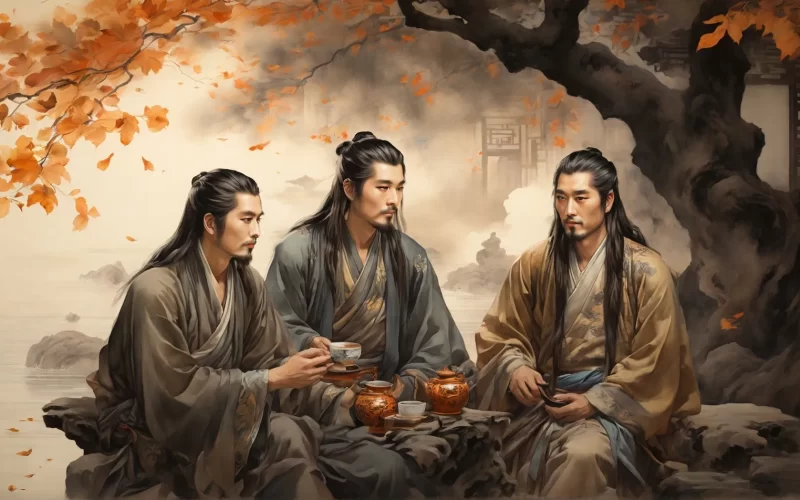
Grown old together with you, I feel ashamed to hear You still bid me beware of the storm far and near!
The final couplet turns the brush towards friendship, concluding the whole with deep feeling. "今日龙钟人共老" (jīnrì lóngzhōng rén gòng lǎo, today, doddering, we grow old together) is both a description of himself and a shared feeling—they are no longer young, both are people in the twilight of their years. The word "共" (gòng, together) gently links the poet's fate with that of his friends: having experienced the same ups and downs of official life, the same vicissitudes of the human world, parting now in old age together. The next line, "愧君犹遣慎风波" (kuì jūn yóu qiǎn shèn fēngbō, ashamed that you still bid me beware of storms), is the emotional climax of the entire poem and its most heart-wrenching point. The word "愧" carries the weight of a thousand jun—as his friends bid farewell, they urged him to "beware of storms," meaning both the perils of river storms and the malice of officialdom and human relations. This concern, this care, warmed the heart of the poet who had drifted for half a lifetime. Yet behind this word "愧" lies even deeper self-sorrow: I am already a doddering old man, nearing my end, yet I still trouble you to worry for me; having experienced a lifetime of hardships, having weathered all storms, how could I not know the dangers of the world? But knowing—what of it? Fate has never been in human hands. This single word "愧" holds gratitude for friendship, helplessness at his own situation, and a deep sigh for the unpredictability of fate.
Holistic Appreciation
This is another powerful work among Liu Zhangqing's poems of exile. The entire poem consists of eight lines and fifty-six characters. Using the farewell at Jiangzhou as its entry point, it merges the sorrowful lament of vicissitudes in official life, the desolation of the autumn river night scene, the helplessness of aging white hair, and the warmth of friends' care, revealing the poet's complex mood of mingled sorrow and joy during his transfer journey.
Structurally, the poem presents a progressive layering from satire to lament, scene to emotion, self to others. The first couplet opens with irony, self-mocking "receiving a gracious decree," self-sighing "learning the drunken singer's song," establishing the poem's tone of cold introspection. The second couplet suddenly shifts to description, using the river moon, returning geese, fallen leaves, and Chu mountains to outline a picture of an autumn night's journey, making the emotions of the previous couplet concrete as a perceptible scene. The third couplet moves from scene to emotion; the interplay of "somewhat glad" and "can do nothing" deepens the flavor of life's experience in the interweaving of relief and helplessness. The fourth couplet moves from self to others, responding to his friends' exhortation with the word "愧," elevating personal sorrow into the warmth of friendship. Between the four couplets, moving from inner to outer and back again, from satire to lament to feeling to shame, the poem deepens layer by layer, forming a seamless whole.
Thematically, the core of this poem lies in the word "愧" (ashamed/grateful). The "how could I have expected" of the first couplet is a cold recognition of fate; the "fallen leaves" and "many mountains" of the second are a silent sigh for a drifting life; the "somewhat glad" and "can do nothing" of the third are the complex flavor of life's experience; the word "愧" in the final couplet gathers all of this to a single point—ashamed of his friends' concern, yet also ashamed of his own fate; ashamed that this doddering body remains that of a drifter; ashamed that a lifetime of hardships has ultimately failed the expectations of confidants. This writing, extending from personal experience to friendship, elevates the poem beyond the typical misery of exile poetry, adding a touch of human warmth.
Artistically, the poem's most moving aspect lies in the polyphonic technique of "mingled sorrow and joy, meaning revealed through irony." The poet writes of "receiving a gracious decree," yet his brush holds satire; he writes of the "seashore near," yet his tone is reluctant; he writes of "growing old together," which is both truth and consolation; he writes of being "ashamed of your words," which is both gratitude and self-sorrow. This technique of sorrow within joy, joy concealing sorrow, appropriately presents the poet's complex and subtle psychological state during his transfer journey, making the reader feel both his bitterness and his authenticity.
Artistic Merits
- Irony in Poetry, Cold Introspection: "How could I have expected a gracious decree" seems like gratitude but is actually satire, using irony to fully express a cold-eyed view of fate and insight into official life.
- Emotion Hidden in Scene, Profound Meaning: The second couplet describes the river moon, returning geese, fallen leaves, Chu mountains—every stroke is scene, yet every stroke is feeling, making intangible sorrow concrete as a perceptible picture.
- Fluctuating Emotion, Clear Structure: Moving from satire to lament, scene to emotion, sorrow to joy and back to sorrow, self to others—the four couplets are like a quartet of emotions, with clear waves and a distinct thread.
- Ending with Feeling, Gentle and Moving: The final couplet concludes with the word "愧," merging gratitude for friendship with helplessness before fate, the words ending but the meaning endless.
Insights
Using the farewell at Jiangzhou as a thread, this poem speaks to an eternal theme—in human life, sorrow and joy are interwoven; fortune and misfortune are often separated by a single thought.
It first allows us to see the "irony of fate." "How could I have expected a gracious decree"—how complex must the poet's heart have been when he wrote these seven characters? That so-called "gracious decree" merely moved him from one place of exile to another, yet he had to be grateful. This trick of fate is the deepest sorrow of exiled literati through the ages: you are forced to accept charity, yet know its wretchedness; you are forced to be grateful, yet know the absurdity of that gratitude. Liu Zhangqing expresses it with irony—a cold eye on fate, and also a self-mockery.
On a deeper level, this poem prompts us to contemplate the "dialectic of gain and loss." "Finding refuge, I am somewhat glad the seashore is near"—from Panzhou to Muzhou was indeed a "gladness." But this gladness is "somewhat glad," a sort of gladness, a gladness relative to a worse situation. The poet tells us: the joys of life are often not absolute, but relative; not essential, but comparative. Finding a shred of gladness in misfortune is a kind of wisdom; seeing joy within sorrow is a kind of philosophical acceptance. Yet behind this acceptance lies a deeper helplessness—because that "white hair" is ultimately insoluble.
And most moving is the deep meaning within that word "愧" (ashamed/grateful). His friends exhorted him to "beware of storms," yet the poet answers with the word "愧." This "愧" contains gratitude, self-sorrow, helplessness, and also warmth. In life's darkest moments, someone still remembers to urge you to "beware of storms"—what precious warmth this is. And the poet's response with "愧" precisely reveals his kindness and the sincerity of his feeling—he is grateful for his friends' concern, yet knows his own powerlessness to change anything, and can only bear all the gratitude and sighs with this single word "愧."
This poem writes of a Tang dynasty exiled literatus, yet allows everyone struggling amidst life's ups and downs to find resonance within it. The loneliness of that "bright moon over the river" is the night of every drifter; the helplessness of "facing my shadow with white hair" is the sigh of every aging person; the deep feeling of "ashamed that you still bid me beware" is the warmth felt by everyone cherished by a friend. This is the vitality of poetry: it writes of one person's experience, but reads as the heart's concern of all.
Poem translator
Kiang Kanghu
About the Poet
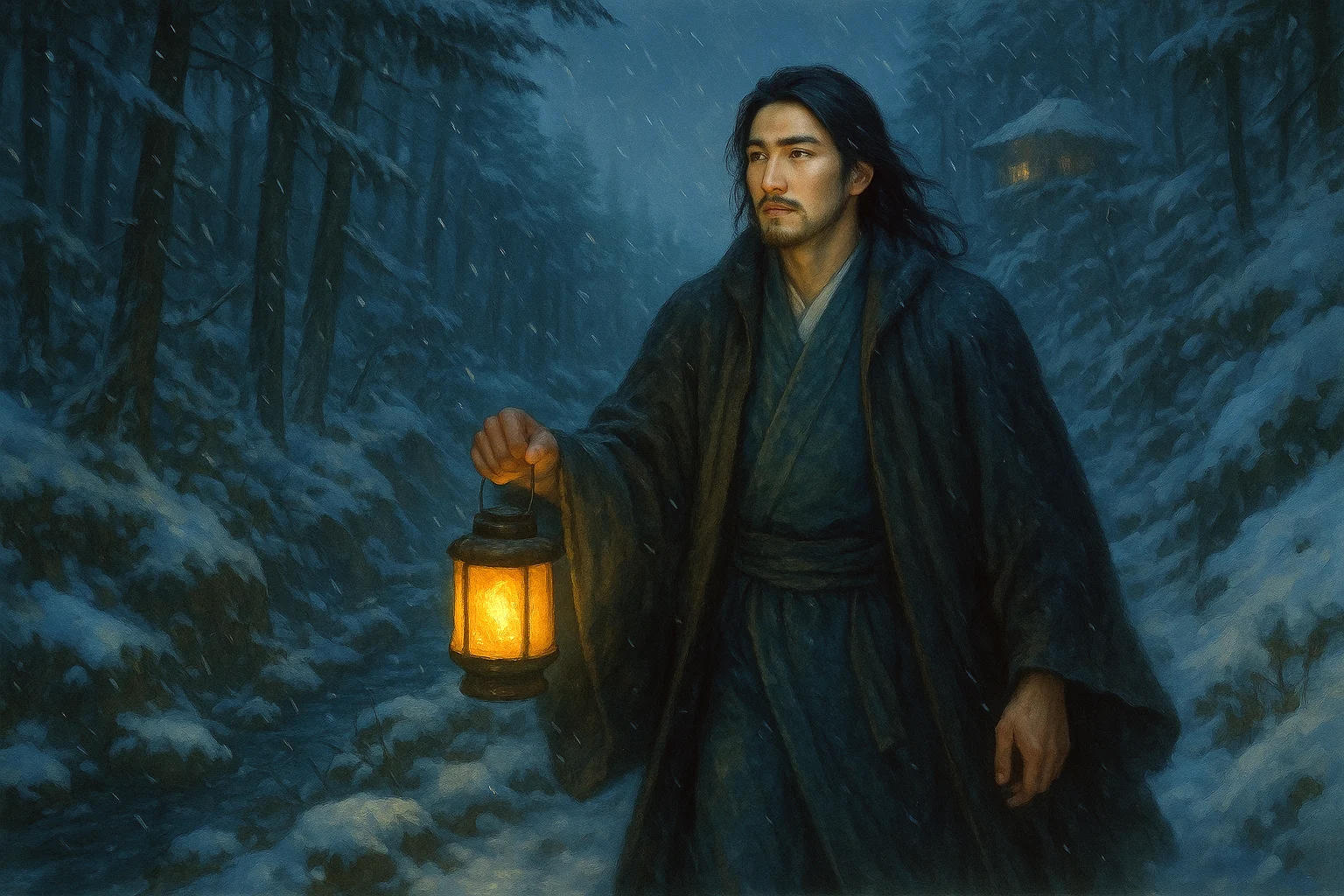
Liu Zhangqing (刘长卿 c. 726 – c. 786), a native of Xuancheng, Anhui Province, was a poet of the Mid-Tang Dynasty. He obtained the jinshi degree (presented scholar) in the late Tianbao era and successively held official posts such as Sheriff of Changzhou and Investigating Censor. Due to his upright and unyielding character, he was exiled twice. His poetry, particularly his five-character verses, achieved the highest distinction, often depicting the melancholy of exile and the joys of reclusion in landscapes. His poetic style is refined, elegant, and ethereal, blending a desolate undertone with the meticulousness characteristic of the Ten Talented Poets of the Dali era. He excelled in using plain sketching to create an atmosphere of tranquil emptiness and profound remoteness. As a pivotal poet bridging the High Tang and Mid-Tang periods, his work inherits the idyllic charm of Wang Wei and Meng Haoran while foreshadowing the bleak and cool elegance of Dali poetry. He exerted a certain influence on late Tang poets such as Yao He and Jia Dao, who belonged to the "painstaking school."