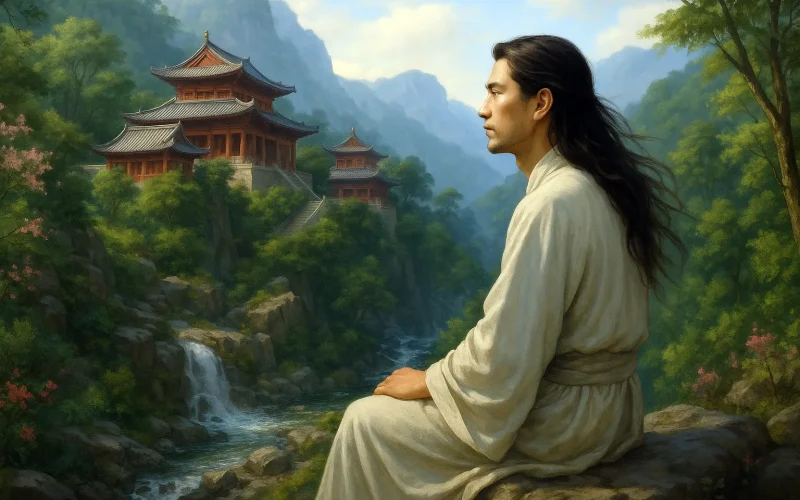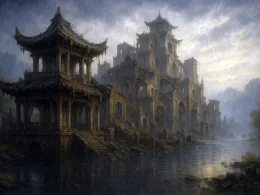




Snow melts with warm air coming down;
Ice thaws in sunlight’s golden crown.
What spring cannot do, tell me where?
The frost that silvers but my hair.
Original Poem
「早春」
白居易
雪散因和气,冰开得暖光。
春销不得处,唯有鬓边霜。
Interpretation
The precise date of this short poem's composition is difficult to determine, but its profound insight into life's rhythms and its tranquil contemplation of personal aging mark it as a work from Bai Juyi's middle or later years, composed after he had gained a clear-sighted understanding of worldly affairs. By this time, the poet had weathered the storms of an official career and entered the autumn of his life. This brief work uses the signs of early spring as a mirror, reflecting the acute tension between nature's eternal cycle of renewal and the singular, irreversible path of an individual life towards decline. Within twenty characters, it offers a concise, philosophical reflection on time, life, and reconciling oneself to reality.
First Couplet: 雪散因和气,冰开得暖光。
Xuě sàn yīn hé qì, bīng kāi dé nuǎn guāng.
Snow dissolves, released by the mild, returning breath of spring; / Ice cracks, having met the tender season's nurturing sun.
Explication: The poem opens in a tone both calm and reverent, depicting the essential physical changes of early spring. "Snow dissolves" and "Ice cracks" are the results; "the mild, returning breath of spring" and "the tender season's nurturing sun" are the causes. The words "released by" and "having met" clarify the benevolent natural laws behind this transformation: an intangible, pervasive vitality (the "breath of spring") prompts dissolution, and a generous, warming light bestows the favor that allows ice to break. The two lines are perfectly parallel and logical. They depict a scene while also paying homage to a great, natural principle of life—under its influence, all that is frozen can soften and be reborn.
Second Couplet: 春销不得处,唯有鬓边霜。
Chūn xiāo bù dé chù, wéi yǒu bìn biān shuāng.
Yet Spring’s great power of thaw, a place remains it cannot reach; / The frost that silvers but my own two temples, past its speech.
Explication: This couplet forms the poem's conceptual core. The focus turns abruptly from nature's praise to self-scrutiny, creating a powerful emotional and philosophical contrast. "Yet Spring’s great power of thaw, a place remains it cannot reach" first creates a pause, building suspense: Could the force that thaws ice and snow and revives all things have a limit? "The frost that silvers but my own two temples" then delivers a concrete, minute, yet startling answer. The word "frost" is a skillful double entendre. It denotes the frost-white color of hair at the temples and metaphorically suggests its cold, immutable quality, symbolizing age and the relentless passage of time. Spring can melt the frost of water and snow in the natural world but is powerless against the "frost" of settled years upon a living body. The word "but" emphasizes the absolute, personal nature of this limitation. By juxtaposing universal natural renewal with the irreversible course of an individual life, the lines generate profound, poignant tension.
Holistic Appreciation
This pentasyllabic quatrain is a "poem of life" illuminated by rational clarity. Its structure presents a perfect "cosmic law versus human condition" model. The first two lines extol the power and universality of natural law, describing the mighty, regenerative force of the cosmos (the spring breath dissolving snow, the warm sun breaking ice). The final two lines reveal the finitude and particularity of the individual before this eternal law, describing the mark of age that no human effort nor even spring's power can erase. Between the four lines exists a rigorous relationship of cause and poignant contrast: precisely because spring holds the power to "thaw" all things, the one place it "cannot reach" appears all the more stark and stirring. The poet avoids conventional lament; instead, with a clear-eyed, almost analytical gaze, he observes and states this contradiction. The emotion is complex yet restrained: there is praise for spring's light, acknowledgment of aging, and, facing this insoluble fact, a calm, slightly wry clarity.
Artistic Merits
- Masterful Use of Contrast: The poem's core strength derives from two contrasts. The first is between what is "thawed" (snow and ice) and what remains "unreachable" (the "frost" at the temples). The second is between nature's cyclical return and life's linear decline. Through this stark juxtaposition, the theme is powerfully deepened.
- Profound Meaning Through Double Entendre: The word "frost" is the linchpin of the entire poem. It skillfully links the natural image (the frost of ice and snow) with the human condition (the frost of white hair), creating a rich metaphorical connection between phenomenon and fate with remarkable concision.
- Fusion of Rational Observation and Poetic Sentiment: The first couplet's "released by" and "having met" suggest a tone of rational deduction. The final couplet's "cannot reach" and "but" shift into the register of personal discovery and reflection. The transition from objective law to subjective experience is seamless, embodying the poet's perfect union of philosophical thought and poetic feeling.
- Extreme Conciseness and Verbal Tension: Twenty characters contain a complete worldview. Verbs like "dissolves," "cracks," and "thaw" are dynamic and potent. "Mild, returning breath" and "nurturing sun" are warm and hopeful. Yet everything culminates in the static, cold finality of "frost." The internal tension of the language is masterful.
Insights
The poem’s power lies in moving beyond conventional sorrow about aging to touch a more fundamental question: In the face of nature’s eternal cycle of renewal, how should the individual, whose life moves inexorably toward decay, find his bearing? Bai Juyi offers not an answer but a stance: to see clearly the boundary marked by "the place Spring’s power cannot reach" and to accept calmly the personal reality of "the frost that silvers but my own two temples."
This poem speaks to readers of any age. It reminds us that true wisdom begins by recognizing and accepting those facts of life—like the "frost at the temples"—that no external force, not even revitalizing spring, can alter. Yet, the poet does not therefore dismiss spring’s value (he first praises its "breath" and "sun"). This reveals that a positive stance toward life is not the fantasy of erasing time’s marks, but the ability, while clear-eyed about life’s limits, to still fully feel and honor each moment of vitality when "snow dissolves and ice cracks."
It encourages us, like the poet, to be clear-eyed witnesses and serene acceptors of our own lives. To admire the spring light while also daring to meet the gaze of the "frost" in our mirror. This courage to face limitation and the spaciousness of heart to love life within it may be the sturdiest bulwark against time’s void. Bai Juyi shows us that life’s dignity and poetry reside not only in youthful flourishing but also in that strand of "frost" which even spring cannot touch, a silvering born of time and understanding.
About the Poet
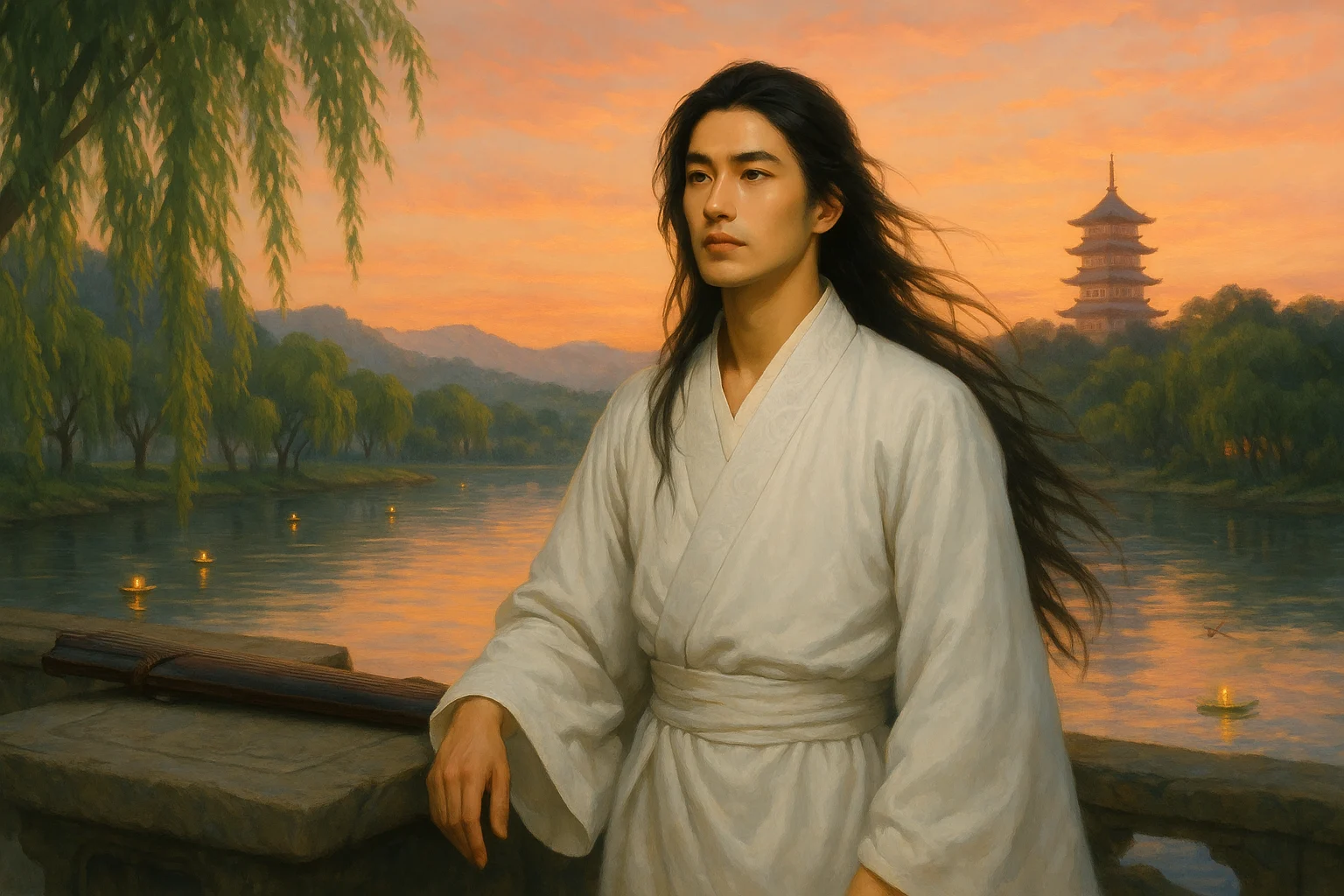
Bai Juyi (白居易), 772 - 846 AD, was originally from Taiyuan, then moved to Weinan in Shaanxi. Bai Juyi was the most prolific poet of the Tang Dynasty, with poems in the categories of satirical oracles, idleness, sentimentality, and miscellaneous rhythms, and the most influential poet after Li Bai Du Fu.