You have just come from our native place,dear fellow,
What happened there you should have known.
On the day you came,before your gorgeous window,
Were the winter plums in blossom grown?
Original Poem
「杂诗」
王维
君自故乡来,应知故乡事。
来日绮窗前,寒梅著花未。
Interpretation
This work stands as one of Wang Wei's most seemingly simple yet profoundly moving five-character quatrains, a microcosm of the "aesthetics of nostalgia" in classical Chinese poetry. Likely composed during his travels as an official or while dwelling away from his native place, the poem adopts a dramatic framework of an accidental dialogue. Within the extreme constraint of twenty characters, it masterfully portrays the explosive concern, selective inquiry, and ultimate emotional investment of a wanderer meeting someone from home. It is not merely an expression of homesickness but reveals the poetic secret of how memory is preserved through concrete imagery and how emotion achieves maximal transmission through the most minimal symbol.
Opening Couplet: 君自故乡来,应知故乡事。
Jūn zì gùxiāng lái, yīng zhī gùxiāng shì.
You have come from my old hometown; / You must know all that’s happened there.
The opening seems conversational, yet its emotional tension is instantly palpable. "You have come from my old hometown" is a plain statement of fact, but the words "old hometown" lend it immense weight, establishing a precious and fragile channel of emotional connection. "You must know all that’s happened there" is not a logical deduction but a pressing conviction and the entrustment of all hope under the sway of emotional logic. The phrase "must know" carries an expectation that brooks no denial and a barely perceptible plea, born of the fear that this connection might be broken. The repetition of "old hometown" is not for rhetorical effect but an instinctive linguistic response to emotional turmoil, highlighting the absolute centrality of "home" in the poet's heart. The wanderer's myriad thoughts collapse in this moment into a total focus on this "you."
Closing Couplet: 来日绮窗前,寒梅著花未?
Láirì qǐ chuāng qián, hán méi zhù huā wèi?
The day you left, before my gauze-veiled window, / Had the winter-plum yet blossomed?
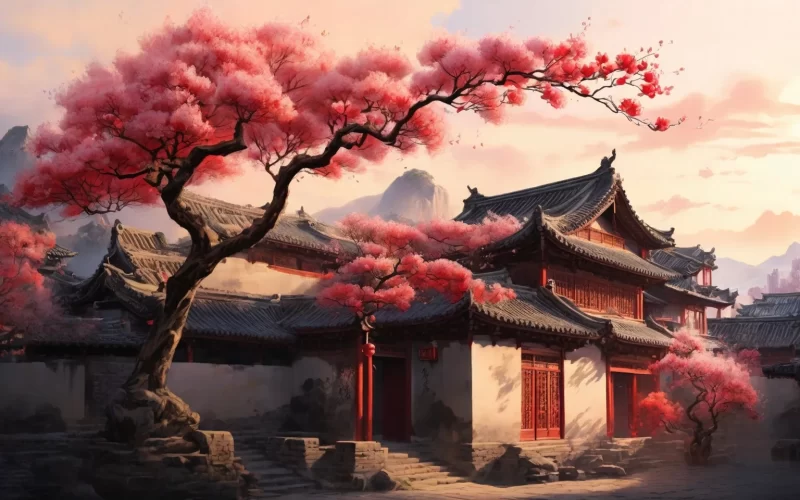
This couplet is the soul of the poem and one of the most famous examples in Chinese poetry of "emotional focus through a seemingly trivial detail." "The day you left" fixes the moment of the other's departure, demonstrating the vividness of memory and the precise projection of emotion. "Before my gauze-veiled window" is the coordinate of memory, the most intimate, poetic corner of home. "Had the winter-plum yet blossomed?" completes the emotional detonation with a query that seems slight and inconsequential. The poet asks not after the health of family or changes in affairs, but solely about the plum blossom. This is not indifference but extreme tenderness born of extreme selection. The "winter-plum" here operates on multiple symbolic levels: it is an emblem of the native landscape, a herald of the season, a witness to the poet's past life, and, most importantly, a symbol of his unsullied character and unchanging heart. To ask after the plum is to inquire after the self; to ask if it has bloomed is to ask if time remains as it was, if all is well.
Holistic Appreciation
This is a marvelous poem about the distillation of emotion and the archaeology of memory. Its structure can be parsed as the psychological drama of "encounter—hope—selection—inquiry": meeting someone from home (encounter), entrusting to them the hope of knowing all (hope), selecting the one perfect symbol from countless possibilities (selection), and finally posing that ultimate question (inquiry). The four lines complete an entire emotional storm, whose eye is precisely that plum tree before the window.
The greatness of Wang Wei's poem lies in the immense tension created by the interplay of extreme emotional concentration and extreme expressive restraint. The wanderer's homesickness, accumulated over the years, breaks its banks the moment he meets "you," but it does not flood forth indiscriminately. Instead, through a highly selective, highly symbolic question, the emotion finds its most precise and elegant outlet. The question "Had the winter-plum yet blossomed?" contains everything: longing for home, nostalgia for the past, sensitivity to the passage of time, and a quiet affirmation of self-identity. Using the smallest of images, it bears the weight of the deepest emotion, achieving the poetic miracle of "seeing a world in a grain of sand." The poem ends suspended, with no answer, leaving the reader with infinite space for imagination and emotional resonance. That winter-plum, whether in bloom or not, has forever blossomed in the spiritual homeland of every wanderer.
Artistic Features
- The Immediacy and Intimacy of Dramatic Monologue: The poem employs a direct, quoted-speech style, instantly placing the reader at the scene of the "wanderer-meets-fellow-townsman" encounter, creating a powerful sense of dramatic immediacy and emotional synchronicity. It is as if we ourselves are the "you" facing the poet's earnest gaze.
- The Ultimate Art of Emotional Filtering: From the vast vagueness of "all that’s happened there," to the spatial pinpointing of "before my gauze-veiled window," to the focus on the "winter-plum" image, and finally to the query about its state ("blossomed?"), the poet performs an act of extreme emotional filtering—from the general to the specific, from the vague to the precise, from feeling to scene. This demonstrates a highly refined poetic control.
- The Privacy of Imagery and the Universality of Symbol: The combination of "gauze-veiled window" and "winter-plum" creates a deeply private and aesthetically charged image of home. Yet, the "winter-plum," as a symbol of integrity flourishing in adversity, allows it to transcend personal memory, acquiring a cultural commonality and spiritual universality. This enables readers of different times to find a point for their own emotional projection.
- The Eternal Resonance of the Open Ending: The poem ends with a question, unanswered. This state of suspension precisely mirrors the nature of nostalgia itself—a perpetual inquiry and waiting. It allows the poem's emotional tension to extend beyond its final line, inviting the reader into the poetic realm to share in that anticipation and imagination.
Reflection
This poem is like a crystal of emotion, clearly refracting the universal structure of human nostalgia. It reveals that the deepest longing is often anchored to the smallest of objects. Home is not an abstract concept but a window, a plum tree, a scent, a particular light. When we long for a distant place, what truly tugs at the heartstrings are often these concrete, minute details—the "had it blossomed?" of our own memories.
In the contemporary era of high mobility and increasingly fluid notions of home, this poem holds particular consoling power. It reminds us that, wherever we are, we can safeguard a "gauze-veiled window" and a "winter-plum" in our hearts. It might be a childhood tree, a taste from the old home, or a familiar melody. Periodically asking our inner selves, "Had the winter-plum yet blossomed?" is a way of confirming the coordinates of our emotions and the anchor of our spirit in a complex, changing world.
In twenty characters, Wang Wei preserved for us the purest poetic sample of homesickness. It reminds every modern wanderer: no matter how technology shrinks geographical distance, the distance between the heart and home will always need to be measured and connected by a warm, specific inquiry about a concrete thing. This is the timeless power of this small poem, its ability to make our hearts tremble even a thousand years later.
Poem translator
Kiang Kanghu
About the poet
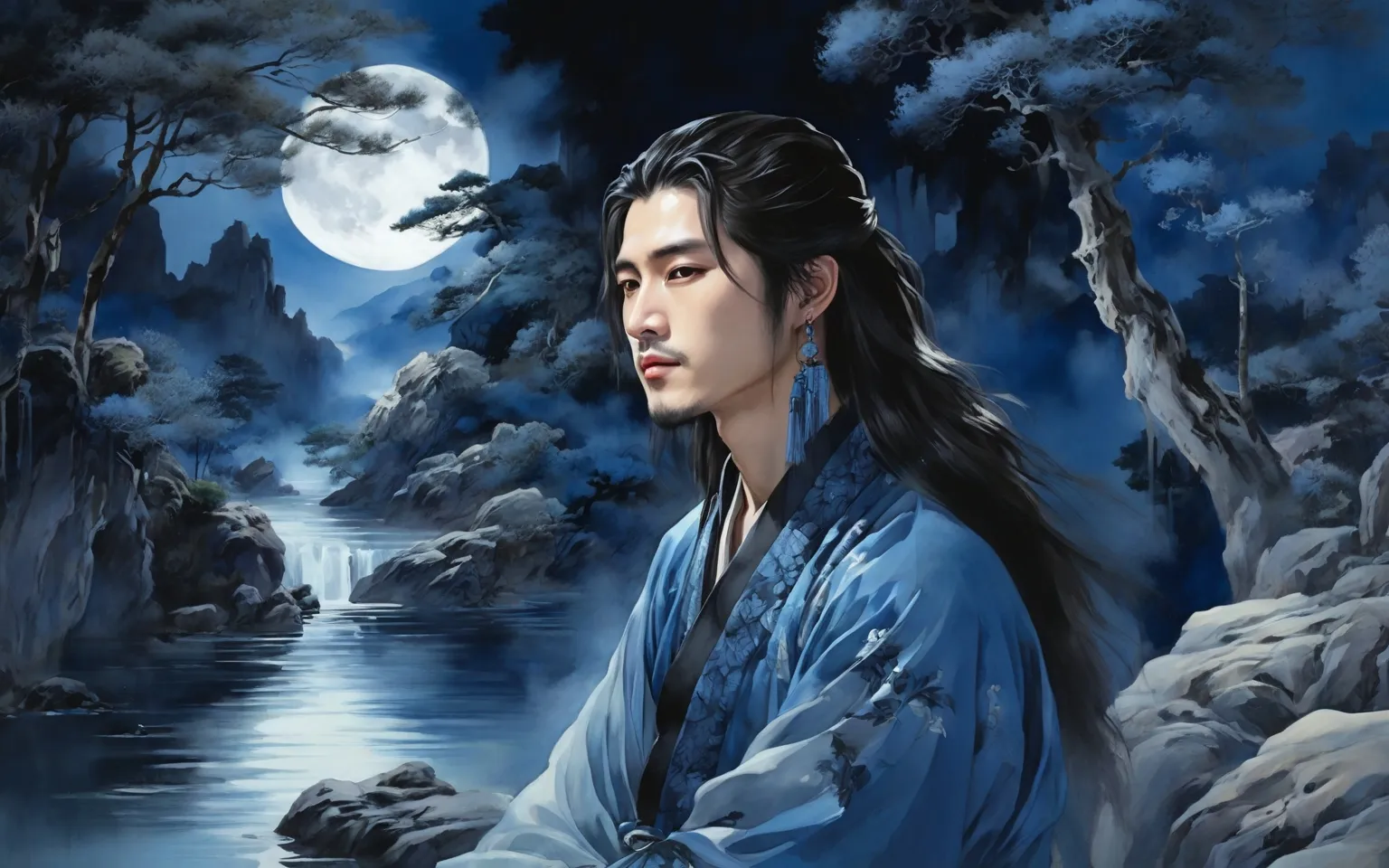
Wang Wei (王维), 701 - 761 A.D., was a native of Yuncheng, Shanxi Province. Wang Wei was a poet of landscape and idylls. His poems of landscape and idylls, with far-reaching images and mysterious meanings, were widely loved by readers in later generations, but Wang Wei never really became a man of landscape and idylls.