


While young, I was not worded about livelihood.
Old now, how could I grudge money for buying wine?
Let's spend ten thousand coins for a jarful of drink good!
Looking in face, two years more we'll be sixty-nine.
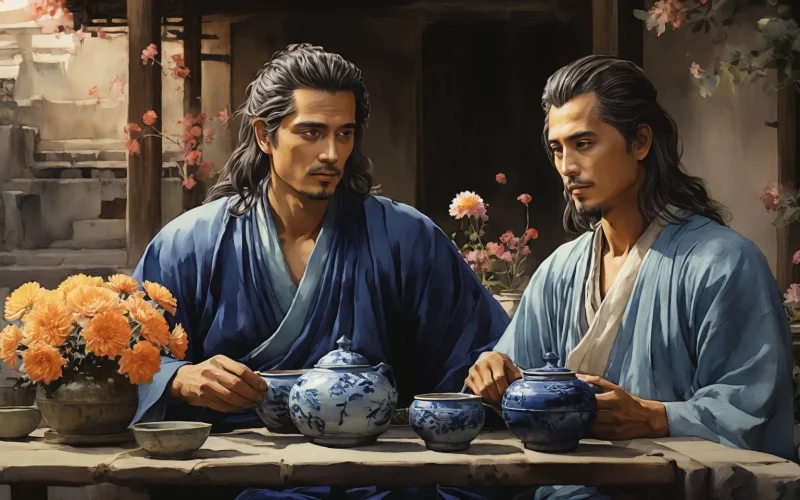
We read and play the drinkers' wager game at leisure;
Drunk, we listen to verse better than music light.
When chrysanthemums yellow, may 1 have the pleasure
To invite you to drink my home-brew with delight?
Original Poem
「与梦得沽酒闲饮且约后期」
白居易
少时犹不忧生计,老去谁能惜酒钱?
共把十千沽一斗,相看七十欠三年。
闲征雅令穷经史,醉听清吟胜管弦。
更待菊黄家酿熟,共君一醉一陶然。
Interpretation
This poem was composed in 837 CE. At this time, Bai Juyi and Liu Yuxi (courtesy name Mengde) both held the sinecure of Advisor to the Heir Apparent in the Eastern Capital and resided in Luoyang. Both men were born in 772 CE, making them sixty-six—firmly within life’s twilight years. In their youth, each had harbored great ambitions, enduring the vicissitudes of official life and political storms. In their later years, they finally obtained leisurely posts far from the seat of power. This poem records an ordinary outing to buy wine and drink together. Yet it perfectly melds the deep, mellow friendship of the two great poets, their mirror-like parallel fates, and a profound philosophical acceptance that smiles at the setting sun alongside a deep-seated sorrow. It stands as the unsurpassed masterpiece of Tang scholarly poetry on friendship in old age.
First Couplet: “少时犹不忧生计,老去谁能惜酒钱?”
Shǎo shí yóu bù yōu shēngjì, lǎo qù shéi néng xī jiǔ qián?
In youth, we still knew no anxiety for how to earn our bread; / Grown old, which of us now would spare the coin for wine instead?
The opening establishes the poem’s expansive yet desolate tone by contrasting attitudes from life’s two ends. “In youth, we still knew no anxiety”recalls the boldness of youth and its ignorance of sorrow, also hinting at the confidence born of their early backgrounds and talents. “Grown old, which of us now would spare the coin”is a declaration of understanding born of enduring life’s changes: since youth and ambition have both slipped away, why be miserly over mere coin for wine? This is self-consolation, an invitation to a dear friend, and implies a deeper psychology—using material generosity (wine money) to compensate for and resist the immense sense of deprivation wrought by time and fate. The rhetorical question intensifies the feeling of resolute, free-spirited detachment.
Second Couplet: “共把十千沽一斗,相看七十欠三年。”
Gòng bǎ shí qiān gū yī dǒu, xiāng kàn qī shí qiàn sān nián.
Together, we spend ten thousand cash to buy a single measure fine; / Gazing at each other—seventy years, lacking three, are yours and mine.
This couplet brings the art of parallelism and emotional impact to their peak. The first line, “Together, we spend ten thousand cash,”alludes to Cao Zhi’s Ballad of the Famous Capital: “Returning to feast at Pingle Lodge, / Fine wine costs ten thousand per dipper.” It hyperbolizes the wine’s high price and their prodigious drinking spirit. This is not ostentation but an extravagant gesture that highlights the present joy’s preciousness and their absolute lack of stinginess regarding their friendship. The second line, “Gazing at each other—seventy years, lacking three,”abruptly cuts from the unrestrained extravagance of the feast into the cold reality of time. The words “gazing at each other”are intensely visual: two white-haired old men, slightly wine-tipsy, peer into each other’s faces, seeing both a dear friend and a mirror of their own life. Born in the same year, their tacit understanding allows them to read in each other’s eyes the precise code of their shared age—“seventy, lacking three.”This calm statement is more powerful than any lament. It speaks utterly of the endless vicissitudes of heroes growing old together, of intimate friends declining side by side. It is the line of greatest emotional concentration in the entire poem.
Third Couplet: “闲征雅令穷经史,醉听清吟胜管弦。”
Xián zhēng yǎ lìng qióng jīngshǐ, zuì tīng qīng yín shèng guǎnxián.
At leisure, we set refined drinking games, exhaust the Classics’ lore; / Drunk, we attend to pure chant—better than pipes and strings, and more.
This couplet delineates the content and artistic conception of their “leisurely drinking,” elevating a common feast to a realm of elegant spiritual communion. “We set refined drinking games” is an intellectual pastime between literati; “exhaust the Classics’ lore” displays the profound scholarship of these two scholar-poets—this game is also a contest and mutual appreciation of talent. “We attend to pure chant” means shutting out external pomp to focus on the other’s inner voice; “better than pipes and strings” declares that the soul’s harmony between kindred spirits far surpasses the value of worldly music and dance. These two lines describe a relationship that transcends ordinary drinking companions: they are rivals in learning, kindred spirits in poetry, loners confirming each other atop spiritual peaks. The form is convivial; the core is highly intellectual, serene, and profound exchange.
Fourth Couplet: “更待菊黄家酿熟,共君一醉一陶然。”
Gèng dài jú huáng jiā niàng shú, gòng jūn yī zuì yī táorán.
But let us wait till chrysanthemums burn gold, our home-brew’s ripe and true; / Then, sir, with you, to get blissfully drunk—just once, then once anew.
The final couplet turns, extending from present merry drinking to future anticipation, granting the brief meeting continuity in time. “Chrysanthemums burn gold” alludes to the Double Ninth Festival, rich in cultural meaning; “our home-brew’s ripe” adds a touch of domestic warmth and the richness of waiting. The phrase “But let us wait till” projects the present blissful joy into the future, diluting the twilight sorrow brought by “gazing at each other,” revealing a positive passion for life and a resilient faith in friendship. “To get blissfully drunk—just once, then once anew” repeats the concept of “once,” the light syllables creating a transcendent artistic conception, as if all disappointment, aging, and helplessness could be forgotten and sublimated in the next scheduled intoxication. Ending on anticipation leaves a long-lasting aftertaste.
Holistic Appreciation
This poem uses “buying wine and drinking at leisure” as its warp and “reflections on life” as its weft, weaving a panoramic picture of intimate friends drinking together in old age. The structure is masterfully conceived: the first couplet introduces the theme, stating the attitude; the second couplet is the climax, violently colliding unrestrained drinking with heartfelt sorrow; the third couplet is the settling, turning to elegant spiritual communion; the fourth couplet is the transcendent turn, illuminating the twilight state of mind with a future promise. The poem’s emotions are complex and multi-layered. The surface is “leisure” and “joy”; the core is “sorrow” and “desolation.” Yet, ultimately, through literati-style elegance and transcendent friendship, desolation transforms into expansiveness, and helplessness turns into anticipation, perfectly embodying the highest realm of Bai Juyi’s late poetry: “words plain, thought deep; sorrow and joy intermingled.”
Artistic Merits
- The Clever, Emotionally Charged Use of Numbers: The stark contrast between "ten thousand cash" and "a single measure," the precise arithmetic of "seventy years, lacking three"—this use of numbers generates immense emotional force. It quantifies and makes tangible complex feelings like unbridled exuberance and poignant sorrow, prodigality and cherished moments, rendering them unforgettable.
- The Adaptation and Re-contextualization of Allusion: The line "ten thousand cash… a single measure" adapts Cao Zhi’s allusion, yet sheds the frivolity of that youthful feast, infusing it with the gravity of friendship in old age. "Chrysanthemums burn gold" implies the Double Ninth Festival without being overt, enriching the promised meeting with cultural depth and a sense of life’s ritual.
- The Vivid, Deepening Detail: The detail "gazing at each other" is key to understanding the poem. It stills time, lays bare fate, and concentrates a depth of wordless understanding—it is the most poignant moment in the poem.
- The Undulation and Balance of Emotional Rhythm: The poetic sentiment flows between a spirit of abandon (sparing no coin, buying a measure) and a subdued melancholy (gazing at each other’s age), between lively conviviality (setting drinking games) and quiet withdrawal (attending to pure chant), and between seizing present joy and anticipating future meetings. It finally achieves a balance that is sorrowful yet not wounded, joyful yet not indulgent, demonstrating a masterful artistic control over emotion.
Insights
This work does more than record a gathering; it defines the ideal of friendship and spiritual belonging in later life. It tells us: The highest form of companionship is choosing to share time and to continue a dialogue of mutual illumination on a spiritual plane, after fully recognizing the whole truth of each other’s lives—including aging, disappointment, and finitude.
In life’s twilight, Bai Juyi and Liu Yuxi did not drown in lamenting that they were "both fallen men, at the world’s far end." Instead, they transformed shared disappointment into the uninhibited generosity of spending "ten thousand cash together." They elevated the inevitability of aging into the refined elegance of "setting refined drinking games." They dissolved the fear of time’s passage in the active anticipation of waiting "till chrysanthemums burn gold." Using poetry and wine as their medium, they created a spiritual commonwealth for two, sufficient to ward off the chill of the external world.
The poem’s insight is profoundly relevant today: In a culture that venerates youth and achievement, how are we to face aging and the re-evaluation of our worth? Bai Juyi and Liu Yuxi demonstrate one possibility—even if great ambitions come to naught, one can still draw upon deep erudition, artistic creation, and the friendship of a kindred spirit to construct an inner world in old age that is rich, full, and aesthetically resonant. That promise of getting "blissfully drunk—just once, then once anew" is the most positive, most poetic shaping of life’s final chapter. It reminds us that the quality of a life may depend not on the height of the summit reached, but on who travels the road with us, and on whether, at every stage—especially the last—we can brew and share with those we love and respect that cup of life’s mellow wine named "Blissful Contentment."
Poem translator
Xu Yuanchong (许渊冲)
About the Poet
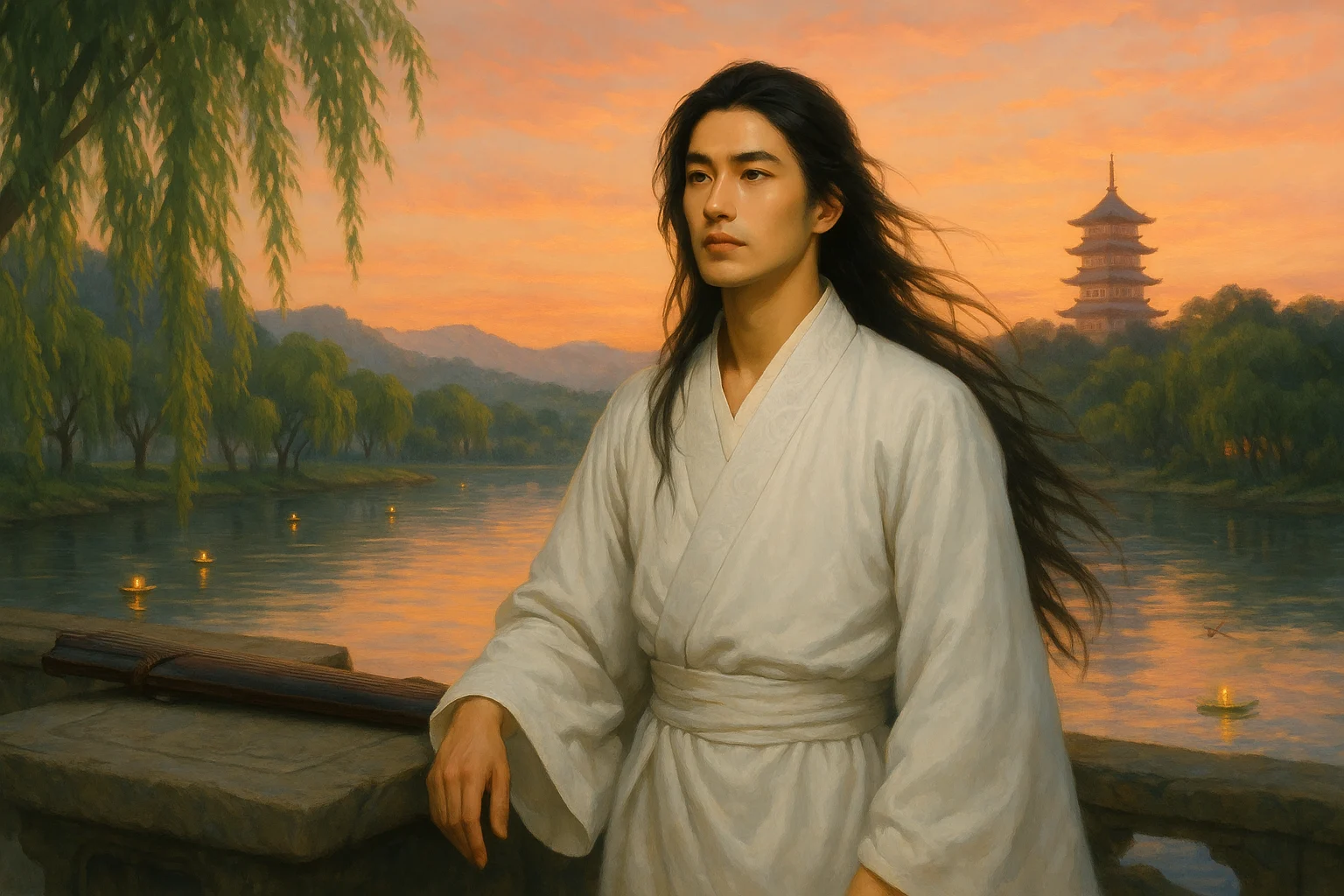
Bai Juyi (白居易), 772 - 846 AD, was originally from Taiyuan, then moved to Weinan in Shaanxi. Bai Juyi was the most prolific poet of the Tang Dynasty, with poems in the categories of satirical oracles, idleness, sentimentality, and miscellaneous rhythms, and the most influential poet after Li Bai Du Fu.