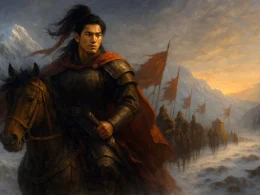
Do not complain of golden cage and wings cut short;
The southern land is far warmer than the northwest.
Don't clearly speak if you listen to my exhort;
You will offend if clearly your complaint's expressed.
Original Poem
「鹦鹉」
罗隐
莫恨雕笼翠羽残,江南地暖陇西寒。
劝君不用分明语,语得分明出转难。
Interpretation
This poem is a work by the late Tang poet Luo Yin, who uses an object to express his aspirations and feelings. Luo Yin "failed the imperial examinations ten times" in his lifetime, remaining trapped in the examination system for decades, giving him a deeply personal understanding of career setbacks and the fickleness of the world. During the tumultuous late Tang and Five Dynasties period, marked by social upheaval and warlordism, Luo Yin sought refuge in his later years with Qian Liu, the King of Wuyue. Though he found a place of security, he remained perpetually discontent and frustrated, the feeling of "living under another's roof" constantly weighing on his mind.
This poem, through chanting about a parrot, conveys the poet's complex state of mind while living in a foreign land under the patronage of another. Parrots originate from Longxi (west of the Long Mountains). They are sensitive to cold and prefer warmth, and are thus often kept in the regions south of the Yangtze. The poet uses the parrot as a metaphor for himself—the "gilded cage" is the roof over his head as a dependent; the "jade-green feathers cut" symbolizes the suppression of his talent; the "southern shore is warm" represents the immediate comfort; and the "western cold" refers to the distant homeland. However, the most thought-provoking part is the admonition to "be careful with speech" in the latter two lines. Parrots are skilled at mimicking human speech, yet this very ability often leads to their confinement; the poet, full of learning and talent, repeatedly offended the authorities of his time due to incautious speech. The three words "分明语" (speak with utter clarity) represent both the parrot's destiny and the poet's self-admonition—in times of chaos, the clearer one speaks, the more difficult one's situation becomes. The entire poem is couched as words of consolation to the parrot, but in reality, every word is the poet's self-consolation and profound sigh.
First Couplet: "莫恨雕笼翠羽残,江南地暖陇西寒。"
Mò hèn diāo lóng cuìyǔ cán, Jiāngnán dì nuǎn Lǒngxī hán.
Don’t regret your gilded cage, your jade-green feathers cut.
The southern shore is warm, though the west is cold, but—
The poem opens with a tone of consolation, stating the poet's own situation. The two words "莫恨" (don’t regret) seem to advise the parrot to accept its fate, but in reality, the poet is urging himself to let go—since he is already in the cage, what use is resentment? "雕笼" (gilded cage) is an exquisite prison, a metaphor for the roof under which the poet lives as a dependent—though it provides shelter, it costs him his freedom. "翠羽残" (jade-green feathers cut) describes the parrot's clipped feathers, a metaphor for the suppression of the poet's talent and the blunting of his edge. The next line, "江南地暖陇西寒" (The southern shore is warm, though the west is cold), uses the contrast between warmth and cold to depict the immediate comfort versus the distant homeland. Within the word "暖" (warmth) lies a sense of compromised security in the present; within the word "寒" (cold) lies a longing gaze towards the native land. The poet seems to be telling himself: Don't complain; it's at least warm here, much better than the cold Longxi. Yet, the more placid this consolation, the deeper the helplessness behind it—for this "warmth" is bought at the price of lost freedom.
Final Couplet: "劝君不用分明语,语得分明出转难。"
Quàn jūn búyòng fēnmíng yǔ, yǔ dé fēnmíng chū zhuǎn nán.
I would advise you not to speak with utter clarity:
For clarity will but help to bar captivity.
This couplet is the soul of the entire poem. "劝君不用分明语" (I would advise you not to speak with utter clarity) is voiced as an admonition, directed both at the parrot and at himself. Parrots are skilled at mimicking human speech, yet this is precisely why they are kept tightly caged—if they couldn't speak, they might gain a bit more freedom; the clearer they speak, the more their owner refuses to let go. "语得分明出转难" (For clarity will but help to bar captivity) uses the word "转" (but/to turn) to express the cruelty of this paradox: clarity is a talent, yet it becomes a shackle; expression is a gift, yet it invites confinement. The poet, renowned for his literary talent throughout his life, brought trouble upon himself because of it, repeatedly failing the exams—a vivid illustration of this very "语得分明出转难." In times of chaos, under the roof of the powerful, the clearer one speaks, the more dangerous one's situation becomes. This couplet is both the poet's summary, born of blood and tears, of his own experience, and a painful warning to all talented scholars under heaven.
Holistic Appreciation
This is another powerful work among Luo Yin's poems that use objects to express intent. The entire poem consists of four lines and twenty-eight characters. Under the guise of chanting about a parrot, it actually describes the poet's own experiences, merging the fate of the caged bird with that of a scholar living under another's patronage, revealing the poet's complex state of mind amidst the chaos of his era and his dependent circumstances.
Structurally, the poem presents a progressive layering from surface to core, from shallow to deep. The first couplet opens with a consoling tone, using "don’t regret" to express self-consolation, and "the southern shore is warm, though the west is cold" to contrast the present reality with the homeland. The final couplet delves further, using "I would advise you not to speak with utter clarity" to introduce the admonition to "be careful with speech," and concluding with "for clarity will but help to bar captivity," pushing the forbearance of the first two lines towards a deeper vigilance. Between the two couplets, the focus moves from external to internal, from acceptance to self-warning, deepening layer by layer into a seamless whole.
Thematically, the core of this poem lies in the words "endurance" (忍) and "caution" (慎). The first line's "don't regret" is endurance—enduring the longing for freedom, enduring the longing for the homeland, accepting the fate of being in this gilded cage. The final line's "not to speak with utter clarity" is caution—being cautious in speech and action, sheathing one's edge, to preserve one's life in these chaotic times. Behind this "endurance" and "caution" lies the poet's profound helplessness, but also the survival wisdom of intellectuals in turbulent times. Yet, the more clear-sighted this wisdom, the more desolate it feels—for it is bought at the price of abandoning "speaking with utter clarity."
Artistically, the poem's greatest power lies in its dual reflection—using the object as a mirror of the self, letting gentle words bear profound meaning. Every stroke describing the parrot is also a stroke describing the poet himself; the gilded cage speaks at once of the caged bird's plight and the scholar's dependent existence; the warning about speaking clearly captures both the parrot's fate and the talented man's tragedy. This technique—writing of human experience through the object, using the bird as metaphor—lifts individual emotion to universal resonance, transforming a moment's feeling into something eternal. The poem's language is placid, free of fiery outbursts, yet every word carries weight, every line cuts deep. It stands as a model of the classical Chinese poetic ideal: "怨而不怒,哀而不伤"
Artistic Merits
- Using Object as Self-Metaphor, Merging Human and Bird: Using the parrot as a metaphor for oneself, the gilded cage as a metaphor for one's place of dependence, the clipped feathers as a metaphor for suppressed talent. Object and self blend, wonderfully merged without seam.
- Gentle Words, Deep Meaning, Subtle and Implicit: The entire poem is voiced as consolation, not a single word directly expresses personal sorrow, yet sorrow is evident; not a single word directly criticizes the times, yet satire is apparent. It expresses resentment without anger, sorrow without excessive grief.
- Dual Symbolism, Layered Depth: "The southern shore is warm, though the west is cold" is both a contrast of temperature and a juxtaposition between homeland and foreign land; "for clarity will but help to bar captivity" is both the parrot's destiny and the talented scholar's tragedy. A single phrase carries double meaning, the intent lying beyond the words.
- Using Seeming Consolation to Write Helplessness, Using Advice to Write Profound Sorrow: "Don’t regret" and "I would advise you" are all words of consolation, yet every word carries a sense of helplessness and sorrow. The more placid, the more profound the sorrow.
Insights
Using the caged parrot as a metaphor, this poem speaks to an eternal theme: In times of chaos, the clearer one speaks, the more difficult one's situation becomes.
It first allows us to see the "risk of speech." The parrot is caged because it speaks well; the talented scholar invites disaster because he dares to speak. Luo Yin "failed the imperial examinations ten times" in his life—wasn't this precisely because of "speaking with utter clarity"? These three words, "分明语," are the destiny of the parrot, and also the destiny of all who dare to speak. It reminds us: in certain eras, silence is not only wisdom but a necessity for survival.
On a deeper level, this poem prompts us to contemplate the "paradox of freedom and security." The warmth of the southern shore is security; the cold of Longxi is home. Staying in the south means compromised security; flying back to Longxi means freedom. However, the parrot's wings have been clipped; it can no longer choose. In his later years, the poet sought refuge with Qian Liu; though he found shelter, he lost freedom; though he gained warmth, he lost his homeland. This situation of "finding shelter but not peace of mind" is the shared fate of countless dependents.
And most moving is the poem's sense of "清醒的无奈" (clear-sighted helplessness). The poet knows he is trapped in a gilded cage, knows he cannot "speak with utter clarity," but he does not deceive himself by calling this cage paradise, nor does he pretend to be content with silence. He merely states this cruel truth in a placid tone with words like "don’t regret" and "I would advise you." This clarity is painful, yet it is also noble—for it means that, even within the cage, his heart still soars in the cold skies of Longxi.
This poem writes of a parrot in the late Tang, yet it allows everyone who, in reality, must sheathe their edge and be cautious in speech and action to find resonance within it. That figure in the "gilded cage" is the figure of every dependent; that admonition of "speaking with utter clarity" is the shared sigh of all who have suffered for it; that self-consolation of "the southern shore is warm" is the language of self-comfort for countless those torn from their homeland. This is the vitality of poetry: it writes of a bird, but it reads as the fate of humankind.
Poem translator
Xu Yuanchong (许渊冲)
About the poet
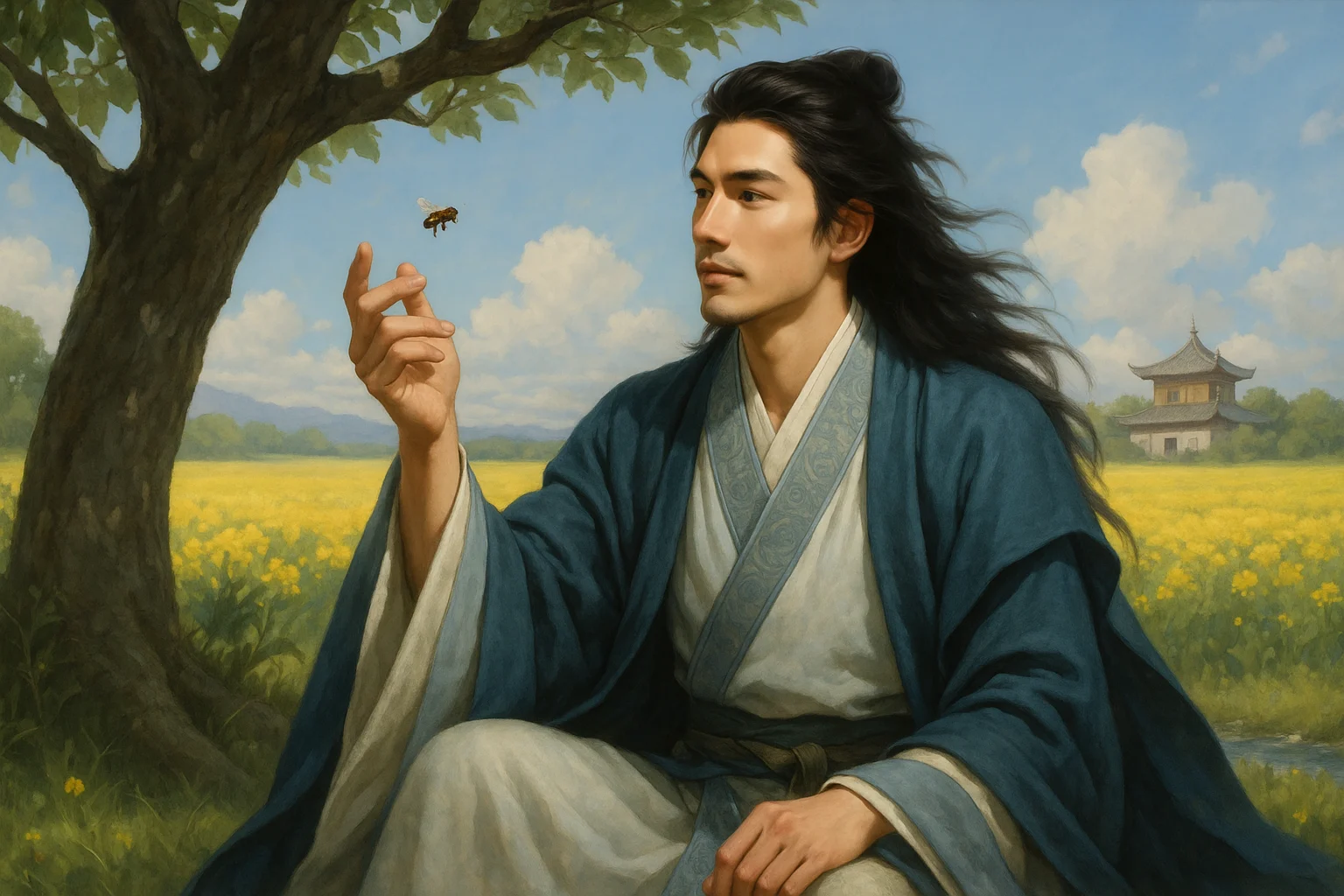
Luo Yin (罗隐 833 - 910), a native of Fuyang, Hangzhou, Zhejiang Province, was a renowned writer and thinker of the late Tang Dynasty. As a key literary figure of the late Tang period, Luo Yin was unparalleled in his time for his satirical poetry and prose. His poems often directly targeted social darkness, employing sharp and accessible language that cut straight to the heart of late Tang political corruption. With nearly 500 surviving poems, he was known alongside Du Xunhe and Luo Ye as one of the "Three Luos" in the late Tang poetic circle, standing out as a unique and powerful voice amidst the ornate and decadent trends of the era.