


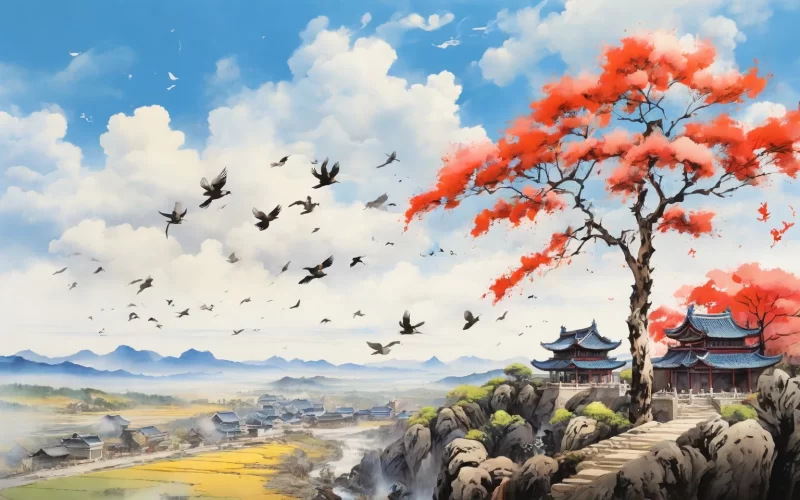
Living retired, I face the double-gate town;
Spring gone, the summer air is still cool and new.
Heaven loves grass in shade, unseen, unknown;
We love the clearer sky when day is through.

It widens the view from my tower high;
My window’s brightened by a beam so faint.
Birds from the south, with nests now warm and dry,
Fly lighter homeward, free from all complaint.
Original Poem
「晚晴」
李商隐
深居俯夹城,春去夏犹清。
天意怜幽草,人间重晚晴。
并添高阁迥,微注小窗明。
越鸟巢干后,归飞体更轻。
Interpretation
This work was composed during a relatively tranquil and cherished period in Li Shangyin's life—between 847 and 848 AD, when the poet accepted an invitation from Zheng Ya, the Surveillance Commissioner of Gui Region, to serve in the military headquarters in Guilin. This journey south held a dual significance for Li Shangyin: on one hand, it was a political posting away from the capital following his marginalization in the strife between the Niu and Li factions, distancing him from the center of power in Chang'an; on the other, it provided an opportunity to temporarily escape court intrigues and find spiritual respite and renewal amidst the southern landscape.
The humid climate and distinctive scenery of the Lingnan region, so different from the Central Plains, deeply moved the poet's sensitive heart—particularly the sight of "late sunshine" after a sudden rain. By this time, Li Shangyin had entered middle age, having weathered career frustrations, family misfortunes, and a rootless existence, making his yearning for "light" and "warmth" especially profound. The realization in the line "Heaven pities the grass in the shade" is both a depiction of the natural scene and an inner reflection of his own prolonged existence in political "obscurity" and his enduring longing for life's illumination. In Guilin, far from the tumult, the poet finally found a "high tower" where his spirit could dwell, allowing him to observe nature and himself with a clearer, more expansive perspective, resulting in this work—a life-affirming poem, stripped of ornament, luminous and warm.
First Couplet: 深居俯夹城,春去夏犹清。
Shēn jū fǔ jiā chéng, chūn qù xià yóu qīng.
My quiet lodging looks down on the double-walled town;
Spring is gone, but summer days are serenely clear.
Explication: The opening establishes the vantage point and season. "My quiet lodging" suggests the poet's relative distance from the political center at this time, while "looks down" grants the view height and breadth. "Spring is gone, but summer days are serenely clear" captures a moment of lucid tranquility within the passage of seasons, setting the poem's tone of clarity and brightness.
Second Couplet: 天意怜幽草,人间重晚晴。
Tiān yì lián yōu cǎo, rén jiān zhòng wǎn qíng.
Heaven pities the grass in the shade, deep and low;
We mortals prize the late sunshine after rain, aglow.
Explication: This couplet is the soul of the poem, moving from scene to principle with profound implication. "The grass in the shade" refers literally to the reviving grass after rain, but also metaphorically to the poet himself and all life that, dwelling in obscurity, still yearns for light. The words "pities" and "prize" imbue the natural phenomenon with emotion and value judgment, expressing a shared feeling for humble life and a conscious cherishing of transient beauty.
Third Couplet: 并添高阁迥,微注小窗明。
Bìng tiān gāo gé jiǒng, wēi zhù xiǎo chuāng míng.
It adds more breadth of view from the tower high;
A subtle glow slips in to brighten my window nigh.
Explication: The brushwork is delicate, the play of light vivid. "Adds more breadth" and "slips in" form a clever contrast: the former describes the expanded vista from afar, the latter the illuminated intimacy nearby. The light is not merely natural but a metaphor for the poet's gradually brightening state of mind. The subtle glow entering the small window is like a sudden spiritual illumination in the midst of hardship—not intense, yet sufficient to light up a corner.
Final Couplet: 越鸟巢干后,归飞体更轻。
Yuè niǎo cháo gān hòu, guī fēi tǐ gèng qīng.
The southern birds, nests dried by the sun's kind grace,
Fly homeward now, a lighter swiftness in their pace.
Explication: Using birds as a metaphor for humanity, the poem concludes. "Nests dried" corresponds to the "late sunshine," a tangible comfort; "a lighter swiftness" conveys psychological lightness and release. The poet seems to see, in the birds' posture, his own temporary respite from strife and his ease of mind. The homeward-flying birds also symbolize a spirit that has found its haven.
Holistic Appreciation
Centered on the image of "sunshine after rain at dusk," the poem constructs a world of artistic conception where light and shadow intertwine, evoking clarity both in the outer scene and within the poet's inner being. His gaze moves from overlooking the entire city, to contemplating the shaded grass with empathy, to taking in the expansive view from a lofty pavilion and sensing the gentle light entering his small window, finally settling on the buoyant flight of returning birds. The perspective subtly shifts from the vast to the intimate, while the mood transitions from quiet reflection to serene delight. This progression demonstrates the poet's artistic mastery in capturing life's deeper truths within the fabric of ordinary, everyday moments.
The poem contains none of the heaviness and obscurity common in late Tang poetry, replaced instead by a lucid contemplation and warm acceptance. This is the late sunshine of the weather, and also of the poet's heart—after long suppression and wandering, finding temporary physical and mental repose in a southern corner, thus developing an especially keen perception and appreciation for the light of nature and the beauty of the human world.
Artistic Merits
- Fresh Imagery with Profound Resonance: Images like "shaded grass," "late sunshine," "subtle glow at the window," and "dried nests, light birds" are ordinary yet fresh, bearing the poet's deep insight into life's vicissitudes, achieving a fusion of nature and personhood.
- Layered Composition of Space and Light: From the distant view of "looking down on the double-walled town," to the closer observation of "shaded grass," to the upward gaze of "breadth from the high tower" and the interior light of the "brightened window," the poem builds a three-dimensional, fluid poetic space.
- Concise Language Rich in Tension: Verbs like "pities," "prizes," "adds," and "slips in" are used precisely, emotionalizing the scene. Words like "serenely clear" and "lighter" convey a progressive sense of delight through comparison, the tone gentle and the resonance lingering.
Insights
This work is a shaft of sunlight Li Shangyin caught during an overcast period in his life, and even more, it is an attitude toward living: maintaining a sensitive heart in adversity, discovering beauty and philosophy in the ordinary. It reminds us: the "late sunshine" moments in life—those periods of calm after setback, the faint light in hardship, the vitality within the mundane—are often all the more precious for their brevity.
Through "Heaven pities the grass in the shade," the poet expresses a profound sense of equality: even the humblest life has the right to be illumined and revived. And "We mortals prize the late sunshine" is an active choice of values: recognizing that life inevitably has its storms, yet still treating each clear moment with seriousness, using it to nourish the spirit and gain the "lighter" strength to continue flying. This is not merely the poet's self-consolation, but a timeless wisdom for living.
About the poet
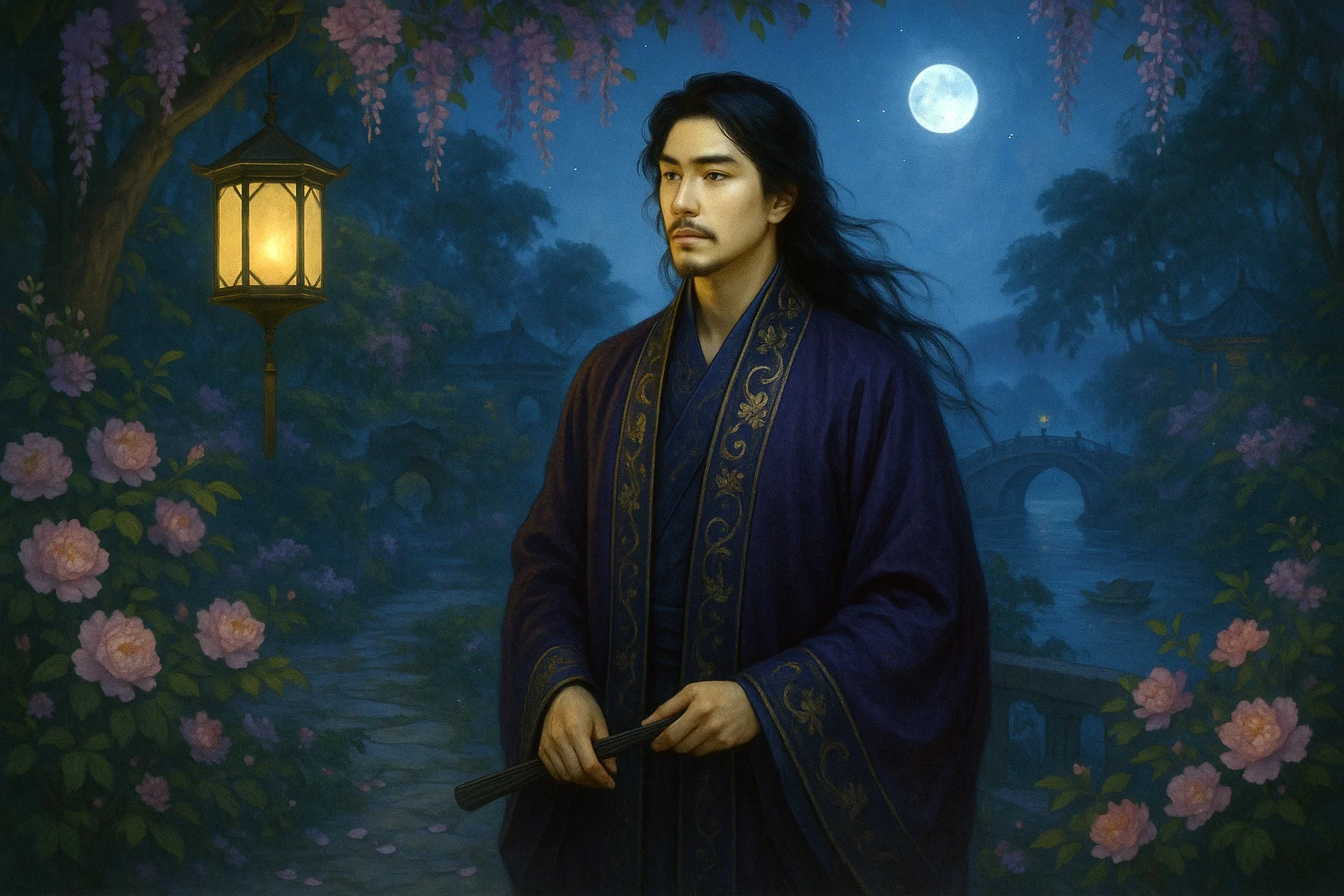
Li Shangyin (李商隐), 813 - 858 AD, was a great poet of the late Tang Dynasty. His poems were on a par with those of Du Mu, and he was known as "Little Li Du". Li Shangyin was a native of Qinyang, Jiaozuo City, Henan Province. When he was a teenager, he lost his father at the age of nine, and was called "Zheshui East and West, half a century of wandering".