


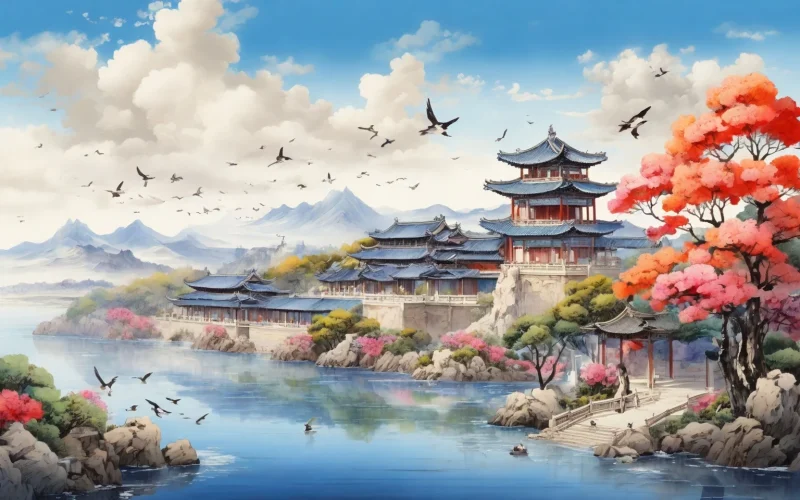
The swallows' twitter seems to grieve over the lost spring;
To dust have returned palace flowers on the wing.
Since the overthrown dynasty closed its splendid scene,
They have come many times but nobody is seen.
Original Poem
「隋宫燕」
李益
燕语如伤旧国春,宫花一落已成尘。
自从一闭风光后,几度飞来不见人。
Interpretation
The Sui Palace refers to the detached palace built by Emperor Yang of Sui in Jiangdu (modern-day Yangzhou, Jiangsu). During the Daye era, Emperor Yang journeyed to Jiangdu three times. Each procession featured a fleet of vessels stretching over two hundred li, with prefectures and counties along the route offering lavish provisions, leading to extravagant expenditures. Within the Jiangdu Palace, luxury reached its peak: beauties were as plentiful as clouds, and song and dance lasted throughout the night. Yet, in little more than a decade, the Sui house collapsed, Emperor Yang was killed in Jiangdu, and those towering palaces and halls fell into ruin, becoming nesting places for swallows.
By the time Li Yi passed by this Sui Palace, it was the Mid-Tang era. After the An Lushan Rebellion, the Tang house, though surviving, was severely weakened. Standing before the ruined palace walls, watching the swallows fly to and fro, listening to their soft chirping, what came to his mind was that history from a century past. Those swallows returned year after year to build their nests here as before, yet the people who once inhabited the palace were long gone. “几度飞来不见人” ("How many times have they flown back, yet found no one")—these seven characters describe the swallows, but also describe people; they write of the Sui, but also of the Tang. The poet does not directly comment on the merits and faults of Emperor Yang of Sui, nor does he express lamentations on rise and fall. He simply places the images—the swallows' chirps, the palace flowers, the people-less palace—together and lets them speak for themselves. This reserved expression carries more power than any commentary.
First Couplet: "燕语如伤旧国春,宫花一落已成尘。"
Yàn yǔ rú shāng jiù guó chūn, gōng huā yī luò yǐ chéng chén.
The swallows' twitter seems to mourn the old kingdom's spring;
The palace flowers, once fallen, turn at once to dust.
The poem opens with personification applied to the swallows' chirping. The words "seem to mourn" (如伤, rú shāng) imbue the swallows with human emotion—they return each year, see the palaces still standing, yet find none of the people from back then; their soft chirping thus sounds like mourning. The next line, "The palace flowers, once fallen, turn at once to dust," shifts from swallows to flowers, from sound to sight. The palace flowers were once witnesses to splendor; now, having fallen and turned to dust, they leave not even a trace. Between "once fallen" (一落, yī luò) and "turn at once to dust" (已成尘, yǐ chéng chén), there is no transition, no struggle, exhausting the fragility of glory.
Second Couplet: "自从一闭风光后,几度飞来不见人。"
Zìcóng yī bì fēngguāng hòu, jǐ dù fēi lái bù jiàn rén.
Ever since the scene was barred and splendour put aside,
How many times have they flown back, yet found no one inside.
This couplet is the core of the entire poem. "Ever since the scene was barred" (一闭风光后, yī bì fēngguāng hòu) marks the turning point—once that palace gate was closed, the world within forever became the past. The word "scene/splendour" (风光, fēngguāng) refers both to the natural scenery and, more importantly, to the glorious spectacle of that bygone era. The next line, “几度飞来不见人” ("How many times have they flown back, yet found no one"), writes of the changes in human affairs from the perspective of the swallows. Swallows are migratory birds, returning year after year. They do not know of dynastic change; they only know the place where they can build their nest is still there, but those people, those who once lived here, never appear again. This single stroke writes the ruthlessness of time to its extreme.
Holistic Appreciation
This is a poem reflecting on the past that uses a minute subject to address a monumental theme. In its four lines and twenty-eight characters, with swallows as the main thread and palace flowers as a foil, it gathers the rise and fall of the Sui dynasty and the vicissitudes of history into an extremely simplified picture.
The first two lines describe the swallows' chirps and the palace flowers, employing personification. The swallows "seem to mourn," the palace flowers "turn to dust"—one has sound, the other is formless; one is lively, the other silent—together they constitute a recollection of bygone glory. The last two lines describe the swallows' return and the people's absence, employing contrast. The juxtaposition of "how many times have they flown back" (几度飞来, jǐ dù fēi lái) and "found no one" (不见人, bù jiàn rén) writes the passage of time and the impermanence of human life in a startling manner.
The poet does not write of Emperor Yang's excesses, nor of Jiangdu's fall; he does not even directly express his own sentiments. He simply stands there, watches the swallows fly to and fro, listens to their chirping, and then records it all. This expressionless style of writing is more thought-provoking than any impassioned discourse.
The swallows in the poem provide a marvelous perspective. They belong to no dynasty, care not for any rise or fall; they simply return and build their nests by instinct. It is precisely this "heartlessness" that sets off the "heartfulness" of the human world. Humans have hearts, thus they feel pain, they sigh, they write poetry; swallows are heartless, thus they return the same each year, indifferent to the changes. It is this contrast that makes the poem's lament all the more profound.
Artistic Merits
- Personification, Transferring Emotion to Objects: Using "seem to mourn" to describe the swallows' chirping endows a natural object with human emotion, making the heartless swallows witnesses to historical vicissitudes, enhancing the poem's emotional power.
- Using the Small to See the Large, Handling Weighty Themes Lightly: Starting from minute things like swallows and palace flowers, the poem addresses the monumental theme of dynastic rise and fall. The technique is clever, the meaning profound.
- Vivid Contrast, Intensifying Vicissitude: The juxtaposition of "how many times have they flown back" and "found no one" condenses the passage of time and the changes of human life into a single line, carrying immense weight.
- Reserved Language, Far-reaching Artistic Conception: The entire poem contains not a single word directly expressing lament for rise and fall, yet every line is inseparable from such reflection. Readers, amidst the swallows' chirps and falling flowers, can naturally sense that deep melancholy.
- Unique Perspective, Ingenious Conception: Taking swallows as the main characters, using their return to contrast the permanent disappearance of people offers a fresh perspective and clever conception, renewing the theme of reflecting on the past.
Insights
This poem, through the swallows' eyes, gazes upon the rise and fall of human affairs, leaving for later generations a meditation on time.
The swallows return year after year, unaware of dynastic change. They only see that the palaces still stand, that they can build nests; they do not see that those people are gone. “几度飞来不见人” ("How many times have they flown back, yet found no one")—these seven characters exhaust the relationship between humans and time: humans build palaces, construct cities, but time will ultimately take the people away, leaving only empty buildings for swallows, for the wind, for later generations to ponder.
On a deeper level, this poem reveals that those who can truly perceive the pain of rise and fall are not swallows, but humans. Swallows are heartless, thus they return the same each year; humans have hearts, thus they stand before ruins, hearing the swallows' chirps and feeling sorrow. This "sorrow" is humanity's fate, and also its privilege. Precisely because we can sorrow, can feel pain, can write poetry, we become human, leaving traces of heartfulness within heartless time.
The Sui Palace has turned to dust, the Sui Emperor has turned to earth, but Li Yi's poem remains. For a thousand years, everyone who reads “几度飞来不见人” ("How many times have they flown back, yet found no one") will, in that moment, stand with the poet before those ruined palace walls, watching the swallows fly to and fro. This is the meaning of literature: it cannot stop time, but it can make a certain moment within time live forever.
Poem translator
Xu Yuanchong (许渊冲)
About the poet
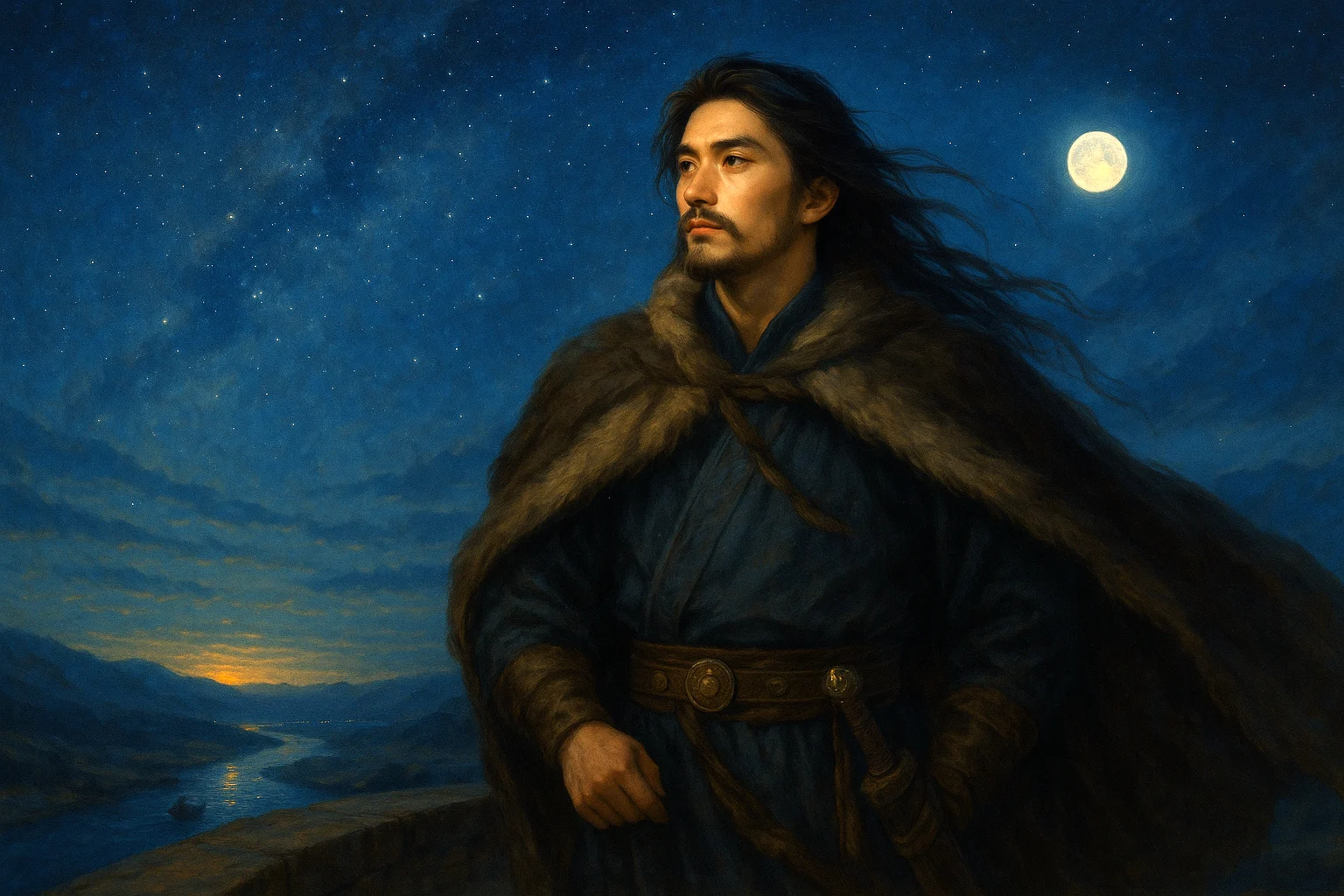
Li Yi (李益 748 - 829), a native of Wuwei, Gansu Province, was a representative poet of the Frontier Fortress School in the Mid-Tang period. He became a jinshi (presented scholar) in the fourth year of the Dali era (769 AD) and served through the reigns of Emperor Xianzong and Emperor Wenzong, eventually rising to the position of Minister of Rites. His poetry is particularly renowned for its seven-character quatrains, characterized by a style that is both solemn and poignant, blending the grandeur of High Tang frontier poetry with the plaintive elegance of the Mid-Tang. Inheriting the legacy of Wang Changling and inspiring later poets like Li He, his frontier poems carved out a unique and distinctive place in the Mid-Tang literary world.