


Where is the temple of the famous Premier? --
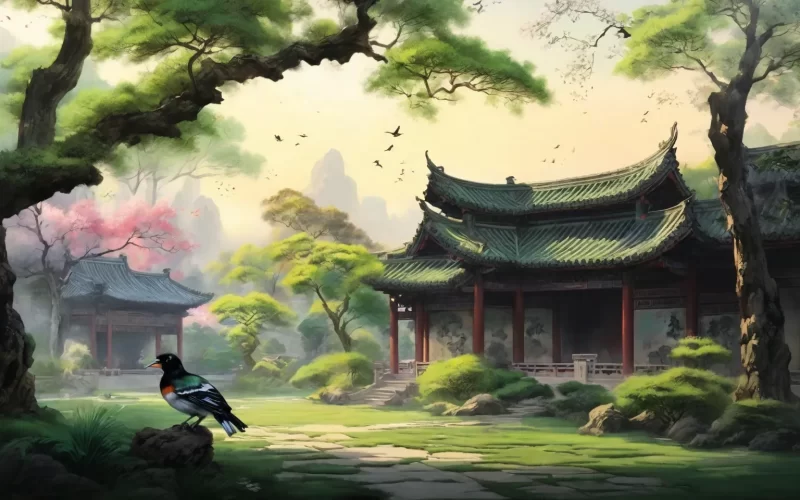
In a deep pine grove near the City of Silk,
With the green grass of spring colouring the steps,
And birds chirping happily under the leaves.

...The third summons weighted him with affairs of state
And to two generations he gave his true heart,
But before he could conquer, he was dead;
And heroes have wept on their coats ever since.
Original Poem
「蜀相」
杜甫
丞相祠堂何处寻?锦官城外柏森森,
映阶碧草自春色,隔叶黄鹂空好音。
三顾频烦天下计,两朝开济老臣心。
出师未捷身先死,长使英雄泪满襟。
Interpretation
This poem was composed in the spring of 760 CE, the first year of the Shangyuan era under Emperor Suzong of the Tang dynasty, shortly after Du Fu's arrival in Chengdu and his settlement by the Huanhua Stream. The An Lushan Rebellion had persisted for five years. Although the two capitals had been recovered, the turmoil remained unresolved, and the state was unstable. Carrying the lifelong ambition to “guide his sovereign to become a sage king,” the poet journeyed to Shu and, amid his wanderings, visited the Temple of the Martial Marquis in the southern outskirts of Chengdu. As he gazed upon the site, the figure of Zhuge Liang—utterly devoted until death, yet eternally marked by the regret of an unfulfilled expedition—profoundly resonated with Du Fu’s own anxieties for the nation and sorrow for the times. Thus, this poem was born: a profound tribute to a great historical figure and a poignant spiritual communion between a later poet and an ancient sage-minister.
First Couplet: 丞相祠堂何处寻?锦官城外柏森森。
Chéngxiàng cí táng hé chù xún? Jǐn guān chéng wài bǎi sēn sēn.
Where is the temple of the famous Premier seen? / Outside the Town of Brocade, 'mid cypresses dark and green.
The poem begins with a question, immediately creating a sense of deliberate search and deep reverence. “Where is… seen?” does not imply uncertainty of location but conveys the poet’s solemn and pious intention to pay homage. The answer, “‘mid cypresses dark and green,” responds with a powerful visual image. It identifies the temple’s site and, through the ancient cypresses’ vigor, solemnity, and density, establishes a dignified, awe-inspiring historical atmosphere, symbolizing Zhuge Liang’s enduring spirit and achievements, thus setting the poem’s overall tone of reverence and somber reflection.
Second Couplet: 映阶碧草自春色,隔叶黄鹂空好音。
Yìng jiē bì cǎo zì chūn sè, gé yè huáng lí kōng hǎo yīn.
Bright grass in spring against the steps turns green in vain; / 'Mid leafy trees golden orioles sing their sweet strain.
This couplet depicts the temple’s immediate scenery with delicate detail and deeply restrained emotion. “In vain” and “sweet strain” are the key phrases here. The words “in vain” create a sharp contrast between the vivid beauty of the natural scene and the poet’s subjective mood of solitude and sorrow: the grass, indifferent, grows fresh and green; the orioles’ song is lovely, yet finds no attentive listener. This self-sufficient spring color and these seemingly purposeless beautiful sounds instead accentuate the temple’s quietude, history’s stillness, and the poet’s boundless sorrow over the perceived loneliness following Zhuge Liang’s death. Using vibrant scenery to convey grief intensifies the emotional effect.
Third Couplet: 三顾频烦天下计,两朝开济老臣心。
Sān gù pín fán tiān xià jì, liǎng cháo kāi jì lǎo chén xīn.
To him the Emperor thrice came, counseling on the land's fate; / To found and maintain two reigns, the old minister served the state.
The focus shifts from scenery to narration, summarizing Zhuge Liang’s life work and character with highly condensed historical language. “Thrice came” illustrates Liu Bei’s sincere recognition of talent and Zhuge Liang’s exceptional wisdom; “found and maintain two reigns” reveals the weight of the trust placed in him, his loyalty to the state, and the immense difficulty of founding and sustaining a dynasty. “Counseling on the land’s fate” showcases his grand strategy; “served the state” reflects his devotion and diligence. Fourteen words encapsulate the essence of his life, filled with immense admiration. The parallelism is precise, the phrasing powerful.
Fourth Couplet: 出师未捷身先死,长使英雄泪满襟。
Chū shī wèi jié shēn xiān sǐ, cháng shǐ yīng xióng lèi mǎn jīn.
But he died before his triumph was won, alas! / How many heroes have since their sleeves wetted with tears for this cause!
The poem concludes with a deep lament that has resonated through the ages. “Before his triumph was won” and “he died” form life’s cruelest paradox, condensing Zhuge Liang’s struggle of “devoting himself until death” and the tragic outcome of “heaven’s will defied” into seven characters—deeply moving. “How many heroes have since their sleeves wetted with tears”: the phrase “how many… since” extends personal grief into historical depth, suggesting that this tragedy of unfulfilled ambition possesses a timeless power to move, capable of evoking profound resonance in all “heroes” who cherish ideals yet face hardship. Du Fu’s own personal sorrow and national anxieties are fully contained within these tears.
Holistic Appreciation
This poem represents the pinnacle of Du Fu’s historical reflections. Its success lies in the “perfect fusion of visiting the past and lamenting the present, and the seamless integration of scenic description, narration, and lyrical expression.” The poem begins with “seen” (seeking the temple) and ends with “tears” wetting the robe. In between, it transitions naturally from dense cypresses and quiet spring scenery to illustrious achievements and enduring regret. The structure is tightly woven, the artistic conception profound and expansive.
The poet does not engage in objective tribute alone. He projects his own intense contemporary concerns into the historical scene. The correspondence between the Shu Han’s “two reigns” and the Tang’s hope for restoration, between Zhuge Liang’s “unfulfilled expedition” and Du Fu’s (and his contemporaries’) inability to serve their country effectively, creates a strong parallel transcending time. Therefore, the grief in “tears for this cause” is shed for Zhuge Liang, for the era, and for the poet himself. This grants the poem strong contemporary relevance and a deep philosophical dimension on human fate, elevating it beyond specific historical commentary into a tribute to ideal character and a lament over historical destiny.
Artistic Merits
- Fusion of Scene and Feeling, Stark Contrast
The second couplet, “Bright grass… in vain” and “‘Mid leafy trees… sweet strain,” uses vibrant spring scenery to contrast the temple’s desolation and the inner melancholy. “Using joyful scenery to express sorrow” achieves an artful intensification of grief and stands as a model of scene-emotion fusion. - Precise Summarization, Exceptional Historical Judgment
The couplet “To him the Emperor thrice came… / To found and maintain two reigns…” accurately summarizes the most crucial encounter, achievements, and spiritual core of Zhuge Liang’s life in fourteen words, demonstrating the poet’s profound historical insight and mastery of concise language. - Somber Emotion, Far-Reaching Resonance
The final couplet, “But he died before his triumph… / How many heroes have since their sleeves wetted…” expresses through personal tears the shared pain of unfulfilled ambition common to heroes across time. The emotion is somber and powerful, possessing a timeless, universal power to move, making it an enduringly celebrated line. - Tight Structure, Natural Progression
The four couplets progress from seeking the temple (question), to viewing the scenery (observation), to remembering the past (recollection), and finally to reflecting on feelings (lament). The transitions are natural and fluid, showcasing the high maturity of Du Fu’s craftsmanship in the seven-character regulated verse form.
Insights
The Temple of the Premier of Shu is more than a historical reflection; it is a spiritual mirror reflecting ideals, fate, and responsibility. It reveals the historical proposition that “great lives are often accompanied by profound regret.” Zhuge Liang’s “died before his triumph” does not diminish his value. On the contrary, precisely because he exhausted all effort yet was thwarted by circumstance, his loyalty and perseverance shine with a more tragic human brilliance.
The core insight this poem offers later generations is this: The value of a life lies not only in the achievement of goals but also in the loyalty, wisdom, and unremitting effort demonstrated in the pursuit of ideals. Even knowing the path is fraught and the outcome uncertain, to still “devote oneself until death”—this spirit alone is enough to “make heroes wet their sleeves with tears,” inspiring countless noble-minded individuals in later ages to persevere through adversity. Through Zhuge Liang’s story, Du Fu establishes a model of character: one who merges personal destiny with the nation’s great cause and persists in striving even amidst tragic circumstances.
Poem translator
Kiang Kanghu
About the poet
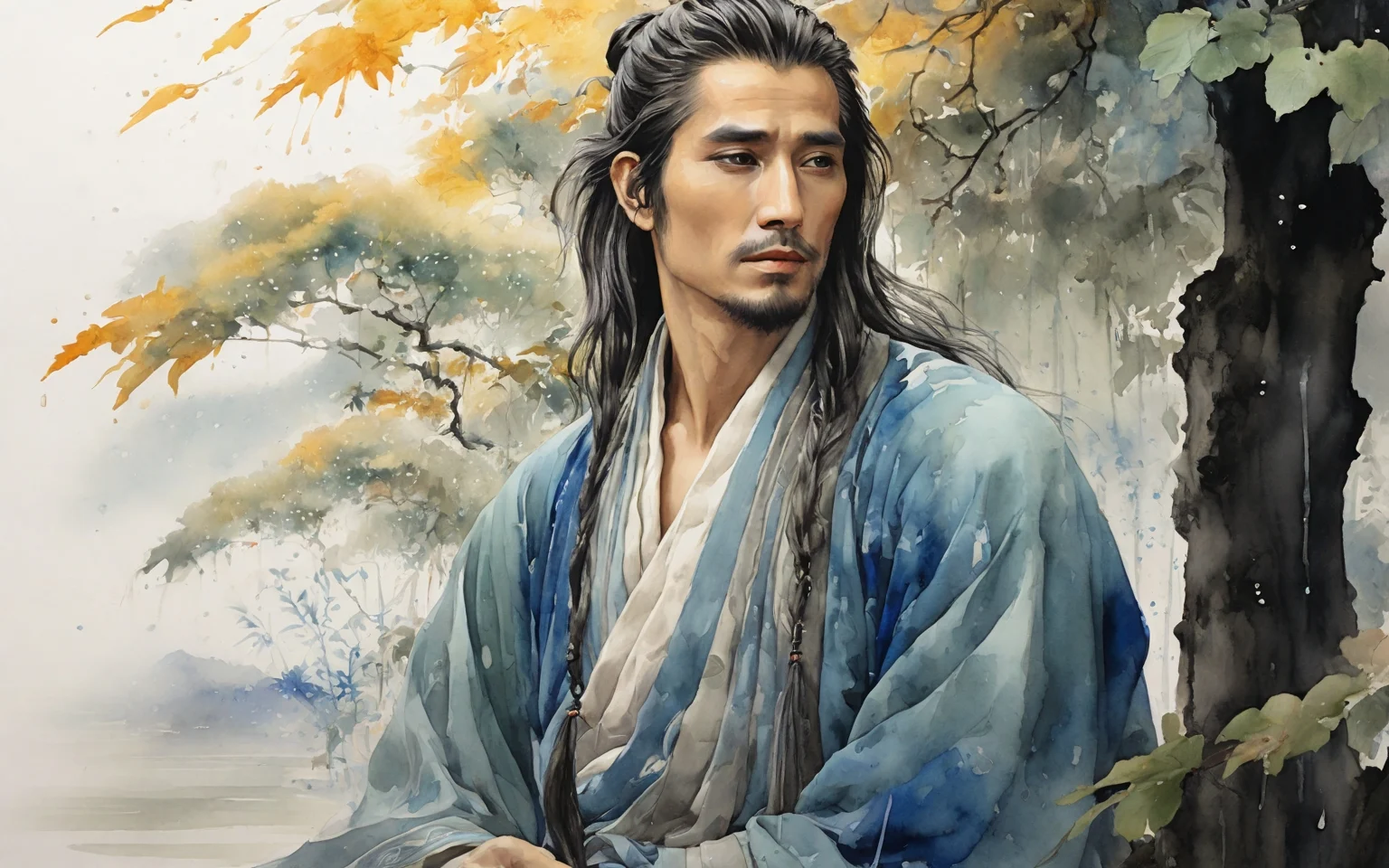
Du Fu (杜甫), 712 - 770 AD, was a great poet of the Tang Dynasty, known as the "Sage of Poetry". Born into a declining bureaucratic family, Du Fu had a rough life, and his turbulent and dislocated life made him keenly aware of the plight of the masses. Therefore, his poems were always closely related to the current affairs, reflecting the social life of that era in a more comprehensive way, with profound thoughts and a broad realm. In his poetic art, he was able to combine many styles, forming a unique style of "profound and thick", and becoming a great realist poet in the history of China.