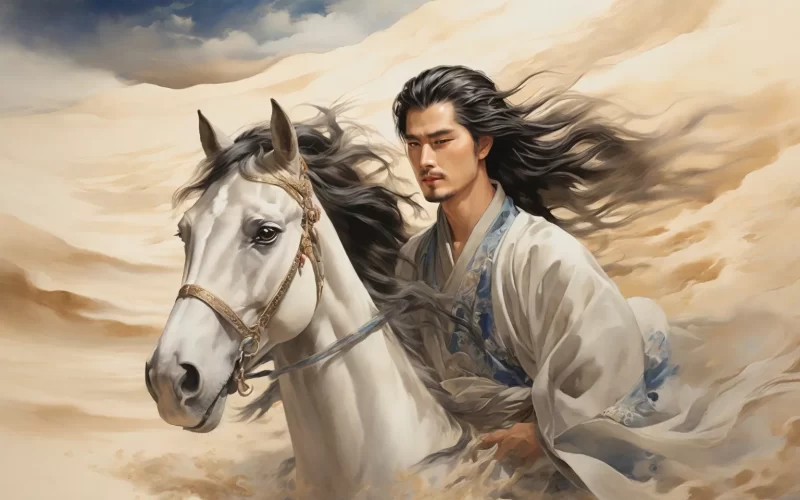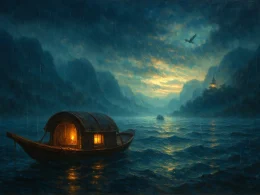



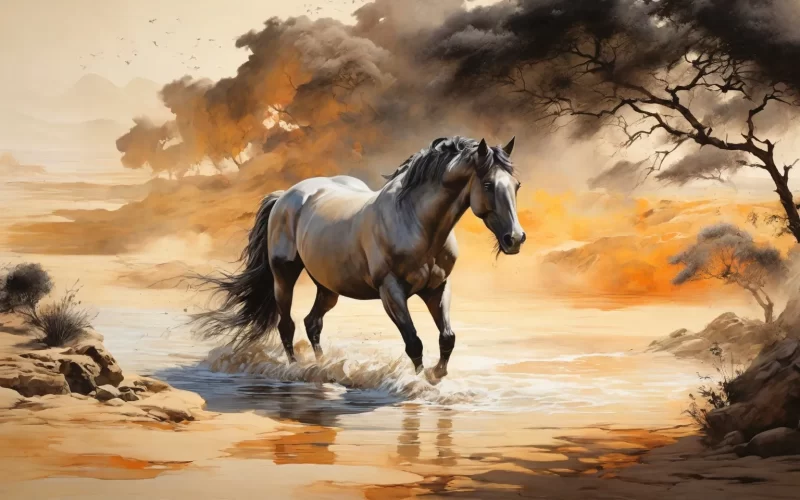
Drink, my horse, while we cross the autumn water!-
The stream is cold and the wind like a sword,
As we watch against the sunset on the sandy plain,
Far, far away, shadowy Lingtao.

Old battles, waged by those long walls,
Once were proud on all men's tongues.
But antiquity now is a yellow dust,
Confusing in the grasses its ruins and white bones.
Original Poem
「塞下曲」
王昌龄
饮马渡秋水,水寒风似刀。
平沙日未没,黯黯见临洮。
昔日长城战,咸言意气高。
黄尘足今古,白骨乱蓬蒿。
Interpretation
Wang Changling lived during the High Tang period, the era of the Tang Dynasty's greatest national power and most illustrious military achievements on the frontier. From Emperor Taizong to Emperor Xuanzong, the Tang engaged in a century-long struggle with neighboring peoples like the Tibetans and Turks along the northwestern border. Countless soldiers marched to the frontier, fighting bloody battles on the sands; some achieved merit and glory, while others were buried beneath the yellow dust. In his early years, Wang Changling traveled extensively in the northwestern frontier regions, experiencing frontier life firsthand. He witnessed the vast desolation of "大漠风尘日色昏" (In the great desert, wind and dust dim the sun's light) and the cruelty of "黄沙百战穿金甲" (Through a hundred battles in the yellow sands, golden armor is pierced). His attitude towards war was complex: on one hand, he celebrated the soldiers' bravery and loyalty; on the other, he deeply understood the death and suffering war brings.
His second "Frontier Song" precisely embodies this complex attitude. The poem contains both the frontier hardships of "水寒风似刀" and the vast, mournful desolation of "黯黯见临洮"; it holds the historical recollection of "昔日长城战,咸言意气高", and, more importantly, the ultimate questioning of "黄尘足今古,白骨乱蓬蒿". This is not a poem glorifying war, but a poem reflecting upon it. It allows us to see that behind the celebrated "high morale" lie countless forgotten "bleached bones."
First Couplet: "饮马渡秋水,水寒风似刀。"
Yǐn mǎ dù qiū shuǐ, shuǐ hán fēng sì dāo.
Watering the horses, we cross the autumn river;
The water bitter cold, the wind like blades.
The opening immediately strikes the senses, depicting the harshness of the frontier environment. "饮马渡秋水"—"Watering the horses" and "crossing"; two actions describing the state of the march. Not stopping, not resting, but constantly moving, constantly fording.
"水寒风似刀"—Five characters that exhaust the severity of an autumn day on the frontier. The water is "寒" (cold)—not cool, but bone-chillingly cold; the wind is "似刀" (like blades)—not blowing, but cutting. This metaphor of "wind like blades" is common in Tang poetry, as in Cen Shen's "风头如刀面如割" (The wind's edge is like a blade cutting the face), but Wang Changling's use is more concise and sharper. This couplet uses physical sensation to convey the essence of war—war, first and foremost, is the suffering of the body.
Second Couplet: "平沙日未没,黯黯见临洮。"
Píng shā rì wèi mò, àn'àn jiàn Líntáo.
Over the level sands, the sun is not yet set;
In the dim gloom, Lintao comes into view.
This couplet shifts from close-up to distant view, from bodily sensation to visual impression. "平沙日未没"—The boundless desert, the setting sun dipping west, yet not yet gone. The words "未没" (not yet set) convey a sense of time standing still, and also the interminable length of the march.
"黯黯见临洮"—"黯黯" (dim/gloomy) describes the murky light, reflecting both insufficient illumination and a heavy heart. Lintao, in modern-day Gansu province, was a crucial garrison town on the Tang Dynasty's northwestern frontier and the site of countless battles. The poet gazes upon Lintao, seeing not just a city, but the history of endless warfare. This couplet uses space to write about time, using the scene before the eyes to express the thoughts in the heart—that gloomy Lintao is both a reality and a piece of history.
Third Couplet: "昔日长城战,咸言意气高。"
Xīrì chángchéng zhàn, xián yán yìqì gāo.
Those bygone battles at the Great Wall,
All speak of the soaring morale of old.
This couplet shifts from the scene before the eyes to historical recollection. "昔日长城战"—The Great Wall symbolizes the frontier and bears witness to war. Those battles fought at the foot of the Wall have long become history, yet people still talk of them, still sing their praises.
"咸言意气高"—People all say how brave the soldiers were then, how high their morale. The phrase "咸言" (all say) expresses unanimous praise. But does the poet's use of these two characters hint at a trace of doubt? When everyone speaks of "意气高" (soaring morale), who will speak for the bleached bones of the fallen? This couplet uses "all say" to describe historical narrative, and also uses "all say" to imply the concealment within history—what we remember is the "high morale"; what we forget are those who never returned.
Fourth Couplet: "黄尘足今古,白骨乱蓬蒿。"
Huáng chén zú jīngǔ, báigǔ luàn pénghāo.
Yellow dust has filled all time, ancient and now;
Bleached bones lie scattered among the weeds.
The final couplet is the poem's conclusion and the answer to all its questioning. "黄尘足今古"—Yellow dust is the color of the frontier, and the color of history. It covers the past and the present; it witnesses all wars and buries all the dead. "白骨乱蓬蒿"—The soldiers of the past are now only bleached bones, scattered amidst the wild grasses. The word "乱" (scattered) expresses the utter desolation of having no one to gather and bury them; the phrase "蓬蒿" (weeds) expresses the wilderness of being forgotten. All the celebrated "意气高" ultimately returns to this "白骨乱蓬蒿". This couplet uses the most direct imagery to express the deepest reflection—what is the meaning of war? When all turns to yellow dust and bleached bones, what significance remains of the former heroism?
Holistic Appreciation
This ancient poem unfolds from the perspective of a march, accomplishing a profound reflection on war through the progression of space and time. The first couplet describes the present, using the bodily sensation of "水寒风似刀" to depict the hardships of war. The second couplet describes what is before the eyes, using the visual impression of "黯黯见临洮" to convey the weight of history. The third couplet turns to history, using the unanimous "咸言意气高" to describe the concealment within narrative. The final couplet addresses the ultimate, using the brutal imagery of "白骨乱蓬蒿" to question the meaninglessness of war.
The entire poem is plain in language, somber in emotion. It lacks flowery rhetoric, lacks impassioned cries; it contains only calm observation and sorrowful questioning. The visceral impact of "水寒" (cold water) and "风似刀" (wind like blades), the imagery of "黯黯" (gloom) and "白骨" (bleached bones)—these are the poet's most authentic feelings about war, and also his most profound critique of it. Compared to Wang Changling's poems celebrating the bravery of soldiers, this poem is more austere, more grave. It does not praise from the victor's perspective, but mourns from the perspective of the dead; it does not justify war, but questions it. This depth of reflection elevates the poem beyond the category of frontier poetry, making it one of the representative anti-war poems of the Tang Dynasty.
Artistic Merits
- Sensory Impact, Authentic Experience: "水寒风似刀" (The water bitter cold, the wind like blades) uses bodily sensation to convey the hardship of war, making the reader empathize deeply.
- Spatial Narrative, Historical Depth: From "临洮" (Lintao) to "长城" (the Great Wall), from the scene before the eyes to historical recollection, space and time intertwine, creating a profound sense of history.
- Potent Contrast, Profound Reflection: The stark contrast between "意气高" (soaring morale) and "白骨乱" (scattered bones) reveals the cruelty and futility of war, prompting deep reflection.
- Concise Language, Weighty Imagery: Images like "黄尘" (yellow dust), "白骨" (bleached bones), and "蓬蒿" (weeds) are concise yet heavy, each word carrying immense weight.
Insights
This poem first reveals to us the true face of war. The celebrated "意气高" (soaring morale), in the poet's lines, ultimately returns to "白骨乱蓬蒿" (bleached bones lie scattered among the weeds). War is never a heroic epic; it is the obliteration of countless lives. It tells us: We must remain vigilant towards war, and doubly cherish peace. The hardships of "水寒风似刀", the horrors of "白骨乱蓬蒿" should not be forgotten, much less glorified.
The "咸言" (all say) in "咸言意气高" also prompts us to consider historical narrative. Everyone says "意气高", but who listens to the voices of the fallen? Historical narrative is always written by the victors, always inclined towards celebration and glorification. It reveals: We must be wary of singular narratives, and listen to forgotten voices. Behind the celebrated "意气高", there are countless stories of "白骨乱蓬蒿" equally worth remembering.
The imagery of "黄尘足今古" (Yellow dust has filled all time) further leads us to contemplate the relentlessness of time and the cycle of history. Yellow dust covers past and present; war has repeated for millennia. From ancient times to now, how many have been stirred by the slogan of "意气高" and marched to war, only to ultimately become "白骨"? This historical cycle gives pause for thought: Have we truly learned from history? Or are we merely repeating the same mistakes?
The figure gazing upon "黯黯见临洮" amidst the "平沙日未没" is especially poignant. He is not a hero, not a general, but an ordinary soldier, on a cold autumn day, leading his horse, fording the icy river, walking towards that gloomy Lintao. Did he know what awaited him? Did he know he might become one of the "白骨乱蓬蒿"? Perhaps he did, perhaps not. But still he walks, still he fords. The fate of this ordinary person is more real, and more moving, than any heroic deed. It teaches us: Behind the grand narratives of history lie the lives and deaths of countless ordinary people. Remembering them is the true respect for history.
Poem translator
Kiang Kanghu
About the poet
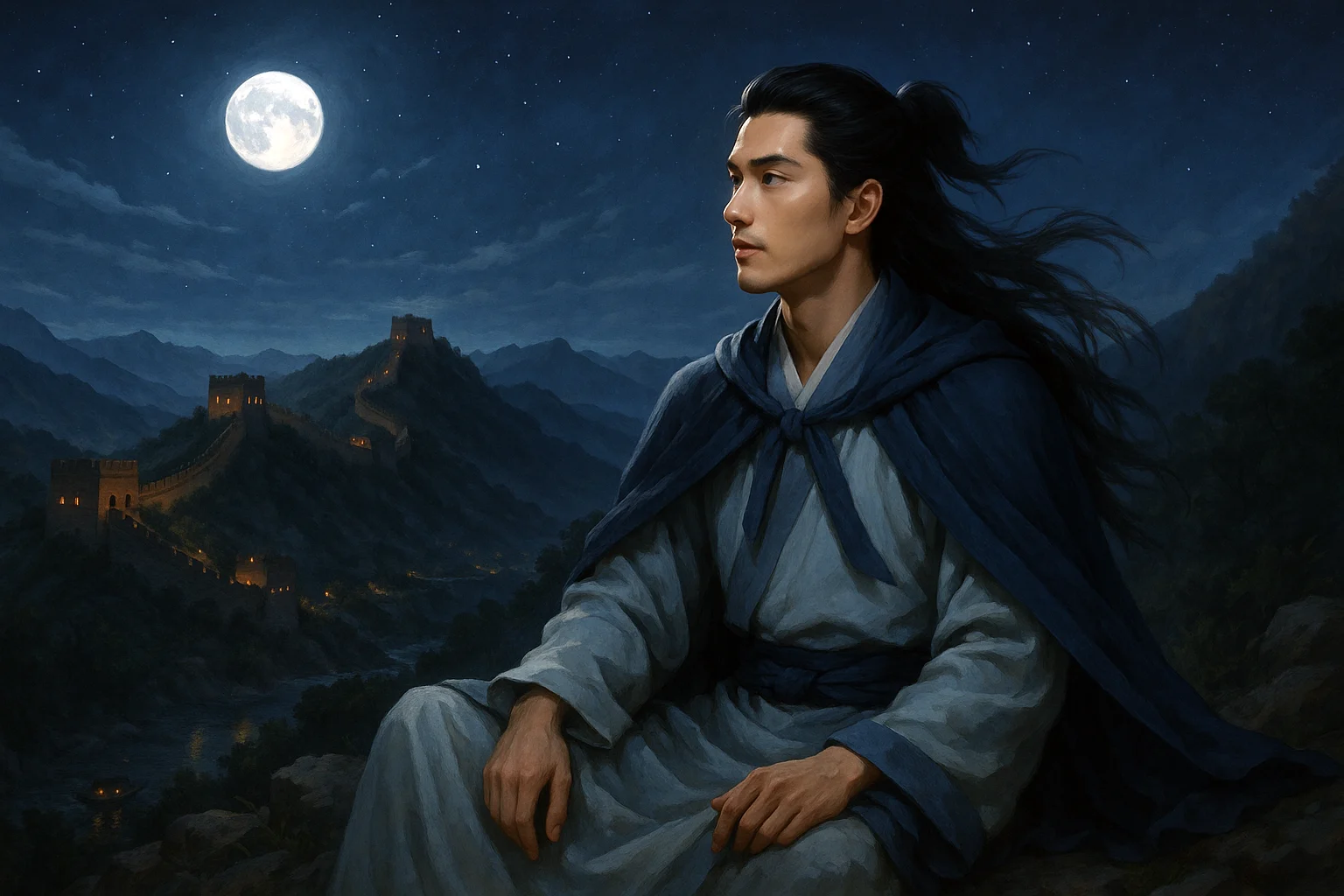
Wang Changling (王昌龄), circa A.D. 690 - 756, was a native of Xi'an, Shaanxi Province. Wang Changling's poems were mostly about the Border Places, love affairs and farewells, and he was well known during his lifetime. His seven poems are equal to those of Li Bai, and he is known as the “Master of seven lines”.