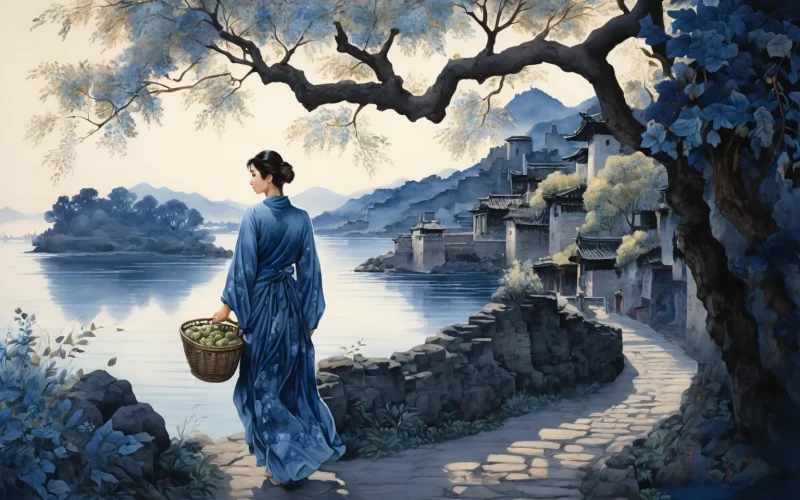
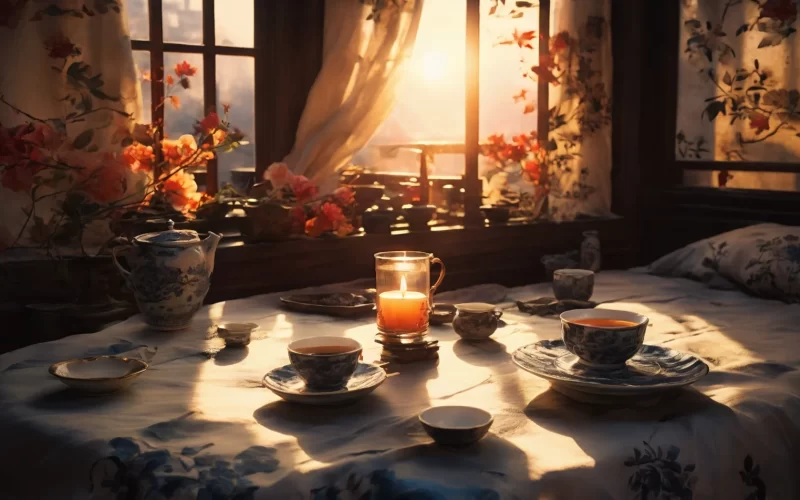
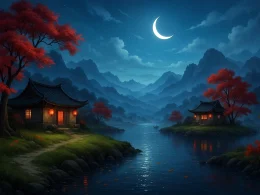
The water-clock drips on — how slow the night is born!
Through trailing clouds, the moon looks out, a visage worn.
The insects chirp all night, by autumn driven cold;
His winter clothes not sent — O Frost, thy hand withhold!
Original Poem
「秋夜曲」
张仲素
丁丁漏水夜何长,漫漫轻云露月光。
秋逼暗虫通夕响,征衣未寄莫飞霜。
Interpretation
This poem is a famous work of a longing wife by the Mid-Tang poet Zhang Zhongsuh. Zhang Zhongsuh's poetry often focuses on women's chamber sentiments and frontier themes. His language is clear and beautiful, his emotions deep and sincere. He was especially skilled at depicting female psychology with delicate brushstrokes, establishing a unique style within the Tang poetic landscape.
This poem was written during the Mid-Tang period, a time of frequent frontier troubles and constant warfare. Countless soldiers garrisoned the distant frontiers year after year, while their wives waited alone in empty chambers, gazing until their eyes grew strained. The female protagonist in the poem is on just such an autumn night, listening to the dripping of the water-clock, watching the moonlight between the clouds, hearing the all-night chirping of insects, longing for the soldier far away. She worries that as autumn deepens and frost grows cold, her husband's winter clothes have not yet been sent. So, she voices a plea to the heavens: "frost should not be strong"—do not send frost yet; wait until I send the winter clothes. This plea is touchingly naive and profoundly moving in its depth of feeling.
Among classical poems, many write of wives longing on autumn nights, some describing moonlight that "cannot be rolled up by blinds in the curtained bower," others describing the autumn wind that "comes back again on the washing block." Zhang Zhongsuh's poem, however, is uniquely conceived. It uses "drips and drips" to write the night's length, "boundless light clouds" to write the moon's faintness, and "Autumn drives dark insects" to write the deepening cold, building layer upon layer, finally concluding with the line "When winter clothes are not made, frost should not be strong," writing the woman's deep concern for her soldier husband in a manner both subtle and intense. The three words "莫飞霜" (frost should not be strong) are not a command to heaven and earth, but a plea to fate; not ignorance of frost's timely descent, but a prayer uttered despite knowing it may be futile—this persistence is the best proof of the longing wife's deep affection. The entire poem begins with scene and ends with emotion, fusing the cold of the autumn night with the warmth of the wife's love within twenty-eight characters, a masterpiece among Mid-Tang boudoir laments.
First Couplet: "丁丁漏水夜何长,漫漫轻云露月光。"
Dīng dīng lòu shuǐ yè hé cháng, màn màn qīng yún lù yuè guāng.
How long the water drips and drips throughout the night! The boundless light clouds let the moonbeams shed their light.
The poem opens with two reduplicated words sketching the autumn night's chill and length. "丁丁漏水" (the water drips and drips) describes the sound of the water-clock dripping—the two characters "丁丁" (drips and drips) are both an imitation of sound and a marking of time; each falling drop strikes the longing wife's heart. "夜何长" (How long the night) uses a rhetorical question in three characters to express the torment of the long night—it is not that the night is too long, but longing makes the night seem long. The next line, "漫漫轻云露月光" (The boundless light clouds let the moonbeams shed their light), shifts from hearing to sight. "漫漫" (boundless) describes the endless clouds and also the vast emptiness of her heart. "露月光" (let the moonbeams shed their light) describes the moonlight filtering through gaps in the clouds, faint and intermittent, just like the flickering hope in her heart. This couplet uses sound to write quiet, light to write shadow, portraying the loneliness of the wife keeping solitary vigil in her empty chamber with penetrating depth.
Second Couplet: "秋逼暗虫通夕响,征衣未寄莫飞霜。"
Qiū bī àn chóng tōng xī xiǎng, zhēng yī wèi jì mò fēi shuāng.
Autumn drives dark insects to chirp the whole night long. When winter clothes are not made, frost should not be strong.
This couplet is the soul of the entire poem. It shifts from scene to feeling, directly expressing the heart's intent. "秋逼暗虫通夕响" (Autumn drives dark insects to chirp the whole night long) writes of autumn deepening, the cold intensifying. The word "逼" (drives) is autumn's pressure, also time's urgency. The insects chirping "通夕响" (the whole night long) are the background sound of the autumn night, also the agitation in the wife's heart. The next line, "征衣未寄莫飞霜" (When winter clothes are not made, frost should not be strong), concludes the entire piece with a plea. "征衣未寄" (winter clothes are not made) is the greatest concern weighing on her heart. "莫飞霜" (frost should not be strong) is her most earnest entreaty to the heavens. She knows well that frost descends in its time, not subject to human will, yet she still must utter these words—not from ignorance of heaven's decree, but because feeling compels her, she cannot but ask. These three words, "莫飞霜," are wonderfully effective in their "unreasonableness," genuine in their artlessness, writing the wife's deep concern for her soldier husband with utter vividness.
Holistic Appreciation
This is a divine work among Zhang Zhongsuh's boudoir lament poems. The entire poem consists of four lines and twenty-eight characters. Using the autumn night as the backdrop, the wife's hearing and sight as the thread, it blends the night's length, the moon's faintness, the insects' all-night chirping, and the fear of frost, showcasing the wife's deep concern for her soldier husband far away.
Structurally, the poem presents a progression from scene to feeling, layer upon layer. The first couplet uses "the water drips and drips" and "boundless light clouds" to write the quiet of the autumn night, using the exclamation "How long the night" to point out the wife's torment. The second couplet uses "Autumn drives dark insects" to write the deepening cold, concluding with "When winter clothes are not made, frost should not be strong" to finally release the emotion accumulated earlier. Between the four lines, it moves from sound to light, from light to insects, from insects to frost, progressing layer by layer, forming a seamless whole.
Thematically, the core of this poem lies in the three words "莫飞霜" (frost should not be strong). The night of "drips and drips", the moon of "boundless light clouds", the insects chirping "the whole night long"—all pave the way for this one line. This "莫飞霜" is the wife's entreaty to the heavens, and also her accusation against fate; it is her concern for her soldier husband, and also her sigh at her own helplessness. She can do nothing, can only say to the cold night, "frost should not be strong"—the more naive this statement, the more moving; the more powerless, the more full of feeling.
Artistically, the poem's most moving aspect lies in the delicate technique of "using scene to write feeling, using sound to convey emotion." The poet uses "drips and drips" to write the sound of dripping water, "boundless" to write the appearance of light clouds, "the whole night long" to write the duration of the insects' chirping. Each sound, each image, is an externalization of the wife's inner world. That "drips and drips" of the water-clock strikes her heart; that "whole night long" chirping of insects sounds in her ears; that plea of "frost should not be strong" is the truest voice from the depths of her heart. This method of entrusting emotion to sound and image makes abstract longing palpable and tangible.
Artistic Merits
- Using Sound to Write Quiet, Scene to Write Feeling: Using "drips and drips" and "insects chirp the whole night long" to write the quiet of the autumn night; using "boundless light clouds" and "moonbeams shed their light" to write the cold of the autumn night. Sound and scene blend; emotion naturally appears.
- Reduplicated Words Vivid, Rhythm Gentle: The two reduplicated words "丁丁" and "漫漫" (drips and drips; boundless) have both auditory and visual impact and also give the poem a gentle rhythm, matching the wife's train of thought.
- Concluding Line States Theme, Unreasonable Yet Wonderful: The plea "When winter clothes are not made, frost should not be strong" concludes the poem. Seemingly unreasonable, it is the natural outpouring of emotion at its peak, artless and true, deeply moving.
- Concise Language, Deep Emotion: The entire poem has twenty-eight characters. It contains scene and feeling, moving from description to direct expression, progressing layer by layer, with enduring resonance.
Insights
This poem, through a solitary vigil on an autumn night, speaks to an eternal theme—The deepest feeling is often not a passionate declaration, but that one plea, "frost should not be strong."
First, it lets us see "the weight of waiting." In that night of "drips and drips", each drop strikes the heart. The insects chirping "the whole night long", each sound urges one toward age. Waiting is the most concrete form of longing; the long, long night is the truest measure of concern. It reminds us: To love someone is to worry about their warmth and cold in countless such nights, to plead with fate on their behalf.
On a deeper level, this poem makes us contemplate "the meaning of a plea." She knows well that frost descends in its time, not subject to human will, yet she still must say, "frost should not be strong." This is not ignorance, but the obsession of deep feeling reaching its peak; not superstition, but the instinct of concern reaching its depths. It makes us understand: True love is not rational calculation, but the persistence of doing despite knowing it may be futile.
And what is most moving is the poem's instinct of "worrying on the other's behalf." She herself keeps solitary vigil in an empty chamber, lonely and unable to sleep. Yet what weighs on her heart is not herself, but the soldier husband far away—fearing he is cold, fearing the chill, fearing his winter clothes are not yet sent. This love that "suffers oneself, not the other" is the most moving core of the longing-wife poem, and also the deepest warmth in the human world.
This poem is set in a Mid-Tang autumn night, yet it allows everyone who worries for another in the deep night to find resonance within it. The sound of "drips and drips" is the echo in the ears of every waiter. The moonlight of "boundless light clouds" is the scenery in the eyes of every long-er. The plea of "frost should not be strong" is the truest voice in the hearts of everyone who loves deeply. This is the vitality of poetry: it writes of a longing wife's heartfelt thoughts, but one reads of people in all eras who, in the deep night, worry for another.
About the poet
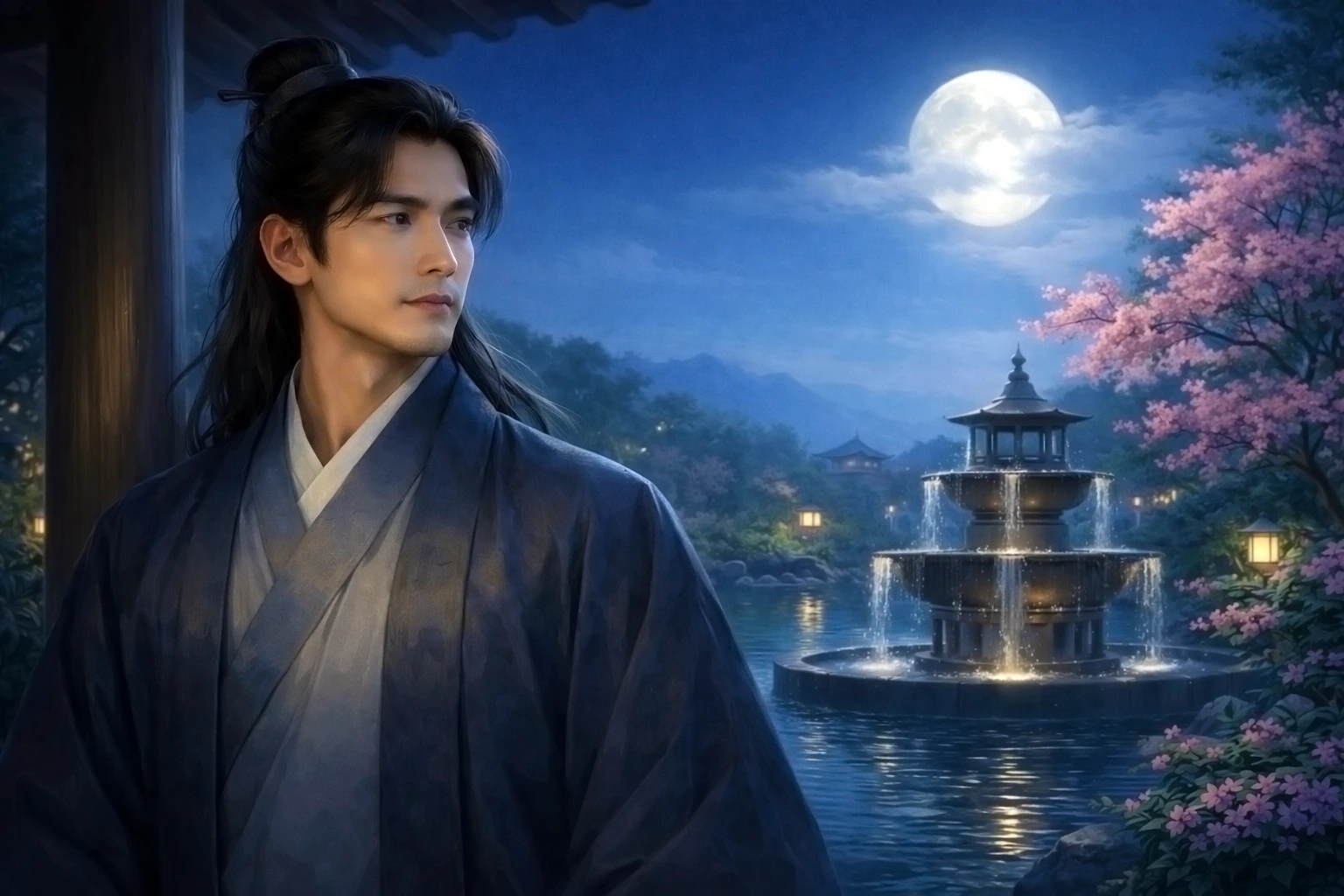
Zhang Zhongsu (张仲素 c. 769 - c. 819), a native of Hejian City, Hebei Province, was a renowned poet of the Mid-Tang period. He passed the jinshi examination in the fourteenth year of the Zhenyuan era (798 AD) and also succeeded in the Boxue Hongci (Erudite Scholar) examination. He held official positions including Hanlin Academician and Drafter of the Central Secretariat. His poetry excelled in the yuefu (Music Bureau) style, particularly in depicting the sentiments of women longing for their absent husbands. His poetic style is characterized by a delicate, refreshing clarity combined with a touch of heroic vigor. Together with Linghu Chu and Wang Ya, both also Drafter of the Central Secretariat, he engaged in poetic exchanges, forming a triumvirate that stood alongside Bai Juyi’s popular school and Han Yu’s unconventional school in the literary landscape of the time.