


O youngest, best-loved daughter of Xie,
Who unluckily married this penniless scholar,
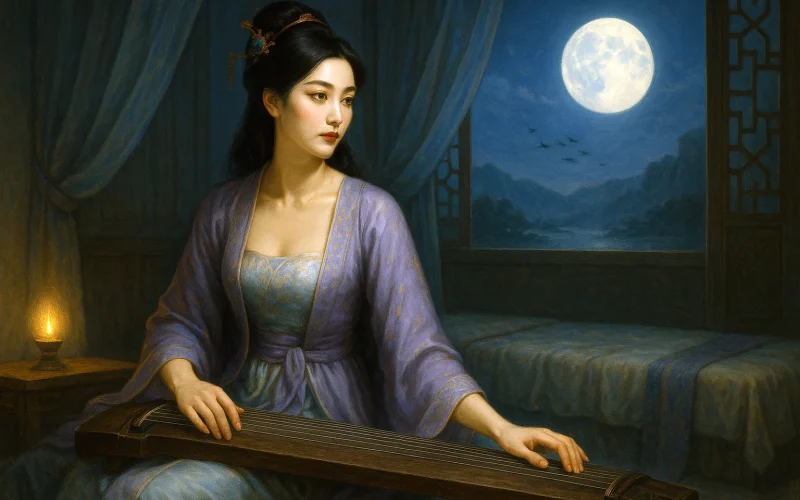
You patched my clothes from your own wicker basket,
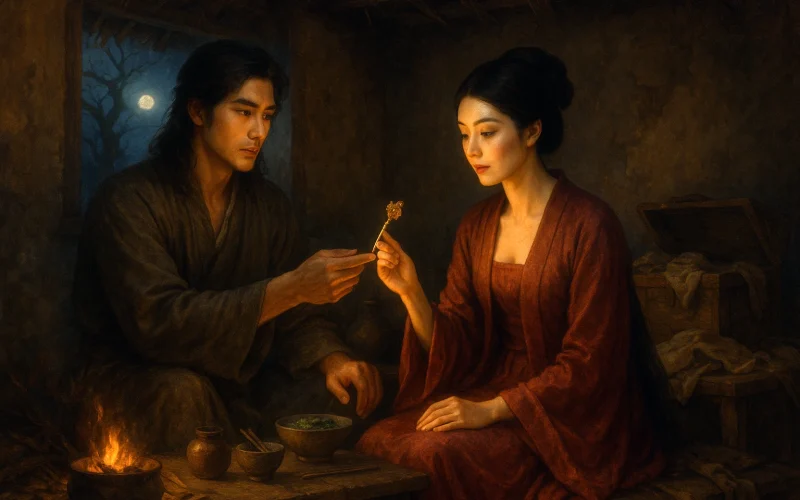
And I coaxed off your hairpins of gold, to buy wine with;
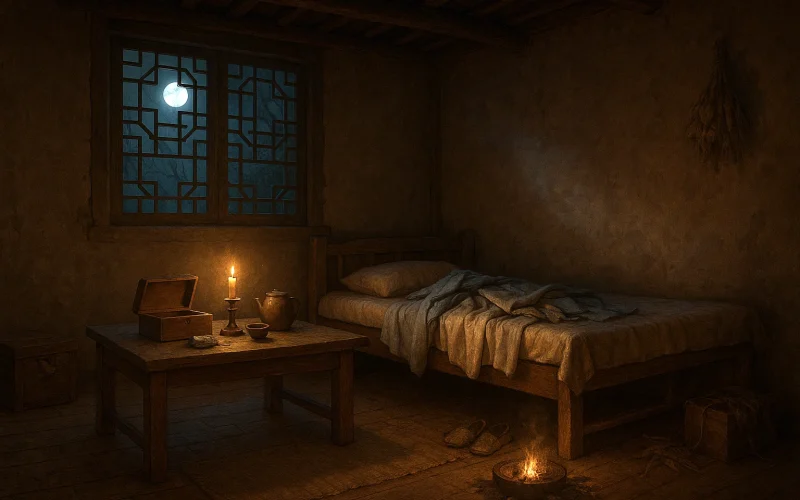
For dinner we had to pick wild herbs --
And to use dry locust-leaves for our kindling.
...Today they are paying me a hundred thousand --
And all that I can bring to you is a temple sacrifice.
Original Poem
「遣悲怀 · 其一」
元稹
谢公最小偏怜女,自嫁黔娄百事乖。
顾我无衣搜荩箧,泥他沽酒拔金钗。
野蔬充膳甘长藿,落叶添薪仰古槐。
今日俸钱过十万,与君营奠复营斋。
Interpretation
This set of poems is by the Mid-Tang poet Yuan Zhen, mourning his deceased wife Wei Cong. It was composed about a year after Wei Cong's death, around the fifth year of the Yuanhe period (810 AD), when Yuan Zhen was serving as a Censor. Wei Cong was from a noble family, the youngest daughter of Wei Xiaqing, the Junior Guardian of the Heir Apparent, and the most beloved, cherished pearl of the family. In the first year of Yuanhe (806 AD), the twenty-year-old Wei Cong married Yuan Zhen. At that time, Yuan Zhen had not yet achieved fame, and their life was austere. Wei Cong did not despise the poverty, content with a simple life. The couple supported each other through hardship, their affection profound and sincere. However, heaven did not grant them many years. In the fourth year of Yuanhe (809 AD), Wei Cong passed away from illness at the young age of twenty-seven. At this time, Yuan Zhen had already been demoted to Jiangling for offending the eunuchs. Disappointed in his official career, physically and mentally exhausted, he then suffered the pain of losing his wife—his sorrow can be imagined.
This set contains three poems, a deep emotional recollection of Yuan Zhen's deceased wife's life. This is the first one, with memories of the difficult life after marriage as its main thread. Through specific, minute details of daily life, it portrays Wei Cong's character of being content in poverty, virtuous, and considerate. A strong contrast is formed between the past where "nothing good" and the present where "with a salary of a hundred thousand and more" to express the poet's profound longing and endless guilt towards his deceased wife. The entire poem writes of the deepest emotion with the plainest language, revealing the truest affection through trivial details. It is a model work among elegiac poetry where "the essence emerges from plainness."
First Couplet: "谢公最小偏怜女,自嫁黔娄百事乖。"
Xìe gōng zuì xiǎo piān lián nǚ, Zì jià Qián Lóu bǎi shì guāi.
As the fair daughter of a noble premier, You’d meet with nothing good since you wed a poor cavelier.
The poem opens with two allusions indicating Wei Cong's status and her situation after marriage. "谢公最小偏怜女" (As the fair daughter of a noble premier) uses the典故 of the Eastern Jin's Xie An favoring his niece Xie Daoyun, metaphorically referring to Wei Cong's noble birth and deep paternal love. "自嫁黔娄百事乖" (You’d meet with nothing good since you wed a poor cavelier) uses the典故 of the impoverished scholar Qian Lou of the Warring States period, comparing himself to the poor scholar, writing that after Wei Cong married him, nothing went well. The contrast between the "偏怜女" (fair daughter) and "黔娄" (poor cavelier) is a contrast between her birth and her circumstances—she should have worn fine silks and eaten delicacies, yet she was willing to share his poverty; she should have lived in comfort and ease, yet she had to do everything herself. Within this couplet, the poet, using two allusions, juxtaposes Wei Cong's nobility with the hardships of married life, setting a tone both deeply affectionate and guilty for the entire poem.
Second Couplet: "顾我无衣搜荩箧,泥他沽酒拔金钗。"
Gù wǒ wú yī sōu jìn qiè, Nì tā gū jiǔ bá jīn chāi.
You’d look in box for garments I wore; You’d pull gold pin from hair to pay for wine I’d implore.
This couplet uses two details of daily life to write of Wei Cong's selfless devotion to her husband. "顾我无衣搜荩箧" (You’d look in box for garments I wore) writes that seeing her husband had no clothes, she would rummage through boxes and chests to search. The word "搜" (look) contains her thoughtfulness, her urgency. "泥他沽酒拔金钗" (You’d pull gold pin from hair to pay for wine I’d implore) writes that when her husband pestered for wine, she would pull the only gold hairpin from her hair to trade for wine. The word "泥" (implore) is the husband's playful pestering, and also the wife's indulgence. The word "拔" (pull) is her without hesitation, and her holding nothing back. These two lines, one writes of clothing, the other of wine; one writes of daily necessities, the other of the husband's "greed." Yet whatever the husband needed, she gave her all, without complaint. With extremely delicate brushstrokes, the poet writes of Wei Cong's virtue and selflessness as if before one's eyes.
Third Couplet: "野蔬充膳甘长藿,落叶添薪仰古槐。"
Yě shū chōng shàn gān cháng huò, Luò yè tiān xīn yǎng gǔ huái.
With dry herbs cooked as food you’d be content; With dead leaves for fuel beneath an ancient tree you went.
This couplet continues to write of the hardships of married life, yet reveals even more Wei Cong's contentment in poverty. "野蔬充膳甘长藿" (With dry herbs cooked as food you’d be content) writes that she used wild vegetables to satisfy hunger, yet said those vegetables were sweet—this word "甘" (be content) is not the taste of the vegetables, but her state of mind: as long as she could be with you, anything was sweet. The next line, "落叶添薪仰古槐" (With dead leaves for fuel beneath an ancient tree you went), writes that she relied on the fallen leaves of an old locust tree for firewood—that word "仰" (beneath) is her dependence on nature, and also her acceptance of life. She never complained, never despised, only silently endured it all, even finding sweetness within the hardship. This couplet writes of Wei Cong's character of being content with her lot and resilient to the marrow.
Fourth Couplet: "今日俸钱过十万,与君营奠复营斋。"
Jīn rì fèng qián guò shí wàn, Yǔ jūn yíng diàn fù yíng zhāi.
Now with a salary of a hundred thousand and more, I can but mourn for you and offer sacrifice before.
The final couplet concludes the entire piece with a strong contrast, pushing the poem's sorrowful lament to a climax. "今日俸钱过十万" writes of the poet's present wealth and honor—he holds a high official post with a generous salary, no longer worrying about food and clothing. The next line, "与君营奠复营斋" , however, uses the phrase "与君" to point out the emptiness of this wealth—his wife is no longer in the world; he can only hold memorial ceremonies and offerings for her, to pray for her soul. This "营奠" and "营斋" are the only things the poet can do for his wife; the word "复" writes exhaustively of the helplessness and sorrow of him holding these ceremonies and offerings again and again. In the past, during the days of "With dry herbs cooked as food" , she was content. Today, with the wealth of "a salary of a hundred thousand and more" , she cannot enjoy it. This contrast between "past poverty" and "present wealth" drives the poet's guilt and longing for his deceased wife to a harrowing depth.
Holistic Appreciation
This is a divine work among Yuan Zhen's elegiac poems, the first of the three Thinking of My Deceased Wife. The entire poem consists of eight lines and fifty-six characters. Using memories of the difficult life after marriage as a starting point, it merges Wei Cong's virtue, selflessness, and contentment in poverty with the poet's present wealth, guilt, and endless longing, showcasing the poet's deepest affection for his deceased wife.
Structurally, the poem presents a progression from past to present, from events to emotion. The first couplet juxtaposes "As the fair daughter of a noble premier" and "You’d meet with nothing good since you wed a poor cavelier," indicating Wei Cong's birth and her situation after marriage. The second and third couplets use four specific details of daily life—"look in box for garments" (顾我无衣搜荩箧), "pull gold pin from hair to pay for wine" (泥他沽酒拔金钗), "With dry herbs cooked as food" (野蔬充膳), "With dead leaves for fuel beneath an ancient tree" (落叶添薪仰古槐)—writing of Wei Cong's virtue and resilience to the marrow. The final couplet concludes with "Now with a salary of a hundred thousand and more" and "I can but mourn for you and offer sacrifice before," using the strong contrast between past poverty and present wealth to push the poem's sorrowful lament to a climax. Between the four couplets, the poem moves from past to present, from events to emotion, each layer deepening, forming a seamless whole.
Thematically, the core of this poem lies in the contrast between the word "乖" (nothing good) and the word "甘" (be content). The "乖" in "百事乖" (nothing good) is the various misfortunes of married life. The "甘" in "甘长藿" (be content with dry herbs), however, is Wei Cong's state of mind in facing hardship. Between this "乖" and "甘" lies all of Wei Cong's love: she could endure everything going wrong, yet be content; she could bear all kinds of hardships, yet never complain. Now the poet holds high office and a generous salary, yet he can no longer share it with her. The days she was once content with have become a guilt the poet cannot release for the rest of his life.
Artistically, the poem's most moving aspect lies in the plain descriptive technique of "revealing deep affection through the ordinary, conveying essence through details." The poet does not write earth-shattering declarations of love, nor heart-wrenching cries of grief. He only writes the most ordinary details of daily life: "look in box for garments," "pull gold pin from hair to pay for wine," "With dry herbs cooked as food," "With dead leaves for fuel beneath an ancient tree." Yet it is precisely this ordinariness that makes the deep affection more real; it is precisely these details that make the longing more heart-wrenching. The indulgence of "pay for wine I’d implore" (泥他沽酒), the contentment in poverty of "be content" (甘), the resilience of "beneath an ancient tree" (仰古槐)—these are the truest portrayal of Wei Cong's entire life. The poet lays out these details one by one, letting the reader feel the deepest emotion within the ordinary, and taste the truest love within the trivial.
Artistic Merits
- Antithetical Method, Vivid Contrast: Using Wei Cong's noble birth to contrast her virtuous contentment in poverty; using past poverty to contrast present wealth. Under this dual contrast, the poet's guilt and longing become even more profound.
- Vivid Details, Seeing the Great from the Small: Details like "look in box for garments," "pull gold pin from hair to pay for wine," "With dry herbs cooked as food," "With dead leaves for fuel beneath an ancient tree" use the smallest fragments of life to write of Wei Cong's lifelong character.
- Natural Allusion, Seamless Integration: Using the allusions of "谢公" (a noble premier) and "黔娄" (a poor cavelier) to write of Wei Cong's birth and married circumstances. The allusions match the person, the allusions blend with the emotion, with no sense of forcedness.
- Plain Language, Intense Emotion: The entire poem is as natural as chatting with a friend, yet each word flows from the heart, using the simplest language to write the most sincere emotion.
Insights
This poem, through the memory of a poor but devoted couple, speaks to an eternal theme—The deepest love is often not in the splendor of adding flowers to brocade, but in the details of sending charcoal in snowy weather.
First, it lets us see "deep affection within the ordinary." The thoughtfulness of "look in box for garments" (搜荩箧), the indulgence of "pull gold pin from hair to pay for wine" (拔金钗), the contentment in poverty of "be content" (甘长藿), the resilience of "beneath an ancient tree" (仰古槐)—these are the most ordinary daily occurrences, yet they hide the deepest love. It reminds us: True deep affection is often not declared in grand, sweeping gestures, but lives in the daily small sacrifices and quiet company that fill these seemingly insignificant moments.
On a deeper level, this poem makes us contemplate the preciousness of "a poor but devoted couple." Wei Cong was born into nobility, yet she was willing to share poverty with Yuan Zhen. In the days of "With dry herbs cooked as food" (野蔬充膳), she was content. In the hardship of "With dead leaves for fuel" (落叶添薪), she had no regrets. It makes us understand: True love is not sharing wealth and honor, but sharing hardship; it is not adding flowers to brocade, but sending charcoal in snowy weather.
And what is most touching is that regret in the poem of "today's wealth and honor, yet you are already gone." In the past poverty, she shared weal and woe with him. Today, with wealth and honor, she is no longer in the world. The poet can only "mourn for you and offer sacrifice" (营奠复营斋), trying to make up for what he owed her in this way. This regret of "子欲养而亲不待" (The son wishes to care for his parents, but they are no longer there) makes the longing in the entire poem even more heart-wrenching, and makes everyone who reads it cherish the people before them.
This poem writes of an elegy in the Mid-Tang, yet allows everyone who has experienced poverty and cherished deep affection to find resonance within it. The figure of "look in box for garments" (搜荩箧) is the portrayal of every virtuous wife. The without hesitation of "pull gold pin from hair to pay for wine" (拔金钗) is the instinct of every lover. The contentment of "be content" (甘长藿) is the stance of everyone who has shared hardship. The regret of "a salary of a hundred thousand and more" (俸钱过十万) is the shared sigh of everyone who only understands how to cherish after loss. This is the vitality of poetry: it writes of Yuan Zhen's longing for Wei Cong, but one reads of people in all eras who love within the ordinary and remember after loss.
Poem translator
Kiang Kanghu
About the Poet
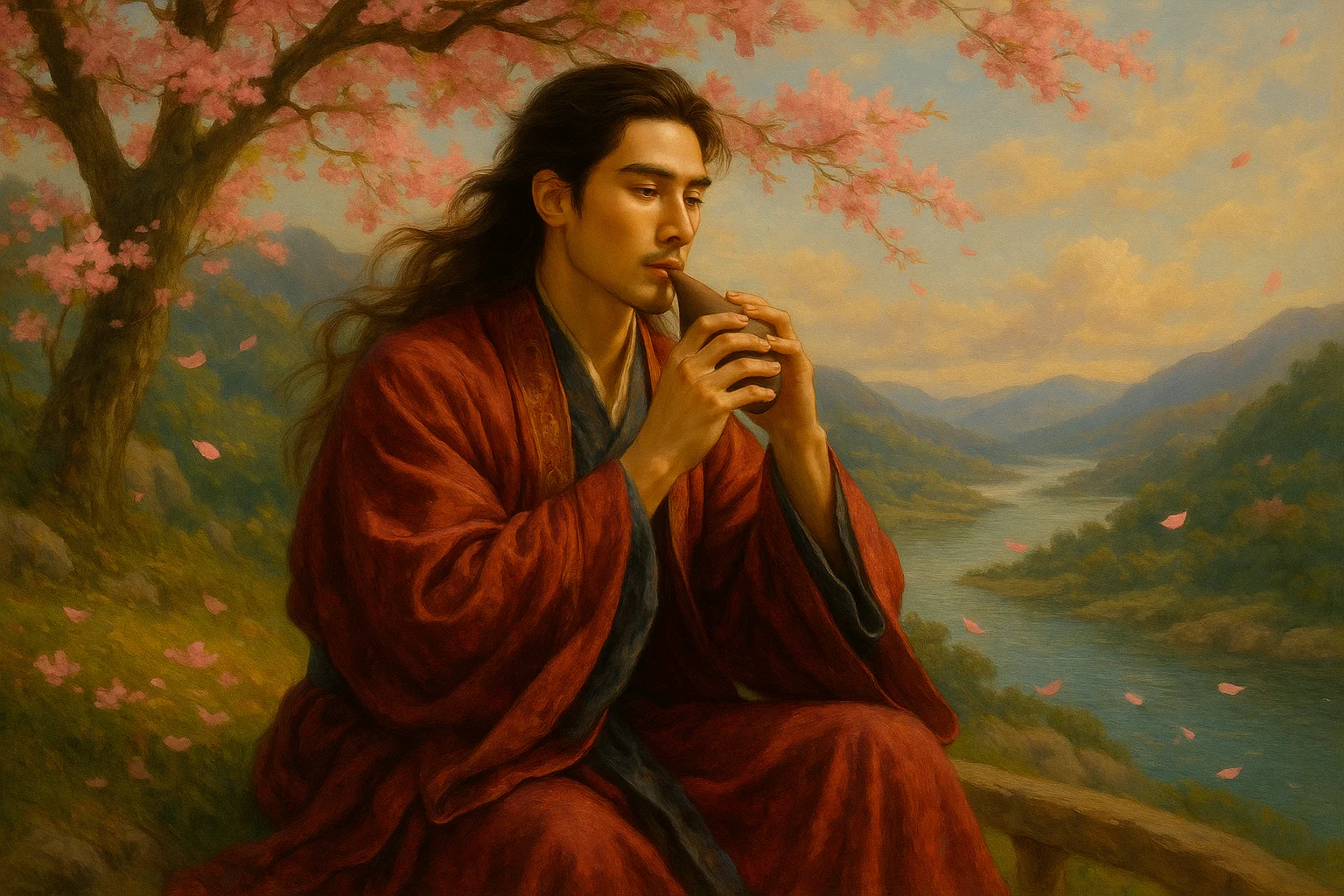
Yuan Zhen (元稹 779 - 831), a native of Luoyang, Henan Province, was a descendant of the Northern Wei imperial family and a renowned poet and statesman of the Mid-Tang Dynasty. As an important figure in Tang literary history, Yuan Zhen co-advocated the New Yuefu Movement with Bai Juyi. His poetic achievements are most distinguished in the yuefu (Music Bureau) style and erotic poetry. His romantic relationship with a woman named Yingying inspired the legendary tale The Story of Yingying. Yuan Zhen’s poetic style is characterized by its accessible clarity, occasionally interspersed with bold and striking expressions. During the transition from the Mid-Tang to the Late Tang, his accessible style exerted a profound influence, laying the foundation for the Yuan-Bai Poetic School.