




I play my flute, nearing the furthest shore;
At sunset I bid my lord farewell.
On the lake I turn my head once more —
Green hills fold white clouds where they dwell.
Original Poem
「欹湖」
王维
吹箫凌极浦,日暮送夫君。
湖上一回首,青山卷白云。
Interpretation
This poem is the eighth of Wang Wei's twenty-poem Wang River Collection, composed in harmony with a poem by his friend Pei Di. Although situated within a series of landscape poems, it ingeniously incorporates the motif of "farewell," demonstrating how Wang Wei seamlessly dissolves personal feelings of parting into the eternal tranquility of the Wang River landscape. It is not a direct, heartfelt farewell but a transcendent, cinematic tableau of parting composed of sound, twilight, and a backward glance. It embodies the aesthetic pursuit of his later poetry: where "every line enters Chan (Zen)" and "all form and appearance dissolve into emptiness."
First Couplet: 吹箫凌极浦,日暮送夫君。
Chuī xiāo líng jí pǔ, rì mù sòng fūjūn.
Flute notes cross to distant shores, borne on the breeze; / At day's dim end, I bid you farewell, sir, on the quay.
Explication: The poem opens with sound breaking the silence, establishing an ethereal, far-reaching tone. "Flute notes" signify an elegant farewell ritual; their clear, plaintive sound traverses space. "Cross to distant shores" lends this sound motion and direction, as if following the departing boat to the water's horizon. "At day's dim end" is not just a time of day but an emotional filter, bathing the parting in a vast, warm afterglow. "Sir" is an ancient, respectful term for a man, here referring to the departing friend. The language is archaic and restrained, with deep feeling held beneath the surface. These two lines sketch a farewell moment interwoven with sound and shadow, rich with unspoken sentiment.
Second Couplet: 湖上一回首,青山卷白云。
Hú shàng yī huí shǒu, qīng shān juǎn bái yún.
On the lake, with one turn of the head, a look behind— / Green hills, and rolling up their slopes, white clouds you find.
Explication: This couplet is a stroke of genius, abruptly elevating the poem's意境 from human parting to the realm of heaven, earth, and Chan. "On the lake, with one turn of the head" marks a shift in action and perspective—from the view of the one remaining on shore to the backward glance of the one departing on the boat. This "turn of the head" holds volumes unspoken. What meets the eye is "Green hills, and rolling up their slopes, white clouds." The green hills are still, eternal, unmoving; the white clouds are in motion, ever-changing, coming and going without intent. The word "rolling up" is wonderfully apt, depicting the dynamic of mist wreathing the mountain slopes while also resonating with the Chan idea of "natural, unimpeded unfurling." The scene seems to say: The hills remain, the clouds go of themselves. Just as I stay here and you go to the world's edge, meeting and parting are the way of heaven and earth. All sorrow of farewell seems purified and transcended before this timeless landscape painting.
Holistic Appreciation
This pentasyllabic quatrain is a "sublime work that contemplates human parting through a cosmic lens." Its structure is exquisite, subtly containing the complete psychological process of farewell: the first line is the expression and consignment of emotion (entrusting feeling to the flute's notes); the second line is the statement of the event and the anchoring in time and space (parting at dusk); the third line is the most pregnant moment of parting (the backward glance); the final line is what is seen in that glance, and also the ultimate settling of the spirit (green hills, white clouds). The four lines complete a leap from "sound" (flute notes) to "silence" (the glance), from "moved feeling" (parting) to "transcendent feeling" (seeing hills and clouds). Wang Wei's brilliance lies in not letting emotion linger in the sadness of "bid you farewell." Instead, through the "one turn of the head," he casts personal, specific feelings of parting into the eternal, spontaneous, wordless cosmic vista of "green hills… rolling up… white clouds." The melancholy of parting is absorbed and dissolved by the immense beauty of heaven and earth, transformed into a profound stillness and transcendent understanding.
Artistic Merits
- The Subtle Shift in Perspective: The poem conceals a seamless shift in viewpoint. The first two lines present what is seen, heard, and felt by the one seeing off (the poet). The latter two lines, borrowing "on the lake, with one turn of the head," quietly switch to what is seen by the backward glance of the one departing (the friend). This shift not only enriches the pictorial layers but also creates a two-way, shared gaze on an emotional level—though meeting in the most understated confluence point: the "green hills and white clouds."
- Contrast and Unity of Imagery: "Flute notes" (human sound) vs. "green hills… white clouds" (sound of nature); "day's dim end" (passing time) vs. "green hills" (eternal space); "bid farewell" (active action) vs. "rolling up" (natural state)—these form multiple contrasts. Yet they ultimately achieve unity within the poem's artistic conception: human activity merges with natural rhythm; transient feeling dissolves into eternal scenery.
- The Refinement and Suggestiveness of Verbs: "Cross" conveys the flute notes' penetration and far-reaching quality; "bid farewell" holds deep feeling within its calmness; "turn of the head" is the condensation and pivot of emotion; "rolling up" is the poetic eye of the entire poem, perfectly combining the cloud's motion with the hill's stillness, impermanence with constancy, full of pictorial beauty and Chan insight.
- The Ultimate Art of Suggestion: After "on the lake, with one turn of the head," what does the traveler see? Think? The poet gives only five characters: "green hills… white clouds." All the emotion, longing, solace, or release therein is left for the reader to imagine and complete. This expression, which "does not tread the path of logic, nor fall into the trap of language," is the most captivating trait of Wang Wei's later poetry.
Insights
This work shows us the unique Eastern aesthetic solution Wang Wei offers for facing parting—that eternal human emotional challenge: Rather than drown in the whirlpool of emotion, withdraw and contemplate oneself within a grander, more eternal natural framework. When personal sorrow of farewell meets the cosmic vision of "green hills… rolling up… white clouds," the former does not vanish but is contained and diluted by the latter, thereby attaining a certain stillness and transcendence.
In modern society, frequent partings and changes remain the norm of life. This poem suggests we might learn from Wang Wei's posture of "turn[ing] the head": in moments of surging emotion, we too could make a spiritual "turn of the head" and view the immediate joys and sorrows within the broader vista of life or nature. That scene of "green hills… rolling up… white clouds" can be real nature, or it can be inner conviction, historical wisdom, or the permanence of art. Through this "transformation into scene" and "sublimation," we may face meetings and partings with greater composure, finding a balance and peace for our own spirit between deep feeling and transcendence. Wang Wei's poem is precisely such a tonic for the soul, drawn from classical landscape and Chan contemplation.
About the poet
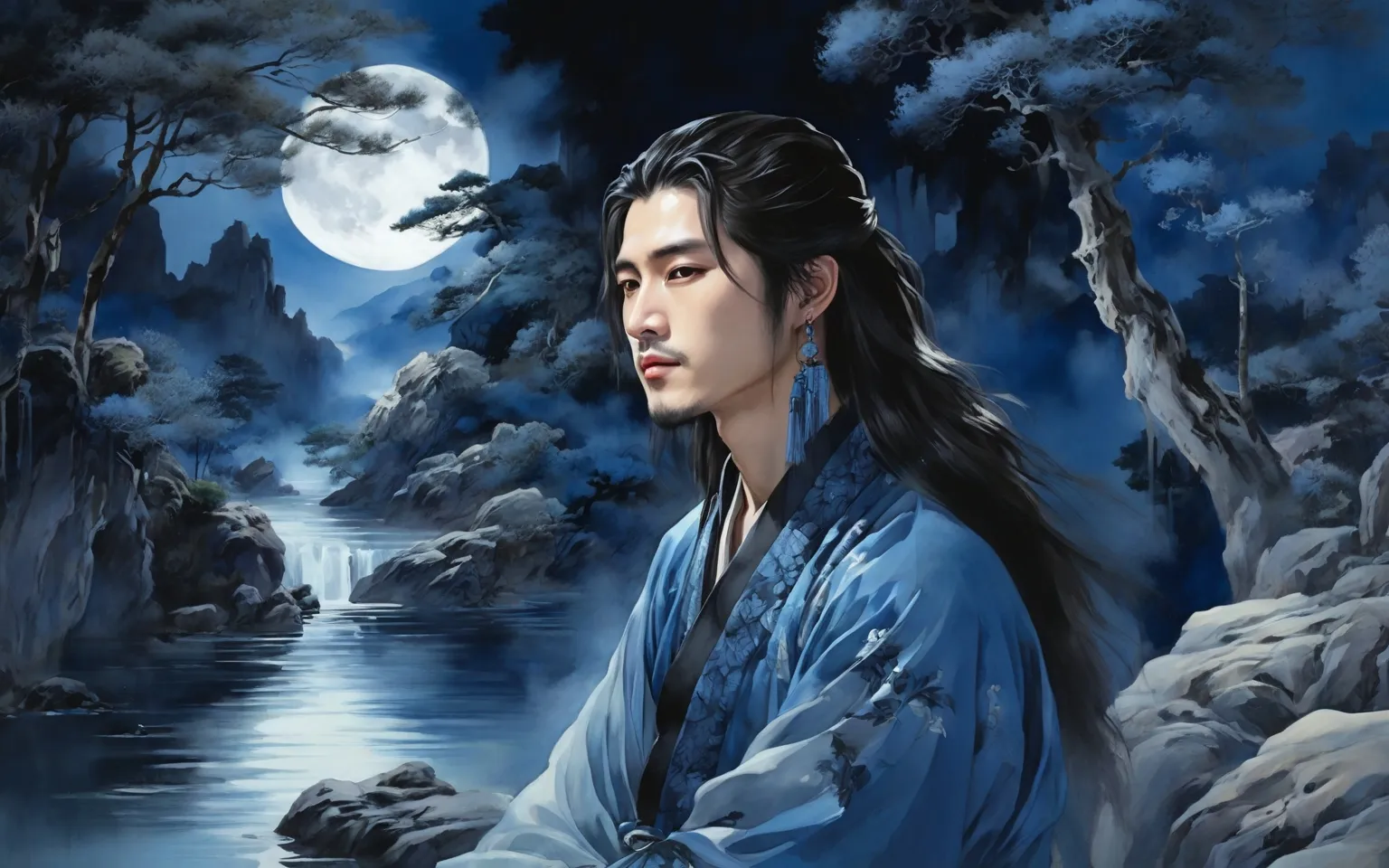
Wang Wei (王维), 701 - 761 A.D., was a native of Yuncheng, Shanxi Province. Wang Wei was a poet of landscape and idylls. His poems of landscape and idylls, with far-reaching images and mysterious meanings, were widely loved by readers in later generations, but Wang Wei never really became a man of landscape and idylls.