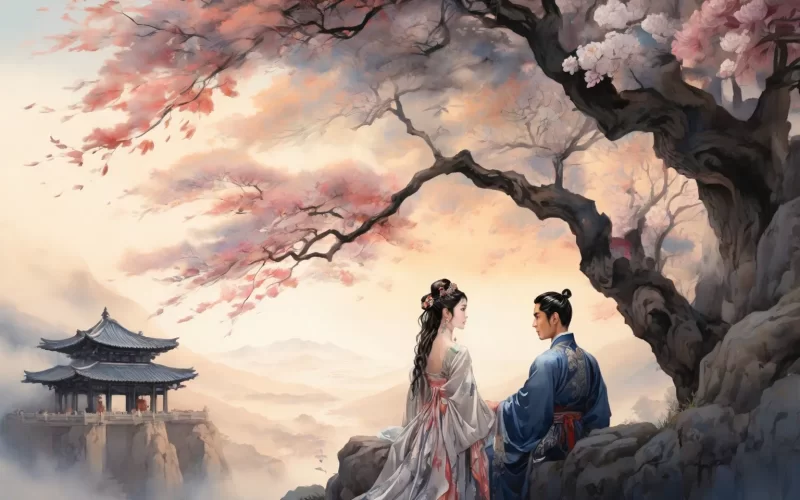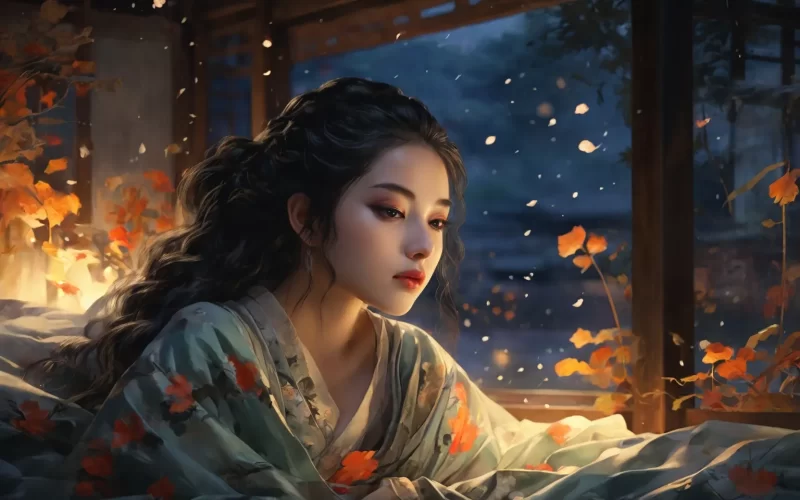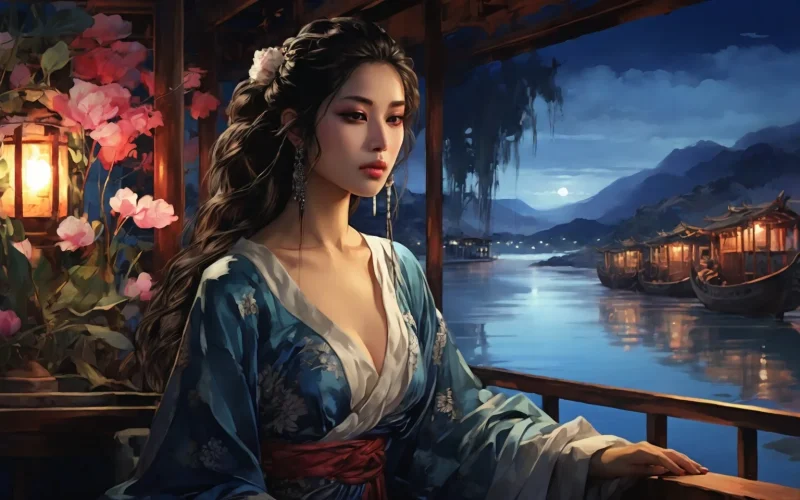
I was bidding a guest farewell, at night on the Hsun-yang River,
Where maple-leaves and full-grown rushes rustled in the autumn.
I, the host, had dismounted, my guest had boarded his boat,
And we raised our cups and wished to drink -but, alas, there was no music.
For all we had drunk we felt no joy and were parting from each other,
When the river widened mysteriously toward the full moon –
We had heard a sudden sound, a guitar across the water.
Host forgot to turn back home, and guest to go his way.

We followed where the melody led and asked the player's name.
The sound broke off... then reluctantly she answered.
We moved our boat near hers, invited her to join us,
Summoned more wine and lanterns to recommence our banquet.
Yet we called and urged a thousand times before she started toward us,
Still hiding half her face from us behind her guitar.
...She turned the tuning-pegs and tested several strings;
We could feel what she was feeling, even before she played:

Each string a meditation, each note a deep thought,
As if she were telling us the ache of her whole life.
She knit her brows, flexed her fingers, then began her music,
Little by little letting her heart share everything with ours.
She brushed the strings, twisted them slow, swept them, plucked them –
First the air of The Rainbow Skirt, then The Six Little Ones.
The large strings hummed like rain,
The small strings whispered like a secret,
Hummed, whispered - and then were intermingled
Like a pouring of large and small pearls into a plate of jade.
We heard an oriole, liquid, hidden among flowers.
We heard a brook bitterly sob along a bank of sand.
By the checking of its cold touch, the very string seemed broken
As though it could not pass; and the notes, dying away
Into a depth of sorrow and concealment of lament,
Told even more in silence than they had told in sound

A silver vase abruptly broke with a gush of water,
And out leapt armoured horses and weapons that clashed and smote-
And, before she laid her pick down, she ended with one stroke,
And all four strings made one sound, as of rending silk....
There was quiet in the east boat and quiet in the west,
And we saw the white autumnal moon enter the river's heart .

...When she had slowly placed the pick back among the strings,
She rose and smoothed her clothing and, formal, courteous,
Told us how she had spent her girlhood at the capital,
Living in her parents' house under the Mount of Toads,
And had mastered the guitar at the age of thirteen,
With her name recorded first in the class-roll of musicians,
Her art the admiration even of experts,
Her beauty the envy of all the leading dancers,
How noble youths of Wu-ling had lavishly competed
And numberless red rolls of silk been given for one song,
And silver combs with shell inlay been snapped by her rhythms,
And skirts the colour of blood been spoiled with stains of wine...
Season after season, joy had followed joy,
Autumn moons and spring winds had passed without her heeding,
Till first her brother left for the war, and then her aunt died,
And evenings went and evenings came, and her beauty faded –
With ever fewer chariots and horses at her door;
So that finally she gave herself as wife to a merchant
Who, prizing money first, careless how he left her,
Had gone, a month before, to Fou-liang to buy tea.
And she had been tending an empty boat at the river's mouth,
No company but the bright moon and the cold water.
And sometimes in the deep of night she would dream of her triumphs
And be wakened from her dreams by the scalding of her tears .

...Her very first guitar-note had started me sighing;
Now, having heard her story, I was sadder still.
"We are both unhappy - to the sky's end.
We meet. We understand. What does acquaintance matter?
I came, a year ago, away from the capital
And am now a sick exile here in Kiu-kiang –
And so remote is Kiu-kiang that I have heard no music,
Neither string nor bamboo, for a whole year.
My quarters, near the River Town, are low and damp,
With bitter reeds and yellowed rushes all about the house.
And what is to be heard here, morning and evening? –
The bleeding cry of cuckoos, the whimpering of apes.
On flowery spring mornings and moonlit autumn nights
I have often taken wine up and drunk it all alone,
Of course there are the mountain songs and the village pipes,
But they are crude and strident, and grate on my ears.
And tonight, when I heard you playing your guitar,
I felt as if my hearing were bright with fairy-music.
Do not leave us. Come, sit down. Play for us again.
And I will write you a ballad to the tune you have just sung."

Moved by what I said, she stood there for a moment,
Then sat again to her strings - and they sounded even sadder,
Although the tunes were different from those she had played before...
The feasters, all listening, covered their faces.
But who of them all was crying the most?
This Kiu-kiang official. My blue sleeve was wet.
Original Poem
「琵琶行」
白居易
浔阳江头夜送客,枫叶荻花秋瑟瑟。
主人下马客在船,举酒欲饮无管弦。
醉不成欢惨将别,别时茫茫江浸月。
忽闻水上琵琶声,主人忘归客不发。
寻声暗问弹者谁?琵琶声停欲语迟。
移船相近邀相见,添酒回灯重开宴。
千呼万唤始出来,犹抱琵琶半遮面。
转轴拨弦三两声,未成曲调先有情。
弦弦掩抑声声思,似诉平生不得志。
低眉信手续续弹,说尽心中无限事。
轻拢慢捻抹复挑,初为《霓裳》后《六幺》。
大弦嘈嘈如急雨,小弦切切如私语。
嘈嘈切切错杂弹,大珠小珠落玉盘。
间关莺语花底滑,幽咽泉流冰下难。
冰泉冷涩弦凝绝,凝绝不通声暂歇。
别有幽愁暗恨生,此时无声胜有声。
银瓶乍破水浆迸,铁骑突出刀枪鸣。
曲终收拨当心画,四弦一声如裂帛。
东船西舫悄无言,唯见江心秋月白。
沉吟放拨插弦中,整顿衣裳起敛容。
自言本是京城女,家在虾蟆陵下住。
十三学得琵琶成,名属教坊第一部。
曲罢曾教善才服,妆成每被秋娘妒。
五陵年少争缠头,一曲红绡不知数。
钿头银篦击节碎,血色罗裙翻酒污。
今年欢笑复明年,秋月春风等闲度。
弟走从军阿姨死,暮去朝来颜色故。
门前冷落鞍马稀,老大嫁作商人妇。
商人重利轻别离,前月浮梁买茶去。
去来江口守空船,绕船月明江水寒。
夜深忽梦少年事,梦啼妆泪红阑干。
我闻琵琶已叹息,又闻此语重唧唧。
同是天涯沦落人,相逢何必曾相识!
我从去年辞帝京,谪居卧病浔阳城。
浔阳地僻无音乐,终岁不闻丝竹声。
住近湓江地低湿,黄芦苦竹绕宅生。
其间旦暮闻何物?杜鹃啼血猿哀鸣。
春江花朝秋月夜,往往取酒还独倾。
岂无山歌与村笛?呕哑嘲哳难为听。
今夜闻君琵琶语,如听仙乐耳暂明。
莫辞更坐弹一曲,为君翻作琵琶行。
感我此言良久立,却坐促弦弦转急。
凄凄不似向前声,满座重闻皆掩泣。
座中泣下谁最多?江州司马青衫湿。
Interpretation
"The song of a Guitar" was composed in the autumn of 816 AD, during the Yuanhe reign of Emperor Xianzong, while Bai Juyi held the nominal post of Marshal of Jiangzhou (modern Jiujiang, Jiangxi). The year before, for memorializing the throne on state affairs and angering powerful officials, he had been demoted to this largely sinecure position. This demotion marked a major turning point in Bai Juyi's political life, shifting him from an idealist dedicated to "serving the world" to a reflective thinker focused on "cultivating his own integrity." Remote Jiangzhou offered a harsh, spare life, leaving the poet in deep spiritual distress. The poem originates from an actual riverside farewell: seeing off a guest at the Xunyang River, the poet chanced upon a former celebrated courtesan from the capital, Chang'an, now drifting along the rivers and lakes. Her artistry and her life story profoundly moved the poet, leading him from "hearing the pipa" to "listening to her history," culminating in the timeless lament: "We are both poor wretches, stranded at the world's edge." This poem is not merely a personal outpouring of emotion but a profound portrayal of the intertwined fates of two types of marginalized figures in the Mid-Tang: the frustrated scholar-official and the drifting entertainer.
Section I
浔阳江头夜送客,枫叶荻花秋瑟瑟。
Xúnyáng jiāng tóu yè sòng kè, fēngyè dí huā qiū sè sè.
主人下马客在船,举酒欲饮无管弦。
Zhǔrén xià mǎ kè zài chuán, jǔ jiǔ yù yǐn wú guǎnxián.
醉不成欢惨将别,别时茫茫江浸月。
Zuì bù chéng huān cǎn jiāng bié, bié shí máng máng jiāng jìn yuè.
忽闻水上琵琶声,主人忘归客不发。
Hū wén shuǐ shàng pípa shēng, zhǔrén wàng guī kè bù fā.
寻声暗问弹者谁?琵琶声停欲语迟。
Xún shēng àn wèn tán zhě shéi? Pípa shēng tíng yù yǔ chí.
移船相近邀相见,添酒回灯重开宴。
Yí chuán xiāng jìn yāo xiāng jiàn, tiān jiǔ huí dēng chóng kāi yàn.
千呼万唤始出来,犹抱琵琶半遮面。
Qiān hū wàn huàn shǐ chūlái, yóu bào pípa bàn zhē miàn.
By Xunyang River, at night, I bid a guest goodbye; / Maple leaves and reed catkins shiver 'neath an autumn sky. / Dismounted, I find my friend aboard, cups raised, but with no music nigh. / Drunk, yet no joy; a gloomy parting's close at hand, / While the vast river soaks the moon, blurring the distant land. / Suddenly, from the stream, a pipa's notes arrive; / The host forgets his home, the guest won't yet depart or drive. / We search the sound, ask softly, "Who plays there?" A pause. / The pipa stops, as if the player would reply, yet hesitates because. / We moved our boat close, asking for a meeting face-to-face; / More wine was called for, lamps re-lit, to restart the feast with grace. / A thousand calls, a hundred pleas—at last she came in view, / Her pipa in her arms, half-hiding her face from me and you.
The poem opens with a farewell on a bleak autumn night, establishing a thick atmosphere of desolation. The phrase "with no music nigh" foreshadows the arrival of the pipa's sound and hints at the poet's impoverished inner life. "Suddenly, from the stream…" is the turning point; the beautiful pipa notes abruptly shatter the gloom, capturing everyone's attention. Details like "ask softly," "yet hesitates," "A thousand calls…" and "half-hiding her face" vividly sketch the pipa player's hesitant, shy, and slightly guarded state of mind, suggesting a hidden past and complex identity, setting the stage for her subsequent personal narrative.
Section II
转轴拨弦三两声,未成曲调先有情。
Zhuǎn zhóu bō xián sān liǎng shēng, wèi chéng qǔdiào xiān yǒu qíng.
弦弦掩抑声声思,似诉平生不得志。
Xián xián yǎn yì shēng shēng sī, sì sù píngshēng bùdézhì.
低眉信手续续弹,说尽心中无限事。
Dīméi xìnshǒu xù xù dàn, shuō jìn xīnzhōng wúxiàn shì.
轻拢慢捻抹复挑,初为《霓裳》后《六幺》。
Qīng lǒng màn niǎn mǒ fù tiāo, chū wèi "Nícháng" hòu "Liùyāo".
大弦嘈嘈如急雨,小弦切切如私语。
Dà xián cáo cáo rú jíyǔ, xiǎo xián qiè qiè rú sīyǔ.
嘈嘈切切错杂弹,大珠小珠落玉盘。
Cáo cáo qiè qiè cuòzá dàn, dà zhū xiǎo zhū luò yùpán.
间关莺语花底滑,幽咽泉流冰下难。
Jiān guān yīng yǔ huā dǐ huá, yōu yè quán liú bīng xià nán.
冰泉冷涩弦凝绝,凝绝不通声暂歇。
Bīng quán lěng sè xián níng jué, níng jué bù tōng shēng zàn xiē.
别有幽愁暗恨生,此时无声胜有声。
Bié yǒu yōu chóu àn hèn shēng, cǐ shí wú shēng shèng yǒu shēng.
银瓶乍破水浆迸,铁骑突出刀枪鸣。
Yín píng zhà pò shuǐ jiāng bèng, tiěqí tūchū dāo qiāng míng.
曲终收拨当心画,四弦一声如裂帛。
Qǔ zhōng shōu bō dāngxīn huà, sì xián yī shēng rú liè bó.
东船西舫悄无言,唯见江心秋月白。
Dōng chuán xī fǎng qiǎo wú yán, wéi jiàn jiāngxīn qiū yuè bái.
She turned the pegs, plucked strings—a note or two, no more; / Feeling showed e’er the tune began, her heart poured to the fore. / Each string suppressed, each note thought-laden, told a plight, / As if recounting a whole life of stifled hope and blight. / Head bent, her fingers followed one another, unconstrained, / Pouring out all the boundless matters in her heart contained. / Light push, slow twist, sweep, pluck—her techniques she’d employ, / First "Rainbow Skirts," then "Six Little Ones," her artistic ploy. / The thick strings roared like sudden pelting rainstorm’s sound; / The thin strings whispered like soft confidences, hushed around. / The roaring and the whispering interweaved in play, / Like large and smaller pearls dropped on a plate of jade, they say. / Now clear as orioles warbling ’midst the flowers, smooth and fleet; / Now choked like a spring sobbing under ice, with pain replete. / Then, like a frozen spring, the strings congealed, the music stayed; / From this congealment, silent grief and hidden spite were made. / This moment held a stillness that surpassed all sound. Then, bright, / A silver vase burst, liquid splashing out in jets of light; / Armored horsemen rushed forth, sabers, lances clashing loud! / The tune done, with her plectrum’s center-stroke, fierce and proud, / The four strings screeched as one, like rending silk, the finale’s shroud. / East boat and west boat hushed, no word was heard from anyone; / We saw but the autumn moon, white at the river’s heart, her run.
This section represents the pinnacle of music description in classical Chinese poetry. Through a series of exquisite similes (pelting rain, whispers, pearls on jade, oriole's song, flowing spring, etc.), the poet transforms abstract music into tangible visual and auditory images. From "Feeling showed e’er the tune began" to "Pouring out all the boundless matters in her heart," music becomes the direct vehicle for emotion. Mention of playing techniques (push, twist, sweep, pluck) and famous tunes ("Rainbow Skirts," "Six Little Ones") displays her superb skill and past glory. "This moment held a stillness that surpassed all sound" captures the immense tension in musical pauses, while "A silver vase burst" and "Armored horsemen" portray the climax of emotional release. Finally, "East boat and west boat hushed… / We saw but the autumn moon…" concludes the surging music with a tranquil moonlit scene, a perfect interplay of movement and stillness, leaving endless resonance.
Section III
沉吟放拨插弦中,整顿衣裳起敛容。
Chényín fàng bō chā xián zhōng, zhěngdùn yīshang qǐ liǎn róng.
自言本是京城女,家在虾蟆陵下住。
Zì yán běn shì jīngchéng nǚ, jiā zài Hámaling xià zhù.
十三学得琵琶成,名属教坊第一部。
Shísān xué dé pípa chéng, míng shǔ jiàofāng dì yī bù.
曲罢曾教善才服,妆成每被秋娘妒。
Qǔ bà céng jiào shàncái fú, zhuāng chéng měi bèi Qiūniáng dù.
五陵年少争缠头,一曲红绡不知数。
Wǔlíng niánshào zhēng chántóu, yī qǔ hóngxiāo bù zhī shù.
钿头银篦击节碎,血色罗裙翻酒污。
Diàn tóu yín bì jī jié suì, xuè sè luó qún fān jiǔ wū.
今年欢笑复明年,秋月春风等闲度。
Jīnnián huānxiào fù míngnián, qiū yuè chūnfēng děngxián dù.
弟走从军阿姨死,暮去朝来颜色故。
Dì zǒu cóngjūn āyí sǐ, mù qù zhāo lái yánsè gù.
门前冷落鞍马稀,老大嫁作商人妇。
Mén qián lěngluò ān mǎ xī, lǎodà jià zuò shāngrén fù.
商人重利轻别离,前月浮梁买茶去。
Shāngrén zhòng lì qīng biélí, qián yuè Fúliáng mǎi chá qù.
去来江口守空船,绕船月明江水寒。
Qù lái jiāngkǒu shǒu kōng chuán, rào chuán yuè míng jiāng shuǐ hán.
夜深忽梦少年事,梦啼妆泪红阑干。
Yè shēn hū mèng shàonián shì, mèng tí zhuāng lèi hóng lángān.
Pensive, she put her plectrum back between the strings, and then / Smoothed out her clothes, composed herself, before she spoke again. / "I was," she said, "a Capital girl; my home was by the Hill / of Toads. At thirteen I’d mastered the pipa, with great skill. / My name was in the Music School, the first on the roll call. / A piece once played brought masters’ praise; my looks outshone them all. / Young lords from Wuling vied to gift me silks, and more, / For one song, scarlet gauzes piled beyond the count or score. / Silver-and-gilt hairpins for beat kept time, were cracked and broke; / Wine, split, would stain my blood-red silken skirt. It was no joke. / Year after year, in laughter, joy, my prime was spent in vain; / Springs, autumn moons passed by, unnoticed, easing my domain. / My brother joined the army; my protectress passed away; / Dawn followed dusk, my beauty faded, turning old and grey. / Fewer and fewer carriages and horses came my gate to find; / Getting on in years, I became a merchant’s wife, resigned. / The merchant prized his profits, thought light of our parting grief; / Last month he went to Fuliang, to buy tea, for relief. / Alone I’ve come to keep this empty boat here on the stream; / Around the boat the bright moon shines, the river waters seem / So cold. In the deep night, I dream of the wild days of youth, / And dream my tears—rouge-streaked—flow down, a proof of bitter truth."
This section unfolds through the pipa player's first-person narrative, presenting the "life" behind the "music" and the "fate" behind the "art." With concise storytelling, the poet condenses the typical life trajectory of a female entertainer: youthful fame, stunning the capital ("masters’ praise," "outshone them all"), extravagant indulgence ("vied to gift," "beyond the count"), the exhaustion of youth ("beauty faded"), desertion, marriage to a merchant, and lonely vigil on an empty boat. The stark contrast between past and present ("blood-red silken skirt" vs. "empty boat," "bright moon") reveals the illusory nature of glory and the cruelty of fate. "Around the boat the bright moon shines, the river waters seem / So cold" echoes the opening's "the vast river soaks the moon," forming an emotional闭环. The conclusion, "dream my tears—rouge-streaked—flow down," presents the pain of the past in a stark visual image, poignantly beautiful.
Section IV
我闻琵琶已叹息,又闻此语重唧唧。
Wǒ wén pípa yǐ tànxī, yòu wén cǐ yǔ chóng jī jī.
同是天涯沦落人,相逢何必曾相识!
Tóng shì tiānyá lúnluò rén, xiāngféng hébì céng xiāngshí!
我从去年辞帝京,谪居卧病浔阳城。
Wǒ cóng qùnián cí dìjīng, zhé jū wò bìng Xúnyáng chéng.
浔阳地僻无音乐,终岁不闻丝竹声。
Xúnyáng dì pì wú yīnyuè, zhōng suì bù wén sīzhú shēng.
住近湓江地低湿,黄芦苦竹绕宅生。
Zhù jìn Pén Jiāng dì dī shī, huáng lú kǔ zhú rào zhái shēng.
其间旦暮闻何物?杜鹃啼血猿哀鸣。
Qí jiān dàn mù wén hé wù? Dùjuān tí xiě yuán āi míng.
春江花朝秋月夜,往往取酒还独倾。
Chūn jiāng huā zhāo qiū yuè yè, wǎngwǎng qǔ jiǔ hái dú qīng.
岂无山歌与村笛?呕哑嘲哳难为听。
Qǐ wú shāngē yǔ cūndí? Ōuyā zhāozhā nán wéi tīng.
今夜闻君琵琶语,如听仙乐耳暂明。
Jīn yè wén jūn pípa yǔ, rú tīng xiān yuè ěr zàn míng.
莫辞更坐弹一曲,为君翻作《琵琶行》。
Mò cí gèng zuò dàn yī qǔ, wèi jūn fān zuò "Pípa Xíng".
感我此言良久立,却坐促弦弦转急。
Gǎn wǒ cǐ yán liáng jiǔ lì, què zuò cù xián xián zhuǎn jí.
凄凄不似向前声,满座重闻皆掩泣。
Qī qī bù sì xiàng qián shēng, mǎn zuò chóng wén jiē yǎn qì.
座中泣下谁最多?江州司马青衫湿。
Zuò zhōng qì xià shéi zuì duō? Jiāngzhōu Sīmǎ qīng shān shī.
Hearing the pipa, I had sighed; now hearing this, once more / My heart was deeply wrung, and sorrow pressed me to the core. / "We are both poor wretches, stranded at the world’s far end. / Meeting now, what need was there of having met as friend? / I, since last year, bade farewell to the Imperial Town; / Banished, I’ve lain ill in Xunyang, my spirits down. / Xunyang’s a desolate place, with no real music found; / For a full year I’ve heard no string or bamboo’s sound. / My home’s near Pen River, low, damp, and overgrown / With yellow reeds and bitter bamboos, bleak and alone. / What does one hear there, morning, evening, night or day? / The nightjar’s bloody cries, the gibbon’s mournful roundelay. / By spring river, on flower morn, ’neath autumn moonlight, / I’ve often had to pour the wine, alone, from sheer despite. / There are, of course, the mountain songs, the village flutes’ refrain, / But crude, discordant, rasping—grievous to hear, a pain. / Tonight I’ve heard your pipa speech, your melody’s command; / It seems I’ve heard immortal music, clearing ear and hand. / Do not refuse, but sit once more, play us another air; / For you I’ll write a 'Song of the Pipa,' if you’ll but care." / Touched by my words, she stood awhile, then, sitting, plucked with haste; / The notes came hurried, tense, unlike the music of the past. / Sadder, more poignant than before, the strains filled all the place; / The hearers, listening once again, hid tears on every face. / But who, of all the company, was most overcome? / The Marshal of Jiangzhou—his blue coat, soaked with tears, was numb.
This section is the poet's direct outpouring of emotion and identification with fate. Following the pipa player's narrative, the poet shifts from listener to speaker, revealing his own situation of "bade farewell to the Imperial Town" and "Banished… lain ill." The description of Xunyang’s desolate environment ("yellow reeds," "bitter bamboos," "nightjar’s bloody cries") is both a statement of reality and an externalization of his lonely inner world. "We are both poor wretches…" is the soul of the entire poem. It transcends differences in status (scholar-official vs. entertainer) to reach a shared sense of human destiny—drifting, frustration, loneliness. Finally, the piper sits again, the music grows more "Sadder, more poignant," all present weep, and the Marshal with his "blue coat, soaked with tears" weeps for her, for himself, and for all "poor wretches," achieving the highest fusion of emotion.
Holistic Appreciation
This poem is the pinnacle of Bai Juyi’s long narrative works. Its greatness lies in orchestrating a perfect symphony of music, narrative, and lyricism. Structured around the sequence of "hearing music – inquiring – listening to her story – finding resonance," the poem is tightly constructed and progressively deepens. The exquisite description of music makes it an artistic model for depicting sound in classical poetry. The pipa player’s life story is a condensed portrait of the vicissitudes of a Tang dynasty entertainer’s fate. The poet’s own personal engagement and reflection elevate individual tragedy into a universal lament on the human condition. The theme of "stranded at the world’s edge" points both to specific historical circumstances (the exile of Mid-Tang literati, the drifting of entertainers) and touches upon the eternal human experiences of wandering and loneliness. Ultimately, music and poetry, the other and the self, past and present merge under the autumn moon at Xunyang River, creating this timeless, poignant symphony.
Artistic Merits
- The Pinnacle of Synesthesia in Music Description: Transforming abstract pipa sounds into concrete images—pouring rain, whispers, pearls on jade, an oriole’s song, a flowing spring, a bursting vase, clashing arms—bridges hearing, sight, and touch, making the music a multisensory, tangible presence.
- Seamless Blending of Dual Narrative Lines: The pipa player’s "entertainer’s life" line and the poet’s "exiled scholar’s" line develop in parallel, converging powerfully in the revelatory line "We are both poor wretches…," generating immense emotional force and intellectual depth.
- Union of Detailed Portrayal and Grand Narrative: The luxurious detail of "Silver-and-gilt hairpins… cracked and broke," the poignant close-up of "dream my tears—rouge-streaked—flow down," and the grand lament of "Springs, autumn moons passed by, unnoticed" reflect and enhance each other, achieving both vivid realism and an expansive poetic realm.
- Synchronized Atmosphere and Emotional Rhythm: From the opening desolation of "Maple leaves and reed catkins shiver" to the pristine silence after the music, "the autumn moon, white at the river’s heart," to the poet’s solitary suffering amid "The nightjar’s bloody cries," the environment consistently resonates with the characters' inner emotions.
Insights
The deep value of this masterpiece lies in revealing the eternal theme that "art crystallizes from suffering, and resonance builds bridges between human hearts." When the frustrated poet and the drifting entertainer met at Xunyang River, the pipa’s sound became more than music; it became the medium for a dialogue between two wounded souls. "We are both poor wretches…" penetrates millennia precisely because it transcends the chasm of status and class, touching the common human predicament—the shattering of ideals, the idleness of time, the rootlessness of fate.
This poem shows us that true understanding often springs from shared experience of pain. In our modern society of high specialization and emotional distance, we need this capacity for empathy across backgrounds even more: to learn to hear the echoes of our own lives in the melodies of others'. Simultaneously, the poem’s process of elevating personal suffering into eternal artistic creation reminds us: if individual hardship can be expressed and conveyed with sincerity, it can become a spiritual force that connects us and illuminates the abyss.
Poem translator:
Kiang Kanghu
About the Poet
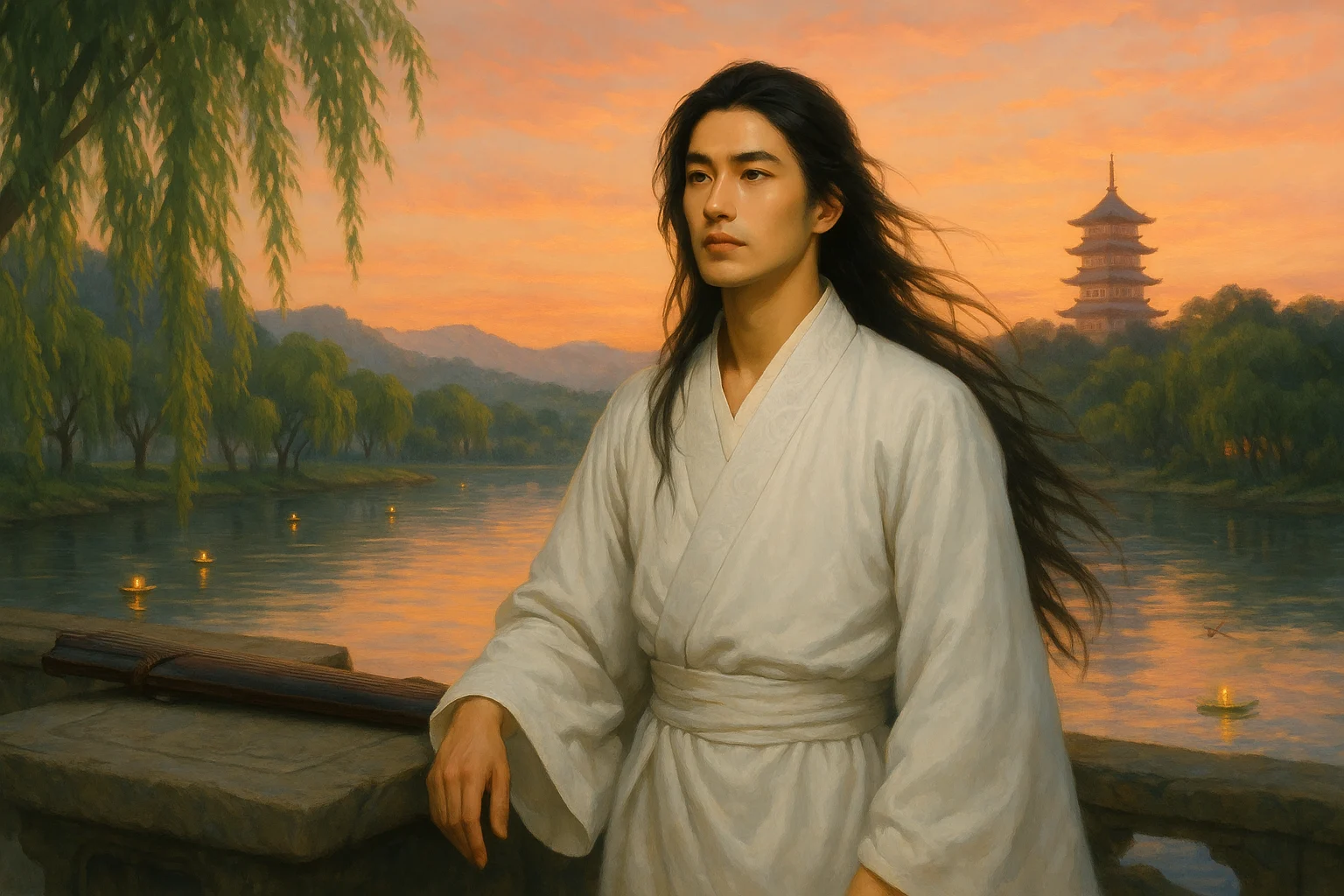
Bai Juyi (白居易), 772 - 846 AD, was originally from Taiyuan, then moved to Weinan in Shaanxi. Bai Juyi was the most prolific poet of the Tang Dynasty, with poems in the categories of satirical oracles, idleness, sentimentality, and miscellaneous rhythms, and the most influential poet after Li Bai Du Fu.