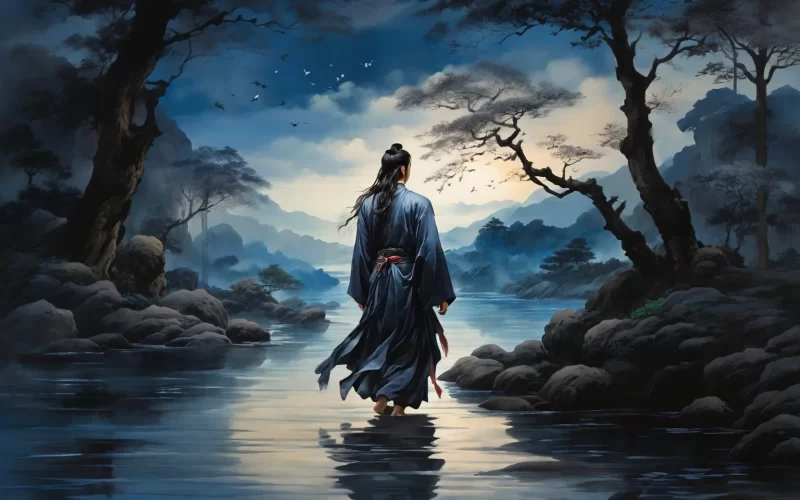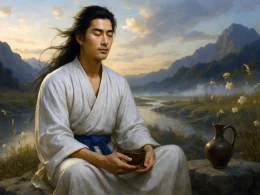




This cloud, that has drifted all day through the sky,
May, like a wanderer, never come back….
Three nights now I have dreamed of you --
As tender, intimate and real as though I were awake.
And then, abruptly rising to go,
You told me the perils of adventure
By river and lake-the storms, the wrecks,
The fears that are borne on a little boat;
And, here in my doorway, you rubbed your white head
As if there were something puzzling you.
…Our capital teems with officious people,
While you are alone and helpless and poor.
Who says that the heavenly net never fails?
It has brought you ill fortune, old as you are.
…A thousand years' fame, ten thousand years' fame-
What good, when you are dead and gone.
Original Poem
「梦李白二首 · 其二」
杜甫
浮云终日行,游子久不至。
三夜频梦君,情亲见君意。
告归常局促,苦道来不易。
江湖多风波,舟楫恐失坠。
出门搔白首,若负平生志。
冠盖满京华,斯人独憔悴。
孰云网恢恢,将老身反累。
千秋万岁名,寂寞身后事。
Interpretation
This poem is the second of Seeing Li Bai in a Dream, composed during the same period as the first—in the autumn of 759 CE, while Du Fu was displaced in Qinzhou. At this time, Du Fu remained deeply anxious, uncertain of Li Bai's circumstances and safety. If the first poem emphasizes the ethereal uncertainty of the dreamscape and the dread of the unknown, this second poem focuses more intently on portraying the figure of Li Bai as witnessed in the dream. From this portrayal, it launches a fierce questioning of unjust fate and gives voice to a profound lament for the tragic destiny shared by gifted souls throughout history. Read together, the two poems form a complete "symphony of sorrow and longing."
First Couplet: “浮云终日行,游子久不至。”
Fú yún zhōng rì xíng, yóu zǐ jiǔ bù zhì.
All day the drifting clouds move ceaselessly by; / But the wanderer, my old friend, still makes no reply.
The poem opens with an evocative metaphor rich in implication. "Drifting clouds" are both the scene before the poet's eyes and a symbol of Li Bai's rootless existence (also subtly echoing Li Bai's own line, "floating clouds, the wanderer's thought"). The constant motion of "move ceaselessly by" stands in stark contrast to the stasis of "still makes no reply," creating a tension between nature's perpetual flow and the prolonged, painful absence in human affairs. This reveals the poet's restless, anxious longing and sense of helplessness.
Second Couplet: “三夜频梦君,情亲见君意。”
Sān yè pín mèng jūn, qíng qīn jiàn jūn yì.
For three nights now, repeatedly, you've come to me in sleep; / Your tender kindness there reveals the feelings you still keep.
Building upon the first poem's "you came into my dream," this line emphasizes "repeatedly," underscoring the depth and urgency of the longing. "Your tender kindness" describes not only the affectionate demeanor of Li Bai in the dream but, more importantly, conveys the spiritual affinity between the two friends—a connection transcending physical separation. Here, the dream becomes the sole remaining channel for emotional communion.
Third Couplet: “告归常局促,苦道来不易。”
Gào guī cháng jú cù, kǔ dào lái bù yì.
Taking leave, each time, you seem distressed and pressed; / Complaining bitterly how hard was each hard quest.
The description delves into the specifics of the dream. "Seem distressed and pressed" vividly sketches Li Bai's hurried, uneasy, and hesitant manner upon departure. This captures both the fleeting, mysterious nature of a spectral visit and, more poignantly, reflects Li Bai's perilous, constrained real-world circumstances projected into the dream. "Complaining bitterly how hard was each hard quest" are the words spoken within the dream, embodying the poet's painful yet clear awareness of, and shared anguish over, his friend's harsh fate.
Fourth Couplet: “江湖多风波,舟楫恐失坠。”
Jiāng hú duō fēng bō, zhōu jí kǒng shī zhuì.
"On rivers and lakes," you sigh, "storms often brew and roar; / I fear the boat may sink, lost forevermore."
This couplet elaborates on the content of those bitter complaints. Superficially, it describes the perils of travel, but it serves as a potent metaphor for the dangers of life and career. The imagery of "storms" and a sinking boat is fraught with a sense of crisis and ominous foreboding, expressing both the poet's fear for Li Bai's exile journey and offering a universal depiction of the precarious fate facing all upright individuals in turbulent times.
Fifth Couplet: “出门搔白首,若负平生志。”
Chū mén sāo bái shǒu, ruò fù píng shēng zhì.
You go out, scratching your white-haired head in despair, / As if your lifetime's hopes had vanished into air.
The focus shifts to a powerfully arresting close-up detail. "Scratching your white-haired head" is a classic gesture of distress, frustration, and anxiety; "as if your lifetime's hopes had vanished" reveals the source of this anguish—a genius who once aspired to "discourse on statecraft like Guan and Yan" finds himself imprisoned and exiled in his twilight years. This image is loaded with immense personal regret and the weight of historical tragedy.
Sixth Couplet: “冠盖满京华,斯人独憔悴。”
Guān gài mǎn jīng huá, sī rén dú qiáo cuì.
The capital teems with grand coaches, caps, and gowns; / You alone are worn down, facing fortune's frowns.
The gaze turns from the dream to a direct indictment of reality, creating a stark and damning contrast. "Teems with grand coaches, caps, and gowns" sketches the capital's opulence and the prominence of the powerful. "You alone are worn down" resonates like a heavy sigh, casting into sharp relief the extreme wretchedness and isolation of Li Bai (and, implicitly, the poet himself). This is not merely a portrait of personal misfortune but a furious denunciation of a society that exalts the unworthy and casts aside the true talent.
Seventh Couplet: “孰云网恢恢,将老身反累。”
Shú yún wǎng huī huī, jiāng lǎo shēn fǎn lèi.
Who says the net of heaven lets nothing slip? / In your old age you're caught within its grip.
With a rhetorical challenge, the poem questions heavenly justice and worldly fairness. "The net of heaven" originates from the Dao De Jing, originally signifying the all-encompassing, impartial way of heaven. The poet turns this adage into a bitter question, using Li Bai's fate as evidence to lament the absence of justice and the absurdity of reality. "In your old age you're caught" is profoundly grievous, giving voice to the bleak injustice of suffering disgrace in one's later years.
Eighth Couplet: “千秋万岁名,寂寞身后事。”
Qiān qiū wàn suì míng, jì mò shēn hòu shì.
A fame that through ten thousand years will ring; / What comfort is this cold, posthumous thing?
The poem concludes with a perspective that pierces through history, its emotion reaching a peak of poignant sorrow. The poet clearly foresees that Li Bai's fame will endure for millennia, yet this recognition—"a fame that through ten thousand years will ring"—stands in cruel contrast to the present reality of "worn down" and "caught." It lays bare an eternal paradox: the greatest souls often endure suffering in their own time, their value requiring posthumous acknowledgment. This is both a consolation and a source of redoubled grief. Du Fu's deep compassion for his friend's fate and his own sense of personal history culminate here in a profound realization of the shared tragic destiny of the gifted across ages.
Holistic Appreciation
Compared to the first poem, this work exhibits more exposed emotion, more direct discourse, and sharper critique. Using the recurrent dreams as a thread, it moves from gazing at the clouds in longing, to recording the dream and describing the figure, to extending from the dream to philosophical reflection, finally issuing a challenge to unjust fate and a lament on historical judgment. This completes the poem's progression from personal friendship to a meditation on universal destiny.
The image of Li Bai constructed here—"scratching your white-haired head," "worn down," "caught"—is a vivid, concrete portrait of a tragic hero. Du Fu is not merely remembering a friend; he is composing a biography for a noble character betrayed by his era and singing a lament for a genius crushed by circumstance. This elevates the poem beyond private sentiment, granting it profound social-critical significance and philosophical depth.
Artistic Merits
- Vivid Detail, Capturing Form and Spirit
Details like "seem distressed and pressed" and "scratching your white-haired head" function like close-up shots, vividly depicting Li Bai's demeanor and manner within the dream, lending the illusory vision a powerful sense of reality and emotional force. - Stark Contrast, Incisive Critique
The sharp juxtaposition of "the capital teems with grand coaches" and "you alone are worn down" acts like a biting social caricature, examining personal injustice against the backdrop of the entire social fabric with immense critical power. - Integration of Discourse, Fusion of Reason and Emotion
The final couplet, "A fame that through ten thousand years will ring; / What comfort is this cold, posthumous thing?" merges profound historical insight with poignant feeling. It concludes with reflection yet resonates with endless emotion, exemplifying how Du Fu's integration of discursive thought into poetry amplifies its affective impact. - Layered Emotional Progression, Reaching the Core
The emotion evolves from anxious longing, to the warmth of the dream encounter, to heartache at the friend's haggard state, to indignation at worldly injustice, finally culminating in a sorrowful reflection on the nature of fate itself. This layered, rhythmic progression embodies the "somberness and restrained power" characteristic of Du Fu's style.
Insights
This work confronts us with an eternal dilemma concerning "individual worth and contemporary recognition." It reveals a recurrent tragic pattern in history: the most exceptional souls often endure great suffering in their own time, their brilliance requiring the passage of ages to be fully recognized.
The insight this poem offers is this: True greatness often must traverse the present reality of being "worn down" and "caught" to reach the distant shore of "fame that through ten thousand years will ring." It reminds us how to perceive our own value when facing injustice and adversity—the confirmation of value sometimes comes not from the applause of one's own era, but from an inner steadfastness to ideals and commitment to principle, and from the resonance it finds in countless hearts across time and space. Through his steadfast belief in and compassion for Li Bai, Du Fu demonstrates how to maintain faith in the existence of light amidst darkness, and to perceive the possibility of spiritual immortality within individual tragedy.
Poem translator
Kiang Kanghu
About the poet
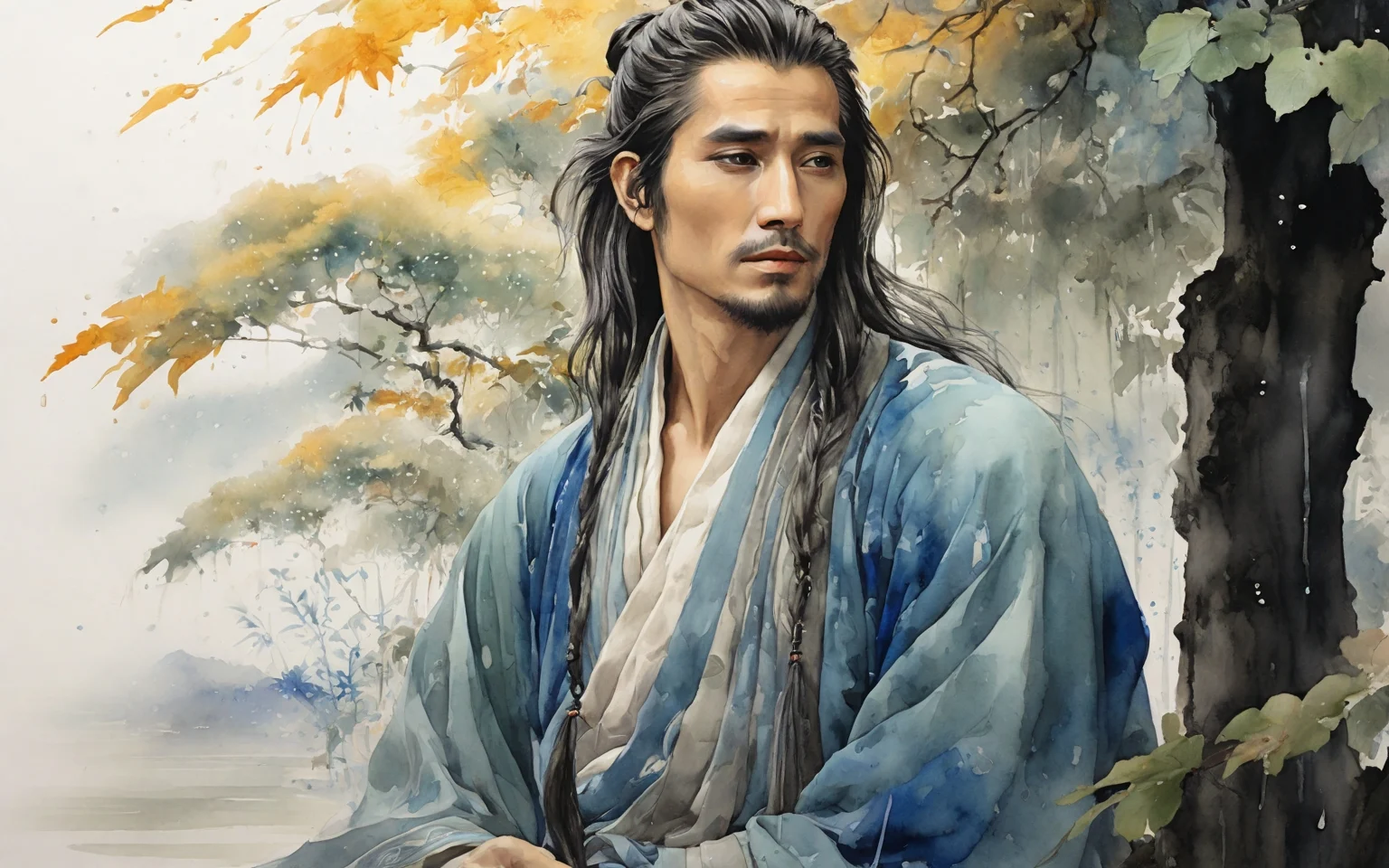
Du Fu (杜甫), 712 - 770 AD, was a great poet of the Tang Dynasty, known as the "Sage of Poetry". Born into a declining bureaucratic family, Du Fu had a rough life, and his turbulent and dislocated life made him keenly aware of the plight of the masses. Therefore, his poems were always closely related to the current affairs, reflecting the social life of that era in a more comprehensive way, with profound thoughts and a broad realm. In his poetic art, he was able to combine many styles, forming a unique style of "profound and thick", and becoming a great realist poet in the history of China.