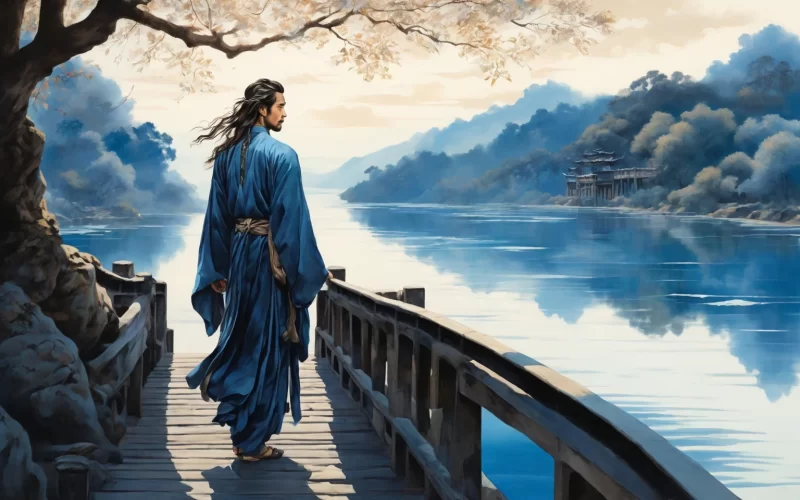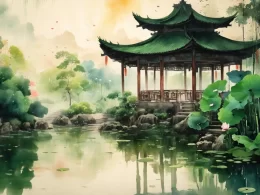



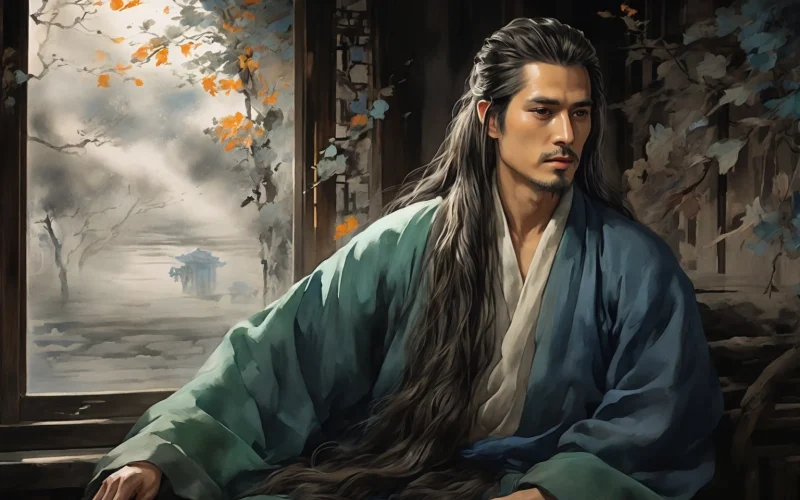
At roadside inn I pass the Winter Solstice Day
Clasping my knees, with my shadow in company.
I think, till dead of night my family would stay,
And talk about the poor lonely wayfaring me.
Original Poem
「邯郸冬至夜思家」
白居易
邯郸驿里逢冬至,抱膝灯前影伴身。
想得家中夜深坐,还应说着远行人。
Interpretation
This poem was written in the winter of 804 CE. Bai Juyi was thirty-three, serving as a Collator in the Palace Library. That year, likely traveling on official business, he lodged at a courier station in Handan. The Winter Solstice was not merely a seasonal marker but a festival of reunion, a time when families traditionally gathered. For the poet, alone on official travel on this night meant for togetherness, the feelings of solitude and longing were intensified. This heptasyllabic quatrain, with its spare language and ordinary setting, sketches a resonant chord of familial affection across distance, becoming a model of the Tang "travel poem" for expressing depth through simplicity.
First Couplet: 邯郸驿里逢冬至,抱膝灯前影伴身。
Hándān yì lǐ féng dōngzhì, bào xī dēng qián yǐng bàn shēn.
At the Handan post-house, the Winter Solstice finds me here; / Hunched, knees to my chest, before the lamp—my shadow is my only peer.
The opening states the facts with calm clarity: the place, the occasion, the poet’s solitude. The verb "finds" suggests a passive, unchosen encounter with the festival, highlighting the pathos of his situation. The posture "Hunched, knees to my chest" is a vivid physical depiction of the idle, introspective traveler. "My shadow is my only peer" deepens the isolation: his sole companion is the insubstantial silhouette cast by the lamp. Together, object and shadow form a closed, lonely world. These lines establish the poem’s quiet, reflective mood.
Second Couplet: 想得家中夜深坐,还应说着远行人。
Xiǎng dé jiā zhōng yè shēn zuò, hái yīng shuō zhe yuǎn xíng rén.
I can see them now at home, sitting late into the night; / And in their talk, I know, the traveler gone far comes to light.
Here lies the poem’s emotional and artistic pivot. The poet shifts from describing his own reality to imagining the scene at home. Instead of stating "I miss my family," he pictures his family missing him—a classic technique of indirect expression. "Sitting late into the night" mirrors his own vigil "before the lamp," linking two spaces in shared wakefulness. "In their talk… comes to light" is a tender, confident speculation. The brilliance of this move is twofold: it powerfully conveys his own longing by projection, and it envelops his present loneliness within the imagined warmth of familial concern, transforming solitude into a form of connectedness.
Holistic Appreciation
The poem’s achievement lies in its subtlety and power: expressing shared feeling through solitude, connection through separation. Its structure is masterful. The first two lines present a realistic snapshot of isolation; the last two project an imagined scene of domestic intimacy. Together, they form a complete emotional circuit: loneliness triggers the imagination of home, and that imagined concern, in turn, reflects back to temper the loneliness. Without a single exclamation, through the simple contrast of the “lamp and shadow” and the “talk at home,” it conveys the ache of travel and the pull of kinship with profound and lingering resonance.
Artistic Merits
- The Mastery of Plain Description: The poem uses unadorned language. Details like hunching by the lamp or imagining a late-night talk are drawn from common life, yet they capture a universal psychological moment with piercing accuracy and immediacy.
- The Technique of "Speaking from the Other Side": By writing not "I miss them" but "they are talking of me," the poet expresses his own emotion indirectly. This creates greater subtlety, depth, and emotional richness, presenting longing as a reciprocal, living bond rather than a solitary complaint.
- The Juxtaposition and Unification of Space and Time: The physical space of the Handan post-house and the psychological space of the distant home are juxtaposed. The shared moment of "late night" synchronizes them. The act of imagination bridges the distance, constructing a unified emotional realm that transcends geography.
- The Poignant Use of Occasion: Setting the poem on the Winter Solstice—a festival of family gathering—creates a stark, powerful contrast with the poet’s actual solitude, heightening the emotional charge of the scene.
Insights
The poem’s enduring appeal lies in its touch upon a universal human experience: the longing for connection during times traditionally meant for togetherness. It reveals a fundamental emotional truth: in moments of isolation, the conscious imagination and certainty of being remembered by loved ones can be a powerful solace. The poet’s act of imagining his family’s conversation is, in itself, a spiritual homecoming.
For the modern reader, the poem’s insight remains deeply relevant. In an age of mobility and distance, we often find ourselves "at the post-house" on days meant for home. Bai Juyi’s poem suggests that physical separation need not mean emotional rupture. The conscious cultivation of a bidirectional imagination—not only missing others, but vividly feeling their missing of us—can sustain connection across any distance. This "speaking from the other side" is an act of empathetic projection that transforms separation into a shared, and therefore more bearable, condition.
It reminds us that sustaining our inner world amidst life’s travels may depend on such quiet acts of imagination, on keeping alive the "lamp" of the mind that allows us to see, even from afar, the familiar faces and hear the caring conversations of home.
Poem translator
Xu Yuanchong (许渊冲)
About the Poet
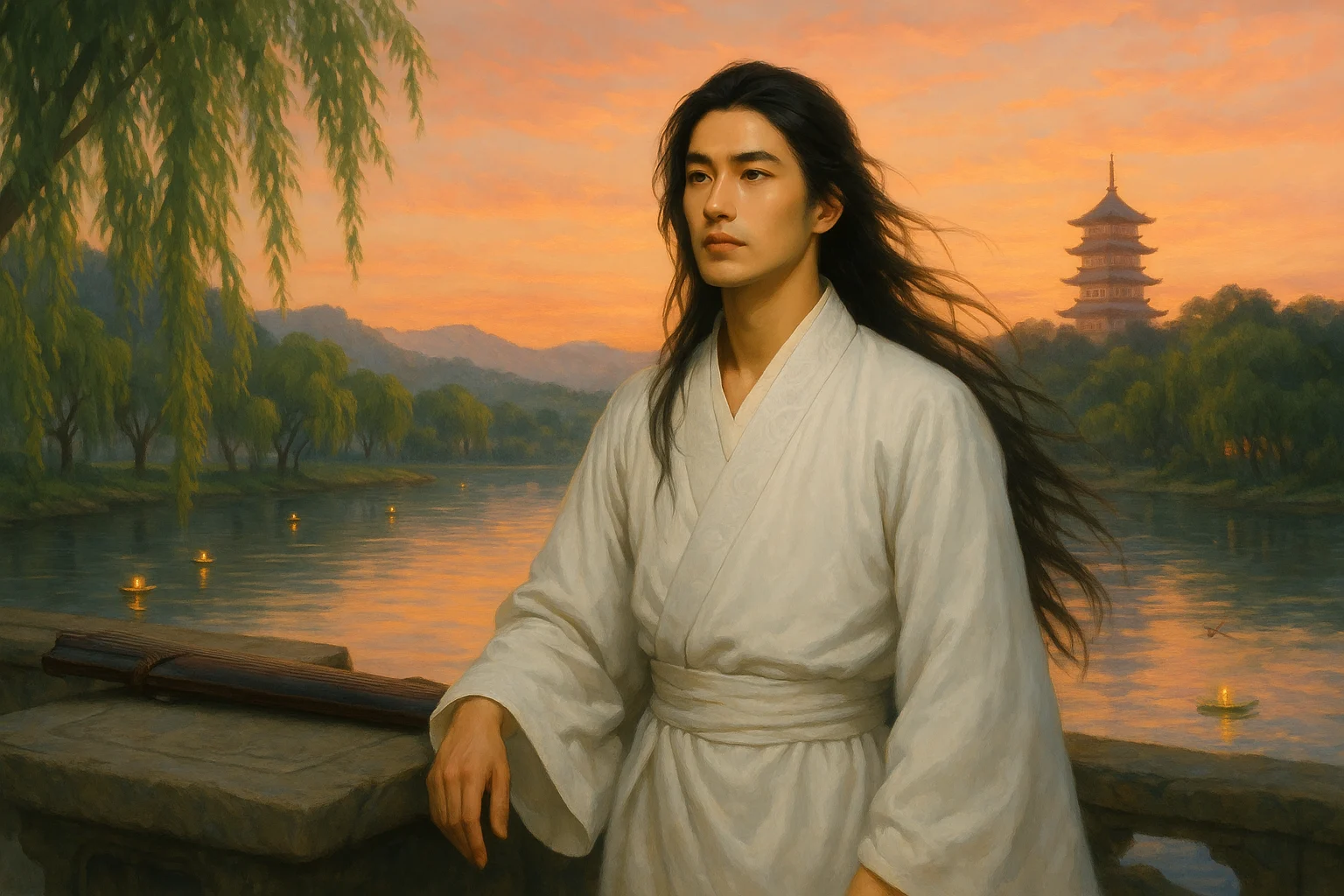
Bai Juyi (白居易), 772 - 846 AD, was originally from Taiyuan, then moved to Weinan in Shaanxi. Bai Juyi was the most prolific poet of the Tang Dynasty, with poems in the categories of satirical oracles, idleness, sentimentality, and miscellaneous rhythms, and the most influential poet after Li Bai Du Fu.